

A Journey Through Ezekiel 16:8–14
During this season, when we celebrate the birth of our Lord and Savior Jesus Christ, it’s crucial to have an expansive view of salvation. Salvation is not merely the escape from judgment; it is the beautiful, redemptive act of God lavishing love upon the undeserving. Few passages in Scripture depict this more vividly than Ezekiel 16:8–14, where God, speaking through the prophet, uses the metaphor of a rescued and adorned bride to explain His covenant relationship with Israel. This poetic, deeply emotional text doesn’t just speak to ancient Israel—it reveals the nature of God’s saving grace for all who believe. In verse 14, we see a hint of God’s glory being made known among the nations, echoing the obligation found in Acts 1:8: “You will be my witnesses… to the ends of the earth.”
Let’s explore 10 powerful truths about salvation from this profound passage.
1. Salvation Begins with God’s Initiative
“I passed by you again and saw you…” (v. 8)
God takes the first step. The imagery here shows God revisiting the helpless, abandoned child (see vv. 1–7), now grown. He chooses to act—not out of obligation, but out of compassion. Hence, we love Him because He first loved us (1 John 4:19). Salvation is not something we seek; it’s something God initiates.
2. God Enters into Covenant with the Broken
“I spread the corner of my garment over you… I made my vow to you and entered into a covenant…” (v. 8)
This is marriage language. In ancient culture, covering with a garment was symbolic of protection, commitment, and union. Consequently, God doesn’t just rescue sinners—He commits to them. Salvation is not transactional; it’s relational and covenantal.
3. Salvation Involves Cleansing from Defilement
“Then I bathed you with water and washed off your blood…” (v. 9)
Before adornment comes cleansing, which symbolizes God removing sin, shame, and trauma; thus, God doesn’t beautify over filth—He cleanses us first. True salvation includes repentance and purification (Titus 3:5).
4. God Clothes Us in His Righteousness
“I clothed you also with embroidered cloth and shod you with fine leather…” (v. 10)
The imagery here moves from nakedness to dignity. Every item—embroidered cloth, linen, silk—speaks of care and honor. In the beauty of the salvific act, we are clothed in Christ’s righteousness (Isa. 61:10; Rev. 19:7,8). Salvation brings dignity to the shamed and value to the rejected.
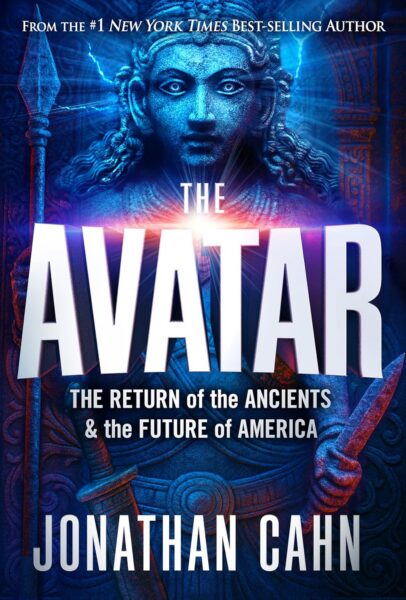
Order Jonathan Cahn’s Newest Book, “The Avatar” on Amazon.com!
5. Salvation is Extravagantly Beautiful
“You were adorned with gold and silver…” (v. 13)
God doesn’t save us minimally. He lavishes us with spiritual riches. This reflects His generous heart. Isaiah 61:3 also elegantly describes salvation: “to give them a beautiful headdress instead of ashes, the oil of gladness instead of mourning, the garment of praise instead of a faint spirit.” Hence, the grace we receive is abundant (Eph. 1:7–8). There is nothing stingy about salvation.
6. God Causes Us to Flourish Through His Grace
“You grew exceedingly beautiful and advanced to royalty.” (v. 13)
This line reveals the transformative power of grace. God doesn’t just save—He elevates and empowers. In Christ, we go from beggars to heirs, from orphans to royalty (Rom. 8:17, 1 Peter 2:9).
7. Salvation Leads to Witness Among the Nations
“Your renown went forth among the nations because of your beauty…” (v. 14)
The beauty God bestows isn’t just for us—it’s meant to reflect His glory to others. This echoes Acts 1:8, where we are told to be Christ’s witnesses. The saved become showcases of grace to the world.
8. The Glory of Salvation Belongs to God Alone
“…for it was perfect through the splendor that I had bestowed on you,” declares the Lord GOD.” (v. 14)
The beauty isn’t natural—it’s bestowed. Our salvation and transformation reflect His splendor, not ours. Consequently, there is no room for boasting. Salvation glorifies the Giver, not the recipient (Eph. 2:8-9).
9. We Are Saved for Intimacy, Not Just Escape
The entire passage moves toward a relational climax: not just survival, but union with God as in a marriage. We see in this passage that salvation isn’t merely avoiding hell—it’s being united to the One who rescues, for love, intimacy, and partnership.
10. Salvation culminates in the Marriage Supper of the Lamb (Rev. 19).
Ezekiel 16 reveals salvation as God taking a forsaken, abandoned soul, cleansing her, adorning her, and drawing her into covenant love. This is why Jesus is called the Bridegroom again and again—salvation is ultimately a union, not merely a rescue. It is the joy of being chosen, washed, and welcomed into intimate fellowship with Christ. We don’t wait for heaven to taste this; the bridal joy begins now. Salvation is more than forgiveness—it is being loved, beautified, and brought into a communion with Jesus too deep for words.
To conclude, Ezekiel 16:8–14 is one of the most poetic pictures of salvation in Scripture. It moves from abandonment to covenant, from filth to beauty, from shame to splendor. It reminds us that salvation is not merely an event but a process of transformation, initiated and sustained by God’s overwhelming love.
But this beauty is not meant to be hidden. Verse 14 sets the tone for a missional life: the nations take notice when God redeems the broken. Likewise, Acts 1:8 reminds us that the Church, adorned in grace, becomes God’s witness to the world. We are saved not just from something, but for something—to bear witness to His glorious love and grace.
Let us never lose sight of the beauty of our salvation—and let us never keep it to ourselves.
Dr. Joseph Mattera is an internationally-known author, consultant and theologian whose mission is to influence leaders who influence culture. He is the founding pastor of Resurrection Church, and leads several organizations, including The U.S. Coalition of Apostolic Leaders and Christ Covenant Coalition. Dr. Mattera is the author of 13 bestselling books, including his latest The Purpose, Power, and Process of Prophetic Ministry, and is renowned for applying Scripture to contemporary culture.