
I recently returned from Cambodia, where I visited a refugee camp and met with government leaders who asked me a question that troubled me.
“Why does the West know so little about what is happening here?” asked His Excellency, Kep Chuktema, who is supposedly the third-ranking member of the Cambodian government. He met with a small delegation representing People For Care And Learning, the American ministry that is setting up schools and churches in this country, which is 97% Buddhist.
It’s a fair question and I didn’t have an answer.
While much of the world’s attention has been focused on conflicts in Ukraine and the Middle East, a serious humanitarian crisis unfolded along the border between Thailand and Cambodia—one that displaced hundreds of thousands of people. I barely knew about the conflict, other than that President Donald Trump has brokered a ceasefire.
The dispute that erupted into war is not new. The two nations share a border of more than 500 miles, much of it disputed for decades because of colonial-era maps and competing territorial claims. Periodically tensions flare, but the fighting in 2025 escalated dramatically. Artillery exchanges and military clashes forced civilians to flee villages near the border provinces.
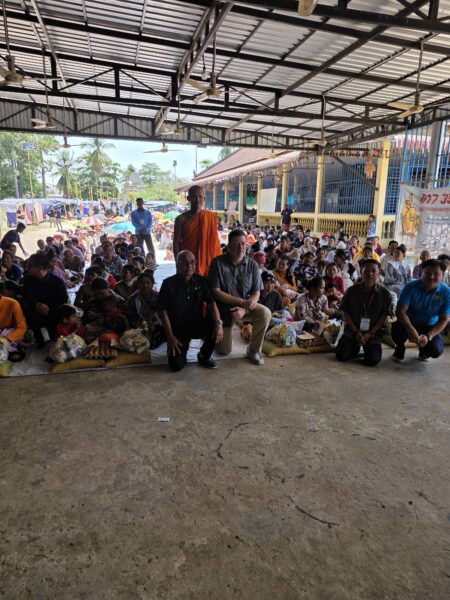
At the height of the conflict, humanitarian agencies estimated that more than 490,000 Cambodians were evacuated from their homes, including over 150,000 children. Temporary camps were established in nearly 200 locations across seven provinces.
Many of the people I encountered had fled with little more than the clothes they were wearing.
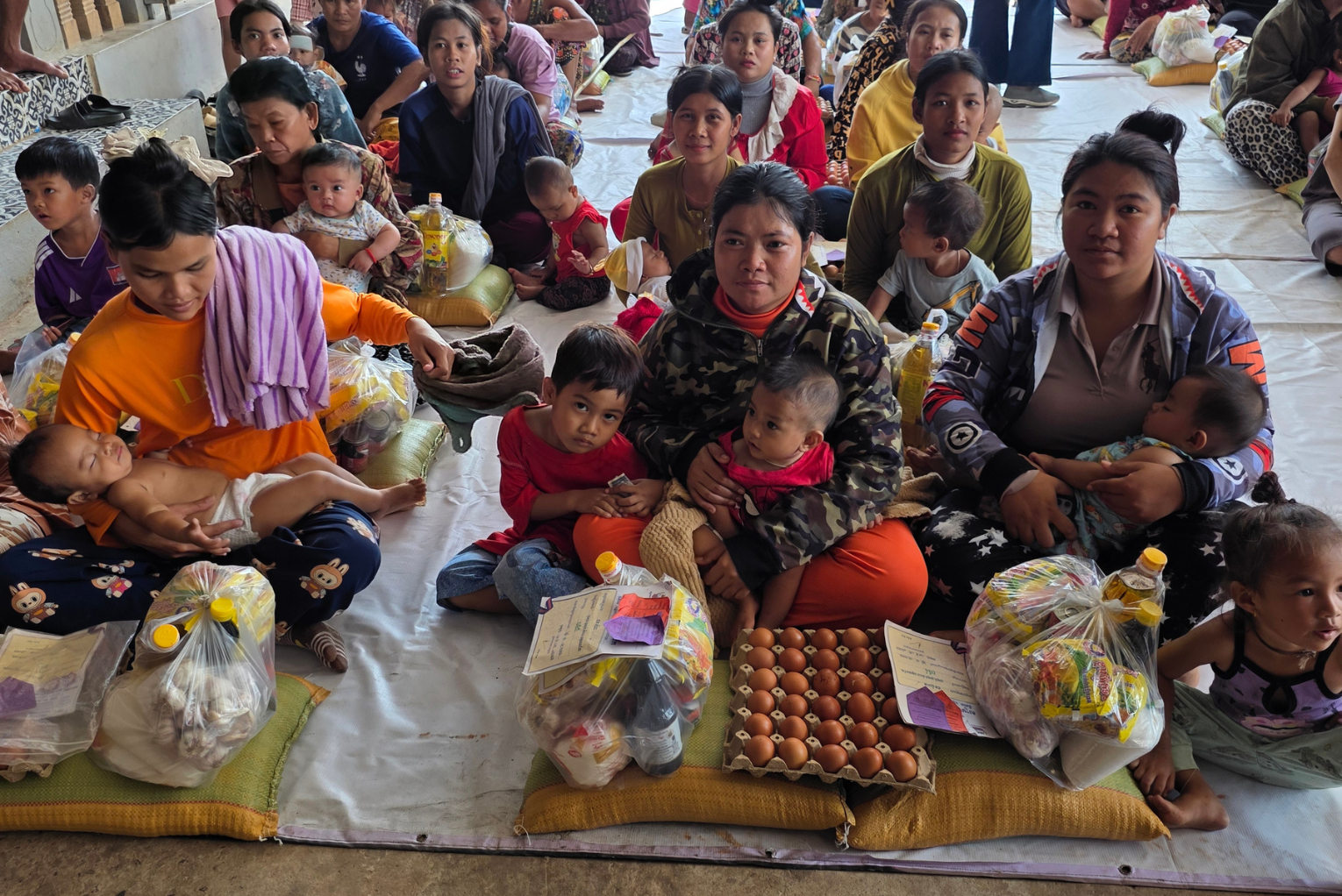
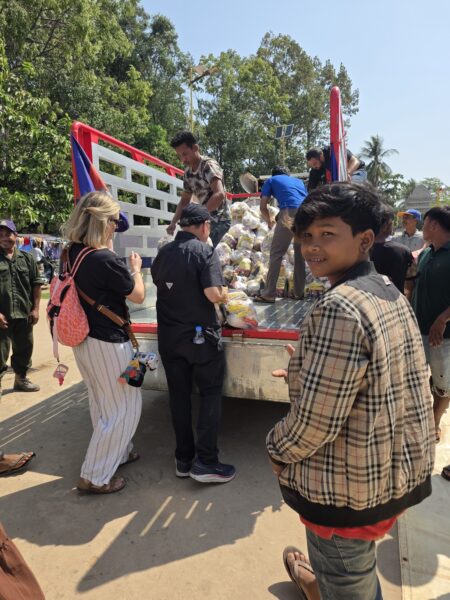
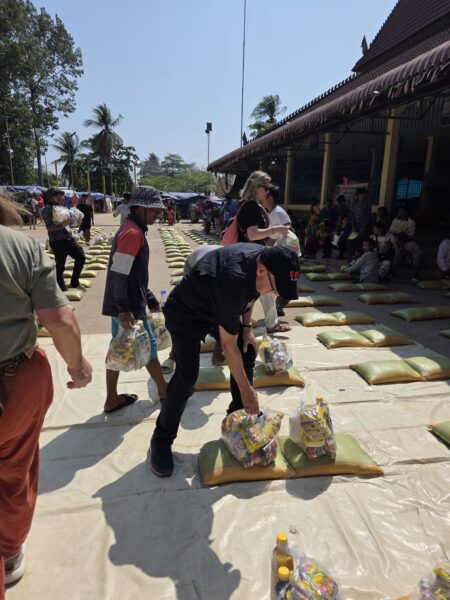
On the trip, PCL provided meals for a family of five for a week to 420 families at a refugee camp on the grounds of a Buddhist Temple called Wat Sompove Loun, which was filled with families who had escaped the violence and were waiting anxiously to return home. Some told stories of villages suddenly emptied as artillery fire began. Others described homes destroyed or abandoned near contested areas of the border.
Many had been farmers who simply left their fields behind.
His Excellency Kep Chuktema was so moved by humanitarian help from PCL that he traveled 200 miles to be with us and see it for himself as we handed out the food.
I spoke to him briefly and said I would do what I could to let people back home know what has happened, and how the Cambodians, which is a much smaller and weaker nation than Thailand, is vulnerable to the military incursions in which Thailand is taking what they believe is their land. This is despite an international court awarding some of the contested areas to Cambodia a few years ago.
The good news is that a ceasefire eventually brought relief to the region. According to leaders I spoke with, most displaced families have now begun returning to their communities. But the crisis revealed how fragile peace can be in a region where old disputes remain unresolved.
It also revealed something else.
In the middle of the crisis, Christian ministries quietly stepped in to help.
Organizations such as Samaritan’s Purse, Catholic Relief Services and World Vision delivered emergency food, sanitation supplies, and shelter assistance to tens of thousands of displaced families. Local churches and ministries also mobilized to provide aid, prayer and spiritual encouragement to those who had lost homes or livelihoods.
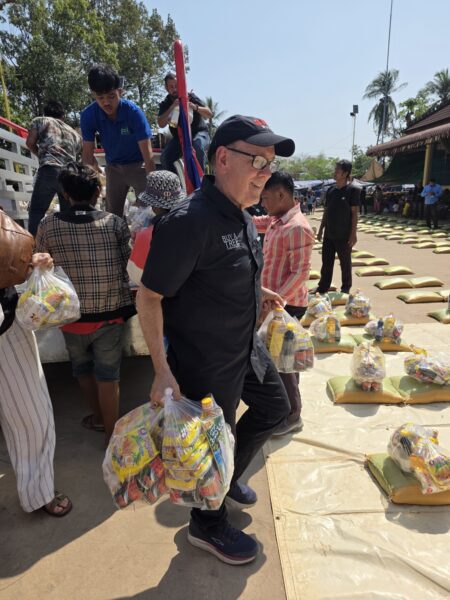
The ministry I came to Cambodia with was People for Care and Learning (PCL), which has served Cambodia for decades through education, humanitarian outreach and church partnerships. During the refugee crisis, ministries like PCL were able to respond quickly because they were already present in the community. The aid we gave was a large bag of rice, a bag of groceries including cooking oil and several dozen eggs. We were told it would feed a family of five for a week. Do the arithmetic. That’s 28,000 meals.
That’s often the difference between effective humanitarian aid and delayed relief.
Christians were already there.
As I walked through the camp, I was reminded that humanitarian crises often unfold far from the spotlight of international media. But for the people living through them, the suffering is just as real as the conflicts we see on nightly news broadcasts.
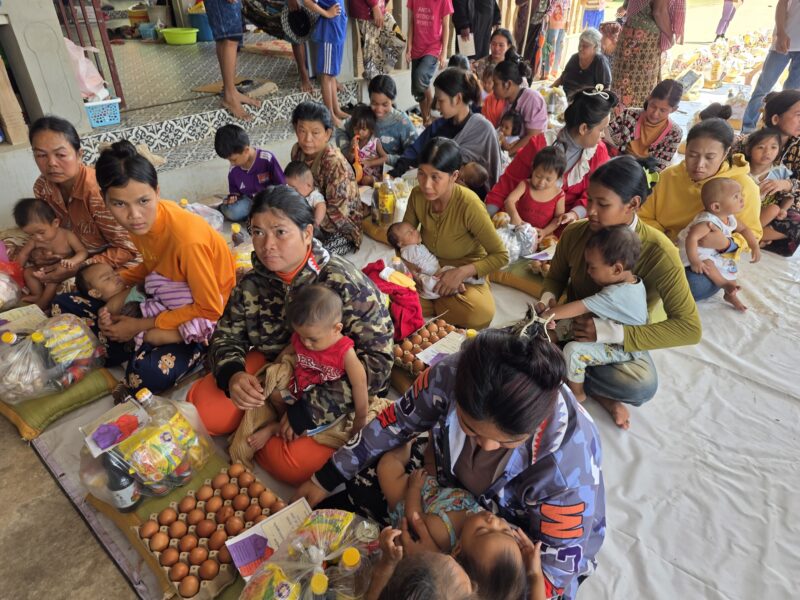
Children still need food.
Families still need shelter.
Communities still need hope.
This is where the church has a unique calling.
Christians cannot solve every geopolitical dispute. But we can respond with compassion when human suffering follows in the wake of conflict.
Throughout history, believers have often been the first to arrive when disaster strikes—bringing not only practical help but also the message of Christ’s love.
What I saw in Cambodia was another example of that quiet but powerful witness.
A border conflict displaced hundreds of thousands of people. The world barely noticed.
But the church showed up.
And sometimes that makes all the difference.
Now we need your help to do more. I’m told that $5000 will feed those families in Wat Sompov Loun for another week. Surely we can easily raise that from those reading this article. You can send your tax-deductible gift to Christian Life Missions (our non-profit partner), and we will work through People for Care and Learning to buy more food for the refugees.
This is a way to show Christian love to this predominantly Buddhist country that is reeling from this war. Remember, Jesus said that if we do this “to one of the least of these,” it’s as though we did it unto Him. Send your best gift to Christian Life Missions at 1150 Greenwood Blvd., Lake Mary, FL 32746, and mark it “Cambodia refugees relief.”
Stephen Strang has seen major changes in the church, the culture and technology since he founded Charisma magazine in 1975. In addition to being CEO of Charisma Media, he hosts a Strang Report podcast live on YouTube and Rumble at 4 p.m. EST every Tuesday and Thursday. His important recent book, Spirit-Led Living in an Upside-World, is available wherever fine Christian books are sold including online at amazon.com.