What does the Lord mean by saying His name is I AM? He is telling us that He is the everlasting one—the true God, with no beginning and no end. He always was, He is right now and He always will be. As He explained to Moses, “I AM whatever you need, at any point in your life. That is My nature—to be for you whatever you need at any given time. My name is I AM—and I want My people to remember it.”
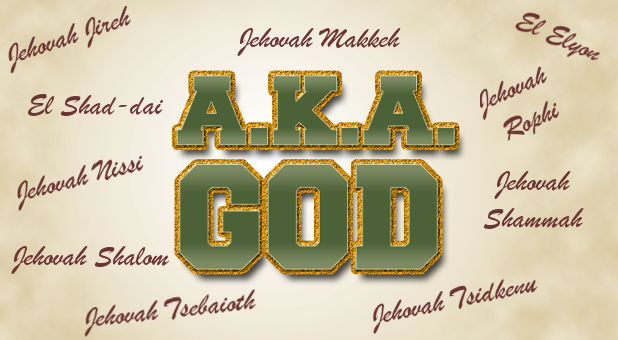
Although “I AM” is the only name God gave for Himself, the ancient Hebrews also referred to Him by several other names in order to help describe His nature and character. These names are expressions of who our Lord is and what He is like.
It is important to note that we can know someone’s name without having any clear idea of who that person is or what he is like. This is true with God also. We can memorize all of the Lord’s various names, and yet still have only the vaguest idea of who He truly is. I believe this is why He revealed His names to the Israelites during their trials and crises. He wanted them to learn every facet of His loving nature toward them, and He used difficult situations as the best way to impress truth on their hearts.
Is this not how our children get to know us? If someone were to ask my children, “Who is your father and what is he like?”, I would be grieved if all they could give were the basics: “His name is David Wilkerson. He lives in New York City and pastors a church in Times Square. During my childhood, he put a roof over my head and always put food on the table. He took care of me well.”
This says nothing about my relationship with my children. Even if they were to add, “He’s also a good father,” it would not capture what I hope I am in my relationship to them. I hope that I have been a good father to them over the years—rejoicing over them in love, being patient with their failures, available to them at all times, offering counsel and meeting their needs. Like any loving dad, I want my relationship with my children to go beyond fulfilling my duties. In fact, I want them to know me mostly by my caring heart toward them.
At times we are asked by nonbelievers, “You say you know God. Tell me, who is He and what’s He like?” All some Christians can answer is, “He’s the great I AM. He rules over heaven and earth and He sits on His throne in glory.” They have nothing to say about our heavenly Father’s loving relationship with us.
When my children were growing up, I never had to lecture them about what I am like. I never had to say, “I’m your father—I’m patient, kind, full of mercy and loving kindness toward you. I’m tenderhearted over you, ready to forgive you at all times.”
They would have laughed if I had stood up at the dinner table and made a proclamation like that. Why? My kids learned about my love for them during their crisis experiences. They saw my love toward them when they were embarrassed, hurt by life or in need of forgiveness. Now, as they are grown and married with children of their own, my sons and daughters are getting to know me through a whole new set of experiences. They are learning even more about me by my attitudes and actions toward them in this new time of need in their lives.
So it is with us in getting to know our heavenly Father. From the time of Adam down through the cross of Christ, the Lord gave His people ever-increasing revelations of His character. He did not do this simply by proclaiming who He is. He did not try to reveal Himself by announcing to Abraham or Moses:
“The following names describe My nature: El Elyon, El Shad- dai, Jehovah Jireh, Jehovah Rophi, Jehovah Makkeh, Jehovah Nissi, Jehovah Tsebaioth, Jehovah Shalom, Jehovah Tsidkenu, Jehovah Shammah, etc. Now go and learn these, and you will discover who I am.”
These Hebrew expressions do describe the wondrous glories and provisions that are wrapped up in our Lord’s character, but God revealed these aspects of His nature by actually doing for His people what He proclaimed Himself to be. Time and again He saw His children’s need, foresaw the enemy’s strategy against them and intervened supernaturally on their behalf.
David Wilkerson (1931-2011) was the founder of Teen Challenge and World Challenge and longtime senior pastor of Times Square Church. He authored more than 30 books, including the best-selling The Cross and the Switchblade and Knowing God by Name, from which this article is adapted.