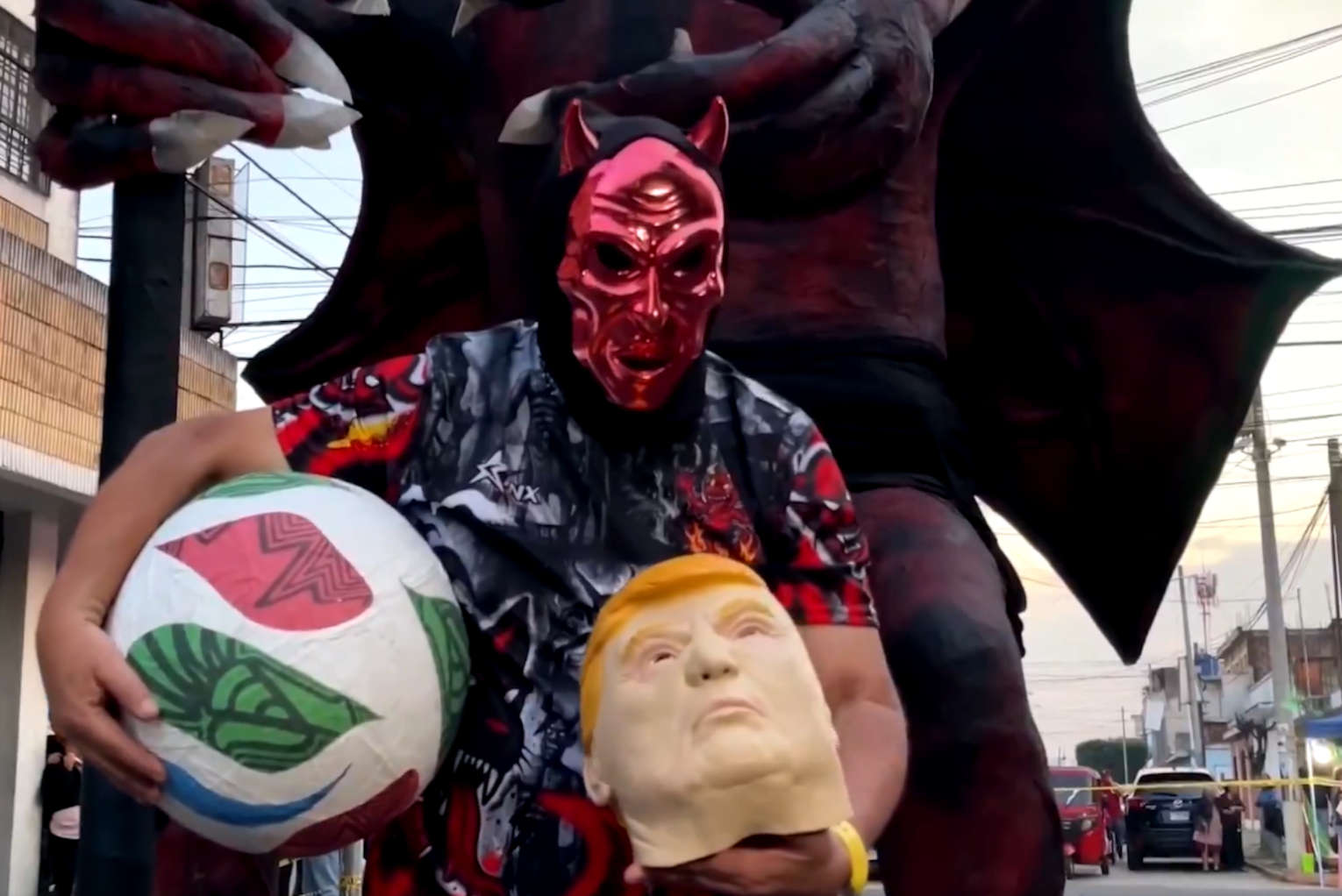

An effigy of President Donald Trump was burned in Guatemala during a ritual that observers described as disturbing, highlighting a deep-seated hostility toward the U.S. president abroad.
Footage from the incident showed the effigy set ablaze while onlookers cheered, a symbolic act intended to “put all bad things behind them,” according to Reuters, which shared the disturbing video:
The US president was selected as the character to be burned with the devil in Guatemala as part of the annual tradition to put all bad things behind them before Christmas pic.twitter.com/CK5mztTMuh
— Reuters (@Reuters) December 8, 2025
This is not the first time Guatemalans have targeted Trump in ritualistic displays. As Reuters reported all the way back in 2016, residents burned effigies of Trump as part of the same local pre-Christmas rituals.
At the time, Reuters noted that anger over Trump’s hardline immigration policies is what sparked this effigy burning.
“We are against this person in many respects, regarding deportations, the wall he wants to build. We do not agree,” one 2016 participant said.
These demonstrations appear to be fueled, in part, by the rhetoric coming from American political leaders and media, which can tacitly approve or normalize hostility toward Trump’s image.

Order Jonathan Cahn’s Newest Book, “The Avatar” on Amazon.com!
For instance, during the last administration, now-former President Joe Biden was photographed allowing his dogs to play with a Trump chew toy, a moment that critics argue contributed to the normalization of mocking the former president.
The most recent burning appears to have been carried out by community members gathering in a public square, echoing similar practices from nearly a decade ago.
Reuters noted in 2016, “Participants believe the practice of torching the devil helps banish bad spirits from their homes and neighborhoods.”
The outlet added, “The custom began in the 16th century, but has spread out from various towns since the 1990s to become popular nationwide.”
Such acts are often framed locally as symbolic purification, yet they clearly carry a strong political message aimed at American political figures.
This latest event underscores the ongoing tension between supporters and critics of Trump, illustrating how international audiences engage with U.S. political debates.
The video circulating on social media has prompted discussion about the limits of protest and the blending of cultural rituals with political statements.
Observers say such demonstrations, especially when amplified online, can influence perceptions of American politics abroad, framing Trump as a uniquely influential figure.
While Guatemalan tradition explains the ritualistic elements, the incorporation of Trump imagery highlights how U.S. political figures have become intertwined with global cultural expressions, often in controversial and sick ways.
This article originally appeared on The Western Journal and is reposted with permission.