
Members of the House Appropriations Committee and the House Foreign Affairs Committee held a joint briefing this week about the persecution of Christians in Nigeria.
In a news release about the briefing, the lawmakers noted that President Donald Trump had asked the House Appropriations Committee on Oct. 31 to investigate the persecution and share their findings.
Lawmakers heard from experts who outlined ways in which the federal government could ease the plight of Christian villagers facing attacks from Islamic militants.
Vicky Hartzler of the U.S. Commission on International Religious Freedom noted that a new wave of attacks hit Nigeria only days before the briefing.
“Just a few days ago, on November 22ⁿᵈ, 303 children and 12 teachers were abducted in an attack on St. Mary’s School, a Catholic institution in Niger State,” she said.
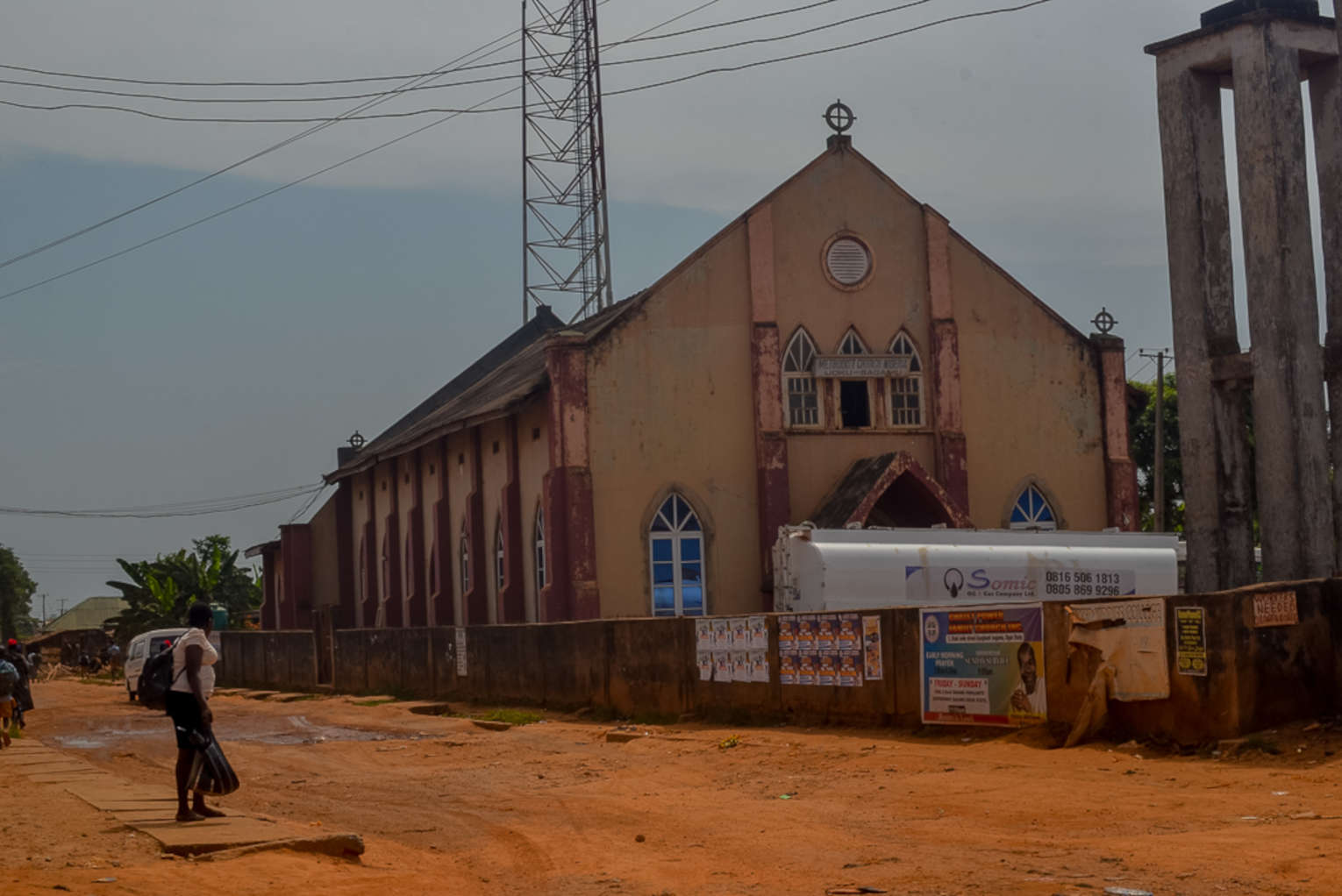
“A few days earlier in Kwara State, gunmen besieged a church and kidnapped several innocent people, including a pastor, and killed two others.”
She commended Trump for designating Nigeria a “Country of Particular Concern” with respect to religious persecution.
Hartzler recommended that “the U.S. government should also work directly with the government of Nigeria to vastly improve its accountability and transparency.”
“No one should live in fear because of how they worship.” – @MarioDB
— House Appropriations (@HouseAppropsGOP) December 2, 2025
Appropriators—including @Robert_Aderholt @RepRileyMoore—and @HouseForeignGOP led a joint briefing on the persecution of Christians in Nigeria, as they prepare a report for @POTUS.https://t.co/TRlypsrgLE
The United States could also “could also be invested in using early warning systems to reduce community violence, and the U.S. government should insist Nigerian government officials respond when there is an early warning.”
“Too many times, local villagers learn of an impending attack and reach out for protection, only to have their cries for help ignored to their ultimate demise,” Hartzler said.
Sean Nelson, senior counsel at Alliance Defending Freedom International, meanwhile, told the lawmakers that he has spoken to persecuted Nigerian Christians firsthand.
“Our cases have involved Christians unjustly imprisoned by Sharia courts, false allegations of crimes merely for evangelism or protecting Christian converts or operating charities, Christians kidnapped and tortured, girls taken from their parents and forced into marriages and forcefully converted to Islam, and both Christians and minority Muslims charged with blasphemy accusations,” he said.

Order Jonathan Cahn’s Newest Book, “The Avatar” on Amazon.com!
“I have visited with villages directly attacked by Fulani militants and witnessed the aftermath of pastors beheaded, mass graves, widows and orphans, churches and homes torched, destroyed farmlands, and the pains of mass displacement and the constant sense that Christians are defenseless against these religiously-motivated attacks, and that the government has regularly failed to protect them.”
Ebenezer Obadare, a senior fellow at the Council on Foreign Relations, said that Islamic terror, especially from Boko Haram, is driving the persecution.
“Boko Haram’s barbarous and implacable campaign to overthrow the Nigerian state and establish an Islamic caliphate in its stead is the source of Nigeria’s present discontents,” he remarked.
“Every proposal to solve the Nigerian crisis that does not take seriously the need to radically degrade and ultimately eliminate Boko Haram as a fighting force is a non-starter.”
This article originally appeared on The Western Journal and is reposted with permission.