
History continues to prove to be more fascinating each and every day.
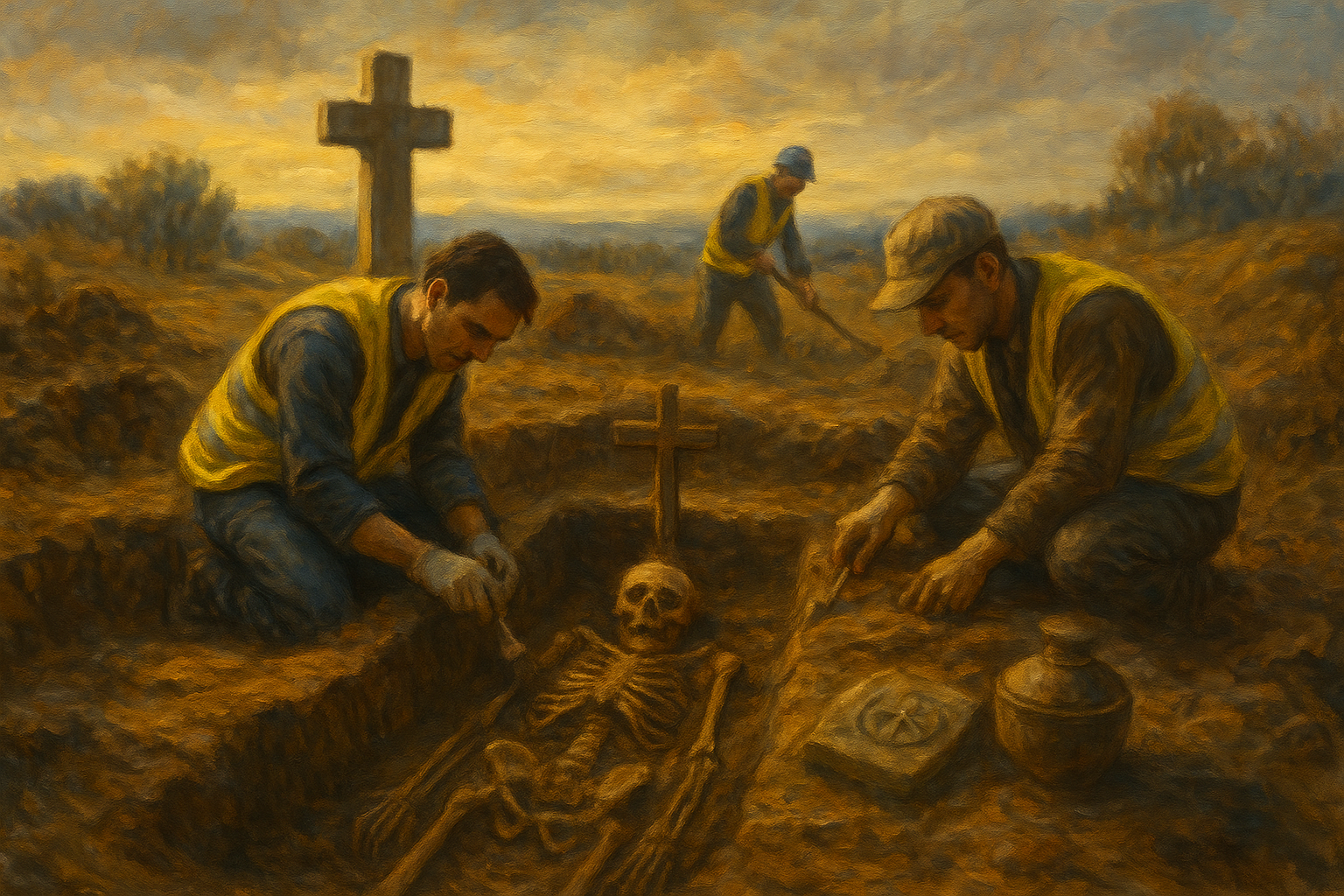
According to Fox News, archaeologists in Europe found a historic grave that was first uncovered over a 1,000 years prior. The dig was located at the Nowy Chorów cemetery in Poland, and it is believed that this site was owned by an upper class person.
Breaking News. Spirit-Filled Stories. Subscribe to Charisma on YouTube now!
One of the most intriguing factors is that the graves were “reopened within a generation, with cremated remains laid directly over emptied burials,” as Fox notes, showing that this was likely due to the grave being reused, not robbed. In fact, this likely happened largely due to incoming rituals that were trying to “correct” burials and help the dead in the after life. This signals a use of both Christian and pagan rituals that were taking place during the medieval period in European history.
Sławomir Wadyl, who is an archaeologist with the University of Warsaw, said that the bodies facing east-to-west with less elaborate grave items in their tomb point to the influence of Christian burials, with their bodies lined up by their heads, not their feet. However, cremation, and symbolism with the burial sites mimic pagan traditions.

Pre-order Jonathan Cahn’s Newest Book, “The Avatar” on Amazon.com!
Wadyl said he believes this is “one of the most fascinating aspects of this project.” He also noted that “…these were not fully Christian or fully pagan burials… They represent a blended, transitional funerary tradition, which is why this cemetery is so significant.”
He points to this being during a shift from paganism to Christianity in the wider culture.
“It’s about a community living through a time of profound change… from pagan to Christian belief, from tribal structures to early states, from old traditions to new identities.”
Join Charisma Magazine Online to follow everything the Holy Spirit is doing around the world!
This discovery highlights how history preserves the story of human transition, belief and identity. Far from being a simple burial ground, it stands as evidence of a cultural shift that shaped the spiritual and social foundations of Europe, reminding us that even in death, people carried the marks of change that defined their time.
Abby Trivett is content development editor for Charisma Media.