

Something extraordinary is happening in the heart of Israel—and for many, it feels deeply prophetic.
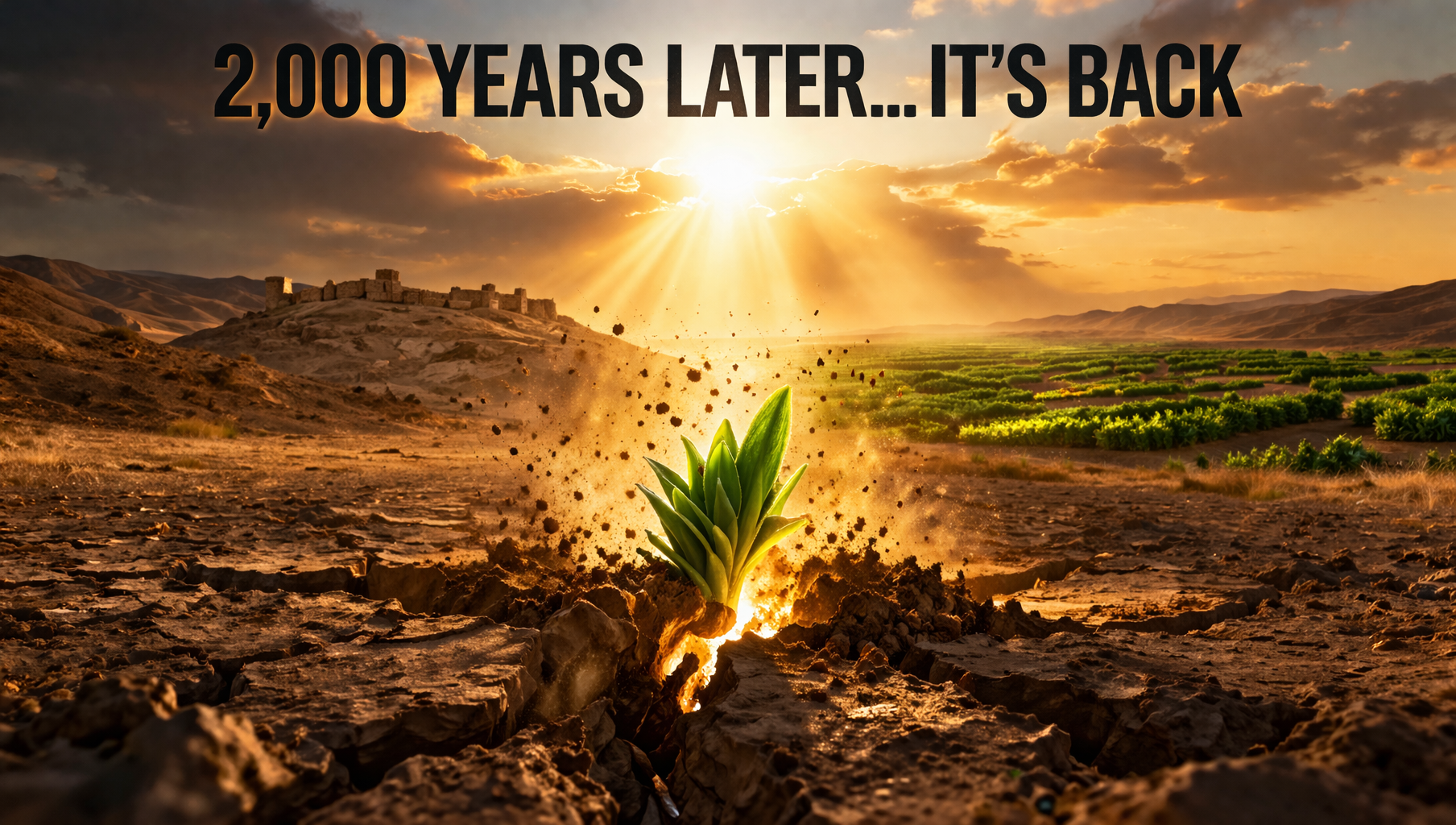
From the Negev Desert, Israeli tour guide Yoav Rotem shared with CBN News what he calls a “super exciting” discovery: a tree grown from a 2,000-year-old seed, dating back to the time of Jesus and the fall of Jerusalem.
“Right over here behind me, there’s a fascinating story… they plant this tree behind me,” Rotem explained. “This is Methuselah, the tree that sprouted in 2005… We are having here the oldest seed that ever sprouted.”
A Miracle Rooted in History
The story begins in the 1960s, when archaeologists excavating Masada—the famed stronghold tied to Jewish resistance against Rome—discovered ancient date pits.
These seeds sat dormant for two millennia.
Then, in 2005, scientists at the Arava Institute successfully revived one.
“Date pits from 2,000 years ago… and that’s very exciting,” Rotem said. “Scholars… actually managed to sprout one of these date pits.”
The result was Methuselah—a living link to biblical times.
To order Dinesh D’Souza’s new book, The End of Time, visit Amazon.com.
Though initially disappointing as a male tree that could not bear fruit, later discoveries changed everything.
“Among them, two female trees… If you have female trees and a male tree, you can have fruits,” Rot said. “We can have today right over here some dates from 2,000 years ago.”
A Biblical Symbol Reborn
This isn’t just a scientific breakthrough—it’s a spiritual sign.
“The date palm tree is going with the land of Israel… it’s connected to God. It’s connected to promise,” he said.
He pointed to Scripture, noting, “In the book of Psalms… the righteous is referred to as a palm tree that is blooming.”
He also highlighted how palm trees appear in the future temple described in the Book of Ezekiel and were central to Israel’s identity.
Even the “honey” of the Promised Land, he explained, was not bee honey—but date syrup.
“The biblical honey is date syrup… This is the honey of the land,” Rotem said.
From Destruction to Restoration
The symbolism deepens when considering the tree’s origin.
“These pits [are] from the time of the destruction… and what’s going on here? It’s blooming. It’s sprouted,” Rotem said.
He connected this directly to Israel’s history and prophetic restoration:
“Think of the Jewish people… the destruction… the Jews are kicked out of Judea… but then 2,000 years later, we have something huge that is happening here in the land.”
Referencing the vision of dry bones in the Book of Ezekiel 37, he added:
“Our hope is gone… and then God is bringing them back to life.”
The Desert Is Blooming
Beyond one tree, Rotem says the transformation of Israel itself points to something greater.
“When you drive… you see carpets of green,” he said. “The desert becoming a farmland… only prophecy can describe.”
He pointed to Isaiah’s words about the desert flourishing, saying what is happening today is “unbelievable… part of maybe prophecy that is being fulfilled right now.”
Despite ongoing conflict, he remains hopeful:
“With all of that… we’re going to get peace. We pray for peace… and it will come.”
From a seed buried in the ashes of destruction to a tree now bearing life again, the message is hard to ignore.
What once symbolized defeat has become a sign of renewal.
And in the deserts of Israel—both physical and spiritual—something ancient is blooming once again.
Abby Trivett is a writer and editor for Charisma Media and has a passion for sharing the gospel through the written word. She holds two degrees from Regent University, a B.A. in Communication with a concentration in Journalism and a Master of Arts in Journalism. She is the author of the upcoming book, The Power of Suddenly: Discover How God Can Change Everything in a Moment. For interviews and media inquiries, please contact [email protected].