
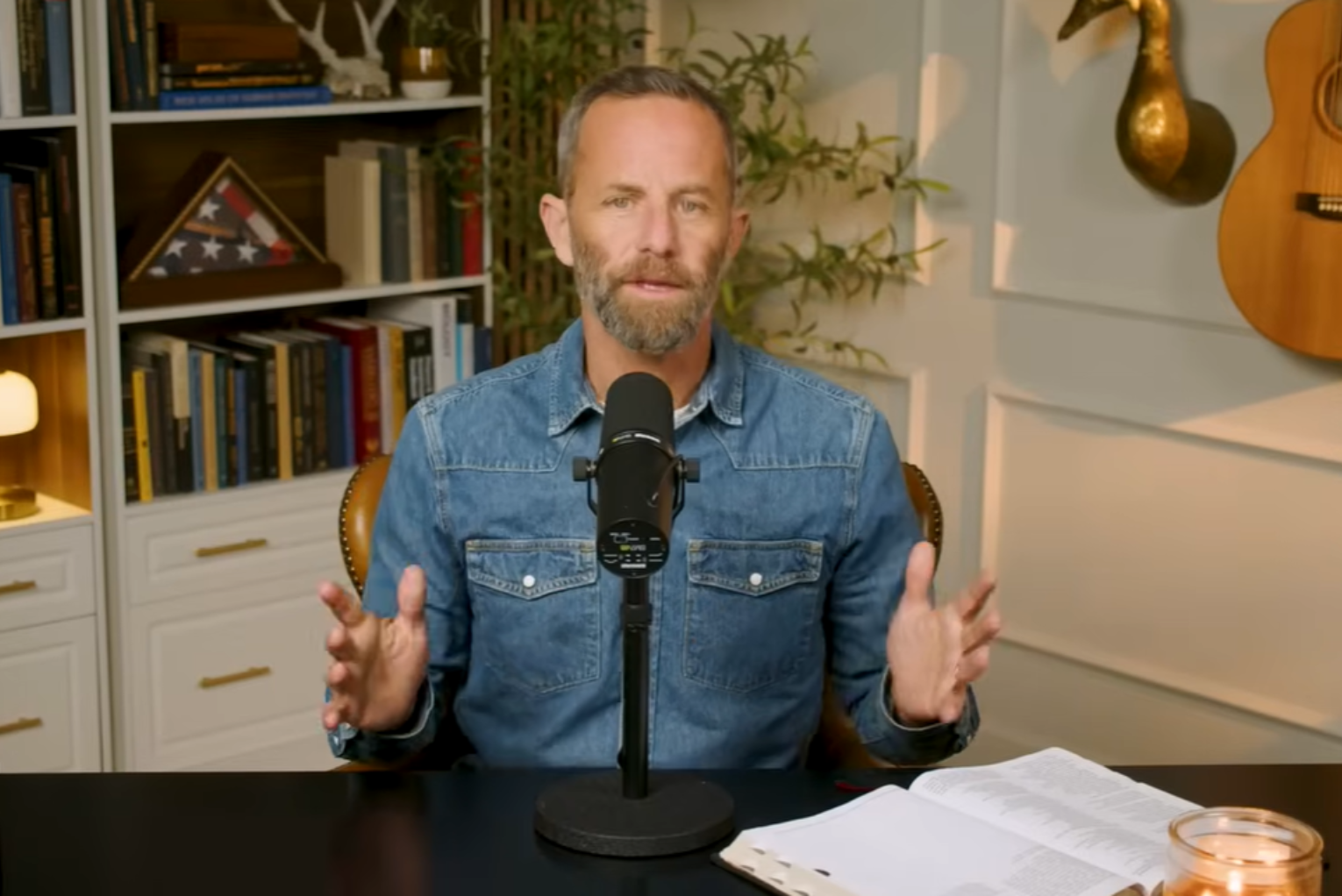

After sparking significant controversy over the topic of hell, Kirk Cameron has responded to critics’ comments about his stance.
In a recent episode of The Kirk Cameron Show, Cameron explained that the controversy began with a personal question posed by his son, James. “When an unrepentant person who doesn’t turn to Jesus dies, what does the Bible actually say happens to them?”
That conversation quickly spread across social media after Cameron questioned the principle of conscious eternal torment, drawing sharp criticism. Cameron said he was accused of “denying hell,” “denying judgment,” and even “denying the faith that was once for all delivered to the saints.”
Cameron emphasized that he did not approach the topic casually. “I sought counsel. I took the advice of my pastor,” he said, adding that he also consulted his wife and other Christians he looks up to before making the discussion public. “I wanted to be careful. I wanted to be faithful.”
Addressing the core accusation directly, Cameron stated plainly, “I believe in hell. I believe in judgment. I have not denied the authority of Scripture.”
What he said he did acknowledge was “an honest theological question” that Christians have debated for centuries: how Scripture describes the final fate of the unrepentant.
Much of the confusion, Cameron said, centers on the doctrine often called conditionalism or annihilationism. He clarified that the view does not teach that sinners “poof disappear” at death.
Instead, he says it begins with the belief that human beings are mortal and that immortality is a gift given by God through Christ. “He who believes in the Son shall not perish but have eternal life,” Cameron said, emphasizing that judgment, accountability and punishment remain central to the view.
Where Christians differ, he explained, is not whether judgment occurs, but what Scripture says is the final outcome. Conditionalism holds that after full and just punishment, the unrepentant experience “the second death.”
Cameron then affirmed deep respect for proponents of the traditional doctrine of eternal conscious torment. He named figures such as Augustine, Charles Spurgeon, John Wesley, R.C. Sproul, and John MacArthur, saying his respect for them “has not diminished at all.”
Cameron also pointed to historical voices—including early church figures and Reformers—who questioned assumptions about natural human immortality. “When I ask questions about how the Bible describes final judgment, I am not rejecting orthodoxy,” he said.
As the debate continues, Christians should look to the Scripture to see that hell is a real place, with real torment, that promises an eternal separation from God and His goodness.
Prepared by Charisma Media Staff.



























We pray for Kirk Cameron to receive wisdom from on high… for his ministry to be true in the sight of the Lord.
Kirk’s response would make sense if Hell was designed to hold humans by default but as scripture tells us blatantly through the words of Jesus Himself: Hell is the eternal prison for Satan and his angels first and foremost which wile they are not eternal beings are in fact everlasting beings aka they have a defined beginning but no ending to their lives. 40And the King shall answer and say unto them, Verily I say unto you, Inasmuch as ye have done it unto one of the least of these my brethren, ye have done it unto me. 41Then shall he say also unto them on the left hand, Depart from me, ye cursed, into everlasting fire, prepared for the devil and his angels: Matthew 25 This is the judgement of the sheep and goats which takes place after Armageddon concludes. Couldn’t be more plain than that.