

As technology changes, so does the job market. Two centuries ago, most low skilled workers would have found work as farmhands, while a century ago they would have been employed in a factory. Today they are most likely to work in the service industry, whether in retail, food service, janitorial services or as personal care aides in a nursing home or hospital.
As I have written before, these jobs are often important stepping stones to better ones, even if they do not offer a direct path to advancement.
Low skilled jobs still teach workers how to follow instructions and become reliable, polite employees; these are habits that will greatly increase their chances of being hired again at a potentially higher wage.
Unfortunately, technology has marched forward at such a remarkable pace that even low skilled work is quickly becoming out of reach for many Americans. Jobs that once required only the ability to work with one’s hands—an entry level auto-mechanic or a server in a restaurant—now demand computer skills as a basic requirement. In her book The Working Life: The Labor Market for Workers in Low-Skilled Jobs, Nan L. Maxwell explains:
“Over the past few decades, the economic prospects for workers possessing relatively few skills have worsened as the demand for skills in the labor market has increased. Even in jobs that might be categorized as low-skilled, workers require a diverse set of skills to succeed. Many of these skills can only be obtained through schooling or job training. This is why workers lacking skills find it difficult to attain a foothold in the labor market and why employers have difficulty filling low-skilled jobs.”
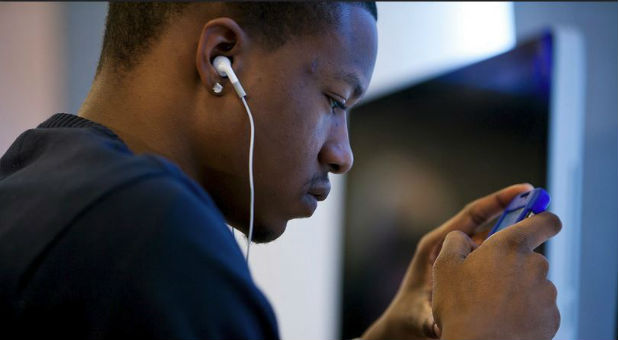
The gulf between those who are comfortable using computers and those who are not is often called the “digital divide.”
According to Child Trends, 93 percent of Asian children and 91 percent of white children have computers in their homes, compared to only 74 percent of black children and 69 percent of Hispanic children. And today, the opportunities lost to those on the wrong side of that divide are greater than ever. Unfortunately, the issue often gets insufficient attention, because many confuse Internet access with computer literacy.
An Associated Press article last month declared confidently, “No Digital Divide Among Black, White Millennials.” It detailed the results of a study that showed that the percentage of blacks ages 18 to 34 who get most of their news from online sources (66 percent) is roughly equal the that of the general population in that age group (64 percent) who get their news from the Internet, including YouTube videos. Unfortunately, many have learned to be entertained by the Internet without learning how to use it to further their education and careers.
The skills required to search for a job and apply for an entry level position are now beyond the reach of many who have theoretical access to computers at public libraries. People can watch videos on YouTube without knowing how to search effectively for a local position that suits their skill set or feeling comfortable completing and submitting an online application or resume.
A couple of decades ago, it was not uncommon for a young person or an adult to be able to obtain part time work doing odd jobs in a neighborhood. Some might even build a viable lawn care or landscaping business that way. Now even small businesses are expected to have a strong presence on the Internet and must be able to respond to emails as well as phone calls.
While some clamor to raise pay for lower skilled work, another consequence of the technological boom that disproportionately affects lower skilled workers has been the trend toward automation: machines doing what human employees used to do. This is nothing new.
We all know that many jobs once performed by human beings on assembly lines in factories are now performed by robots. However, more recently, fast food chains like McDonalds have introduced ordering kiosks, replacing cashiers. Many analysts have pointed to rising minimum wage levels in some cities as the catalyst for automating food service and other customer service jobs.
I believe there is a great opportunity for churches and community organizations to make a tremendous difference in the lives of children and adults stuck on the wrong side of the digital divide. In addition to providing computer access, churches can provide mentors and teachers to help workers increase their comfort level with basic computer skills. They can also help them take advantage of the growing number of universities are offering free online courses, as well as organizations like Khan Academy that offer academic instruction in a variety of subjects for free.
The digital divide is real, but I believe it can be narrowed and eliminated one community at a time.