

All over the planet, nature is starting to behave in some very unusual ways. And unfortunately for us, a lot of the changes that we are witnessing in nature are quite detrimental for humanity. Of course, the truth is that we haven’t exactly been too kind to the planet that we are living on. In fact, many would argue that we are in the process of absolutely devastating the Earth, and most of us don’t feel bad about that at all. So could it be possible that it is now payback time?
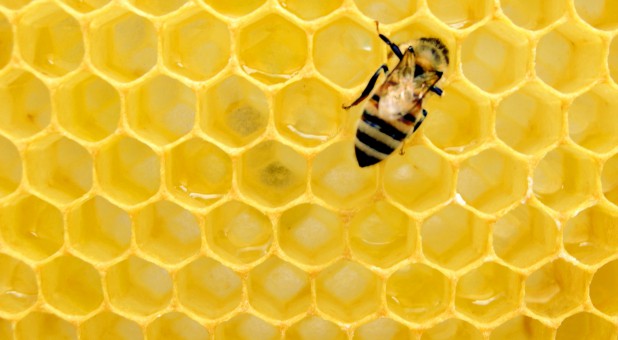
Let me give you just one quick example of how we are destroying the planet. According to a recent survey of U.S. beekeepers, an astounding 37% of all honeybee colonies were lost over the winter:
Every year since 2006, the University of Maryland’s nonprofit Bee Informed Partnership (BIP) conducts an annual survey to determine how many bee colonies were lost over the course of the year. The 2018–2019 survey asked 4,696 U.S. beekeepers to report how many colonies they lost, and the preliminary results of the survey suggest that things aren’t looking so good.
Of the more than 319,000 managed bee colonies in the survey, 37.7 percent were lost over the winter. This represents the largest die-off since the survey began, and a full 7 percentage points higher than the previous year. Having fewer honeybees is more than just an ecological problem, it’s also an economic one: Every year, honeybees contribute a nearly $20 billion value to U.S. crop production.
Of course we don’t have to look too far to find the culprit. We are the ones who are killing off all the bees, and in the process, we are setting the stage for an unprecedented ecological disaster, because if all the bees suddenly vanished, human civilization would not last much longer at all.
In the end, we will be held accountable for what has been entrusted to us, and it appears we are starting to get what we deserve.
The following are 10 signs that nature has turned against humanity:
1. In the middle of the country, farmers are freaking out because giant black vultures are literally eating their farm animals alive. And since the vultures are federally protected, the farmers can’t do anything about it:
They’ll devour slimy newborn calves, full-grown ewes and lambs alive by pecking them to death.
First the eyes, then the tongue, then every last shred of flesh.
And there isn’t much defense against black vultures and turkey vultures, both of which are federally protected and cannot be killed without a permit.
2. All up and down the East coast, Americans are becoming the victims of flesh-eating bacteria when they go into the water. Here is one recent example from Florida:
A woman who cut herself while walking along the water on the Florida beach she loved died after contracting necrotizing fasciitis, becoming the latest victim of the flesh-eating bacteria.
Lynn Fleming, from Ellenton, about 15 miles north of Sarasota, fell and cut herself while she was walking at Coquina Beach on nearby Anna Maria Island two weeks ago.
At this point things have gotten so bad that the CDC is telling people with open wounds “to avoid bodies of water, especially swimming pools and hot tubs.”
3. For decades, cockroaches have been multiplying despite our best efforts to eradicate them with insecticides. But now they are developing resistance to our insecticides, and researchers are warning that this will make them “invulnerable”::
The day that squeamish humans—and exterminators—have long feared may have come at last: Cockroaches are becoming invincible. Or at least German cockroaches (Blattella germanica) are, according to a new study. Researchers have found that these creatures, which have long been a prevalent urban pest, are becoming increasingly resistant to almost every kind of chemical insecticide.
Not all insecticides are created equal. Some degrade the nervous system, whereas others attack the exoskeleton; they also have to be left out for varying amounts of time. But many insects, including cockroaches, have evolved resistance to at least one of the most commonly-used insecticides.
4. Last week it was hotter in some parts of Europe that it has ever been before. In fact, in one region in France the temperature actually hit 114 degrees Fahrenheit:
Hundreds of firefighters battled on Saturday to contain wildfires in southern France as a stifling heatwave brought record-breaking temperatures to parts of Europe, killing at least three people in Italy.
In the Gard region, where France’s highest temperature on record was registered on Friday at 45.9 degrees Celsius (114 degrees Fahrenheit), scores of fires burned some 600 hectares (about 1,500 acres) of land and destroyed several houses and vehicles, emergency services said.
5. Along the California coastline, temperatures have been so hot that mussels have actually been “roasting in their shells”:
A record-breaking June heatwave apparently caused the largest die-off of mussels in at least 15 years at Bodega Head, a small headland on the northern California bay. And Sones received reports from other researchers of similar mass mussel deaths at various beaches across roughly 140 miles of coastline.
While the people who flocked to the Pacific to enjoy a rare 80 F. beach day soaked up the sun, so did the mussel beds—where the rock-bound mollusks could have been experiencing temperatures above 100 F. at low tide, literally roasting in their shells.
6. And of course the East coast is not being left out either. According to meteorologists, some portions of the East coast could see heat index values hit 110 degrees “as early as Wednesday”:
Another round of oppressive heat is already in the forecast this week for the East coast with oppressive heat index values on the way for the parts of the Southeast by midweek. Heat index values could approaching 105 to 110 degrees in parts of the region as early as Wednesday.
Major cities from North Carolina to New Jersey will see a long stretch of temperatures at or above 90 degrees, which means another heat wave is on the way for cities like Philadelphia and Washington, D.C.
7. Thanks to the unusually high temperatures, wasp’s nests are absolutely thriving across the southern United States. In fact, one expert anticipates that there will be dozens of “super nests” in his area this year:
Warmer winters contribute to these nests, Mr. Ray said. Most yellow jackets don’t survive the cold months because they freeze to death or have trouble finding food. They need a fair amount of sugar and carbohydrates, he said.
“The queens are the only ones who have an antifreeze compound in their blood,” Mr. Ray said. “So normally, a surviving queen will have to start a colony from scratch in the spring. With our climate becoming warmer, there might be multiple surviving queens producing more than 20,000 eggs each.”
8. Meanwhile, the middle of the country is being absolutely hammered by the wettest year that it has ever experienced. And just when you thought that it couldn’t possibly get any wetter, more storms are scheduled to come rolling through:
But a new system was moving through the Northern Plains Sunday morning and already bringing some severe storms to Minnesota.
The system will attempt to bring some cooler air down from Canada, which will interact with the heat situated in the Midwest and spark storms across parts of the Plains and the Midwest, from Wyoming to Illinois.
9. In recent months we have also seen unusually large hail absolutely hammer communities all over the country. For example, it is being reported that some portions of Montana were just hit with “baseball-sized hail”:
Thunderstorms that moved through southwestern Montana dropped baseball-sized hail in western Powder River County and golf ball-sized hail as the storm moved to the east.
The National Weather Service reports Wednesday night’s storm left behind broken windows and damaged crops.
Baseball-sized hail fell near Moorhead, a community about 35 miles southwest of Broadus, while Broadus recorded a 70 mph (113 kph) wind gust. Communities just north of Moorhead reported golf ball-sized hail.
10. Needless to say, all of this wet weather has just continued to feed the unprecedented flooding that we have seen along our major rivers. At this point, we are being told that the horrific flooding along the Mississippi River may go beyond the end of the summer:
The 2019 Mississippi River flood fight is going to slog deep into the summer—and maybe much longer.
While communities north of St. Louis are beginning the expensive path to recovery after record-breaking winter and spring precipitation and runoff, people below the Missouri River are shoveling mud from their houses and praying for a dry spell.
The Lower Mississippi Valley remains in a flood crisis as high water continues to swamp streets, homes, businesses, sewage and water treatment plants, and farm fields, including across some of the poorest counties in the United States.
These are 10 examples that have just been in the news during the past few days. If I wanted to cover all of the unusual events that we have witnessed so far in 2019, I would have to write an entire book.
The truth is that global weather patterns are dramatically shifting and our planet is becoming increasingly unstable. And no matter how hard humanity tries to find solutions, the reality of the matter is that things are going to continue to get worse.
We have passed the tipping point, and we are starting to experience the consequences for decades of exceedingly foolish decisions.
We have entered the time of “the perfect storm,” and everything that can be shaken will be shaken.
This article originally appeared on the End of the American Dream blog. Reprinted with permission.