

If you’ve spent any time around the prophetic ministry in your Christian journey, chances are you’ve heard some strong and sometimes alarming words thrown around. Terms such as false prophet, wolf in sheep’s clothing, or even snake oil salesman. And those are just a few of the labels people use.
But let’s pause for a second and really ask: What do those phrases actually mean? What does a false prophet really look like? How do we distinguish between the real gift from God and the counterfeit from the enemy?
In Matthew 7:15–16, Jesus gives us a serious warning: “Beware of false prophets, who come to you in sheep’s clothing, but inwardly they are ravenous wolves. You will know them by their fruits.” That’s a powerful image. It tells us that false prophets aren’t necessarily easy to spot, and they don’t come wearing red flags or carrying signs that say, “Hey, I’m here to deceive you!” No, they blend in. They look, act, and even sound just like the rest of the flock. But underneath that harmless appearance is a very different nature: one driven by selfish motives and spiritual manipulation.
When Jesus says they’re dressed like sheep, He’s saying they seem like one of us. They’re part of the community doing what everyone else is doing, maybe even leading or prophesying in God’s name. But deep down their hearts are not aligned with God. They are opportunists, waiting for the right moment to exploit others, often for personal gain, power, money, or recognition.
If only they looked obviously dangerous or out of place, it would be much easier to tell them apart. But the truth is that they walk like sheep and talk like sheep, so they fit right in. The only real way to spot them is by looking at their fruit, their actions, the results of their ministry and the character they display over time.
We need to look with spiritual eyes and have ears to hear. We cannot look as the world looks. We need to discern and perceive as the Holy Spirit leads us. That way, we won’t be deceived by just the outward appearance of a man or woman or be led by their smooth words.
I remember having a conversation with someone who was particularly vocal about this issue. He was going off, criticizing all sorts of people in the prophetic ministry and labeling them as false prophets. I agreed with him to a point. Yes, there are false prophets, and especially in these last days, we need to be discerning.
But I asked him a simple question: “If you’re so confident about who’s false, can you name five true prophets today?”
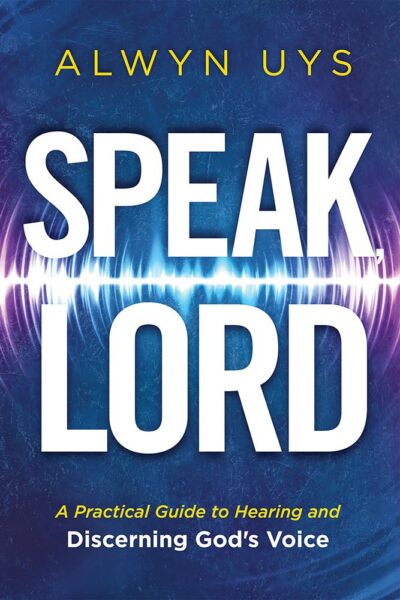
Order Alwyn Uys’ New Book, “Speak Lord” on Amazon.com!
He fell silent. He couldn’t name even one. It wasn’t because true prophets don’t exist, but because he was so focused on calling out the counterfeit that he never took time to recognize the real.
Just because there are fakes out there doesn’t mean the genuine doesn’t exist. In fact, the existence of a counterfeit only proves there is something real and valuable worth imitating. The prophetic is still very much alive today. There is no solid biblical evidence to support that prophecy and the ministry of prophets ended with the apostles. God still speaks, still moves and still raises up prophets today.
If we really want to spot the false, we have to first become familiar with the real. Think about how bank employees are trained to detect counterfeit money. They don’t spend all their time studying fake bills. Instead, they become experts on the real thing. They learn every tiny detail of an authentic bill: the feel, the look, the print and the security features. That way, when a fake shows up, even one that’s close to the real deal, they immediately recognize that it’s not.
There can be thousands of ways to fake a hundred-dollar bill, but there’s only one true version. The more you know the authentic, the easier it is to spot the fake.
It’s the same with the prophetic. There are all kinds of twisted and false versions out there, imitations that look spiritual on the outside but are not born of God. The enemy has always tried to counterfeit what God has created. But here’s the thing: Satan is not a creator. He can’t make anything new. All he can do is mimic, distort and corrupt what God has already made. Only God, through His Spirit, can give the true prophetic gift.
As believers, God has given us the gift of discernment. It’s a spiritual sensitivity to help us distinguish what’s real from what’s fake, what is of God and what is not. And the best way to sharpen that discernment is by drawing closer to Jesus, knowing His Word, listening to the Holy Spirit, and staying grounded in truth. When we know what is real, we won’t be so easily fooled by the counterfeit.
Balaam: A Prophet for Profit
In the Book of Numbers chapter 22, we encounter a man named Balaam, a figure who presents himself as a prophet of God but whose actions reveal a very different reality. His story stands as a sobering lesson in how greed and the lust for honor can corrupt even those who claim to speak on behalf of the Lord.
Balaam lived in the distant region of Pethor, which is near the Euphrates. His reputation as a spiritual figure, a man who could bless or curse with power, had reached across kingdoms. When the people of Israel came out of Egypt and camped on the plains of Moab, fear gripped the heart of King Balak of Moab. Israel’s numbers were vast, and its victories over surrounding nations were well known.
Desperate and intimidated, Balak sent a delegation of elders to Balaam with a simple but dark request: “Come at once, curse this people for me, for they are too mighty for me. Perhaps I shall be able to defeat them and drive them out of the land” (Num. 22:6).
To his credit, Balaam did not immediately agree. He told the messengers, “Lodge here tonight, and I will bring back word to you, as the Lord speaks to me” (v. 8). That night God made His will unmistakably clear: Balaam was not to go with them, and he was certainly not to curse the people of Israel, “for they are blessed” (v. 12).
But the real test came not in the initial refusal but in what happened next.
Unwilling to take no for an answer, Balak sent another group of messengers. This time, they were more numerous and far more distinguished. They were nobles of higher rank. Along with them came the promise of greater rewards should Balaam agree to fulfill the king’s request (vv. 15–17).
Balaam responded with pious-sounding words: “Though Balak were to give me his house full of silver and gold, I could not go beyond the word of the Lord” (v. 18). But his actions betrayed his heart. Instead of sending the messengers away, he entertained them. He invited them to stay another night so he could inquire of God again, as if God’s command had somehow changed (v. 19).
This is where we begin to see the true condition of Balaam’s heart. Though he spoke spiritual language, what he really desired was the reward. Apostle Peter later exposes this in the New Testament, warning believers against those who have “forsaken the right way and gone astray, following the way of Balaam the son of Beor, who loved the wages of unrighteousness” (2 Pet. 2:15).
That night, God allowed Balaam to go, but it was not approval. It was permissive will, not perfect will. Balaam’s persistence revealed his motive, and God’s anger was kindled (Num. 22:22).
As Balaam set out with Balak’s princes, God sent an angel to oppose him on the road. Ironically, it was Balaam’s donkey, not the so-called prophet, who saw the angel of the Lord standing with a drawn sword. The donkey veered off the road, crushed Balaam’s foot, and finally lay down beneath him. Enraged, Balaam beat the animal until God opened the donkey’s mouth, allowing it to speak in rebuke (vv. 28–30). Then God opened Balaam’s eyes, and he finally saw the angel blocking his path.
This moment was more than just miraculous. It was humiliating. The man who claimed to see divine things was blinder than his own donkey. Though God spared his life and permitted him to continue, the incident exposed just how spiritually compromised Balaam had become.
When Balaam eventually reached Balak, he did not pronounce curses over Israel as the king had hoped. Instead, under God’s control, he blessed Israel multiple times. (See Numbers 23–24.) Yet even in this, his heart was not fully submitted to the Lord. His outward obedience was not matched by inward loyalty.
Later in Scripture, we learn of Balaam’s final betrayal. In Numbers 31:16, Moses reveals that it was Balaam who advised Balak to seduce the Israelites with sexual immorality and idolatry, leading them into sin and invoking God’s judgment upon His own people. Balaam had found another way to earn his reward: by corrupting Israel indirectly. His manipulation led to a plague that killed 24,000 Israelites (Numbers 25).
Eventually, Balaam’s story ends in judgment. During Israel’s war against Midian, he was killed by the sword (Num. 31:8). It was a tragic ending for someone who once claimed to speak for God.
Balaam stands as a tragic example of a prophet whose gifting was not matched by godly character. Though he appeared to seek God’s will and even uttered words of truth under divine compulsion, his heart was far from loyal to the Lord. The clearest evidence of this is seen in his persistent desire for the honor and riches offered by King Balak.
Despite God’s clear instruction not to go and not to curse Israel because they were blessed, Balaam entertained the king’s offers not once but repeatedly, hoping that God would eventually allow him to profit from the assignment. His lips said, “I could not go beyond the word of the Lord” (v. 18). But his actions revealed a man who was hoping God would change His mind just so Balaam could get paid.
This contradiction in Balaam’s life is what makes him the quintessential false prophet. He did not reject God outright. In fact, he used spiritual language, claimed to wait on God, and gave the appearance of obedience. But inwardly, his affections were set on reward, not righteousness.
Scripture does not leave this hidden. In 2 Peter 2:15 (NIV), Peter exposes Balaam for who he truly was: a man “who loved the wages of wickedness.” And in Jude 1:11, his name is grouped with those who corrupt the way of truth for personal gain. Balaam’s downfall was not his ability to prophesy but the motives behind his ministry. He was willing to twist God’s calling for a price.
What makes Balaam’s story even more sobering is that while he technically did not curse Israel with his mouth, he devised a scheme to bring them down through seduction and idolatry (Num. 31:16). This reveals just how far he was willing to go to serve himself. When God wouldn’t let him curse Israel directly, he found another way to please Balak and secure his reward, at the cost of many lives and his own soul.
In the end, Balaam’s greedy heart led him to spiritual ruin and physical death (Num. 31:8). His story is a powerful reminder that spiritual gifts, titles, or reputations do not guarantee a heart that is right before God. A true prophet is not just someone who speaks for God but someone who walks with Him in integrity, putting obedience above opportunity and faithfulness above fortune.
The story of Balaam is more than just a historical account. It’s a serious warning to anyone who claims to speak for God but is inwardly driven by personal ambition, greed, or a desire for recognition. Balaam had a prophetic gift, yes, but his heart was not aligned with God’s purposes. He repeatedly flirted with compromise and pursued the rewards offered by men rather than the approval of God. His example shows that it is entirely possible to say the right things outwardly while harboring wrong motives inwardly.
We must not be fooled by spiritual language or public displays of power. Balaam sounded like a prophet. He even spoke blessings over Israel under the inspiration of God. But his actions later proved that he was willing to lead others into sin if it meant he could benefit personally. That’s the hallmark of a false prophet: one who uses the things of God for selfish gain, even if it costs others dearly. His path ultimately led to destruction, both for Israel temporarily and for Balaam eternally.
Today, this warning still applies. Some voices appear spiritual, gifted, and even anointed, but if the root is greed, pride or manipulation, the fruit will eventually show it. As Jesus said in Matthew 7:16, “You will know them by their fruits.” We must learn to discern not just the message but the life and motives behind it.
Balaam’s story teaches us that a prophetic gift without submission to God is dangerous. True prophetic ministry must come from a heart that fears God more than man, loves truth more than applause, and seeks obedience more than opportunity. Anything less becomes a platform for deception. Let us beware of Balaam’s path, pursuing the path of integrity, humility and unwavering devotion to the Lord.
Micaiah: A Prophet of Integrity in a Crowd of Compromise
In 1 Kings 22, we encounter a striking and dramatic scene, one that vividly contrasts the boldness of true prophecy with the deception of falsehood. At the heart of the story stands Micaiah, a little-known prophet with a powerful voice, whose unwavering commitment to God shines brightly in a room full of compromise.
The story begins with King Ahab of Israel, who is infamous for his rebellion against God, allying with King Jehoshaphat of Judah. Together, they consider launching an attack on Ramoth Gilead, a strategic city they believed rightfully belonged to Israel.
Jehoshaphat, a godly king, requests to first inquire of the Lord, saying, “First seek the counsel of the Lord” (1 Kings 22:5, NIV).
Ahab obliges and gathers around 400 prophets, who all enthusiastically declare that victory is certain: “Go, for the Lord will give it into the king’s hand!” (v. 6, NIV).
But something feels off. Jehoshaphat senses that these prophets are simply echoing what the king wants to hear. Then he asks, “Is there no longer a prophet of the Lord here whom we can inquire of?” (v. 7, NIV).
Ahab reluctantly admits there is one, Micaiah, son of Milhaupt, and then immediately follows with a confession that reveals his heart: “I hate him because he never prophesies anything good about me, but always bad” (v. 8, NIV).
This statement reveals the core issue: Ahab didn’t want the truth. He wanted affirmation.
Micaiah is summoned, but even before arriving, he is pressured by the king’s messenger to fall in line with the other prophets. The messenger urges him, “Look, the other prophets without exception are predicting success for the king. Let your word agree with theirs, and speak favorably” (v. 13, NIV).
Here we see Micaiah’s character shine. With a calm but resolute heart, he replies, “As surely as the Lord lives, I can tell him only what the Lord tells me” (v. 14, NIV).
This single sentence defines the essence of a true prophet: one who is not swayed by crowds, threats or promises of reward but stands firm in uncompromising obedience to God.
At first Micaiah mimics the false prophets, sarcastically saying, “Attack and be victorious” (v. 15, NIV). But Ahab, recognizing the mockery, demands the truth. Then Micaiah delivers a chilling vision: He sees Israel scattered on the hills like sheep without a shepherd, which is a veiled but direct prophecy of Ahab’s impending death (v. 17, NIV).
Then he pulls back the curtain on a heavenly courtroom, where God permits a lying spirit to deceive Ahab through the mouths of his prophets (vv. 19–23, NIV). This powerful vision reveals a terrifying truth: The 400 prophets were not speaking from the Spirit of God but from a spirit of deception allowed to fill Ahab’s hardened heart.
Micaiah’s words provoke outrage. The false prophet Zedekiah strikes him across the face, mocking, “Which way did the spirit from the Lord go when he went from me to speak to you?” (v. 24, NIV). Ahab, furious and unwilling to repent, orders Micaiah to be imprisoned and fed with meager rations until he returns from battle.
But Micaiah, unflinching, responds with one final, fearless declaration: “If you ever return safely, the Lord has not spoken through me.” Then he adds, “Take note, all you people!” (v. 28, NIV).
Despite the pressure of a royal court, the influence of 400 prophets, and the threat of prison, Micaiah stood alone, faithful to God, even when it cost him. He didn’t bend to political power, social pressure, or popular opinion. He was a prophet in character, not just in message.
As the chapter closes, Ahab disguises himself in battle, hoping to escape the judgment prophesied over him. But a random arrow finds its mark and pierces him fatally, proving Micaiah’s words to be true (vv. 34–37, NIV). Micaiah’s fate remains uncertain, as he’s left in prison, but his legacy endures as a prophet who chose truth over safety, obedience over popularity, and God’s voice over man’s approval.
The story of Micaiah in 1 Kings 22 is not just about prophecy. It’s about character. In a time when truth was scarce and compromise was common, Micaiah stood as a lone voice of righteousness. He wasn’t just a prophet because he could deliver a message. He was a prophet because his heart was aligned with God, and his integrity outweighed his desire for safety or acceptance.
In contrast to the hundreds of prophets who spoke what the king wanted to hear, Micaiah shows us that truth does not always come with applause. He chose to fear God rather than man. He valued obedience over opportunity, faithfulness over fame, and conviction over comfort. This kind of spiritual character is rare, but it is exactly what God seeks in those who claim to speak for Him.
The calling to be a voice for God will always come with pressure, from leaders, from culture, from peers. There will always be moments when the temptation to remain silent or to twist the truth feels easier and safer. But Micaiah’s story reminds us that truth is costly. He was thrown into prison, rejected by the king, and stood alone, yet he spoke the word of the Lord without compromise.
Today, more than ever, the church and the world need people like Micaiah, people whose character is rooted in God’s truth, who do not fear rejection, and who are willing to speak even when their voice is the only one. Being a true voice for God may cost us comfort, popularity, or even relationships, but it will always be worth it. Because in the end, the only approval that matters is God’s, and the only legacy worth leaving is one of faithfulness to Him.
Wolf or Watchman
Here’s a side-by-side comparison to help you see the difference between the real and the false:
| False | Real |
|---|---|
| Void of the fear of the Lord | Marked by the fear of the Lord |
| Speaks from the flesh and to the flesh | Prophesies the heart of God to the spirit of the believer |
| Operates with a spirit of divination | Partners with the Holy Spirit |
| Twists Scripture and prophetic words to control and manipulate | Uses the Word of God to encourage and exhort |
| Driven by greed and popularity; seeks to please man | Driven by the calling of God upon their life; seeks only to please God |
| Motivated by the applause and praise of people | Motivated by love and compassion for God’s people |
| Focus of their ministry is themselves as the anointed one; often have fanatical followers who hang on every word they speak | Focus of their ministry is always Jesus and recognizing Him as the Anointed One |
| Always draw people to their gift and themselves | Use their gifts to draw people to Jesus |
| Prostitute their gifts for monetary gain by seeking money for prayer, prophetic ministry, or “deliverance” | Understand that they have freely received, and therefore they freely give and serve God’s people |
| See themselves as spiritually superior and closer to God than the people they are deceiving | See themselves as no better than the people they are serving |
| Arrogant, prideful, and self-centered | Humble, approachable, and transparent |
| Cannot submit to authority or be corrected | Belong to a healthy community with oversight and accountability |
| Make it very clear to those around them that they are anointed by God, have special revelation, and are prophets of the Lord: “Jezebel who calls herself a prophetess” (Rev. 2:20) | Often enjoy the secret and hidden life out of the spotlight, yearning to spend as much time with God as possible |
Alwyn Uys is a former professional rugby player from South Africa who had big dreams of pursuing a career in sports until a debilitating car accident at age twenty-four left him paralyzed from the chest down. In the pursuit of normality and regaining his life, Alwyn cultivated a deep friendship with the Lord and was launched into international ministry. He now shares his testimony, preaches the gospel, and teaches others to hear God’s voice for themselves. Alwyn is a successful author, athlete, and prophetic minister who equips believers to grow in hearing God and moving in the gifts of the Spirit. His new book, Speak Lord, is available on Amazon.com.