
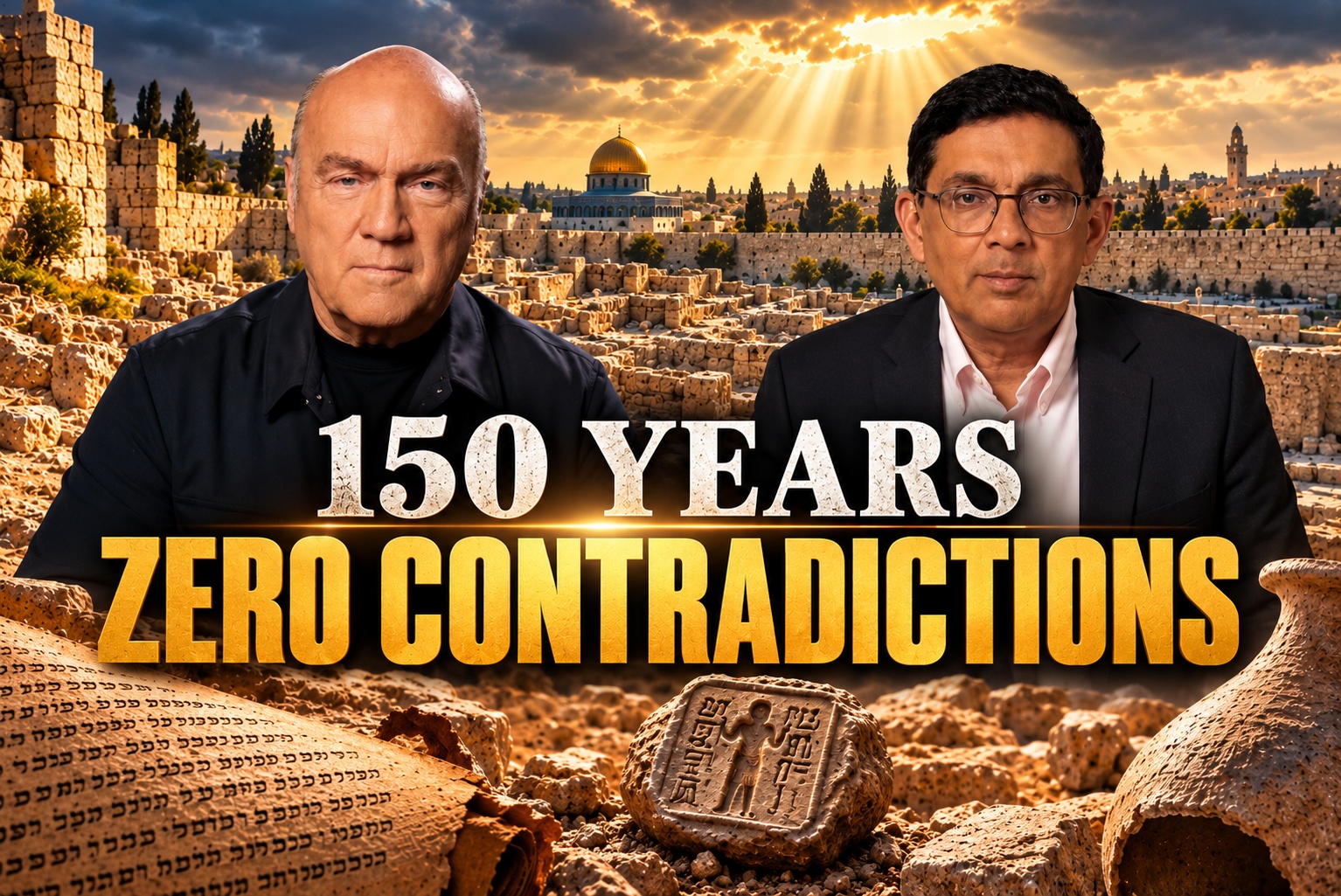
For generations, skeptics have attempted to dismiss the Bible as mythology. But Dinesh D’Souza says the archaeological record keeps presenting a very different picture.
In a recent conversation with Pastor Greg Laurie, D’Souza discussed his book, The Stones Cry Out, and the evidence he says has accumulated during roughly 150 years of biblical archaeology.
“I’m also happy to report that in 150 years, there is not a single important finding of biblical archaeology that contradicts the Bible,” D’Souza said.
D’Souza says the significance is not merely found in spectacular discoveries. Sometimes, the smallest objects unearthed from the ancient world bring people mentioned only briefly in Scripture back into view.
D’Souza pointed to tiny clay seals bearing names connected with biblical figures. An archaeologist may initially have no idea who a name belongs to, he explained, only for researchers later to discover that the individual appears in Isaiah or Jeremiah.
Suddenly, someone mentioned in only a few lines of Scripture has left a physical footprint in history.
“These real people and places and events kind of spring to life,” D’Souza said.
One example he highlighted was Caiaphas, the high priest involved in Jesus’s trial. D’Souza discussed the discovery of an ornate first-century ossuary bearing an inscription linked to the Caiaphas family, citing it as an example of archaeology intersecting with figures described in the New Testament.
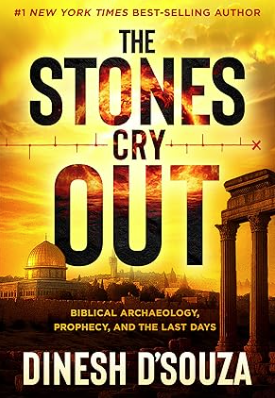
To order Dinesh D’Souza’s new book, The Stones Cry Out, visit Amazon.com.
He also turned to the places connected with Jesus’ ministry.
D’Souza discussed the Pool of Siloam and the ancient pilgrimage route leading toward the temple, noting how archaeological work has illuminated the Jerusalem that Jewish pilgrims would have encountered in the first century.
For Christians, these discoveries matter because the Gospel accounts aren’t presented as stories set in some imaginary world. They name cities, rulers, religious leaders and locations.
D’Souza also highlighted archaeological evidence connected with Balaam, son of Beor, the Old Testament figure described in Numbers. He pointed to an ancient inscription discovered in Jordan referring to “Balaam son of Beor,” noting the similarity in name, location and Balaam’s role as a religious figure.
However, D’Souza was careful not to claim that archaeology can prove every supernatural element of Scripture.
“You cannot with archaeology prove the theology of the Bible,” he said. “I’m not trying to prove the miracles.”
Instead, his argument is cumulative.
“If I can show you 100 archaeological artifacts that corroborate the Bible with not a single one going in the opposite direction,” D’Souza asked, “doesn’t that enhance the credibility of the Bible as a whole?”
Perhaps the most remarkable example he discussed was the Dead Sea Scrolls.
D’Souza noted that manuscripts discovered beginning in 1947 pushed the available Hebrew biblical textual evidence back centuries and demonstrated substantial continuity in the transmission of the Old Testament. He also pointed to the timing: The discovery came just before the modern state of Israel was established in 1948.
For D’Souza, archaeology does something profound. It places the Bible back into the physical world of history.
The stones cannot tell us everything. They cannot prove a miracle or force someone to believe.
But after a century and a half of digging, D’Souza argues they continue pointing back toward the people, places and events recorded in Scripture.
And sometimes, the stones really do cry out.
Abby Trivett is a writer and editor for Charisma Media and has a passion for sharing the gospel through the written word. She holds two degrees from Regent University, a B.A. in Communication with a concentration in Journalism and a Master of Arts in Journalism. She is the author of the newly released book, The Power of Suddenly: Discover How God Can Change Everything in a Moment. For interviews and media inquiries, please contact [email protected]. Learn more about Abby at abbytrivett.com.

The whole series of “Stones Cry Out” has been a big nothingburger. Glad that Charisma put the disclaimer at the end. Archeology shows that the places and some of the people in the Bible existed in history. That’s nice. But it doesn’t “prove” anything except that the writers of the Bible knew where these places were and who these people were.
So because Macbeth was a real person means that Shakespeare’s play is real? Or that we can physically go to Pluto’s cave (Ploutonion (Pluto’s Gate) at Hierapolis, per Google) means that it’s really a gate to Hades?