
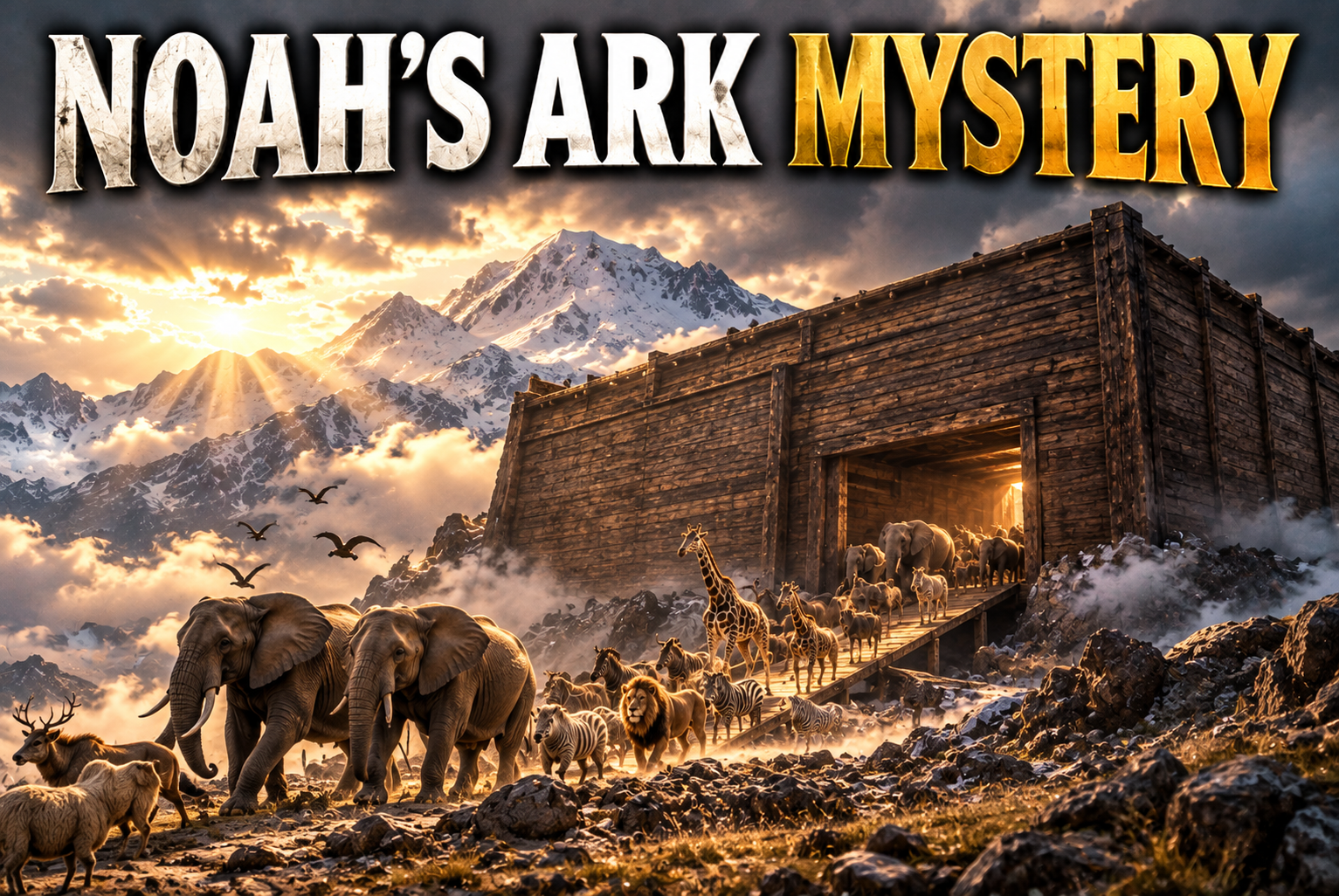
Pastor Billy Crone recently discussed the renewed fascination surrounding Turkey’s boat-shaped Durupinar formation, telling Charisma Media that he is not convinced this is the resting place of the biblical Ark.
“I’m not a big fan, based on the evidence I’ve come across, of the Durupinar site,” Crone said, stressing that Christians should be able to disagree over secondary issues without division.
Crone argues the formation is consistent with a mudflow and says similar shapes can be observed throughout the surrounding landscape. More importantly, he believes the biblical and historical evidence points higher—to the mountains of Ararat rather than the valley below.
“Historically, biblically, it’s always been the mountains of Ararat,” Crone said.
Crone also pointed to ancient writings that he says describe people traveling to see the Ark centuries before Christ. Some accounts, he said, even claimed visitors removed pieces of the structure and its tar to make amulets. He further referenced reported sightings stretching into more recent history.
Yet perhaps the most fascinating part of Crone’s argument isn’t where the Ark landed. It’s whether the enormous biblical vessel could actually have worked.

To order Dinesh D’Souza’s new book, The Stones Cry Out, visit Amazon.com.
One of the most common criticisms of the Genesis account is simple: How could Noah possibly squeeze every animal onto one boat?
Crone says that objection misunderstands the biblical text.
Genesis, he points out, speaks about animal “kinds,” not every modern species or breed. Noah would not have needed hundreds of varieties of dogs, for example. Nor would he have needed to bring aquatic animals aboard. Crone further reasons that younger animals could have been selected instead of fully grown ones, dramatically reducing space and food requirements.
Then comes the number that may surprise skeptics.
Crone says estimates using these assumptions put the number at roughly 35,000 animals, averaging approximately the size of a sheep. But he took the calculation even further, padding the estimate to 50,000.
According to Crone, even then, the animals would occupy only about 37% of the Ark.
“That’s it,” Crone said. “You got plenty of” room, leaving the remaining space available for necessities such as food, water and animal enclosures.
And what about eight people caring for all those animals?
Drawing from his agricultural background, Crone argues that simple feeding, watering and waste-management systems could have dramatically reduced the workload without requiring anything resembling modern technology.
The debate over where Noah’s Ark rests is far from settled. But Crone’s argument raises another fascinating question: What if some of the things modern skeptics dismiss as impossible become considerably harder to dismiss when the biblical details themselves are actually taken into account?
Abby Trivett is a writer and editor for Charisma Media and has a passion for sharing the gospel through the written word. She holds two degrees from Regent University, a B.A. in Communication with a concentration in Journalism and a Master of Arts in Journalism. She is the author of the newly released book, The Power of Suddenly: Discover How God Can Change Everything in a Moment. For interviews and media inquiries, please contact [email protected].
