

One in five Americans is currently dealing with a mental health illness such as depression, anxiety, or substance use. Neurosurgeon W. Lee Warren told CBN News he found himself in the depths of despair and is now sharing his healing journey, which combines his Christian faith and recent discoveries in the field of neuroscience.
Like millions of Americans, he suffered from debilitating Post Traumatic Stress.
“I was deployed as a neurosurgeon to a combat theater hospital in Iraq,” he said, “and spent five months there and went through a hundred mortar and rocket attacks and did 200 brain surgeries in that tent hospital and just saw a lot of human despair.”
Then he suffered every parent’s worst nightmare, the death of a child.
“Our son Mitch was killed in 2013,” he said. “That led me to a now 12- or 13-year-long study of how to recover myself and my family after that devastating tragedy.”
He did heal and describes how others can too, from their own mental health issues, in his book, The Life-Changing Art of Self-Brain Surgery: Connecting Neuroscience and Faith to Radically Transform Your Life.
Dr. Warren’s first steps on the road to emotional wellness began by harnessing the power of neuroplasticity, a newly discovered process that rewires our brains, for better or worse, based on what we think about the most.
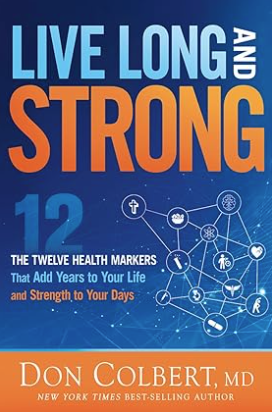
To order Don Colbert’s new book, Live Long and Strong, visit Amazon.com.
“And that neuroplasticity process, this is the most important part that happens every moment of your life,” he said, “whether you’re directing it or not.”
In other words, our repetitive thoughts, whether positive or negative, change the way our neurons communicate with each other, in a way that causes our brains to automatically think that way even more.
“So if you’ve always been anxious or afraid, or you’ve gone through something hard that’s made you more depressed, your brain will just keep recreating synapses, connections, that will reinforce that same thought process,” Dr. Warren explained.
Knowing this, Dr. Warren changed his own thinking. Instead of focusing on sadness and loss like he normally did, he began counting his blessings. The more he did that, the more blessed he felt.
“And that’s the whole idea really behind Philippians 4, which says, if you want to be less anxious, be more grateful and think better thoughts and you’ll actually overcome anxiety,” he said. “And we’ve learned that that’s now true on the neuroscience side too.”
To read the full story, visit our content partners at CBN News.
Reprinted with permission from cbn.com. Copyright © 2026 The Christian Broadcasting Network Inc. All rights reserved.
