
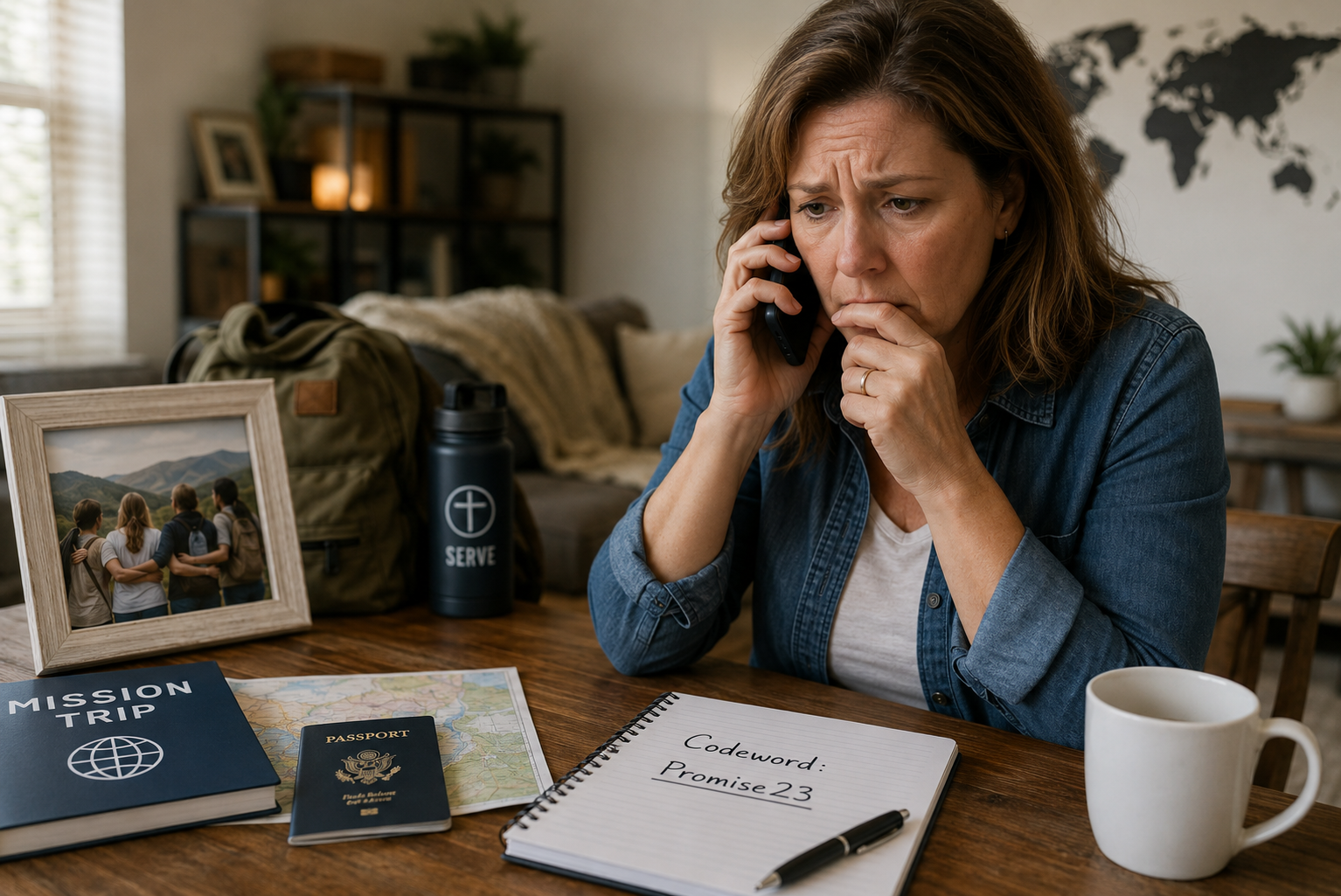
Mission trips are built on community support in the form of prayer, giving and updates that help people back home feel connected. Photos, short videos and quick posts can encourage supporters and remind families why the trip matters.
But the same posts that build connection can also create unwanted exposure. In recent years, ministries have been paying closer attention to a scam that targets families back home, not the team overseas. It often starts with an urgent call claiming a traveler has been kidnapped, arrested or hospitalized, backed by just enough personal detail to sound believable. The goal? Use pressure tactics to force a loved one into sending money before they can confirm what’s true.
“Most teams prepare for what could happen during the trip. What often gets overlooked is how something like this can impact families at home in a matter of minutes,” said Brad James, Brotherhood Works. One of his responsibilities is working through the risks with groups and individuals preparing for mission trips and helping them make sure they have the right mission travel coverages.
Panic Powered by Partial Information
Virtual kidnapping relies on a predictable human response: when someone you love might be in danger, you want to act immediately. Scammers take advantage of that moment, especially when the loved one is traveling and harder to reach due to time zones, full schedules and limited connectivity.
“Criminals don’t need much to sound credible,” said James. “Public social posts can reveal names, relationships, church connections and travel details. Even small bits of information can be pieced together into a story that feels real in the moment.”
A Scenario Worth Discussing
To help churches prepare, it can be useful to talk through how a call like this might unfold.
“Let’s say a mom receives a call from an unfamiliar number that looks international,” said James. “The caller claims her son has been kidnapped and pressures the mom to act immediately.”
James explains that the caller may include specific details such as names, location references or mentions of the mission trip. All to make the situation feel legitimate. There may be shouting or distressing noise in the background. The mom is told to stay on the line and send money right away.
In reality, the traveler hasn’t been taken at all. The son may be in a team meeting, doing outreach, on a bus or away from his phone, completely unaware that panic is unfolding at home.
According to the FBI, schemes like this are designed to keep victims engaged so they don’t verify what’s happening. Perpetrators often work to keep the conversation going and prevent contact with the supposed victim.
If you ever get a call like this, the most important step is also the hardest: slow the situation down.
“Scammers rely on urgency,” said James. “If they can keep you reacting instead of thinking, they have a much better chance of getting you to comply.”
The FBI advises focusing on staying calm, buying time, and verifying the situation before acting. Recommended steps include:
- Try to reach the traveler another way. Call or text them from another device while staying on the line.
- Ask to speak directly with your loved one. Request proof they are okay.
- Use a family codeword. Ask a question only your family member would know.
- Keep your voice low and steady. Don’t argue or escalate the situation.
- Repeat the caller’s instructions to buy time. Let them know you’re writing things down.
- Avoid sharing additional information. Don’t give details the caller can use to strengthen the story.
- Be cautious about payment demands. Scammers typically insist on immediate digital payment because it is fast and difficult to reverse.
“If something feels off, take that seriously,” said James. “Verification should always come before action.” If you cannot confirm your loved one’s safety or believe there could be a real threat, contact local law enforcement right away.
Consider covering these safety tips with your team and their families early in the trip planning process:
- Set expectations for online updates. Ask them to avoid posting real-time locations, schedules or lodging details.
- Make social media settings private. Keep personal information and contact details from being publicly visible in posts or on a feed.
- Have a communication plan. Identify who families should contact first if they receive a concerning call, email or message.
- Use a prearranged codeword. A simple phrase can help confirm a mission travelers identity quickly.
- Encourage delayed or limited public posting. Sharing highlights after the trip reduces real-time exposure.
You Can’t Always Trust What You Hear
While these scams have existed for years, they are becoming more sophisticated. Generative AI tools now make it easier to create highly convincing fake content, including voice cloning for proof of life. The FBI warns that scammers can use deepfakes and synthetic media to carry out imposter scams, extortion, and financial fraud.
“That doesn’t mean every scam call involves AI. But it does mean ministries and families should be prepared for a moment when something sounds real, even if it isn’t,” said James.
For more guidance on mission travel planning and mission-related risk management resources, visit https://www.brotherhoodmutual.com/works/missions-care.
Karen Belcher is a senior risk management writer for Brotherhood Mutual Insurance Company. She works closely with the company’s risk control, underwriting, claims and legal staff, and with outside experts to research ways ministries can protect and care for their people, property, and programs.
