
As International Women’s Day approaches, I find myself contemplating the true meaning of the holiday. International Women’s Day is not just a celebration of women’s achievements. It is a reminder of the unique way women lead, the strength they carry, and the responsibility they embrace. In a world that often confuses outrage with action, women’s leadership calls us back to something deeper: answering God’s call with courage and saying, hineni.
I grew up in a home with three girls and no boys. People often assume my parents constantly told us, “Girls can do anything.” But that wasn’t the message. The message was deeper: humans can do anything. If you are determined, if you are willing to work, if you are willing to say “yes” to the moment God places before you, then you can do anything. It was never framed as “overcoming the obstacle of being a woman.” It was simply an ingrained belief in human potential.
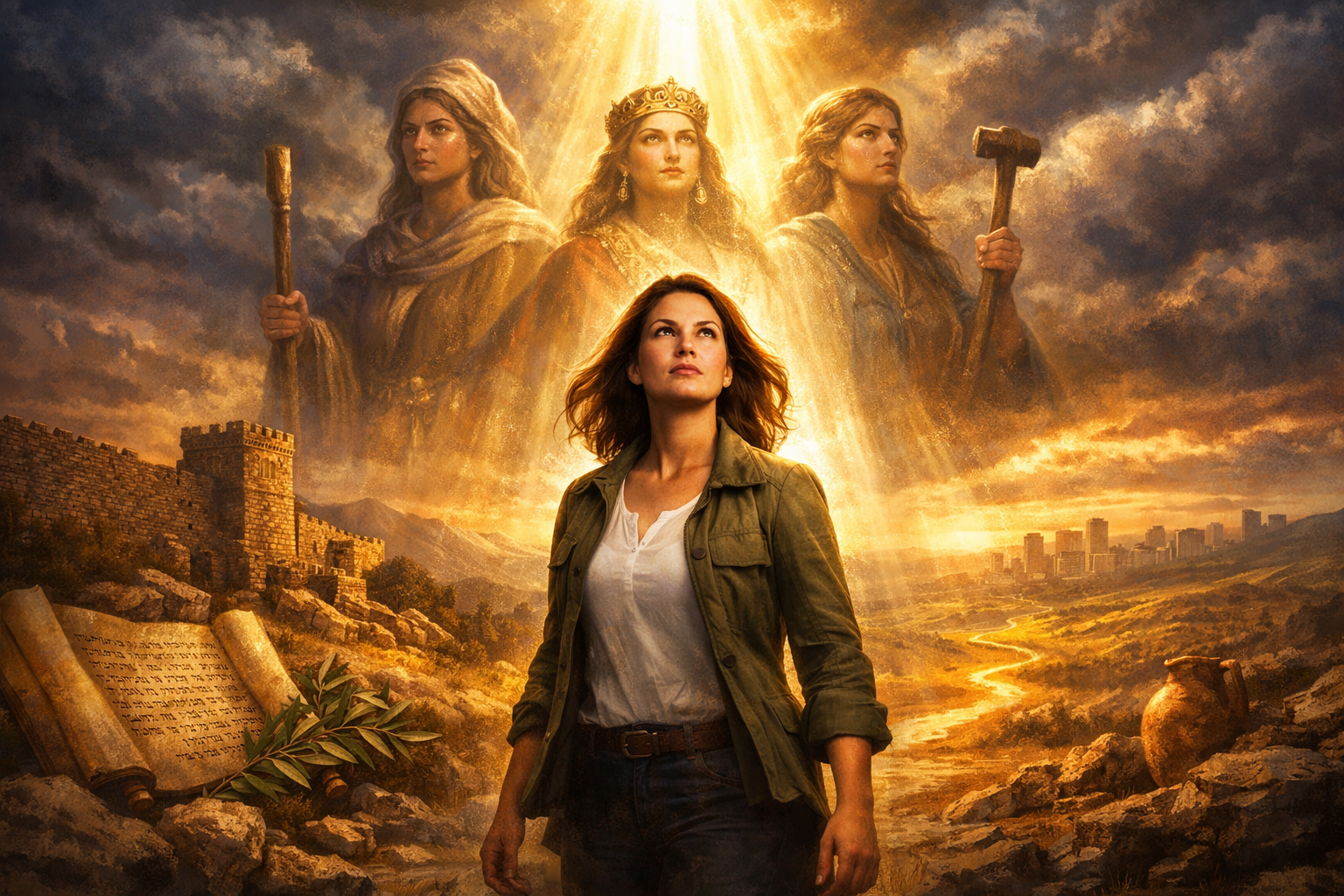
And the women I looked up to most were the women of the Bible—women who led not by imitating men, but by stepping into leadership in their own uniquely female way.
Deborah, who judged a nation with wisdom and courage. Esther, who risked everything to save her people. Jael, who acted decisively, when others froze in fear.
These women did not wait for perfect circumstances. They did not wait for someone else to act. They stepped forward because they understood something essential: when God places you in a moment, you have a role to play.
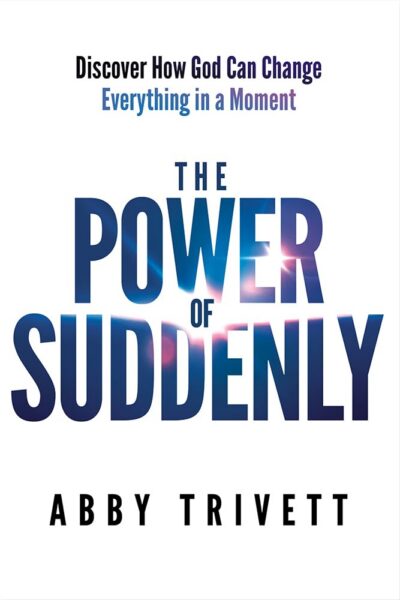
To order Abby Trivett’s new book, The Power of Suddenly, visit Amazon.com.
There is a commentary about the sin of the spies who returned from the Land of Israel seeing only negativity. Some say that if Moses had sent women instead, they would have returned with hope. They would have seen the beauty of the land even amid difficulty. That ability to see goodness where others see only obstacles is one of the most powerful forms of leadership.
Women occupy a unique place in the world. In pregnancy, in childbirth, in raising children, in the way we nurture, in the way we listen, in the way we hold families and communities together. This is not about rigid gender roles. My husband worked from home when our children were young and was deeply involved in every part of their lives.
It is not about who does what. It is about each person contributing what they uniquely can to make society whole.
Women bring distinct strengths: empathy, intuition, resilience, the ability to see possibility in broken places. These strengths are not small or insignificant. On the contrary, they are essential.
There are real moments when things are not fair. Inequality exists. Injustice exists. But I have learned that outrage alone does not create goodness. Outrage may feel righteous, but if it does not lead to action, it tears the world apart, rather than healing it.
So instead of asking, “Why is this happening?” I ask a different question: What is my hineni moment here?
Hineni— Hebrew for “here I am”—is the word Abraham spoke, the word Moses spoke, the word Esther lived. It is the word that says: I am willing to step forward. I am willing to do the hardest thing. I am willing to bring light where there is darkness.
Today, we live in a culture where criticism is easy and outrage is celebrated. But leadership is not about optics. It is about responsibility. It is about stepping into the moment God places before you and saying, “Here I am.”
At The Fellowship, women lead every office—not because of a quota, not because of a principle, but because they were the best people for the role. Leadership should never be about checking a box. It should be about excellence, calling, and the willingness to serve.
On this International Women’s Day, the message I want to share is simple: Step into your “hineni moment”.
Ask yourself: Where can I make a unique difference? Where is God calling me to bring light? Where can I heal, build, comfort, or lead? Then run toward that place. Give it your all. Bring your whole heart.
When we answer that call, when we say hineni in the moments that matter, God works miracles through us. Women have been doing this since biblical times. And the world needs that courage now more than ever.
Yael Eckstein is President and Global CEO of The International Fellowship of Christians and Jews, one of the world’s largest religious charitable organizations, and is a respected Jewish leader, speaker, bestselling author, and an award-winning podcast host and humanitarian. A 2025 ‘Pillars of Jerusalem’ award recipient for her exceptional contributions to Israel’s public diplomacy, and The Jerusalem Post’s 2023 Humanitarian of the Year, Yael is a Chicago-area native based in Israel with her husband and their four children.
