
A holiday tradition for many families is to watch or read Charles Dickens’ A Christmas Carol. But who exactly was the man who brought us memorable characters like Scrooge and Tiny Tim?
The work of Dickens is still studied today, but few people know about his faith.
Scholar and author Dr. Gary Colledge has studied the legendary 19th-century English writer extensively. The Akron, Ohio, native even studied in the United Kingdom, earning a Ph.D. at the prestigious University of St. Andrews for his work on the faith of Dickens.
“That’s what’s going to be prevalent in anything we read by Dickens — that idea, that ‘real Christianity,’ and Dickens uses that term ‘real Christianity’ a number of times in letters and in his writing,” Colledge told CBN News. “‘Real Christianity’ is being like Jesus.”
Lessons from Scrooge
During his research, Colledge discovered that Dickens was a Christian, and his faith in Jesus Christ surfaces throughout his works in the themes and characters.
Colledge read a letter from Dickens to one of his critics:
“‘All my strongest illustrations are derived from the New Testament. All my social abuses are shown as departures from its Spirit. All my good people are humble, charitable, faithful, forgiving, over and over again. I claim them in expressed words as disciples of the Founder of our religion.'”
For example, in A Christmas Carol, Colledge says Marley’s warning to Scrooge about what it means to truly live life reflects the importance of imitating Christ.
“The taking care of humanity, the thinking about my fellow man, doing unto others as I’d have them do unto me,” Colledge explained. “For Dickens, the Golden Rule was absolutely crucial.”
Order Jonathan Cahn’s Newest Book, “The Avatar” on Amazon.com!
Evidence of Dickens’ Faith
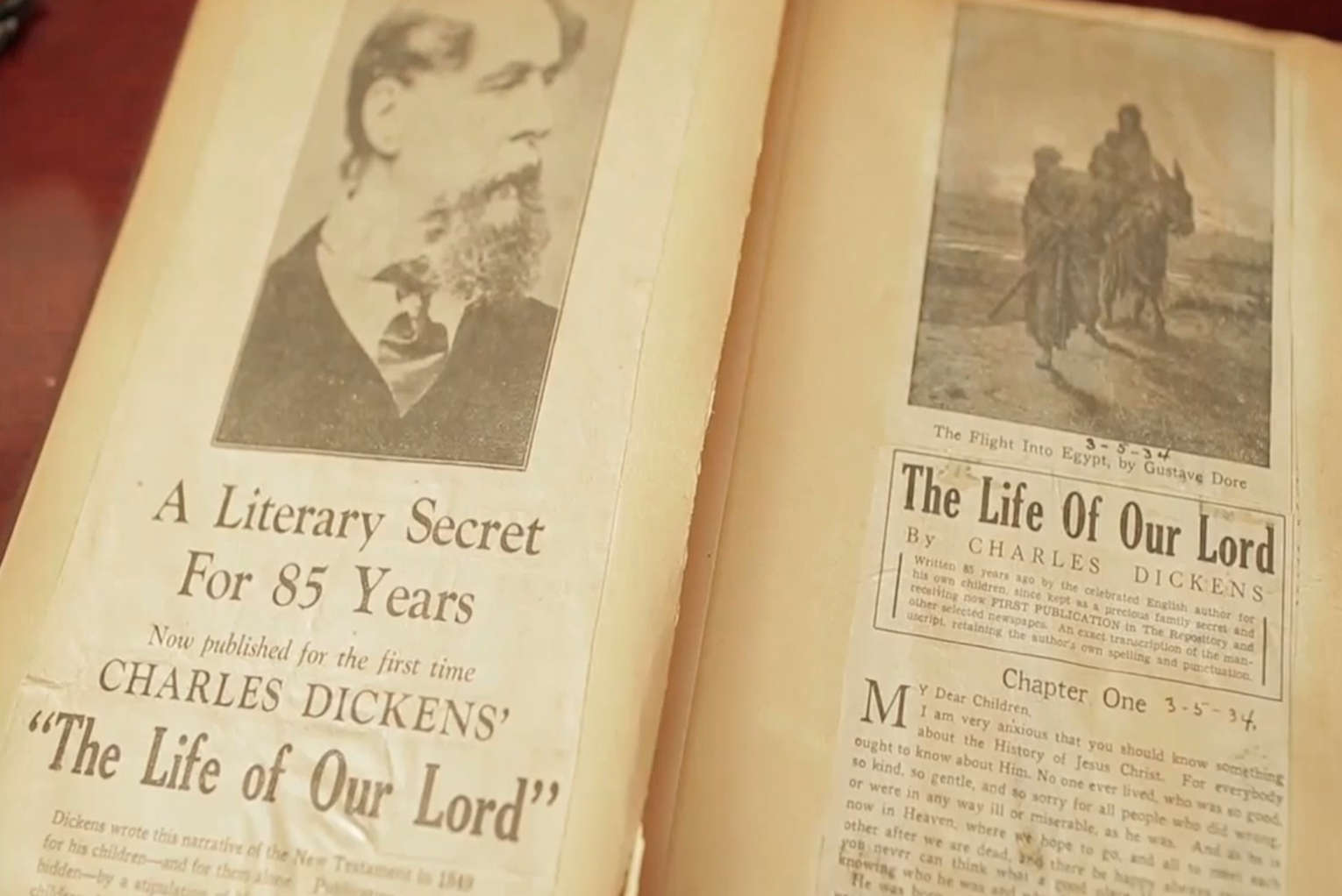
Colledge believes the most definitive evidence for the Christian faith of Charles Dickens is a little-known work, written during the height of his career over a period of three years for his children. It’s simply titled, The Life of Our Lord.
“Critics are right; it’s not a fantastic piece of literature, but it shines a bright light on Dickens’ faith because he is the sole editor of this thing,” Colledge said.
Colledge calls The Life of Our Lord a Gospel Harmony, where the author interweaves the four Gospels into a single narrative. In this case, Dickens summarized the life of Christ for the next generation — his children.
“My dear children, I’m very anxious that you should know something about the history of Jesus Christ, for everybody ought to know about Him,” Dickens wrote at the beginning of the work.
Gospel Harmonies were very important in the 19th century. A Christian family at that time would have had at least two books in their home — the Bible and a Gospel Harmony.
“The spiritual formation of his children is nothing that Dickens would leave to someone else,” Colledge noted. “He just wouldn’t have done that, so this would have been a very important tool in Dickens’ family for religious instruction — instruction in Christian thinking.”
If you would like to read the full story, you can visit our content partners at CBN News.
Reprinted with permission from cbn.com. Copyright © 2025 The Christian Broadcasting Network Inc. All rights reserved.
