
May I make a suggestion to everyone reading along with me today?
We all know that America has been through an extremely stressful and contentious political year. Two thousand sixteen put the entire nation on edge and divided us down the middle. But now, the presidential election is over, a new Congress is in place, and President Donald J. Trump has been inaugurated. Maybe it’s time to put hardscrabble politics behind us for a while and think about something more uplifting.
Let’s all take a deep breath of fresh air and let the Scriptures talk to us.
I’d like to focus on a passage found within my book, Bringing Up Boys. As a writer, speaker and broadcaster, the content I’m about to share is very near and dear to my heart. It involves the words we use—or abuse—as we communicate with those around us. It has been suggested that the most powerful weapon in the world is not a gun or even a nuclear bomb, but rather, it is the tongue. That is what the book of James tells us. With the careless use of our words, we can encourage or discourage, forgive or condemn, lift up or tear down.
Words are so easy to utter, often tumbling out without much reason or forethought. Those who hurl criticism or hostility at others may not even mean or believe what they have said. Their comments may reflect momentary jealousy, resentment, depression, fatigue or revenge. Regardless of the intent, harsh words sting like killer bees. Almost all of us, including you and me, have lived through moments when a parent, a teacher, a friend, a colleague, a husband or a wife said something that cut to the quick. The pains of those harsh comments are now sealed forever in the memory bank. That is an amazing property of the spoken word. Even though a person forgets most of his or her day-by-day experiences, a particularly painful remark may be remembered for decades. By contrast, the individual who did the damage may have no memory of the encounter a few days later.
Former senator and presidential candidate Hillary Rodham Clinton wrote about her father, who never affirmed her as a child. When she was in high school, she brought home a straight-A report card. She showed it to her dad, hoping for a word of commendation. Instead, he said, “Well, you must be attending an easy school.” Decades later, the remark still burns in Mrs. Clinton’s mind. Her father’s thoughtless response may have represented nothing more than a casual quip, but it created a point of pain that has endured to this day.
If you doubt the power of words, remember what John the disciple wrote under divine inspiration. He said, “In the beginning was the Word, and the Word was with God, and the Word was God” (John 1:1). John was describing Jesus, the Son of God, who was identified personally with words. That makes the case about as well as it will ever be demonstrated. Matthew, Mark and Luke each record a related prophetic statement made by Jesus that confirms the eternal nature of His teachings. He said, “Heaven and earth will pass away, but my words will never pass away” (Matt. 24:35). We remember what He said to this hour, more than 2000 years later. Clearly, words matter.
There is additional wisdom about the impact of words written in the book of James. The passage reads:
See how we put bits in the mouths of horses that they may obey us, and we control their whole bodies. And observe ships. Though they are so great and are driven by fierce winds, yet they are directed with a very small rudder wherever the captain pleases. Even so, the tongue is a little part of the body and boasts great things. See how great a forest a little fire kindles. The tongue is a fire, a world of evil. The tongue is among the parts of the body, defiling the whole body, and setting the course of nature on fire, and it is set on fire by hell (James 3:3-6).
Have sparks ever sprayed from your tongue? More important, have you ever set a child’s spirit on fire with anger? All of us have made that costly mistake. We knew we had blundered the moment the comment flew out of our mouths, but it was too late. If we tried for a hundred years, we couldn’t take back a single remark.
The first year Shirley and I were married, she became very angry with me about something that neither of us can recall. In the frustration of the moment she said, “If this is marriage, I don’t want any part of it.” She didn’t mean it and regretted her words almost immediately. An hour later we had reconciled and forgiven each other, but Shirley’s statement could not be taken back. We’ve laughed about it through the years, and the issue is inconsequential today. Still, there is nothing either of us can do to erase the utterance of the moment.
Words are not only remembered for a lifetime, but if not forgiven, they endure beyond the chilly waters of death. We read in Matthew 12:36, “But I say to you that for every idle work that men speak, they will give an account on the Day of Judgment.”
Thank God, those of us who have a personal relationship with Jesus Christ are promised that our sins—and our harsh words—will be remembered against us no more and will be removed “as far as the east is from the west” (Ps. 103:12a). Apart from that atonement, however, our words will follow us forever.
I didn’t intend to preach a sermon here because I am not a minister or a theologian. But I find great inspiration for all family relationships within the wisdom of the Scriptures. And so it is with the impact of what we say. The scary thing for us parents is that we never know when the mental videotape is running during our interactions with children and teens. A comment that means little to us at the time may “stick” and be repeated long after we are dead and gone. By contrast, the warm and affirming things we say about our sons and daughters may be a source of satisfaction for decades. Again, it’s all in the power of words.
Here’s something else to remember: The circumstances that precipitate a hurtful comment for a child or teen are irrelevant to their impact. Let me explain. Even though a child pushes you to the limit, frustrating and angering you to the point of exasperation, you will nevertheless pay a price for overreacting. Let’s suppose you lose your poise and shout, “I can’t stand you! I wish you belonged to someone else.” Or, “I can’t believe you failed another test. How could a son of mine be so stupid?”
Even if every normal parent would also have been agitated in the same situation, your child will not focus on his misbehavior in the future. He is likely to forget what he did to cause your outburst. But he will recall the day you said you didn’t want him or that he was stupid. It isn’t fair, but neither is life.
I know I’m stirring a measure of guilt into the mix with these comments. (My words are powerful too, aren’t they?) My purpose, however, is not to hurt you but to make you mindful that everything you say has lasting meaning for a child. He may forgive you later for “setting the fire,” but how much better it would have been to have stayed cool. You can learn to do that with prayer and practice. It will help to understand that we are most likely to say something hurtful when we are viscerally angry. The reason is because of a powerful biochemical reaction going on inside. The human body is equipped with an automatic defense system called the “fight or flight” mechanism, which prepares the entire organism for action. When we’re upset or frightened, adrenaline is pumped into the bloodstream, setting off a series of physiological responses within the body. In a matter of seconds, the individual is transformed from a quiet condition to an “alarm reaction” state. The result is a red-faced father or mother who shouts things he or she had no intention of saying.
These biochemical changes are involuntary, operating quite apart from conscious choice. What is voluntary, however, is our reaction to them. We can learn to take a step back in a moment of excitation. We can choose to hold our tongue and remove ourselves from a provoking situation. As you have heard, it is wise to count to 10 (or 500) before responding. It is extremely important to do this when we’re dealing with children who anger us. We can control the impulse to lash out verbally or physically and avoid doing what we will certainly regret.
What should we do when we have lost control and said something that has deeply wounded a child? The answer is this: We should repair the damage as quickly as possible. I have many fanatical golfing friends who have tried vainly to teach me their crazy game. They never give up, even though it is a lost cause. One of them told me I should immediately replace the divot after digging yet another hole with my club. He said the quicker I could get that tuft of grass back in place, the faster its roots would reconnect. My friend was talking about golf, but I was thinking about people. When you have hurt someone, whether a child, a spouse or a colleague, you must dress the wound before infection sets in. Apologize, if appropriate. Talk it out. Seek to reconcile. The longer the “divot” bakes in the sun, the smaller will be its chances for recovery. Isn’t that a wonderful thought?
Of course, the apostle Paul beat us to it. He wrote more than two thousand years ago, “Do not let the sun go down on your anger” (Eph. 4:26). That Scripture has often been applied to husbands and wives, but I think it is just as valid with children.
Before I leave the subject of words, I want to address the issue of profanity. I find it very distressing to witness the way filth and sacrilege have infiltrated our speech in Western nations. Cursing and swearing are so common today that even some of our preschoolers talk like the sailors of yesterday. It has not always been the case. During my teaching days in a public junior high school, bad language was not permitted. I’m sure it happened when kids were alone, but not often within the hearing of the faculty. One day, one of my better students used God’s name in a sacrilegious way. I was very disappointed in her. Believe it or not, having taught several hundred kids per year, that was the only time I remember hearing a boy or girl talk like that. I pointed out to her that one of the Ten Commandments instructed us not to use the Lord’s name in vain and that we should be careful how we talked. I think she believed me. That occurred in 1963.
How radically things have changed since then! Now almost every student, it seems, uses profanity—disgusting references to bodily functions and sexual behavior. Girls curse as much as boys. Since President Bill Clinton’s escapade with Monica Lewinsky in the White House, even elementary school kids have talked openly about oral sex as though it were no big deal. More of them are trying to practice it than ever before. As a matter of fact, sexually transmitted diseases of the mouth and throat are reaching epidemic proportions among middle school and senior-high school students. We have become a profane and immoral people, both young and old. Nevertheless, the ancient commandments haven’t changed. This is what the Scriptures tell us particularly about the casual use of God’s name:
“So I will make My holy name known in the midst of My people Israel. And I will not let them pollute My holy name anymore. And the nations shall know that I am the Lord, the Holy One in Israel” (Ezek. 39:7).
“They are to teach my people the difference between the holy and profane, and cause them to discern between the unclean and the clean” (Ezek. 44:23).
“but let your “yes” mean “Yes,” and “No” mean “no.” for whatever is more than these comes from the evil one” (Matt. 5:37)
If we are to believe the validity of these and other passages in the Bible, our profanity is an offense to God. It is a terrible thing to drag the names of God, Jesus and the Holy Spirit through the gutter, using them as curse words or to punctuate sentences in everyday conversation. Even Christians often say, “God” in casual situations. At times, when I hear what is very sacred being defiled and mocked, I utter a silent prayer, asking our heavenly Father to forgive our disrespect and heal our land. It is time we stood up for what we believe and teach those eternal truths to our children. I am recommending herewith that you give major emphasis to your children’s language. No, we shouldn’t be as legalistic as my father, who once dressed me down harshly for using the phrase, “Hot dog!” I think he overacted in that instance. But there is still a place for clean, wholesome, respectful speech. In particular, you should not permit your children to mock the name of God.
The primary reason I have provided the Scriptures above is to help you teach these biblical concepts in your home. Read and discuss the Word to establish this vital principle. By teaching a reverence for things that are holy, you are demonstrating that our beliefs are to be taken seriously and that we are accountable to the Lord for the way we behave. It is also a way of teaching principles of civility that should be a central objective of your leadership at home.
As our culture grows increasingly self-centered and mean-spirited, it is comforting to remember that, for us, God’s Word is an anchor in the stormy sea. It is also, as the psalmist wrote, “a lamp to my feet and a light to my path” (Ps. 119:105).
If we will use the Scriptures to guide both the tone and content of our conversations, we will be very well-served indeed.
With that, I will bid you farewell until next month. Thanks to those of you who continue to stand alongside this ministry through your prayers and financial support. They are deeply appreciated. God’s blessings to each one of you.
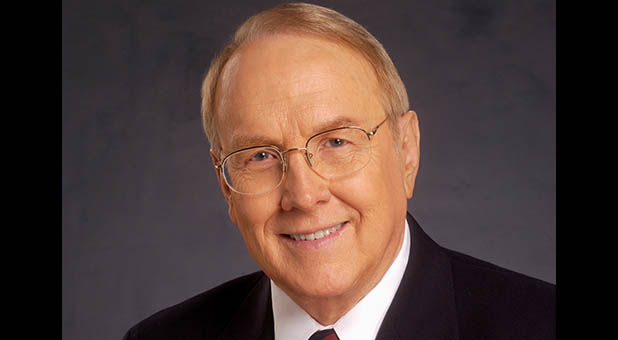
Dr. James Dobson is the president and founder of Family Talk Radio. He is the author of more than 30 books dedicated to the preservation of the family.
