Levites Sing Psalms on Temple Mount Again After Nearly 2,000 Years

For nearly 2,000 years, the songs of the Levites and their daily psalms used for temple services have been absent from the Temple Mount.

This week, that changed.

In a development that drew global attention, three Levites ascended the Temple Mount and sang the Shir shel Yom, the daily psalm for Tuesday traditionally recited during Temple worship.

The event comes just days after reports of another potential red heifer being born in Israel, adding to a growing list of developments surrounding efforts to restore Temple service.

According to a report by Israel365 News, the singers described the moment as the partial fulfillment of a centuries-old hope.

“We were moved today to fulfill — partially — our dream as sons of Levi: to sing the song of God on the holy mountain. Today, thank God, there are several organizations of Levites preparing for the day when we can stand again on the platform, and we invite our Levite brothers to inquire and join.”

The event was organized by the Beyadenu movement, which encourages Jewish prayer and worship on the Temple Mount. Organizers said the three Levites have been training together and periodically ascending the Mount to sing the daily psalm at the time corresponding to the ancient morning offering. A video of Tuesday’s event was also released.

This was not the first time the three Levites had ascended the Temple Mount to sing.

Around December 2025, the same group gathered to perform a song in memory of the victims of the Bondi Junction terror attack in Australia.

More Than One Event

By itself, the return of Levitical singing is historically remarkable.

Viewed alongside other recent developments, however, it becomes another piece of a much larger picture.

Over the past several years, preparations connected to a future Temple have steadily advanced. Priests have continued training for Temple service. Sacred vessels and priestly garments have been recreated. The Temple Institute has continued its work surrounding the biblical red heifer, and recent reports of another potential red heifer born in Israel have once again fueled discussion about ritual purification and future Temple worship.

Now, after nearly two millennia of silence, Levites are once again publicly performing one of their ancient Temple responsibilities on the Temple Mount.

The organizers emphasized that this is only the beginning, calling for additional Levites to join the growing choir in preparation for expanded service.

The article also notes that the singers stood on the historic 15 steps associated with the Songs of Ascents and that Levitical music was never viewed as mere ceremony.

Quoting 1 Chronicles 25:1, the organizers wrote:

David and the commanders of the army set apart for the service the sons of Asaph, Heman, and Jeduthun, who prophesied with lyres, harps, and cymbals.

According to Jewish tradition cited in the report, Temple sacrifices offered without the accompanying Levitical songs were considered incomplete.

Why Christians Are Watching

For us as Christians, the significance of these developments is not that they establish a date for Christ’s return. Scripture is clear that no one knows that day or hour.

Nor do we look to a restored Temple for salvation. Jesus Christ fulfilled the sacrificial system once for all through His death, burial and resurrection.

Even so, many students of Bible prophecy pay close attention because Scripture describes a functioning Temple during the end times.

Daniel 9:27 speaks of sacrifices being halted midway through a future covenant. Jesus referred to the “abomination of desolation” standing in the holy place in Matthew 24:15. The apostle Paul wrote that the man of lawlessness will sit in God’s Temple, proclaiming himself to be God (2 Thess. 2:3-4).

Those passages do not tell us when a Third Temple will be built, nor do they place it before the Rapture. They do, however, describe a future Temple playing a significant role during the Tribulation.
Order Mondo Gonzales’ New Book, “The Mystery of the Red Heifer” on Amazon.com!

That is why developments like the return of Levitical singing, ongoing priestly preparations and renewed attention surrounding red heifers continue to capture the attention of Christians around the world.

Whether these events ultimately become part of God’s prophetic timetable remains to be seen.

What cannot be denied is that the movement to restore Temple worship is no longer confined to ancient history or theological discussion. After nearly 2,000 years, Levites are once again singing on the Temple Mount, preparations continue on multiple fronts, and the conversation surrounding a future Temple is growing louder with each passing month.

And that is a development worth paying close attention to.

James Lasher, a seasoned writer and editor at Charisma Media, combines faith and storytelling with a journalism background from Otterbein University and ministry experience in Guatemala and at the LA Dream Center. A Marine Corps and Air Force veteran, he is the author of The Revelation of Jesus: A Common Man’s Commentary and a contributor to Charisma magazine. For interviews and media inquiries, please contact [email protected].



Jack Hibbs: The Rapture Is About More Than End-Times Prophecy

If Jesus Christ called His Church home today, would we be ready?

That’s the question Pastor Jack Hibbs challenged us to confront as he laid out what he believes is the Bible’s unmistakable message about the rapture. His focus wasn’t on winning an end-times argument. It was on awakening us, the body of Christ, to live every day with the expectation that Jesus could return at any moment.

“Though I do not see Him, I long for Him and I’m looking for Him,” Hibbs said. “I’m commanded in the Bible to look for Him. It’s crystal clear.”

The Scripture That Changed His Mind

Hibbs said one passage completely transformed his understanding of the rapture.

Quoting Jesus’ promise in John 14, he read:

“Let not your heart be troubled. You believe in God, believe also in Me. In My Father’s house are many mansions. And if it were not so, I would have told you. I go to prepare a place for you. And if I go to prepare a place for you, I will come again and receive you to Myself, that where I am, there you may be also.”

He said Christ’s promise forced him to reconsider his previous position.

“Jesus has been preparing a place in Heaven, according to His own words, to bring us there. That’s what He says.”

Then came the question he couldn’t answer.

“I never get to go up there to see the mansions. I never get to go up there to where He has been preparing. I never get to go up there to where He is. There’s no reunion up there with a post-tribulational view. Doesn’t work.”

That realization drove Hibbs back into Scripture.

“I swung back through the Scripture and study slowly,” he said, “but I swung back to the post-tribulational, premillennial, literal view of Scripture, what is also known as futurist view of prophetic interpretation.”

Order Jonathan Cahn’s New Book, “The Altar of Pergamon” on Amazon.com!

A Return That Could Happen at Any Moment

Hibbs argued that Christ’s First Coming and Second Coming are both tied to specific prophetic events.

The rapture, he said, is different.

Reading from 1 Corinthians 15, Hibbs emphasized Paul’s words:

“Behold, I tell you a mystery… We shall not all sleep… We shall be changed.”

He pointed to Paul’s repeated use of the word “we.”

“He didn’t say, ‘They shall be changed,'” Hibbs said. “He said… ‘We shall be changed.'”

Hibbs said Paul fully expected Christ could return during his own lifetime.

“Some people are going to be alive when it happens, and their bodies going to be changed without death.”

Hope, Not Endless Arguments

Hibbs acknowledged that Christians have debated the timing of the rapture for generations, but he pointed back to Paul’s conclusion in 1 Thessalonians 4.

“Therefore, comfort one another with these words.”

He urged believers not to allow prophecy to become another reason for division.

“Getting big arguments about this and break fellowship with your friends and create your own denominations and beat pre-tribulation, mid-tribulation, post-tribulationists up, getting a big fight about it? No.”

The purpose of the doctrine, he said, is encouragement.

Live Like Jesus Could Return Today

Hibbs said the doctrine of the rapture isn’t about fear or escaping hardship.

“The rapture is not an escape for fearful people.”

Instead, he said it changes the way we live every day.

“Though I do not see Him, I long for Him and I’m looking for Him. I’m commanded in the Bible to look for Him. It’s crystal clear.”

“And so because I love Him, I want to be ready to meet Him.”

Hibbs also challenged us to reject celebrity culture, internet personalities and human traditions whenever they compete with God’s Word.

“I don’t care what anybody says about that. What does the Bible say?”

He warned believers not to blindly follow popular teachers—including himself.

“Don’t listen to what I have to say. The moment I give you a Bible verse and then I start talking about I went to a delicatessen or an air show, your ears better get perked up and ready for discerning.”

He closed by warning against elevating tradition above Scripture.

“You have replaced the teachings of God with the traditions of men.”

Then Hibbs left believers with one final challenge.

“Back to the Word of God, back to the Bible, and back to the blessed hope and the glorious appearing of our great God and Savior, Jesus Christ.”

Finally, he offered a reminder every one of us should take to heart.

“Don’t let anyone steal your joy. Get ready. He could come back at any moment. Are you ready? In the meantime, let’s be busy about our Father’s business.”

James Lasher, a seasoned writer and editor at Charisma Media, combines faith and storytelling with a journalism background from Otterbein University and ministry experience in Guatemala and at the LA Dream Center. A Marine Corps and Air Force veteran, he is the author of The Revelation of Jesus: A Common Man’s Commentary and a contributor to Charisma magazine. For interviews and media inquiries, please contact [email protected].



Prominent Rabbi Claims Torah Predicts Trump Turning Against Israel. What Should Christians Make of It?

A prominent Orthodox rabbi is making a bold claim about President Donald Trump’s recent posture toward Israel, arguing that it is not simply the result of politics or diplomacy, but part of God’s dealings with Israel in the last days.

According to reporting by Israel365 News, Rabbi Mendel Kessin believes Trump’s apparent shift from one of Israel’s strongest allies to a leader urging restraint against Iran and Hezbollah fulfills a pattern found in the Torah thousands of years ago.

His conclusions have sparked discussion among Jewish audiences because they touch on Israel’s security, Iran and biblical prophecy. For Christians, however, an important question arises: How should we evaluate these prophetic claims while still recognizing Israel’s central place in God’s prophetic plan?

The answer requires both discernment and humility.

A Rabbi’s Explanation for Trump’s Shift

Kessin rejects conventional political explanations for Trump’s recent actions.

Rather than attributing them to advisers, foreign policy calculations or geopolitical pressures, he argues God is allowing Trump to change course because of Israel’s internal spiritual condition.

“It’s shocking,” Kessin said, according to Israel365 News, “because it looks like Trump has changed. But really, God is giving this punishment because of what the Israeli government is doing. They have no idea of the commotion they’re making in heaven.”

Specifically, Kessin argues Israel’s effort to draft ultra-Orthodox yeshiva students into military service represents an attack on Torah study, which he views as the nation’s greatest source of spiritual protection.

Whether Christians agree with that conclusion is another matter.

While we affirm the authority of the Old Testament and God’s covenant promises concerning Israel, our understanding of redemption, prophecy and salvation is centered on Jesus Christ and the New Testament. We do not interpret biblical prophecy through rabbinic tradition or Kabbalistic teaching, but through the whole counsel of Scripture.

Even so, when respected Jewish teachers begin viewing current events through a prophetic lens, Christians should at least understand what is being said before weighing it against Scripture.

Order Troy Anderson’s New Book, “Designated Disrupter” on Amazon.com!

“Save Me From My Brother”

The centerpiece of Kessin’s argument comes from Genesis 32:11.

As Jacob prepares to meet Esau after years of separation, he prays:

Save me, I pray, from the hand of my brother Esau, for I am afraid he will come and attack me…

Kessin believes the wording points beyond Jacob’s immediate situation.

“The Torah calls it that Esav, that Jacob prays against Esav, and he says, ‘from the hands of my brother,'” Kessin said.

“Take a look at the beginning of the verse. He’s actually calling Esav his brother and he’s praying to God to save him from Esav as his brother.”

He continued, “There will come a day when Esav will be your brother again in the future, and he will try to do what? Kill you. So you’re going to pray: ‘Please God, change his mind. Save me from that.'”

Kessin applies that interpretation directly to Trump, noting that both Trump and Israeli Prime Minister Benjamin Netanyahu have publicly referred to one another as brothers.

“The Torah refers specifically to Esav, miyad achi, miyad Esav, from the hands of my brother, the hands of Esav, and you have called Trump your brother,” Kessin said.

“It’s amazing when you think about that: a direct reference that you can actually pray for salvation from Esav as your brother. And this is it. Everybody is now praying that Trump reverse himself the way he used to be.”

That interpretation is entirely Kessin’s. Scripture does not identify Donald Trump with Esau, and Christians should be careful not to declare as biblical certainty what Scripture does not explicitly teach.

But the larger question remains worth considering.

If one of Israel’s strongest political allies can become a source of concern almost overnight, what does that remind us about placing our confidence in political leaders?

Iran, Trump and a Different Prophetic Lens

Kessin also argues that Trump has a divinely appointed role in confronting Iran.

“God wants him to remove Iran, and he’s not doing that,” Kessin said. “He’s playing around. It’s ping-pong.”

He sharply criticized negotiations with Tehran, arguing the Iranian regime cannot be trusted to honor agreements.

“The war is not with Iran. It’s with Islam,” Kessin said. “That’s the war.”

Christians should distinguish between Kessin’s interpretation and biblical prophecy.

Many of us have long recognized Persia—modern-day Iran—as one of the nations specifically mentioned in Ezekiel 38 as part of a future coalition that comes against Israel. That does not mean every diplomatic negotiation fulfills prophecy.

It does, however, remind us that Scripture consistently presents Israel as central to God’s prophetic timeline.

The Bible also repeatedly warns against trusting human rulers above God.

Whether presidents change course because of politics, pressure, personal ambition or reasons known only to God, our confidence ultimately rests in the Lord rather than in Washington, Jerusalem or any other capital.

Where Christians Agree—and Where We Don’t

Perhaps the most significant takeaway from Kessin’s lecture is not whether his interpretation proves correct.

It is that many Orthodox Jews increasingly believe the world is entering an extraordinary period of prophetic significance.

We can appreciate that growing expectation while recognizing that our hope rests in Jesus Christ, not in rabbinic interpretations of the Torah.

We also differ from Kessin on foundational doctrines.

We do not believe Torah study is humanity’s highest command or Israel’s greatest defense. We believe Jesus Christ fulfilled the Law and the Prophets and that salvation comes through Him alone.

At the same time, Christians should reject replacement theology and remember that God is not finished with Israel.

Romans 11 warns Gentile believers not to become arrogant toward the natural branches. Genesis 12:3 declares God’s blessing upon those who bless Abraham’s descendants. Zechariah 12 points to Jerusalem becoming a heavy stone for the nations, while Ezekiel 38 and 39 place Israel at the center of future conflict before God powerfully reveals Himself to the world.

Those passages are why Christians should continue to watch the Middle East carefully—because Scripture tells us that Israel will remain central to God’s redemptive plan.

We pray for Israel. We pray for the Jewish people to recognize Jesus as the Messiah. We pray for wisdom for world leaders and for Israel’s leaders as they face extraordinary threats. Above all, we remember that no president, prime minister, peace agreement or military alliance determines the outcome of history.

The God of Abraham, Isaac and Jacob does.

James Lasher, a seasoned writer and editor at Charisma Media, combines faith and storytelling with a journalism background from Otterbein University and ministry experience in Guatemala and at the LA Dream Center. A Marine Corps and Air Force veteran, he is the author of The Revelation of Jesus: A Common Man’s Commentary and a contributor to Charisma magazine. For interviews and media inquiries, please contact [email protected].



Georgia Pastor Gunned Down While Repairing Church Roof. Nearly 30 Years Later, Cold Case Ends With Arrest

Nearly 30 years after a Georgia pastor was shot to death while repairing the roof of the church he faithfully served, authorities have arrested a suspect in a case that has remained unsolved for decades.

According to initial reporting by WSB-TV 2, the Georgia Bureau of Investigation announced Wednesday that Zachary B. Harper, 47, has been charged with felony murder and malice murder in the June 1, 1996, killing of Pastor James Hand.

Hand, 54, was serving as pastor of Full Gospel Church of Snipesville in Jeff Davis County when he climbed onto the church roof to make repairs. Investigators said he was shot multiple times while working, and deputies later discovered his body on the roof.

Georgia Bureau of Investigation, Georgia Department of Corrections

The murder stunned the local community and launched an investigation that stretched across nearly three decades.

Authorities said investigators with the GBI and the Jeff Davis County Sheriff’s Office continued pursuing leads over the years. New information developed during the investigation ultimately led to Harper being charged in the case.

Harper is currently serving a life sentence at Jenkins Correctional Facility for an unrelated murder. Investigators have not publicly disclosed what evidence connected him to Hand’s death or what they believe the motive was. The investigation remains active, and once complete, the case will be presented to the Brunswick Judicial Circuit District Attorney’s Office for prosecution.

A Pastor Faithfully Serving Until the End

The circumstances surrounding Pastor Hand’s death make the tragedy especially sobering.

He was not traveling, attending a conference or even standing behind the pulpit. He was caring for the church in a practical way, repairing its roof when his life was taken.

For many pastors, ministry extends far beyond preaching on Sunday mornings. Shepherds often spend countless hours maintaining church buildings, helping families in need, counseling hurting people and serving wherever there is work to be done. Pastor Hand’s final act reflected that servant-hearted commitment.

Order Don Dickerman’s Book, “Death Row Redemption” on Amazon.com!

While many questions about the case remain unanswered, one thing is clear: investigators never stopped searching for answers. After nearly 30 years, a family, a church and an entire community may finally be one step closer to seeing justice carried out.

As the body of Christ, let us remember Pastor Hand’s loved ones, the congregation he served and everyone who has carried the weight of this tragedy for nearly three decades. We can pray that the legal process reveals the full truth, that justice is faithfully administered and that God brings lasting peace and healing to all those whose lives were forever changed by this heartbreaking loss.

James Lasher, a seasoned writer and editor at Charisma Media, combines faith and storytelling with a journalism background from Otterbein University and ministry experience in Guatemala and at the LA Dream Center. A Marine Corps and Air Force veteran, he is the author of The Revelation of Jesus: A Common Man’s Commentary and a contributor to Charisma magazine. For interviews and media inquiries, please contact [email protected].


A Recently Discovered Christian Manuscript Is Turning Heads Nearly 1,600 Years Later

A remarkable manuscript discovery is giving the world a fresh glimpse into how one of the church’s greatest theologians wrestled with one of Scripture’s most mysterious passages.

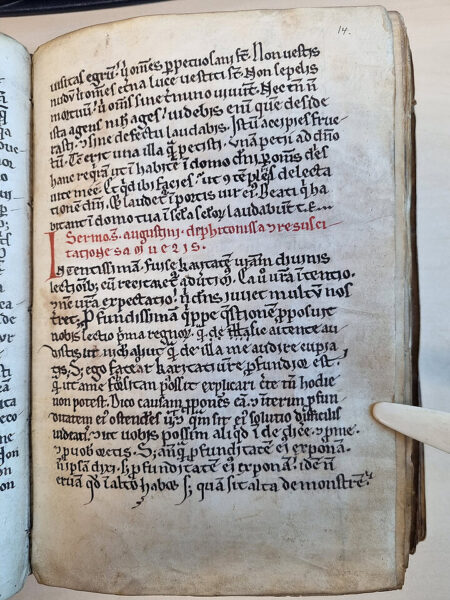
According to a report from the Daily Mail, researchers uncovered two previously unknown sermons by St. Augustine hidden within a 12th-century Latin manuscript in a Polish library. The sermons center on the account in 1 Samuel 28, when King Saul sought out the Witch of Endor after God no longer answered him.

Auszug aus der Handschrift (in rot): „Predigten des Augustinus über die Wahrsagerin und die Erscheinung Samuels.“ Quelle: Pelplin, Diözesanbibliothek, Codex 114 (195), fol. 14r. (Image: Biblioteka Diecezjalna im. Biskupa Jana Bernarda Szlagi w Pelplinie)

The passage has long sparked debate because it appears to describe the prophet Samuel appearing after his death.

Professor Christian Tornau summarized the account this way: “‘Saul believes himself to be in a hopeless situation shortly before a battle against the Philistines. God does not listen to his prayers. He turns to a witch.'”

At Saul’s request, the woman “conjures up the supposed spirit of the deceased prophet Samuel,” who foretells Saul’s death.

Augustine’s Conclusion

The newly discovered sermons reveal that Augustine carefully considered whether Saul truly encountered Samuel or was the victim of some form of supernatural deception.

Ultimately, Augustine rejected the idea that the medium possessed authority over the dead.

As the report explains, Augustine argued that “the Witch of Endor held no power over the dead. If Samuel genuinely appeared, he believed it was because God allowed it, not because the medium had summoned him through magic.”

Order Dinesh D’Souza’s New Book, “The Stones Cry Out” on Amazon.com!

Rather than forcing a final conclusion, Augustine presented multiple interpretations before allowing his congregation to wrestle with the text.

Tornau explained, “‘It was not until the second sermon on the following Wednesday that the options were weighed up.'”

He added, “‘The style, humor and content also clearly indicate that the sermons in the manuscripts were actually written by Augustine.'”

Is Daniel 12:4 Unfolding Before Our Eyes?

Discoveries like this naturally raise a fascinating question.

Daniel 12:4 declares, “But you, Daniel, shut up the words and seal the book until the time of the end. Many shall run to and fro, and knowledge shall increase.”

That verse has often been associated with advances in travel, technology and human knowledge. Yet our generation has also witnessed an extraordinary number of biblical discoveries emerge from the ancient world—Dead Sea Scrolls, archaeological finds confirming biblical history, forgotten manuscripts and long-lost writings that illuminate how the early church understood Scripture.

These discoveries do not add to God’s Word or change biblical doctrine. We know Scripture is complete. They can, however, deepen our understanding of history, language and the way faithful believers throughout the centuries wrestled with difficult passages.

Whether the continuing recovery of ancient biblical texts represents part of the increase of knowledge Daniel foresaw is something we should prayerfully consider. Scripture does not explicitly identify discoveries like these as a fulfillment of Daniel 12:4. Yet they undeniably contribute to humanity’s growing understanding of the biblical world and continue drawing attention back to God’s Word thousands of years after it was written.

Augustine’s newly recovered sermons remind us that the deepest questions of Scripture have challenged God’s people for centuries. They also remind us that we are called to search the Scriptures diligently, test every interpretation against God’s Word and trust that He alone remains sovereign over life, death and the unseen realm.

James Lasher, a seasoned writer and editor at Charisma Media, combines faith and storytelling with a journalism background from Otterbein University and ministry experience in Guatemala and at the LA Dream Center. A Marine Corps and Air Force veteran, he is the author of The Revelation of Jesus: A Common Man’s Commentary and a contributor to Charisma magazine. For interviews and media inquiries, please contact [email protected].


Amir Tsarfati Reveals the Dangerous Mistake Many Christians Make About Israel

As war, prophecy and the modern nation of Israel continue to dominate headlines, Bible teacher Amir Tsarfati is urging Christians to keep one foundational truth in focus: It’s never been about elevating Israel above God.

“It’s about the God of Israel,” Tsarfati said. “Don’t ever, ever try to be like Israel. He’s not asking you to be a Jew.”

Pointing to Exodus 33, Tsarfati noted that after Israel sinned with the golden calf, Moses’ greatest concern was not preserving Israel’s reputation but remaining in God’s presence. Moses pleaded with the Lord, “If your spirit, if your presence is not leading, I’m not moving out of here.”

Tsarfati said that same priority should define our walk with God. The goal is not to imitate Israel’s national identity but to pursue the God who called Israel and redeemed us by His grace.

Order Jonathan Cahn’s New Book, “The Altar of Pergamon” on Amazon.com!

It’s About God’s Name

Tsarfati turned to 2 Samuel to explain why God chose Israel in the first place.

“It’s not about them, IT’S ABOUT HIS NAME,” he said. “He is choosing them to make for Himself a name.”

God’s covenant with Israel reveals His faithfulness, His sovereignty and His unchanging character. Israel points to Him. When believers lose sight of that, they risk putting the spotlight on the wrong place.

“The emphasis is not on them,” Tsarfati said. “The emphasis on Him.”

He also warned against two opposite errors.

“And every time you idolize Israel, you take the glory from the God of Israel,” he said. “And when you hate Israel, you hurt the heart of God of Israel.”

Chosen by Grace

Tsarfati also challenged the idea that Israel was selected because of its moral superiority.

“There’s nowhere a single verse that says in the whole Bible they were so good and they were so perfect that that’s why God chose them,” he said. “Nowhere.”

He then connected that truth directly to every Christian.

“Show me a verse that says that you are perfect. That you are so good and that’s why God chose you.”

His point is the heart of the Gospel. God did not choose Israel because it earned His favor, and He does not save believers because they deserve it. Both demonstrate His grace.

Closing with Isaiah 44, Tsarfati reminded listeners of God’s enduring covenant with Israel: “Remember these, O Jacob and Israel, for you are my servant. I have formed you. You are my servant, O Israel. You will not be forgotten by Me.”

As conversations about Israel continue to intensify, Tsarfati’s message serves as a timely reminder that the ultimate focus of Scripture is not merely God’s people, but the God who remains faithful to every promise He has made.

James Lasher, a seasoned writer and editor at Charisma Media, combines faith and storytelling with a journalism background from Otterbein University and ministry experience in Guatemala and at the LA Dream Center. A Marine Corps and Air Force veteran, he is the author of The Revelation of Jesus: A Common Man’s Commentary and a contributor to Charisma magazine. For interviews and media inquiries, please contact [email protected].


Pastor Landon Schott: The 3 Biggest Mistakes the Church Is Making About Homosexuality

Mercy Culture Pastor Landon Schott isn’t mincing words when it comes to one of the most controversial issues facing the modern church.

Speaking on a recent episode of his Spiritual Leadership podcast, Schott argued that many churches have responded to homosexuality in ways that are neither biblical nor loving. While emphasizing that every person is loved by God, he said genuine love refuses to compromise biblical truth.

“When it comes to gender and sexuality, we must be unconditional in our love for people while remaining unwavering in our loyalty to God’s Word,” Schott said.

According to Schott, the church has made three major mistakes that have contributed to widespread confusion both inside and outside the church.

1. Treating Homosexuality as the Greatest Sin

Schott believes many Christians have elevated homosexuality above every other sin, even though Scripture points to something else.

“The first is this is they’re making homosexual practice the greatest sin. And homosexuality is not the greatest sin. Pride is.”

He pointed to Scripture after Scripture that warns about pride, saying it ultimately keeps people from repentance.

“Homosexual practice or any sexual practice is not the greatest sin. It’s pride. Why? Because pride keeps you from repenting of any sin.”

Schott added that every believer should examine pride in his or her own life before elevating one particular sin above another.

Order “Born Gay, Born Again” by Zaire Willis and Reginald Robinson on Amazon.com!

Speaking Truth Instead of Staying Silent

While Schott rejects treating homosexuality as the worst sin, he also believes many churches have gone to the opposite extreme by refusing to address it altogether.

2. Remaining Silent Out of Fear

Schott said fear has caused many pastors to avoid teaching what the Bible says about sexuality.

“The second mistake the church is making is not addressing it. I call it being scared, speechless. And the church has become a coward.”

He encouraged pastors to teach Scripture even when it invites criticism.

“We need to understand it is not personal. It is spiritual.”

Schott went on to challenge believers to seek churches that clearly teach biblical doctrine.

“If your pastor doesn’t know what the Bible says or refuses to teach biblical truth on sexuality, you need to leave that church.”

Love Doesn’t Mean Affirmation

Schott’s strongest warning centered on churches that, in his view, have moved beyond silence to affirming behavior Scripture identifies as sinful.

3. Affirming What Scripture Calls Sin

Schott said churches should never redefine biblical truth to match cultural trends.

“The third mistake the church is making, and I believe this is probably the worst mistake they’re making, is they are affirming it.”

Quoting Isaiah 5:20, he warned against reversing God’s standards.

“They’ve abandoned the Word of God. They’ve abandoned the truth of God. They have tolerated the wickedness of the world. And they are embracing what is demonic instead of embracing what is holy.”

Schott argued that tolerance has become confused with biblical love.

“A lie of the enemy is to replace repentance with tolerance. And it is demonic.”

He added that Christians are called to love every person while remaining faithful to what Scripture teaches.

Identity Is Found in Christ

Schott closed by encouraging those struggling with sexual temptation not to define themselves by their desires.

“You are not your sexuality. Your identity is in Christ Jesus.”

He continued:

“I’m going to say it again. You are not your sexuality. Your identity is not your sexuality. Your identity is a son, a daughter in Christ Jesus.”

The issue ultimately comes back to discipleship rather than identity politics. His central message was that believers should anchor their identity in Christ, pursue holiness through obedience to Scripture and extend both truth and love to those wrestling with sexual sin.

James Lasher, a seasoned writer and editor at Charisma Media, combines faith and storytelling with a journalism background from Otterbein University and ministry experience in Guatemala and at the LA Dream Center. A Marine Corps and Air Force veteran, he is the author of The Revelation of Jesus: A Common Man’s Commentary and a contributor to Charisma magazine. For interviews and media inquiries, please contact [email protected].



4 Major Earthquakes Shake the World in 1 Day as Jesus’ Warning About ‘Earthquakes in Various Places’ Demands Our Attention

Four major earthquakes struck three regions of the world within hours of one another on Wednesday, leaving devastation in Venezuela, shaking Japan and rattling Northern California. According to the U.S. Geological Survey (USGS), the events included a magnitude 7.2 earthquake in Venezuela, followed less than a minute later by a magnitude 7.5 earthquake, a magnitude 6.9 earthquake off Japan’s northeast coast, and a magnitude 5.6 earthquake in Northern California.

The earthquakes unfolded thousands of miles apart and occurred in separate tectonic settings. Seismologists have found no evidence that the events were causally connected.

At the same time, the extraordinary concentration of major earthquakes in various places around the world inevitably draws us back to the words Jesus spoke nearly 2,000 years ago.

Four major earthquakes in one day

The day’s most destructive earthquakes struck Venezuela.

The USGS recorded an initial magnitude 7.2 earthquake approximately 100 miles west of Caracas. Thirty-nine seconds later, a magnitude 7.5 earthquake struck nearly the same region, leveling buildings and triggering widespread rescue operations.

Reuters reported, “Two powerful earthquakes struck Venezuela on Wednesday, killing at least 32 people and injuring 700 after dozens of buildings collapsed into piles of shattered concrete and steel in and around the capital Caracas.”

Order Jonathan Cahn’s New Book, “The Altar of Pergamon” on Amazon.com!

Across the Pacific, the USGS measured a magnitude 6.9 earthquake off Japan’s northeast coast near Iwate Prefecture. Japan’s Meteorological Agency later revised its own estimate to magnitude 7.2, though the USGS continued to list the event as a 6.9. Authorities reported no destructive tsunami, no abnormalities at nearby nuclear facilities and no immediate reports of major damage.

Reuters reported, “An earthquake of magnitude 6.9 struck Japan’s northeast coast on Thursday, but no tsunami warning was issued, no injuries were immediately reported and no irregularities were found at nuclear facilities, the authorities said.”

The fourth significant earthquake struck Northern California, where the USGS measured a magnitude 5.6 earthquake near Potter Valley in Mendocino County. The quake triggered ShakeAlert notifications across much of Northern California, produced numerous aftershocks and caused localized damage.

The beginning of birth pains

The USGS has repeatedly stated there is no verified long-term increase in the total number of earthquakes worldwide.

Yet the past two years have brought a succession of devastating, high-profile earthquakes that have shaken nations and dominated headlines worldwide.

Jesus’ words in Matthew 24 were never centered on a single statistic. They painted the picture of a world marked by converging signs—wars, famines, pestilences and “earthquakes in various places”—that would precede His return.

Speaking about the signs preceding His return, Jesus said:

For nation will rise against nation, and kingdom against kingdom. There will be famines, epidemics, and earthquakes in various places. All these are the beginning of sorrows. — Matthew 24:7-8 (MEV)

Jesus did not point to earthquakes alone. He spoke of wars, famines, pestilences, deception, persecution and earthquakes together. He called them “the beginning of birth pains.”

Birth pains do not describe a single contraction. They describe a process that moves toward a culmination. That is why we have long understood Jesus’ illustration to portray an increasingly turbulent world as history moves toward His return.

That does not mean every individual category must rise in a perfectly straight line or that every year must break the previous year’s record. It means we watch the whole picture Jesus painted.

Today, wars dominate headlines. Israel remains at the center of global attention. Deception has become commonplace. Lawlessness continues to spread. Natural disasters repeatedly capture the world’s attention. The Gospel is advancing into places that previous generations could scarcely have imagined through modern technology.

One earthquake does not prove anything. One war does not prove anything. One famine does not prove anything.

Jesus told us to watch all these things together.

Wednesday’s earthquakes stand as another reminder that His words remain as relevant today as the day He spoke them. They call us, not to fear, but to readiness. Scripture repeatedly reminds us that our hope is not found in reading headlines alone but in trusting the One who declared the end from the beginning.

As the world grows increasingly uncertain, Jesus’ command to remain watchful becomes increasingly urgent. Our calling has not changed. We are to proclaim the Gospel, occupy until He comes, and live each day expecting the return of our King.

James Lasher, a seasoned writer and editor at Charisma Media, combines faith and storytelling with a journalism background from Otterbein University and ministry experience in Guatemala and at the LA Dream Center. A Marine Corps and Air Force veteran, he is the author of The Revelation of Jesus: A Common Man’s Commentary and a contributor to Charisma magazine. For interviews and media inquiries, please contact [email protected].


Pastor Tony Spell Speaks Out After Neighbor Confrontation and Alleged Threats

On the morning of June 23, 2026, Pastor Mark Anthony “Tony” Spell was working on a church bus battery in the parking lot of Life Tabernacle Church in Central, Louisiana, when years of neighborhood tension boiled over.

According to Spell, the 20-year-old son of neighbor Scott Sherwin began walking along the shoulder of busy Hooper Road, shouting vulgarities across the four lanes. Then came the alleged threats that would push any husband and father to his limit. Spell quoted them directly at his press conference the following day:

“He said, ‘Tony,’ I’m quoting him. He said, ‘Tony, I’m going to rape your wife, I’m going to rape all of your grandchildren,’ and he said ‘the next time you go out of town, I’m going to kill them, and what the F are you going to do about it?’ End quote.”

Spell did not wait. He crossed the highway toward the young man, who was standing in his own front yard. Cellphone and surveillance video captured the confrontation. As Spell charged across the road, footage appears to show the neighbor threw the first punch. A fierce physical fight erupted on the grassy shoulder beside passing traffic. The young man later required stitches after the clash.


East Baton Rouge Sheriff’s Office deputies arrested Spell on a charge of second-degree battery. He posted $25,000 bond that same evening and returned for his church’s Tuesday night service.

Still energized from the day’s events, Spell addressed his congregation that night. Referencing Mark 16:18, he declared:

“I fulfilled the scripture, because I laid hands on the sick. I don’t know how much recovery they’re going to have, but I laid hands on them.”

The next day, Wednesday, June 24, Spell stood on the church steps and explained his actions with conviction. He stated:

“As a natural protector to my wife and to my grandchildren who were threatened murder, who were threatened rape, I have an obligation to protect them.”

He continued:

“I’m a pastor who shepherds his flock. It’s not the job of the sheep to attack the wolves; it’s the job of the shepherd to protect his sheep.”

And he made his position unmistakably clear:

“I can’t allow a man to rape my wife. I can’t allow a man to rape my grandchildren. I will not allow a man to murder my children when I’m gone… When you threaten to rape my wife, when you threaten to rape my grandchildren, and the next time you leave, go out of town, I’m going to kill every one of them— as a man, as a father, and as a pastor, I can’t allow that.”

Scott Sherwin, the young man’s father, strongly denied that such threats were made or could be heard across the highway. He said his son was simply checking if the grass was dry enough to mow. Police records indicate limited formal complaints between the families, despite a feud stretching back to at least 2020.

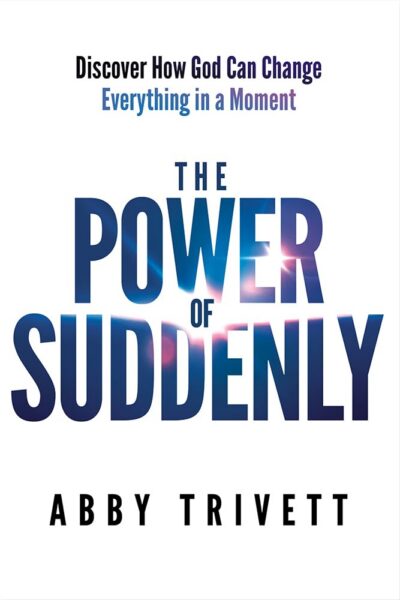
Order Abby Trivett’s New Book, “The Power of Suddenly” on Amazon.com!

This incident highlights more than a single clash on Hooper Road. It reflects Pastor Spell’s consistent pattern of standing firm — whether defying COVID-era restrictions years ago or now responding to what he described as direct, vile threats against his family and flock.

As the case proceeds in court, video evidence and witness accounts will be examined alongside the full context of the alleged threats. For those who believe in the duty to protect one’s own, Pastor Spell’s actions represent the resolve of a shepherd who refused to stand idle when the wolves came too close. In a time when provocation is often expected to be quietly endured, his response serves as a powerful reminder that some lines, once crossed, demand action.

James Lasher, a seasoned writer and editor at Charisma Media, combines faith and storytelling with a journalism background from Otterbein University and ministry experience in Guatemala and at the LA Dream Center. A Marine Corps and Air Force veteran, he is the author of The Revelation of Jesus: A Common Man’s Commentary and a contributor to Charisma magazine. For interviews and media inquiries, please contact [email protected].


Jerusalem Is Still God’s City—And No Amount of Hatred Will Change That

The hatred directed at Israel today is breathtaking.

On college campuses, in political circles, on social media and even from some church pulpits, the Jewish state is increasingly portrayed as the villain of the modern world. The pressure to abandon Israel has become relentless.

Yet in the middle of that noise, Pastor John Hagee recently delivered a reminder the church desperately needs to hear: Jerusalem does not belong to the United Nations, the European Union, the United States or any other earthly power.

Jerusalem belongs to God.

“The fact of the Bible is that God chose Jerusalem as the place where His name would be there forever,” Hagee declared. “Jerusalem is God’s house on earth. Jerusalem is God’s address.”

That truth has not changed.

The nations may rage. Politicians may redraw maps. Activists may chant in the streets. God is not renegotiating His covenant.

For thousands of years, Jerusalem has stood at the center of God’s redemptive plan. Hagee pointed to Psalm 132, saying, “‘The Lord has chosen Zion, that’s Jerusalem, and He hath desired it for His own habitation.’ That means God lives there.”

The Battle for Jerusalem Is Spiritual, Not Political

That reality explains why Jerusalem remains the most contested city on earth.

For centuries, empires have risen and fallen while Jerusalem remained at the center of conflict. Kings, armies and political movements have fought over its streets, its hills and its future. Yet despite repeated invasions, occupations and wars, the city remains exactly where God said it would be.

“Jerusalem has been conquered and reconquered 44 times in history. Yet it stands. Why? Because God has sworn to establish it forever,” Hagee said. “Jerusalem standing is a testimonial to the keeping power of God.”

Many critics of Israel view the struggle over Jerusalem strictly through a political lens. Scripture presents something far deeper. Behind every battle, every diplomatic dispute and every attempt to divide the city is a spiritual conflict that stretches back thousands of years.

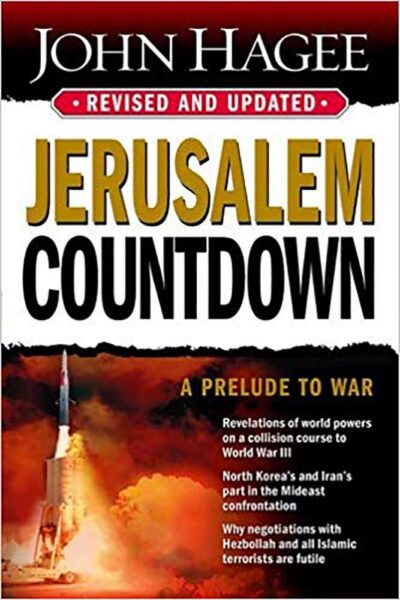
Order John Hagee’s Best-Selling Book, “Jerusalem Countdown” on Amazon.com!

Hagee did not mince words.

“The supernatural battle for Jerusalem is not over,” he said. “The battle of Islam versus Judaism is a supernatural struggle.”

The hostility directed toward Israel today is often wrapped in the language of politics, justice or international relations. Yet Jerusalem has always drawn opposition because it occupies a unique place in God’s plan. The city He chose has become the city the world cannot stop fighting over.

Zechariah foretold that Jerusalem would become a burdensome stone for the nations. Today’s headlines read like a confirmation of that prophecy.

What should the church do?

Stand with Israel.

Not because Israel is perfect. No nation is. Not because every action of every Israeli leader is above scrutiny. It isn’t.

We stand with Israel because Scripture leaves no room for confusion about God’s covenant purposes. The God who promised the land to Abraham has not reversed Himself. The God who declared Jerusalem His city has not changed His mind. And the God who commands us to pray for the peace of Jerusalem has not withdrawn that instruction because it became unpopular.

At a time when hostility toward the Jewish state is spreading across Western culture, believers should be careful not to adopt the world’s view of Israel while claiming to uphold God’s Word.

The King Is Coming to Jerusalem

Hagee recalled a moment at the Western Wall that changed the course of his life. Looking at an elderly Jewish man praying with tears in his eyes, he felt God impress something on his heart.

“That man is your spiritual brother,” Hagee said. “All the things that are good spiritually came to us through the Jewish people.”

That conviction eventually led to the founding of Christians United for Israel, which today represents millions of Christians who refuse to abandon the Jewish people.

The reason is rooted in Bible prophecy. God’s prophetic story is moving toward Jerusalem, not away from it. The city that occupies the center of Scripture will also occupy the center of Christ’s earthly reign.

Hagee reminded believers that when Jesus returns, He will not establish His throne in one of the world’s political capitals.

“He’s not coming to Washington. He’s not coming to Rome. He’s coming to the city of David. He’s coming to Jerusalem.”

Those words cut through the confusion of a world searching for answers in governments, institutions and political movements. The climax of human history will not be written in Washington, Moscow, Beijing, Brussels or New York. It will unfold in Jerusalem, where the Messiah will establish His kingdom and fulfill every promise God has made concerning Israel.

As hostility toward Israel intensifies, the church cannot afford to retreat into silence. This is the moment to reject the pressure of popular opinion and anchor ourselves in what Scripture actually says.

The same God who preserved Jerusalem through empires, invasions and wars is still watching over His city today. The same God who scattered the Jewish people among the nations also brought them home. And the same God who promised that His Son would one day reign from Jerusalem will keep that promise as surely as He has kept every other one.

That’s why believers should continue praying for the peace of Jerusalem, continue standing with the Jewish people and continue watching the prophetic signs unfolding before our eyes.

James Lasher, a seasoned writer and editor at Charisma Media, combines faith and storytelling with a journalism background from Otterbein University and ministry experience in Guatemala and at the LA Dream Center. A Marine Corps and Air Force veteran, he is the author of The Revelation of Jesus: A Common Man’s Commentary and a contributor to Charisma magazine. For interviews and media inquiries, please contact [email protected].