Catholic Nun Says UFO Encounters May Be Demonic, Weeks After Priest Was Removed for Similar Claims
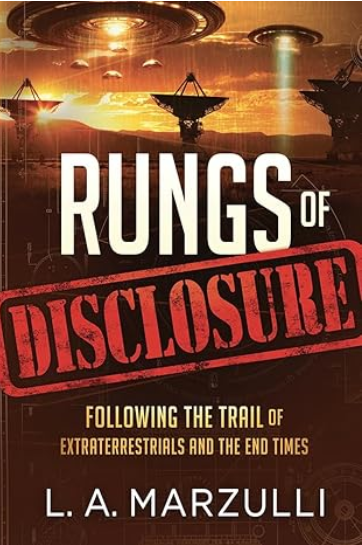
As the global push toward disclosure continues, a Catholic nun is warning that many reported alien encounters may be rooted in the spiritual realm rather than visitors from distant planets.
“I think sooner look at the demonic side than the extraterrestrial,” Mother Miriam said, according to the Daily Mail.
She called fallen angels the “best explanation” for many UFO sightings and alleged alien encounters.
“The Catholic position, there is such a thing as extraterrestrial intelligence,” she said. “These creatures really are from another world, the spiritual world. They’re what we call angels.”
Mother Miriam warned that an intense fascination with UFOs and paranormal phenomena can become a distraction from God.
“If they can get people wrapped up in theories of alien visitations and extraterrestrial visitors to Earth, if they can get them absorbed and fascinated by any number of paranormal phenomena and distracted from God, they will have succeeded in their diabolical mission to deceive and to destroy,” she said.
She also acknowledged the Catholic Church has not definitively ruled out extraterrestrial life, saying, “It’s possible there are other planets. The church is not definitive on that.”
Her comments come less than a month after Monsignor Stephen Rossetti was removed from his role as an exorcist for the Archdiocese of Washington after publicly linking many UFO sightings to demonic activity. Cardinal Robert McElroy said Rossetti’s statements “linking UFOs to demonic presence and the Center’s recent use of social media gravely undermine the Church’s very precise teaching on the devil, demons and exorcism.”
Rossetti later asked forgiveness “for any ways that I have not been faithful to the teachings of the Church’s Magisterium” and reaffirmed his commitment to Church authority. Whether Mother Miriam’s remarks will prompt any response from Catholic leadership remains to be seen.
The ongoing conversation surrounding disclosure should drive us deeper into God’s Word, not into fear or speculation. Scripture warns that a time of great deception is coming, declaring, “God sends them a strong delusion, so that they may believe what is false” (2 Thess. 2:11-12).
Whatever unfolds as disclosure continues, it does not change who Jesus Christ is. He remains Lord, His Word remains true, and He is coming again just as He promised. As questions surrounding UFOs and non-human intelligence continue to grow, we should be prepared to answer them with biblical truth, pointing people to the gospel above every other narrative.
James Lasher, a seasoned writer and editor at Charisma Media, combines faith and storytelling with a journalism background from Otterbein University and ministry experience in Guatemala and at the LA Dream Center. A Marine Corps and Air Force veteran, he is the author of The Revelation of Jesus: A Common Man’s Commentary and a contributor to Charisma magazine. For interviews and media inquiries, please contact [email protected].
Is the Global Heat Wave an End-Times Sign? What the Bible Says About Heat, Judgment and the Future Temple
Can extreme heat tell us something about biblical prophecy?
That’s the question raised by a recent report from Israel365 News, which connects several Old Testament passages—including prophecies from Moses, Haggai, Malachi and Isaiah—to today’s record-breaking temperatures and renewed interest in rebuilding the Third Temple in Jerusalem.
Whether or not the report’s conclusions prove correct, it points us back to Scripture—and that’s always a worthwhile place to begin. Rather than dismissing the idea or accepting it uncritically, let’s examine what God’s Word actually says.
Moses’ warning
The discussion begins in Deuteronomy 28, where Moses warned Israel about the consequences of turning away from God.
“And your skies above your head shall be copper, and the earth beneath you shall be iron” (Deut. 28:23).
Describing the verse, the report says, “No rain. No relief. The sky sealed shut like a lid on a boiling pot.”
Moses spoke these words to Israel under the Mosaic Covenant. Even so, they remind us that God is sovereign over creation and has often used the natural world to accomplish His purposes. That doesn’t mean every heat wave fulfills prophecy, but neither should we ignore the biblical pattern.
Perhaps the most intriguing passage the report highlights is Haggai.
After Israel returned from Babylon, the people rebuilt their own homes while neglecting the House of God. The prophet connected that neglect with drought:
“Therefore, the heavens above you have withheld the dew, and the earth has withheld its produce. And I called for a drought on the land…” (Hag. 1:10-11).
From that passage, the report concludes, “The equation is clear. A people in the Land of Israel who neglect the Temple invite climatic punishment. The inverse is equally true: building the Temple invites restoration.”
That is the report’s interpretation. We affirm that Jesus Christ is God’s provision for our salvation. At the same time, Scripture teaches that a Temple will stand in Jerusalem during future end-times events, making Haggai’s prophecy especially interesting as discussion surrounding the Temple continues to grow.
Malachi, Isaiah and the future
The report also points to Malachi’s description of a coming day “burning like a furnace” (Mal. 4:1) and Isaiah’s prophecy that “the light of the sun shall become sevenfold” when the Lord restores His people (Isa. 30:26).
Could those passages relate to future events still ahead? It’s possible. Scripture doesn’t identify today’s heat wave as their fulfillment, but neither does it tell us to dismiss the comparison. Instead, we’re called to examine these passages carefully and test every interpretation against God’s Word.
Why this matters
The report also notes that support among Israeli Jews for rebuilding the Third Temple has risen from 30% to 55% over the past 12 years.
That’s significant because Scripture plainly teaches that a Temple will exist in Jerusalem during future end-times events (Dan. 9:27; Matt. 24:15; 2 Thess. 2:3-4; Rev. 11:1-2). As interest in rebuilding the Temple grows, it’s understandable why these prophetic passages are receiving renewed attention.
John wrote, “Beloved, do not believe every spirit, but test the spirits to see whether they are from God” (1 John 4:1). We should approach prophetic claims with that same discernment. Likewise, the sons of Issachar “had understanding of the times, to know what Israel ought to do” (1 Chron. 12:32). As we watch events unfold around the world, we are called to have that same biblical wisdom—testing what we hear, searching the Scriptures and discerning the signs of the times.
We are living in prophetic days, and the world around us continues to remind us that God’s Word is unfolding exactly as He said it would. Is this historic heat wave another sign pointing us toward what the prophets foresaw? It’s a question worth asking and prayerfully examining. We should never force current events into biblical prophecy, but neither should we dismiss them without first measuring them against Scripture.
As we watch, pray and seek the Lord, may we remain grounded in His Word, sensitive to the leading of the Holy Spirit and ready for the return of Jesus Christ.
James Lasher, a seasoned writer and editor at Charisma Media, combines faith and storytelling with a journalism background from Otterbein University and ministry experience in Guatemala and at the LA Dream Center. A Marine Corps and Air Force veteran, he is the author of The Revelation of Jesus: A Common Man’s Commentary and a contributor to Charisma magazine. For interviews and media inquiries, please contact [email protected].
Pope Leo Faces Major Test as Catholic Division Deepens
Pope Leo XIV is facing another major challenge of His pontificate after issuing an urgent appeal to a breakaway Catholic group to abandon plans to consecrate four bishops without Vatican approval.
In a letter addressed to the Rev. Davide Pagliarani, leader of the Society of St. Pius X, the pope warned that the planned ceremony in Econe, Switzerland, would deepen a decades-old division within the Roman Catholic Church and place those involved outside the church’s communion.
“I plead with you and ask you with all my heart: please turn back!” Leo wrote.
The Society of St. Pius X, commonly known as SSPX, announced it intends to move forward with the consecrations, arguing there is a “state of necessity” requiring additional bishops to serve its faithful.
According to Roman Catholic canon law, consecrating bishops without papal approval is considered a schismatic act and carries automatic excommunication for both the bishop performing the consecration and those being ordained.
Leo warned the consequences would extend beyond church leadership.
“I urge you to consider carefully the spiritual good of the faithful, because the schismatic act you are about to undertake would deprive them of the licit, and in some cases, even valid reception of the sacraments,” the pope wrote.
The dispute traces its roots to the aftermath of the Second Vatican Council. The Society of St. Pius X was founded in opposition to several church reforms, including permitting Mass to be celebrated in local languages rather than exclusively in Latin.
The group maintains it is preserving authentic Catholic teaching while remaining outside the Vatican’s official authority.
The current dispute closely mirrors events in 1988, when the society’s founder, Archbishop Marcel Lefebvre, consecrated four bishops without papal approval. The Vatican responded by excommunicating Lefebvre and the newly consecrated bishops. Those excommunications were lifted in 2009 as part of an effort to restore relations, but the SSPX has never returned to full communion with the Roman Catholic Church.
Despite its irregular status, the organization has continued to grow, reporting hundreds of priests, seminarians and religious members serving in dozens of countries.
Jesus prayed that His followers “may all be one” (John 17:21), while also calling His people to remain rooted in truth. Scripture likewise reminds us that “All Scripture is inspired by God and is profitable for doctrine, for reproof, for correction, for instruction in righteousness” (2 Tim. 3:16).
As we watch divisions unfold across the broader Christian landscape, we should be reminded to remain anchored in the authority of God’s Word, to pursue unity grounded in biblical truth, and to faithfully contend for the faith once delivered to the saints.
James Lasher, a seasoned writer and editor at Charisma Media, combines faith and storytelling with a journalism background from Otterbein University and ministry experience in Guatemala and at the LA Dream Center. A Marine Corps and Air Force veteran, he is the author of The Revelation of Jesus: A Common Man’s Commentary and a contributor to Charisma magazine. For interviews and media inquiries, please contact [email protected].
Isaiah Saldivar: 10 Demons Every Christian Should Know About
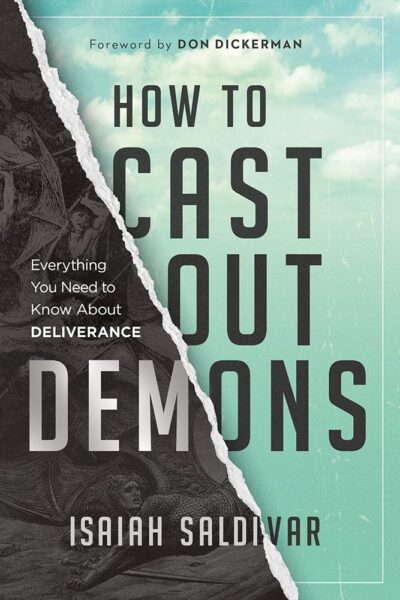
Deliverance minister and revivalist Isaiah Saldivar says too many Christians are unaware of how demons operate, how they gain access and how Jesus has given believers authority over the powers of darkness.
In a recent teaching titled “10 Demons Every Christian Should Know About,” Saldivar said the goal is not to glorify demons, but to expose darkness and point believers back to the authority of Jesus Christ.
“We’re not magnifying darkness,” Saldivar said. “We’re magnifying Jesus. But, we are going to expose darkness.”
The spirit of fear
Saldivar said the spirit of fear is one of the enemy’s primary tools to paralyze Christians and keep us from obeying God.
“God has not given us the demon of fear,” Saldivar said. “You could use that translation. It’s a spirit.”
He said this spirit often works through intimidation, panic, irrational fear and constant dread. For believers, he said, fear can keep us from preaching, praying for the sick, evangelizing or stepping into the calling God has placed on our lives.
“The enemy doesn’t need to physically chain you down if he can keep you intimidated not wanting to do what God told you to do,” he said.
The lying spirit
Saldivar pointed to 1 Kings 22 and John 8:44 to explain what he called the lying spirit, saying Satan’s strategy is not always an obvious lie, but a believable distortion of the truth.
“It’s not obvious lies,” Saldivar said. “It’s a strategy to make lies sound believable.”
He said this spirit works by attacking what God has spoken, just as the serpent did in Genesis when he asked, “Has God indeed said that?”
“The lying spirit whispers, ‘God doesn’t love you. You’re never going to change. You don’t need to repent. You’re the exception. It’s fine. God isn’t speaking. You’re not really saved,’” he said.
The spirit of infirmity
Saldivar said not every sickness is caused by a demon, but he also warned that Christians should not ignore the biblical connection between some sickness and demonic oppression.
“The Bible clearly teaches that not all sickness is caused by demons,” he said. “But at the same time, the Bible clearly teaches that some sicknesses and infirmities are connected to demonization or having a demon.”
Pointing to Luke 13, he noted that the woman who was bent over for 18 years was described as having a spirit of infirmity.
“Whether your problem’s physical, whether your problem’s spiritual, whether your problem overlaps and is both, the answer will always be Jesus,” he said.
Saldivar said Mark 9 shows Jesus directly identifying a “deaf and dumb spirit,” proving that Scripture names specific demonic spirits.
“Jesus names the demon, and specifically calls it out by name,” Saldivar said.
He said this spirit is not only about physical hearing or speech, but also spiritual hearing and spiritual silence. It seeks to stop believers from hearing the Word of God and speaking the truth of the gospel.
“Satan loves that you’re silent,” he said. “He loves when a Christian doesn’t share their faith.”
Unclean and sexual spirits
Saldivar described unclean and sexual spirits as among the most common demonic bondages facing people today.
“There seems to be a category in scripture, at least in the New Testament, where there’s an unclean spirit, not just a demon,” he said.
He connected these spirits to lust, pornography, sexual addiction and perversion, saying the enemy takes what God created as pure and corrupts it.
“God wants you to have a pure sex life,” Saldivar said. “But an unclean spirit wants you to have a perverted sex life.”
He warned that sexual sin can become a spiritual doorway and said Jesus does more than forgive sexual sin; He breaks its power.
“Jesus didn’t just die to forgive sexual sin, he died to break the bondage of sexual sin,” he said.
Legion, torment and self-destruction
Using Mark 5, Saldivar said the account of Legion shows how demons seek isolation, torment and destruction.
“This is Satan’s ultimate goal, it’s a spirit of legion, torment, self-destruction,” he said.
He said this spirit can manifest through despair, self-harm, addiction, reckless behavior and suicidal thoughts. Its purpose is to destroy what God has created and sabotage what is good.
“Whatever’s good, you can find you destroy it,” Saldivar said. “That spirit is strong, it’s evil, it’s vile.”
The spirit of divination
Saldivar said Acts 16 identifies a spirit of divination and warned Christians to reject occult practices that seek supernatural guidance apart from God.
“Not every spiritual experience comes from God,” Saldivar said. “Not every manifestation from God, not every prophecy from God, not every voice is from God.”
He listed tarot cards, psychics, mediums, horoscopes, spirit guides, channeling, Reiki, manifestation practices and Ouija boards as spiritual doors Christians must avoid.
“Divination is seeking supernatural guidance apart from God,” he said. “It’s saying, ‘God, I don’t trust you to lead me. I’m going to find another source to lead me.’”
The religious spirit
Saldivar acknowledged that the Bible does not use the exact phrase “religious spirit,” but said the spirit is seen in the pride and hypocrisy Jesus confronted in the Pharisees.
“There is a religious spirit that’s just always denying God and fighting and asking questions and rebellious and replacing relationship with Christ with religion,” he said.
He said this spirit produces spiritual pride, judgment, performance-based Christianity and outward holiness without inward transformation.
“I don’t want people to think I’m Christian,” Saldivar said. “I want to actually be a Christian.”
The spirit of jealousy
Saldivar used Saul’s jealousy of David to show how envy can corrupt the heart and turn friends into enemies.
“Jealousy disguises itself as discernment,” he said. “Jealousy disguises itself as criticism and competition and offense.”
He said jealousy destroys churches, ministries, marriages, families and friendships because it causes people to see another person’s blessing as a threat.
“One of the fastest ways to identify the spirit of jealousy, and this is a spirit, is to ask yourself this question: Can I celebrate someone else’s success?” he said.
The Antichrist spirit
Saldivar closed by warning about the Antichrist spirit, which he said rejects Christ’s authority, lordship and exclusivity.
“The spirit of the antichrist rejects Christ’s authority; it rejects His lordship; it rejects His exclusivity,” he said. “It’s a lying demonic spirit.”
He said this spirit promotes false gospels, denies repentance, twists Scripture and treats Jesus as one option among many.
“The many ways to God, all roads lead to heaven, it’s antichrist,” Saldivar said.
The issue is not fear of demons, but confidence in Christ. Every spirit he described works toward bondage, confusion and destruction, but Jesus came to bring freedom, truth and abundant life. We must stay rooted in Scripture, walk in discernment and remember that the focus of the gospel is not the power of darkness, but the victory of Jesus Christ.
“Never forget this,” Saldivar said. “The focus of the gospel is not demons. The focus of the gospels is Jesus.”
James Lasher, a seasoned writer and editor at Charisma Media, combines faith and storytelling with a journalism background from Otterbein University and ministry experience in Guatemala and at the LA Dream Center. A Marine Corps and Air Force veteran, he is the author of The Revelation of Jesus: A Common Man’s Commentary and a contributor to Charisma magazine. For interviews and media inquiries, please contact [email protected].
This Radical New Consciousness Theory May Be Conditioning the World for the Coming Deception
A new theory reported on by the Daily Mail attempts to answer one of humanity’s oldest questions: Why are we conscious?
University of Edinburgh Professor Igor Rudan argues that consciousness is not simply our awareness of the world but an evolutionary adaptation that allowed humanity to mentally simulate possible futures before acting. His proposal goes even further, suggesting consciousness may be so fundamental that our experience of space and time emerged from it.
It is a fascinating hypothesis, but it also reflects a growing trend to explain humanity’s deepest mysteries without the Creator.
Scripture answers the question of origins before humanity ever enters the picture. “In the beginning God created the heavens and the earth” (Gen. 1:1). Space, time and the physical universe are not products of consciousness. They are part of God’s created order. Consciousness itself is one of God’s gifts to humanity, not the force from which reality emerged.
Created in God’s Image, Not by Consciousness
The theory assumes consciousness evolved because it gave humanity a survival advantage. By mentally simulating future outcomes, our ancestors supposedly became more successful than competing species.
God’s Word presents a completely different account.
Genesis 2:7 tells us, “Then the LORD God formed the man from the dust of the ground. He breathed the breath of life into his nostrils, and the man became a living being.” Adam did not gradually become self-aware through evolutionary development. He became a living person because God intentionally created him and breathed life into him.
That distinction shapes everything else Scripture teaches about humanity.
Rudan’s theory also suggests consciousness exists on a spectrum, with some animals possessing greater levels of awareness than others. While the Bible acknowledges that animals display remarkable intelligence, it establishes a clear distinction between mankind and every other living creature. Genesis 1:26-27 tells us that humanity alone was created in God’s image.
Our worth is not determined by intelligence, planning ability or evolutionary success but by the God who made us.
The theory also attempts to explain morality by suggesting consciousness evaluates future possibilities through emotions, risks and rewards. While those factors certainly influence our decisions, they do not explain why people instinctively recognize justice, guilt, sacrifice and evil. Romans 2:15 says God has written His law on our hearts, and our conscience bears witness to it. Human beings possess moral awareness because we answer to a moral Creator.
The Search for Humanity Without the Creator
Perhaps the greatest weakness of theories like this is not simply what they claim about consciousness but what they leave out. There is no Creator, no soul and no eternal purpose. Humanity becomes the product of natural processes rather than God’s intentional design.
Yet Scripture tells us that God “has also set eternity in their hearts” (Eccl. 3:11). Our longing for meaning, truth, beauty, and eternity cannot be reduced to an evolutionary advantage, for we were created to know the One who placed those desires within us.
This illustrates a broader trend that has become increasingly common across modern culture. Whether the discussion revolves around neuroscience, artificial intelligence, transhumanism or consciousness studies, many of today’s theories begin with the assumption that humanity can ultimately explain itself without God. They may differ in their conclusions, but they often arrive at the same destination: replacing the Creator with creation.
How Consciousness Is Shaping the Disclosure Narrative
That larger shift also helps explain why discussions about consciousness have become increasingly connected to the growing disclosure movement surrounding unidentified anomalous phenomena and alleged non-human intelligences.
While many questions remain about unexplained aerial phenomena (UAPs), a growing number of researchers, authors and public figures within the disclosure movement argue that the phenomenon is not simply technological but deeply spiritual.
Increasingly, they suggest humanity must undergo an expansion of consciousness or a collective awakening before it can fully understand or interact with alleged non-human intelligences.
That language should sound familiar.
Terms such as “raising consciousness,” “awakening,” “higher awareness,” “expanded perception” and “human evolution” have become common themes throughout New Age spirituality.
More recently, many of those same ideas have found their way into disclosure discussions, where consciousness is presented as the key that unlocks humanity’s next stage of existence.
Whether intentional or not, theories that elevate consciousness as the foundation of reality help prepare people to embrace that broader worldview. If consciousness becomes the ultimate source of truth, purpose and even existence itself, it becomes much easier to accept spiritual claims that encourage people to look inward for so-called enlightenment rather than upward to the God who created them.
Scripture repeatedly warns us that deception often begins by replacing God’s truth with an alternative explanation for reality. Romans 1:25 says people “exchanged the truth of God for the lie, and worshiped and served the creation rather than the Creator.” That warning is just as relevant today as our culture increasingly looks to human consciousness instead of God’s revelation to answer life’s greatest questions.
This does not mean Professor Rudan is promoting New Age spirituality or that every scientist studying consciousness shares those beliefs. His work is presented as an attempt to explain consciousness through evolutionary biology. Yet ideas rarely remain confined to academic journals. They often become the philosophical foundation upon which broader cultural and spiritual movements are built.
Our greatest need has never been expanded consciousness. Our greatest need is redemption through Jesus Christ. Sin has darkened humanity’s understanding, but Christ came to reconcile us to the Father and renew our minds through His truth. Consciousness is one of God’s most extraordinary gifts, but it was never meant to replace the One who gave it. The more we discover about the remarkable design of the human mind, the more it should lead us to worship its Designer.
James Lasher, a seasoned writer and editor at Charisma Media, combines faith and storytelling with a journalism background from Otterbein University and ministry experience in Guatemala and at the LA Dream Center. A Marine Corps and Air Force veteran, he is the author of The Revelation of Jesus: A Common Man’s Commentary and a contributor to Charisma magazine. For interviews and media inquiries, please contact [email protected].
Ahead of America’s 250th, Rare Founding Artifacts Reveal the Bible’s Enduring Influence on the Nation
As Americans prepare to celebrate the nation’s 250th birthday this week, a new exhibit invites visitors to look beyond modern debates and examine the nation’s founding through the words and artifacts left by those who lived it.
The Museum of the Bible in Washington has unveiled a special collection featuring original founding-era documents, family Bibles and historical artifacts that trace Scripture’s influence on America’s earliest years.
Among the exhibit’s centerpiece items are the first Bible printed in English in America, family Bibles belonging to several Founding Fathers and an original letter from Thomas Jefferson discussing religious liberty.
The exhibit arrives at a significant moment. As our nation approaches a milestone birthday, it offers an opportunity to reflect not only on America’s political history but also on the biblical ideas that shaped many of its earliest conversations about liberty, human dignity and public life.
Original documents tell the story
Rather than asking visitors to accept a particular interpretation, museum officials say the collection centers on primary historical sources.
“The Bible has been an integral part of this nation’s founding and history,” Anthony Schmidt, the museum’s director of collections and curatorial, told Fox News Digital.
The exhibit explores how biblical language appeared throughout the founding era and influenced discussions surrounding education, government and individual freedom.
More than church history
One section highlights the role Scripture played in everyday colonial life, displaying family Bibles owned by several Founding Fathers and other prominent Americans.
“These objects show the Bible’s impact not only on religious life, but on early American art, education and politics,” Schmidt said.
The collection also includes Revolutionary-era publications that helped unite the colonies, documents tracing early Jewish civic life in America, portraits of George Washington and other colonial figures, a hand-colored lithograph honoring Abraham Lincoln and busts of George Washington and Benjamin Franklin.
Another section examines the relationship between faith and government through Jefferson’s writings on religious liberty and one of America’s earliest published arguments for resisting tyranny.
Let the evidence speak
Schmidt said one of the exhibit’s primary goals is to encourage Americans to study original historical documents rather than relying solely on modern interpretations.
“We want visitors to encounter the history of this country and see, in the primary documents, what impact the Bible actually had on the people who built it,” he said.
He also acknowledged that America’s founders did not agree on every religious point.
“Many of the founders disagreed about religion, and disagreed sharply, but they were still shaped by the Bible’s language and arguments,” Schmidt said. “We want people to engage with that evidence and come to their own conclusions.”
Looking toward America’s next chapter
As preparations continue for America’s 250th anniversary celebration, the exhibit serves as a reminder that the nation’s earliest leaders frequently turned to biblical language when discussing liberty, justice and human dignity. While historians continue to debate the degree of that influence, the original documents themselves remain an important part of America’s story.
The approaching anniversary is also an opportunity to pray for our nation, to thank God for His faithfulness throughout our history, and to ask Him to guide America toward another generation that honors Him.
James Lasher, a seasoned writer and editor at Charisma Media, combines faith and storytelling with a journalism background from Otterbein University and ministry experience in Guatemala and at the LA Dream Center. A Marine Corps and Air Force veteran, he is the author of The Revelation of Jesus: A Common Man’s Commentary and a contributor to Charisma magazine. For interviews and media inquiries, please contact [email protected].
Daniel Adams: 8 Biblical Ways to Prepare While Waiting on a Prophetic Word
Many of us have received a prophetic word we believe came from God, only to spend months—or even years—wondering when it will come to pass. Seasons of waiting can test our faith, producing either perseverance or discouragement depending on where we keep our focus.
In a recent teaching, Daniel Adams addressed that challenge by sharing eight biblical principles for waiting well. Rather than encouraging us to chase more prophetic words, Adams urged us to become the kind of disciples who can faithfully steward what God has already spoken. His message serves as a reminder that while we often focus on the promise, God is also focused on preparing us for it.
1. Stay faithful with what God already told you
Adams began with what he called the foundation of the entire process: obedience.
“What happens sometimes is people get a new prophetic word and they forget the first thing God told them that even got them to the place of getting other prophetic words,” Adams said. “They like completely just throw it away.”
Instead of continually searching for another revelation, Adams encouraged us to remain faithful to the last instruction God gave us.
“So many people want a new prophetic word while neglecting the last thing that God told them to do,” he said.
Quoting Luke 16:10, Adams reminded us, “He that is faithful in that which is least is faithful also in much.”
His practical challenge was straightforward: “Ask yourself this … Am I obeying the last instruction God gave me?”
Before God entrusts us with more, we must first faithfully steward what He has already placed in our hands.
2. Seek the Giver more than the gift
Adams warned us not to allow prophetic promises to become the center of our faith.
“A prophetic word should draw you closer to God, not replace intimacy with him,” he said.
He added, “Don’t become so focused on the promise that you neglect the promiser.”
Rather than pursuing supernatural experiences for their own sake, Adams emphasized cultivating daily intimacy with God.
“Spend time in prayer, read the word, and worship him daily,” he said.
He concluded with perhaps the most important reminder of the entire teaching.
“Your relationship with God is more important than any prophetic gift or promise.”
As followers of Christ, our greatest pursuit should never be the fulfillment of a prophecy—it should always be knowing Jesus more deeply.
3. Prepare for what God promised
Waiting, Adams said, should never become passive.
“If you’re going to get a prophetic word, you need to have a landing place,” he said. “You have to prepare for what God promised.”
He repeatedly emphasized that preparation is an expression of faith.
“Faith prepares before it sees results.”
If God has promised increase, Adams said we should begin preparing now rather than waiting until it arrives.
“If God says he is bringing increase, you better be preparing for increase.”
Likewise, if God has promised influence or leadership, we should begin developing those abilities today.
“If God says he’s sending people, then you better be prepared to lead people.”
He summarized the principle with a simple statement:
“We don’t just wait—we build, learn, grow for what God has spoken.”
Quoting Habakkuk 2:3, Adams reminded us that God’s vision comes at “the appointed time.”
He also cautioned us not to allow delayed fulfillment to produce unbelief.
“So don’t allow disappointment to turn into unbelief.”
Adams noted that God sometimes removes certain relationships before fulfilling His promises because not everyone is meant to accompany us into the next season.
“Don’t be surprised as prophecy is coming to pass in your life if people that were with you are not with you anymore.”
6. Guard your words
Adams spent considerable time emphasizing the importance of speaking in agreement with God’s promises.
“Your words should agree with what God has spoken,” he said.
He warned that we often undermine our own faith through careless speech.
“So many people cancel their faith by speaking fear, doubt, and unbelief.”
Adams specifically cautioned against repeatedly saying things such as:
“It’s never going to happen.”
“Maybe God forgot about me.”
“Nothing is changing.”
Instead, we should choose to speak God’s promises over our circumstances rather than allowing our circumstances to dictate our confession.
Quoting Proverbs 18:21, Adams reminded us, “Death and life are in the power of the tongue.”
7. Keep serving while you wait
Rather than putting ministry on hold until a prophetic word comes to pass, Adams encouraged us to continue faithfully serving wherever God has placed us.
“Keep serving while you wait,” he said.
Looking to Scripture, he pointed out that David served before becoming king, Joseph served before ruling Egypt and Jesus served before His exaltation.
He encouraged us to continue serving our churches, our families and God’s people.
“Faithfulness during obscurity prepares you for visibility.”
According to Adams, true servanthood produces the humility necessary to handle future promotion.
“The meek shall inherit the earth.”
8. Trust God’s timing
Adams concluded by reminding us that God sees what we cannot.
“God’s timing is perfect,” he said.
He encouraged us to trust God’s process even when circumstances make little sense.
“He sees things we cannot see and prepares us for what he has prepared for us.”
Drawing from Romans 4:21, Adams added, “If God promised it, He is able to bring it to pass.”
His encouragement was simple but powerful: “Trust the process. Trust the timing. Trust the Lord.”
Waiting is preparation
Adams cautioned us not to treat prophetic words as substitutes for discipleship.
“A prophetic word is not replacement for discipleship,” he said.
He also encouraged us to write prophetic words down, pray over them and remain submitted to biblical discipleship while allowing God to fulfill His promises in His perfect timing.
Whether we are waiting on a calling, a ministry opportunity, restored relationships or another promise the Lord has spoken over our lives, Adams’ central message is one we would all do well to remember: God is just as interested in preparing us as He is in fulfilling the promise.
As we continue to seek Jesus, serve faithfully and allow the Holy Spirit to shape our character, we position ourselves to steward whatever He chooses to entrust to us. Waiting is never wasted when God is using it to make us more like Christ.
James Lasher, a seasoned writer and editor at Charisma Media, combines faith and storytelling with a journalism background from Otterbein University and ministry experience in Guatemala and at the LA Dream Center. A Marine Corps and Air Force veteran, he is the author of The Revelation of Jesus: A Common Man’s Commentary and a contributor to Charisma magazine. For interviews and media inquiries, please contact [email protected].
Marco Rubio Shares the Gospel, the Second Coming and Why Christians Should Never Fear the Future with Pastor Greg Laurie
Secretary of State Marco Rubio spends his days helping shape American foreign policy while navigating wars, hostage negotiations and global crises. Yet during a recent interview with Pastor Greg Laurie, the conversation focused less on geopolitics than on the Gospel, the return of Jesus Christ and the hope Christians have in Him.
Laurie praised Rubio’s remarks during the memorial service for Charlie Kirk, saying they clearly communicated the heart of the Christian faith.
“I thought you did a better job presenting the gospel than some preachers I’ve heard,” Laurie told Rubio. “It was theologically accurate, it was passionate, and it was also understandable.”
Rubio responded that he spoke from the heart.
“I think these things always come best from the heart,” he said.
‘God Took on the Form of a Man’
Rubio recalled the message he shared at Kirk’s memorial, beginning with humanity’s creation and the entrance of sin into the world.
“His deep belief that we were all created, every single one of us, before the beginning of time by the hands of the God of the universe, an all-powerful God who loved us and created us for the purpose of living with Him in eternity.”
“But then sin entered the world and separated us from our creator.”
“And so God took on the form of a man and came down and lived among us.”
“And He suffered like men. And He died like a man. But on the third day, He rose unlike any mortal man.”
Rubio emphasized the physical resurrection of Christ.
“He didn’t rise as a ghost or as a spirit, but as flesh.”
He concluded by pointing to Christ’s promised return.
“And then He rose to heaven, but He promised He would return. And He will.”
‘Christians Should Never Live in Fear’
Laurie later asked Rubio how he handles the enormous responsibility of serving as secretary of state while facing increasingly unstable world events.
Rubio said Christians have a unique reason to live without fear.
“Of all the faiths in the world, and I’m not prejudging or criticizing anybody, but of all the faiths in the world, the ones who should never live in fear or the ones who should never live in worry that becomes paralyzing are Christians because we know how it ends.”
He compared the Christian life to watching a movie whose ending is already known.
“You know how it ends. You know the lead character survives, but nonetheless, you still get nervous every time you see it.”
Rubio then pointed to the promises found in Scripture.
“We know that at the end of time there’ll be a new heaven and a new earth and that Jesus will return.”
He acknowledged that difficult days will come before Christ returns but reminded believers of the certainty of God’s promises.
“We know how the movie ends. We know how the story ends.”
“We don’t know when it ends. We can’t detail exactly how that’s going to play out, but we know generally the thematic of it and the thematic of it is victory and the restoration of what we should have been from the very beginning.”
Rubio also reflected on why death exists.
“We were not… death is not a natural… it’s natural because it entered into the world through sin.”
“But we were never meant to die. We were not created to die.”
Living Faithfully While Waiting for Christ’s Return
Laurie asked Rubio whether current world events make him think Jesus’ return could be near.
“If you look at the 2,000 years of Christianity every generation has believed they lived in the end times.”
He noted that every era has experienced global turmoil and pointed to Jesus’ own teaching about His return.
“I think it’s almost a trap… we’re basically told that it… whether it’s death or the second coming it’ll come as a thief in the night.”
“So, rather than try to predict it or anticipate it, I think you just sort of understand that’s how the story ends and in the meantime, this is what we’re called to do — to live our faith.”
‘Ours Is a Faith of the Cross’
Laurie also asked Rubio whether openly living out his Christian faith has come at a political cost.
Rubio said followers of Christ should expect opposition.
“The gospel’s clear you’ll be hated for it.”
“Ours is a faith of the cross.”
“It’s not the faith of winning the lottery… and there’s nothing wrong with wealth. There’s nothing wrong with success. There’s nothing wrong with happiness.”
“But I think it’s a misunderstanding of Christianity to believe that it’s a… faith that leads to… happiness and prosperity.”
Reflecting on church history, Rubio said Christianity has often been strongest when believers remained faithful under pressure.
“If you look at the era of Christianity where Christianity has been strongest and most vibrant is when it’s countercultural.”
“When it’s been strong and the most vibrant is when it’s been oppressed.”
“We don’t seek oppression. We don’t seek to… be… hated, but it’s going to happen.”
A Public Witness
Laurie concluded the interview by expressing gratitude that Rubio has been willing to speak openly about his faith while serving in one of the nation’s highest offices.
“I think that God has raised you up for this moment to do exactly what you’re doing,” Laurie said.
Throughout the interview, Rubio consistently returned to the same message. While the world faces uncertainty and conflict, Christians have reason for confidence because of the Gospel, Christ’s resurrection and the promise that one day He will return.
James Lasher, a seasoned writer and editor at Charisma Media, combines faith and storytelling with a journalism background from Otterbein University and ministry experience in Guatemala and at the LA Dream Center. A Marine Corps and Air Force veteran, he is the author of The Revelation of Jesus: A Common Man’s Commentary and a contributor to Charisma magazine. For interviews and media inquiries, please contact [email protected].
Controversial New Study Claims Gossip May Be Good for You: Scripture Says Otherwise
A new study reported on by the Daily Mail is drawing attention for a provocative claim: People who gossip and spread rumors are more likely to be in romantic relationships and have children.
Researchers analyzed nearly 1,500 adults and concluded that what they call “relational aggression” — gossiping, spreading rumors and socially excluding others — may have offered an evolutionary advantage by helping people attract or keep romantic partners. The authors even suggested the behavior “could be under natural selection” in modern humans.
From a purely descriptive standpoint, the researchers identified a statistical association. They did not establish that gossip causes relationship success or larger families.
For us as Christians, however, the more important question is not whether a sinful behavior can appear to produce an earthly advantage. Scripture repeatedly shows that sin can seem profitable for a season while ultimately producing destruction.
The Bible never treats gossip as a virtue, a relationship strategy or a tool for success. Instead, it consistently portrays it as something that damages friendships, divides communities and grieves God.
The danger of calling sin an advantage
Throughout history, people have justified sinful behavior because it appeared to “work.”
Lying can gain temporary advantages. Greed can produce wealth. Pride can bring worldly recognition. Manipulation can sometimes achieve influence.
That does not make those behaviors righteous.
Likewise, even if someone used gossip to damage a rival’s reputation or elevate their own social standing, Scripture would never redefine that behavior as good because it produced a desired outcome.
The Christian standard is not, “Does this increase my success?” It is, “Does this honor God?”
Jesus calls His followers to holiness, not merely effectiveness.
Proverbs 16:28: “A perverse man sows strife, and a whisperer separates the best of friends.” Gossip doesn’t strengthen relationships—it destroys them. Even close friendships can be shattered when rumors and whispered accusations take root.
Proverbs 11:13: “A talebearer reveals secrets, but he who is of a faithful spirit conceals the matter.” God honors people who can be trusted. Mature believers protect confidences instead of using someone else’s failures or private struggles as conversation material.
Proverbs 20:19: “He who goes about as a talebearer reveals secrets; therefore do not associate with a gossip.” This is one of Scripture’s strongest warnings. Rather than embracing gossipers because they seem influential or entertaining, we are told to be cautious about allowing them into our closest circles.
Proverbs 26:20: “Where there is no wood, the fire goes out; so where there is no talebearer, strife ceases.” Gossip fuels conflict the way wood fuels a fire. Refusing to pass along rumors is often the quickest way to stop division before it spreads.
Leviticus 19:16: “You shall not go up and down as a talebearer among your people…” Even under the Old Covenant, God made it clear that spreading damaging stories about others had no place among His people. Our words should protect our community, not tear it apart.
Ephesians 4:29: “Let no unwholesome word proceed out of your mouth, but only what is good for building up, that it may minister grace to the hearers.” Before speaking, we should ask a simple question: Will these words build someone up or tear someone down? If they don’t impart grace, they shouldn’t leave our mouths.
James 4:11: “Do not speak evil of one another, brothers.” Speaking negatively about fellow believers is more than poor behavior—it undermines the unity Christ desires for His Church.
James 1:26: “If anyone among you thinks himself to be religious, and does not bridle his tongue but deceives his own heart, this man’s religion is worthless.” James doesn’t separate spiritual maturity from our speech. A tongue that is out of control reveals a heart that still needs to be surrendered to God.
Psalm 141:3: “Set a guard, O Lord, over my mouth; keep watch over the door of my lips.” David recognized that controlling our words is difficult. This verse is a reminder to ask God daily for wisdom before we speak.
1 Peter 4:15: “But let none of you suffer… as a busybody in other men’s matters.” Gossip often begins with inserting ourselves into situations that aren’t ours to manage. Peter encourages us to mind our own affairs instead of becoming consumed with everyone else’s.
Discernment in an age of conflicting messages
Studies can offer useful observations about human behavior, but Christians are called to evaluate every claim through the lens of Scripture.
If a culture begins celebrating a behavior that God warns against, our response should not be to adjust Scripture to fit the culture. It should be to let Scripture remain our standard.
Whether intentional or not, presenting gossip as something beneficial risks normalizing a sin that God repeatedly condemns. We are called to be people whose words heal rather than wound, unite rather than divide, and reflect the character of Christ rather than the values of the world.
Our culture may reward gossip for a time. God’s Word calls us to something better.
James Lasher, a seasoned writer and editor at Charisma Media, combines faith and storytelling with a journalism background from Otterbein University and ministry experience in Guatemala and at the LA Dream Center. A Marine Corps and Air Force veteran, he is the author of The Revelation of Jesus: A Common Man’s Commentary and a contributor to Charisma magazine. For interviews and media inquiries, please contact [email protected].
Levites Sing Psalms on Temple Mount Again After Nearly 2,000 Years
For nearly 2,000 years, the songs of the Levites and their daily psalms used for temple services have been absent from the Temple Mount.
This week, that changed.
In a development that drew global attention, three Levites ascended the Temple Mount and sang the Shir shel Yom, the daily psalm for Tuesday traditionally recited during Temple worship.
The event comes just days after reports of another potential red heifer being born in Israel, adding to a growing list of developments surrounding efforts to restore Temple service.
According to a report by Israel365 News, the singers described the moment as the partial fulfillment of a centuries-old hope.
“We were moved today to fulfill — partially — our dream as sons of Levi: to sing the song of God on the holy mountain. Today, thank God, there are several organizations of Levites preparing for the day when we can stand again on the platform, and we invite our Levite brothers to inquire and join.”
The event was organized by the Beyadenu movement, which encourages Jewish prayer and worship on the Temple Mount. Organizers said the three Levites have been training together and periodically ascending the Mount to sing the daily psalm at the time corresponding to the ancient morning offering. A video of Tuesday’s event was also released.
This was not the first time the three Levites had ascended the Temple Mount to sing.
Around December 2025, the same group gathered to perform a song in memory of the victims of the Bondi Junction terror attack in Australia.
More Than One Event
By itself, the return of Levitical singing is historically remarkable.
Viewed alongside other recent developments, however, it becomes another piece of a much larger picture.
Over the past several years, preparations connected to a future Temple have steadily advanced. Priests have continued training for Temple service. Sacred vessels and priestly garments have been recreated. The Temple Institute has continued its work surrounding the biblical red heifer, and recent reports of another potential red heifer born in Israel have once again fueled discussion about ritual purification and future Temple worship.
Now, after nearly two millennia of silence, Levites are once again publicly performing one of their ancient Temple responsibilities on the Temple Mount.
The organizers emphasized that this is only the beginning, calling for additional Levites to join the growing choir in preparation for expanded service.
The article also notes that the singers stood on the historic 15 steps associated with the Songs of Ascents and that Levitical music was never viewed as mere ceremony.
Quoting 1 Chronicles 25:1, the organizers wrote:
David and the commanders of the army set apart for the service the sons of Asaph, Heman, and Jeduthun, who prophesied with lyres, harps, and cymbals.
According to Jewish tradition cited in the report, Temple sacrifices offered without the accompanying Levitical songs were considered incomplete.
Why Christians Are Watching
For us as Christians, the significance of these developments is not that they establish a date for Christ’s return. Scripture is clear that no one knows that day or hour.
Nor do we look to a restored Temple for salvation. Jesus Christ fulfilled the sacrificial system once for all through His death, burial and resurrection.
Even so, many students of Bible prophecy pay close attention because Scripture describes a functioning Temple during the end times.
Daniel 9:27 speaks of sacrifices being halted midway through a future covenant. Jesus referred to the “abomination of desolation” standing in the holy place in Matthew 24:15. The apostle Paul wrote that the man of lawlessness will sit in God’s Temple, proclaiming himself to be God (2 Thess. 2:3-4).
Those passages do not tell us when a Third Temple will be built, nor do they place it before the Rapture. They do, however, describe a future Temple playing a significant role during the Tribulation.
That is why developments like the return of Levitical singing, ongoing priestly preparations and renewed attention surrounding red heifers continue to capture the attention of Christians around the world.
Whether these events ultimately become part of God’s prophetic timetable remains to be seen.
What cannot be denied is that the movement to restore Temple worship is no longer confined to ancient history or theological discussion. After nearly 2,000 years, Levites are once again singing on the Temple Mount, preparations continue on multiple fronts, and the conversation surrounding a future Temple is growing louder with each passing month.
And that is a development worth paying close attention to.
James Lasher, a seasoned writer and editor at Charisma Media, combines faith and storytelling with a journalism background from Otterbein University and ministry experience in Guatemala and at the LA Dream Center. A Marine Corps and Air Force veteran, he is the author of The Revelation of Jesus: A Common Man’s Commentaryand a contributor to Charisma magazine. For interviews and media inquiries, please contact [email protected].