Spiritual Crisis Deepens as ‘Demon Pronouns’ Trend Spreads
A concerning trend is rising among younger generations as some begin to adopt so-called “demon pronouns,” aligning themselves with identities rooted in darkness. For Christians, this signals something far more sinister than just a cultural curiosity—it’s a call to spiritual arms.
This trend continued gaining traction when a viral video featuring two young people, Jasper and Liana, where Liana shares that they use “they/demon” pronouns. The video, which circulated widely on social media, has shined a light on the very real spiritual warfare taking over the souls of people from all age ranges struggling with their gender identities.
In Ephesians 6:12, Paul reminds believers that “our fight is not against flesh and blood, but against principalities… against spiritual forces of evil.” This verse isn’t abstract; it’s a reminder of the ongoing spiritual warfare in our world. When young people embrace identities that glorify darkness, they’re opening doors to a spiritual oppression that may have lifelong consequences.
At its heart, this trend highlights a disturbing reality: in our absence, other voices rush in. Jesus called His followers to be “the salt of the earth” and “the light of the world” (Matt. 5:13-14). Yet, when the church is silent or disengaged, it leaves a vacuum. And as history shows, Satan is all too ready to fill that void, distorting identity and purpose.
This is the natural consequence of a culture adrift. When Christians fail to offer truth and hope, young people look elsewhere, often to identities and ideologies that ultimately harm rather than heal. Peter’s warning rings loudly here: “Be alert and of sober mind” (1 Peter 5:8), because if we ignore this spiritual crisis, our adversary will take advantage.
Our mission as believers has always been to lead—not with judgment, but with light. Now is the time for the church to reclaim its voice and its influence. If we do not step up to guide this generation, we leave them vulnerable to the spiritual forces that seek to mislead and bind them.
We cannot afford to stand by passively. Our culture, our youth and our spiritual future depend on believers taking up the call to be salt and light in a world that desperately needs it.
In an electric Sunday service at Trinity Church in Scottsdale, Arizona, Pastor Mark Driscoll called on Christians to step up, pray and make their voices heard in the upcoming election, emphasizing the biblical importance of voting. Driscoll was joined by prominent Christian leaders, including Senate candidate Carrie Lake, Turning Point USA founder Charlie Kirk, worship leader Sean Feucht and Pastor Jack Brewer, each of whom stressed the significance of this election for the future of the nation.
After a Spirit-filled session of praise and worship led by Feucht, Driscoll began by addressing the event that is on the forefront of many American minds: Election Day.
“Voting is not just a civic duty but a biblical one,” Driscoll told the congregation, urging them to elect leaders who uphold Christian values. He reminded attendees that this election is an opportunity for believers to “bring light into the darkness” and encouraged them to reach out to family and friends to ensure they vote.
Kirk spoke about Arizona’s critical role as a swing state, noting that counties like Maricopa could determine the nation’s direction. “This is not the time to sit on the sidelines,” Kirk said. “Our children’s future is at stake.” He called on the congregation to take action by helping others get to the polls, especially since many ballots remain unreturned.
Sharing her own journey through political and personal challenges, Lake reflected on the strength she’s found in her faith. “God put us here at this moment to help save this country,” she said, encouraging believers to rely on God’s purpose through difficult times.
Pastor Brewer addressed the issue of fatherlessness, calling it a pressing concern for both the church and the nation. He encouraged Real Faith Church to invest in young men as future leaders, stressing the church’s role in shaping character and purpose.
“We have a battle on our hands ladies and gentlemen it’s called fatherlessness this nation is the most fatherless nation in the world by far,” Brewer shares. “…We need righteous men of God.”
As each speaker emphasized, the call for Christians to participate in the world around them is rooted in Jesus’ command to be the salt and light of the earth, found in Matthew 5:13-16. This mandate shows us the importance of preserving truth and illuminating righteousness in our culture. Being salt means acting as a preservative against moral decay, while being light calls believers to reflect Jesus’ truth and love in a world shrouded in darkness.
Over 57 million Americans have already voted, and in some states more than half of the total expected vote is already in. So it may already be too late for a last minute surprise to alter the outcome of the election.
In 2020, Democrats absolutely dominated the early voting period, but in 2024 things are very close between Democrats and Republicans. Is this an indication that a “red landslide” is coming, or are Republicans simply shifting votes that would have been cast on Election Day into the early voting period? We will soon find out. In any event, the following are 8 major election developments that everyone needs to know about.
#1 The U.S. Supreme Court has ruled that the state of Virginia can purge approximately 1,600 non-citizens from its voter rolls.
The Supreme Court on Wednesday allowed Virginia to move forward with its removal of roughly 1,600 alleged noncitizens from its voter rolls just days before the 2024 election.
The high court granted a request from state officials to pause a lower court order that blocked Virginia from continuing its voter removal program that was launched in August, exactly 90 days before Election Day. A provision of the National Voter Registration Act requires states to complete programs aimed at purging ineligible voters from registration lists up to 90 days before federal elections.
#2 There were reports that officials in Bucks County, Pennsylvania had been turning away on-demand mail ballot voters early. Now a judge in Bucks Country has extended on-demand mail ballot voting until Friday, and this is considered to be a major victory for the Trump campaign.
Bucks County Judge Jeffrey Trauger has ordered the Bucks County Board of Elections to extend its on-demand mail-in ballot deadline until “the close of business” on Friday, Nov. 1.
The Wednesday afternoon ruling stems from a lawsuit filed several hours earlier by former President Donald Trump’s campaign and other state and national GOP groups claiming Bucks County illegally turned away voters.
The filing with the Bucks County Court of Common Pleas, posted online late Wednesday morning, alleges that the county violated the state’s election laws by not allowing some voters to use the “on-demand mail-ballot” option in the final hours of the mail-in ballot application at 5 p.m. Oct. 29.
#3 In Wisconsin, turnout in the conservative counties of Waukesha, Ozaukee and Washington is far higher than turnout in the liberal bastion of Dane County.
The conservative “WOW” counties of Waukesha, Ozaukee and Washington have increased their turnout advantage over liberal Dane County up to 12.16%. Dane’s turnout advantage going into Election Day 2020 was 0.9%. This represents a 13% turnout swing compared to ‘20.
#4 In Arizona, Republicans are doing a much better job of turning out “low propensity voters” than Democrats are.
A look at AZ voter frequency scores shows that Democrats are trailing Republicans by a couple of points in the zero, one, and two buckets, turning out more of their 3/3 voters.
It’s not an excellent combination for available votes down the stretch, so Republicans are likely to outvote Democrats by 300,000+.
#5 Abortion is on the ballot in both Arizona and Nevada, and this was supposed to be a major advantage for Kamala Harris in those states. But it turns out that vast numbers of pro-abortion voters are going to vote for Trump anyway.
While an Washington Post-Schar School poll conducted in October found that 68% of voters in Arizona and 80% of voters in Nevada say they planned to support their state’s abortion referendum, the same poll showed Harris narrowly behind Trump in Arizona and tied in Nevada. Harris’ support among likely voters in the poll was 46% in Arizona to Trump’s 49%, and they both had 48% support in Nevada.
Meanwhile, Trump—who has claimed credit for Roe’s reversal—has been working to assuage the concerns of independent and Republican voters who support abortion rights. In recent weeks, the former president has promised to veto a national abortion ban, after repeatedly refusing to make such a pledge. While he has maintained that each state should choose its own abortion laws, he said in a recent town hall geared toward women voters that many of the current bans are “too tough.”
Republican and independent voters who plan to split their ticket on abortion—voting for an abortion referendum and for Trump—said they were willing to give Trump the benefit of the doubt on the issue, with some feeling reassured by his recent promises not to crack down further on abortion.
#6 As I discussed yesterday, it appears that the Harris campaign may be giving up on the swing state of North Carolina. So far, Democrats in the state have cast over 300,000 fewer votes than they did at the same stage of the 2020 early voting period.
According to AdImpact, a political intelligence firm, on Monday the Harris-Walz campaign reserved $2.7 million worth of ads in North Carolina for the last stretch of the campaign, only to turn around and kill more than $2 million of its reservations on Tuesday. Though Harris is following through on a scheduled Raleigh rally on Wednesday morning—while Trump is holding his own event in Rocky Mount, NC—her campaign managers’ hopes of winning North Carolina’s 16 electoral votes have likely plunged as daily updates of early voting numbers continue to paint a grim picture of her prospects in the Tar Heel State.
The 2020 vs 2024 contrast in early voting patterns is striking. Compared to the same time four years ago, North Carolina Democrats have cast 341,000 fewer votes, while Republicans have cast 9,000 more, noted Andy Jackson of the Raleigh-based John Locke Foundation. Aside from the party mix, North Carolina is also seeing lower turnout among two traditional Democratic voter blocs: young people and blacks. In 2020, 92% of the state’s black voters backed Biden. Across the country, however, black support of Trump is surging.
#7 A television station in Pennsylvania is apologizing for broadcasting “randomly generated test results” that were meant to “help news organizations make sure their equipment is working properly in advance of election night.”
Test results for the upcoming Nov. 5, general election mistakenly appeared on WNEP-TV early Sunday evening during a broadcast of the Formula 1 Mexico Grand Prix.
Those numbers should not have appeared on the screen, and it was an error by WNEP that they did.
The numbers seen on the screen were randomly generated test results sent out to help news organizations make sure their equipment is working properly in advance of election night.
#8 It turns out that the incendiary devices that were used to set ballot boxes in Oregon and Washington on fire had a pro-Palestinian message inscribed on them.
Ballot boxes in Oregon and Washington were set on fire with incendiary devices early Monday in what authorities believe are connected incidents, police said.
The devices used in the arson incidents carried markings with the expression “Free Gaza,” two sources familiar with the ongoing investigation told ABC News.
Sadly, I believe that this is just the beginning of the chaos that is coming.
November 5, may be the end of the campaign, but it will also be the beginning of a very dark chapter in our history.
There is going to be such an outpouring of negative emotion in the aftermath of this election, and whoever emerges as the winner is going to be facing crisis after crisis.
7 Startling Ways Biden and Harris Are Misleading the Public
As the 2024 election approaches, the influence of media narratives and political leaders is once again in the spotlight. Despite Big Tech manipulation, evidence shows that President Joe Biden and Vice President Kamala Harris, along with various media outlets, are employing deceptive, fraudulent strategies to sway the opinions of American voters. From selective coverage to divisive rhetoric, these tactics may be shaping public perception in ways that often go unnoticed.
#1. The Biden White House edits an official transcript. In response to comedian Tony Hinchcliffe’s joke about Puerto Rico, President Joe Biden called Trump supporters, on video, garbage. The backlash from the sitting president labeling nearly half of the country as “garbage” was swift, and left the administration scrambling for a way to get out of the proverbial hot water. So, without the approval of the stenographer, they altered the transcript in potential violation of the Presidential Records Act of 1978 for releasing a false transcript.
The White House changed the official transcript of President Joe Biden‘s disputed remarks regarding former President Donald Trump’s supporters.
#2.Kamala Harris’ edited 60 Minutes Interview. After a disastrous, and scripted, interview with CBS’ program “60 Minutes,” the Harris campaign and the news station were hit with accusation of manipulation. Video evidence shows Kamala’s answer on a question being selectively edited. Donald Trump is now suing CBS News for $10 billion and accusing them of election interference.
#3. Karine Jean-Pierre’s track record as White House Press Secretary. Every press conference held by the embattled Pierre brings with it the possibility of being caught in another lie. From lying about FEMA money being used on illegal immigrants, border security, inflation, denying Biden called Trump supporters garbage and much more, Pierre has a reputation of ducking, dodging or outright lying about questions to the White House Press Pool, especially her old nemesis, Peter Doocy of Fox News.
KJP: "I'll see you guys tomorrow."
REPORTER: "You told us something SIX TIMES that turned out to be false. Are you sorry about that?"
#4. Kamala Harris becoming the Democratic Presidential Candidate. People on the right, left and middle were shocked when Harris took over as the DPC without winning a single primary victory. Democratic voters overwhelmingly rejected her as their candidate in 2020, and she held extremely low approval ratings as Vice President. That is until she became the nominee and the media shifted into high gear remaking her image to paint her as the greatest thing since sliced bread.
#5. Mark Zuckerberg admits to censoring social media at the Biden-Harris administration’s request. There is no such thing as free speech on Meta platforms, and Zuckerberg proved that when he admitted to censoring information related to COVID-19 content, business connections of the Biden family and the notorious Hunter Biden laptop.
Mark Zuckerberg has admitted that the Biden-Harris administration repeatedly pressured his company to censor content.@benshapiro exposed Zuckerberg and the government's involvement in censoring content a month ago during his testimony to Congress. WATCH: pic.twitter.com/ax69By9Bbf
#6. Google conducts massive misinformation scheme with the Harris campaign. Video evidence yet again revealed that tech-giant Google was in bed with the Democratic Party when an employee admitted that their search results are slanted in Harris’ favor. Not to mention they admitted to a “glitch” that allowed the Harris campaign to edit news headlines using search ads so readers would think they were actual news articles by sites such as Reuters, the Associated Press and others.
NEW: Google blames a “glitch” for how the Harris campaign was able to trick internet users into thinking reputable news sites were giving Kamala favorable reporting.
It’s really weird how these “glitches” always seem to benefit the left.
#7. KamalaHQ revealed to be manipulating Community Notes. The feature on X that is used to identify and correct incorrect information, the Community Notes, has been hijacked by a group of Harris supporters. It was revealed in a private Discord server chat how they would overwhelm a note and either have it removed, or replaced, with misinformation. Their account on X has been flagged several times for posting outright false information, yet they have regularly had any Community Notes removed thanks to this deceptive campaign.
‘Block Community Notes We Don’t Like’: Harris Campaign Caught Red-Handed Manipulating X To Censor Criticism https://t.co/nfIqSrvePU
Manipulation is often subtle, operating through influence, deceit or control to achieve hidden goals. The Bible warns against such behavior, calling for integrity and transparency in all interactions. Proverbs 12:22 says, “Lying lips are an abomination to the Lord, but those who act faithfully are His delight.” Scripture highlights honesty and truth as essential virtues, emphasizing that manipulation only sows distrust and discord. In a world filled with competing agendas, the Word of God reminds us that genuine leadership and persuasion come through sincerity and humility, not coercion or deceit.
This is evident in the positive reception many undecided voters have given Donald Trump and J.D. Vance for their appearances on multiple, large-platform podcasts recently, most notably The Joe Rogan Experience.
In the Bible, Absalom, King David’s son, used manipulation and charm to sway public favor, positioning himself as a better leader than his father. Through deceit and self-promotion, he worked to win the hearts of Israel, ultimately attempting to usurp the throne (2 Sam. 15:6).
Similarly, Kamala Harris has leveraged influence and alliances within the political, corporate and media spheres to gain authority without winning popular support in the primaries. Like Absalom’s quest for power, Harris’s path reflects how ambition can sidestep traditional channels, stirring controversy over legitimacy and leadership. While Absalom’s efforts led to division and conflict, voices continuously warn that the radical Left’s political manipulation threatens to erode what little trust is left in today’s institutions.
Are the Nephilim Set to Return Before Jesus Comes Back?
In a recent discussion with Prophecy Watchers, pastor and Bible teacher Rick Renner delves into an intriguing topic: will the Nephilim, the half-human, half-angelic beings mentioned in the Bible, make a return before Jesus comes again? Drawing from both ancient history and Scripture, Renner explains the signs of the end times, warning of events similar to those described before Noah’s flood.
Renner says the world’s ancient myths of gods and demigods weren’t simply flights of imagination, “In the ancient world, people think, ‘Oh, they just had overactive imaginations.’ No, they were closer to these events, and they remembered these events.” He notes that temples built by ancient civilizations were often dedicated to “fallen deities” that people believed were real, showcasing humanity’s historical connection to these extraordinary beings.
Renner links these events to biblical passages in 2 Peter and Jude, which discuss angels who “left their first estate” and committed “the unthinkable” by interacting with humans. These rebellious angels, Renner explains, were punished severely: “God put those rebellious angels in chains so they couldn’t move,” he says, emphasizing that these angels, creatures of light, are now bound in darkness “until the time of the great judgment.”
In discussing the days before the flood, Renner points to a growing corruption that spread through humanity, nearly destroying all purity except for Noah and his family. “Noah was blameless in his generation,” he notes, describing how Noah’s lineage remained untouched by this corruption. Renner sees a modern-day parallel in today’s trends, such as transhumanism and genetic manipulation, as people “violate boundaries that were never supposed to be violated.”
One of the most fascinating aspects of Renner’s discussion involves a prophecy about a faithful remnant who will stand strong at Jesus’ return. When Paul mentions “those that are alive and remain” in 1 Thessalonians 4, Renner explains that the Greek term refers to a remnant of believers who will remain “spiritually robust” in a time of widespread disbelief. This, he says, explains why Jesus asked, “When the Son of Man comes, will he find faith on the earth?” Renner believes the true Church will be small yet faithful, contrasting with a “fake church” that embraces worldly values.
As Renner sees it, recent events provide further confirmation that we are living in prophetic times. The reappearance of what he believes are the ruins of Noah’s Ark, first uncovered in 1948, coincided with the reestablishment of Israel. These events, he says, are not coincidental but “two end-time phenomena” reminding us of God’s plan and promise.
Though Renner warns of challenging times ahead, he reminds listeners that God’s power ultimately prevails. Just as Noah’s family remained pure and faithful, believers today can trust that Jesus will keep and rescue His bride. The Bible promises, “We have this hope as a sure and steadfast anchor of the soul,” (Heb. 6:19). Through every trial, believers can hold fast to the hope of Jesus’ return and the ultimate victory He brings.
Is Fear Stopping You from Fulfilling God’s Purpose in Your Life?
In a powerful sermon recently uploaded to YouTube, Pastor Jentezen Franklin speaks to those struggling with fear, urging them to live boldly and step into the fullness of God’s purpose. Franklin emphasizes that fear, especially the fear of failure, is a common struggle that can hold believers back from pursuing their callings and dreams.
“The spirit of fear will try to talk you out of it,” he says. “Anytime you take a new job, get into a new relationship or invest in a new venture, fear tells you, ‘Be careful, it’s probably not going to make it.’”
Franklin encourages believers to resist the temptation to “play it safe” in their spiritual lives. He reminds them that stepping out in faith often means leaving behind what’s comfortable, pushing past uncertainty and trusting God with the unknown.
“God doesn’t want us to live small,” Franklin says. “He has so much more for you, but you’ve got to believe and step out by faith.” He adds that true faith involves risk and movement, calling believers to push beyond what they have done before and to walk forward into new opportunities and challenges.
Fear, Franklin explains, can prevent people from pleasing God, as faith and fear are opposing forces. “Without faith, it is impossible to please God,” he says, quoting Hebrews 11:6. Franklin encourages those who face fear to remember that failure is part of the journey and that everyone, even the strongest believers, experiences setbacks. “The failure rate of the human race is 100%,” he says. “You have to fail to win.”
For those held back by the fear of failure, Franklin offers a message of hope: God sees beyond our fears and calls us to a life of purpose and courage. He emphasizes that faith in God gives believers the power to overcome obstacles, with God’s promise to guide and support them through every step.
“Faith is moving beyond what you’ve already done,” Franklin says. “It’s trusting God to do something new in you.”
To anyone feeling weighed down by fear, remember that God’s Spirit gives us strength. “For God has not given us the spirit of fear, but of power, and love, and self-control,” (2 Tim. 1:7). In Jesus Christ there is freedom to step out in courage, leaving fear behind.
Hurricane Helene Miracle: Couple Survives Deadly Flood Using Their Couch
A North Carolina couple credits their survival through Hurricane Helene to a deep faith and an unlikely flotation device: their living room couch.
Howard Ray, a volunteer firefighter, and his wife, Lisa, say God helped them through the storm, which ravaged much of their community and swept through several states. The couple, who lost their home and belongings, are clinging to faith as they work to rebuild.
“I just want people to understand that you can’t give up; you’ve got to push no matter what,” Howard told Queen City News. “I don’t understand. We shouldn’t be alive; there’s no way, it’s all God,” he added, describing how they held onto their couch as floodwaters swept their trailer off its foundation.
As the hurricane’s effects intensified, floodwaters rose quickly, filling the couple’s trailer. Lisa recalls a moment of surrender when she sat on the couch, which ultimately became their lifeline. “I just had to sit down on that couch, and we floated out,” she says.
Their journey on the water was perilous. The flood levels rose 25 to 30 feet, and the couple drifted on the couch until Howard instructed Lisa to grab onto a barbed wire fence for stability. Though the sharp fence injured her hand, it provided a crucial hold. Eventually, they found shelter in a garage, waiting there for hours until the waters receded.
The storm took an emotional toll as well. During Lisa’s hospital stay for her injuries, she learned that her friend, Michelle Quintero, a Madison County Sheriff’s Office captain, had died in the flood. “I just collapsed,” Lisa says. “She was a good person; she’s a great mother. She had one grandbaby and one grandbaby on the way.”
Despite the devastation, the Rays remain resolute in their faith. Pleasant Valley Baptist Church has provided temporary housing assistance through a disaster relief fund, covering their stay at an Airbnb for the next year.
Howard’s faith continues to guide him in the aftermath. “I know I might have lost everything, but that doesn’t mean that I stop and that I’ve got to quit and just give up,” he says.
Their resilience mirrors a biblical principle of faith in extreme trials. Proverbs 3:5 reminds us to “Trust in the Lord with all your heart, and lean not on your own understanding.” The Rays’ faith and gratitude for life now serve as a testament to the strength they draw from God, even as they face the long road to recovery.
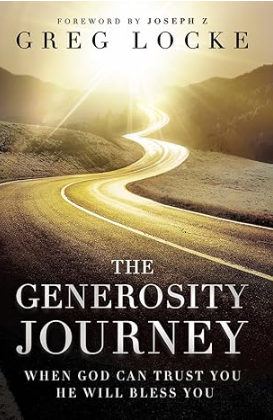
Greg Locke: How Biblical Generosity Transforms Lives
At the Breakers Conference, Pastor Greg Locke shares a powerful message on generosity, challenging common beliefs about wealth and godliness. Locke argues that poverty is not a requirement for holiness, and that God desires for Christians to live abundantly. “You don’t have to be broke to be blessed,” Locke tells attendees. “God doesn’t want His people in poverty.”
Locke recounts a pivotal moment in his life at 18, when he pledged $500 at a missions conference. “That commitment changed my life,” he says, adding that the experience sparked a lifelong transformation in his view on generosity. He credits a Baptist preacher with a quote that cemented this change: “Nothing will change your life more than biblical giving.”
Locke’s approach to generosity extends to everyday life. He shares his habit of tipping generously as a practical way to show compassion. “You don’t know what people are going through,” Locke says. “A simple tip can be an act of love to someone who’s struggling.”
In his message, Locke also emphasizes that believers are merely stewards of God’s resources, saying, “Everything we have already belongs to God.” He challenges the congregation to go beyond the standard 10% tithe, calling it “training wheels for biblical generosity.” True giving, Locke insists, means supporting others in meaningful ways. Locke highlights how his church supports missions and holds events such as Single Moms Sunday, where they distribute funds to those in need.
Transparency in giving is central to Locke’s message. He allows his church members to view his own giving records to hold himself accountable. “If I call people to give, I must set the example,” he says, adding that reflecting on the church’s giving history renews his purpose, especially in difficult times.
Locke continues by stressing the importance of generosity in the Christian life. “When we give, we’re impacting eternity,” he says, suggesting that the stewardship of finances is one of the most powerful expressions of faith.
This message from Pastor Locke echoes what the Bible commands in calling believers to be wise with God’s resources: “Moreover it is required of stewards that one be found faithful” (1 Cor. 4:2).
Is Donald Trump a Christian? Mark Driscoll Weighs In
In a recently posted video, Pastor Mark Driscoll addresses a question on the minds of many Christians: Is Donald Trump truly a Christian?
Driscoll shares his thoughts on Trump’s faith, offering insights from his recent experience at the National Faith Advisory Board event. In the video, Driscoll also encourages Christians to prioritize policy over personality in the upcoming election, emphasizing the importance of aligning voting decisions with biblical values.
“It was largely pastors and ministry leaders,” Driscoll says, recounting a schedule filled with “a lot of worship and a lot of prayer” at the event. He and his wife, Grace, believe it may have been “the last pastor’s Faith event before the election.” According to Driscoll, the timing adds weight to the day, as many leaders anticipate the upcoming election and discuss issues they see as vital to their communities.
Driscoll also describes meeting former President Donald Trump, who, despite constant attacks from the mainstream media, appears “really relaxed” and “joyful.” Trump engages the crowd with unscripted remarks, which Driscoll says reveals a personable side. “He was just talking to us freely,” Driscoll recalls, noting how Trump’s humor and energy struck a chord with the gathered audience. “He was sharp and likable,” Driscoll adds, surprised by the warmth Trump displayed.
In Trump’s address to attendees, he touches on several issues important to many conservative Christians, such as support for Israel, religious freedom and abortion. Driscoll says Trump’s experiences, including two assassination attempts, have made him more conscious of faith and God’s role in his life. “He doesn’t use the evangelical language, but there’s a God-consciousness in his mind,” Driscoll explains, referencing Trump’s belief that “there is a God who is over our affairs.”
Driscoll goes on to emphasize the importance of policy over personality in voting. “Policy is primary,” he says, encouraging pastors to guide their congregations in understanding a biblical worldview. Driscoll sees these policies as having a direct impact on people’s lives, explaining, “If you care about people, you need to vote for policies because people live under the policies.”
God and the World Series: MLB Players Promote Faith on Baseball’s Biggest Stage
As the World Series battles on, faith and baseball intersect in a grand slam moment for players and fans alike. This year’s matchup between the Los Angeles Dodgers and the New York Yankees isn’t just a contest between two powerhouse teams—it’s a showcase of faith, with star players stepping up to the plate to share what their beliefs mean to them, both on and off the field.
CBN Sports reporter Will Dawson captures this spirit firsthand, sitting down with players who are unashamed to reveal how their faith keeps them grounded amid the intensity of the season. “Baseball and sports in general is a brotherhood,” Dawson notes. “But there’s a different battle—a spiritual battle—and it’s not just your teammates in this; it’s your brothers in Christ.”
Dodgers’ first baseman Freddie Freeman is one of the many players unafraid to reveal how his faith sustains him. Freeman recently faced a crisis when his three-year-old son was diagnosed with Guillain-Barré syndrome, a serious autoimmune disorder. Reflecting on the ordeal, Freeman says he “leaned on [his faith] a lot.” His family, grounded in faith, became his support system, and he drew strength from his team chaplain, Brandon Cash. “Having a great network of people to keep us strong, keep the faith … it’s been really good,” Freeman says.
Yankees captain Aaron Judge, towering at 6-foot-7, stands out not only for his athletic prowess but for his humility and dedication to his faith. Adopted at a young age, Judge often reflects on the biblical imagery of adoption, saying it helps him understand the depth of God’s love.
“His love is incredible,” Judge shares. “If you would have told me back when I was five years old that I’d be in a World Series with the Yankees, I never would have believed you. Just having [God’s] blessings, keeping the faith through good times and bad times, knowing He’s always with me, has definitely helped me get to this position.”
When players like Judge take a swing for the fences with their faith, their words reach beyond the ballpark. As Dawson notes, a superstar speaking out about God’s love commands attention, “When he says something about God’s love and Jesus Christ, they all listen,” Dawson says. “It’s going out all over the world.”
For believers on both rosters, this World Series offers more than a shot at the Commissioner’s Trophy; it’s a field of opportunity to spread the message of Christ. When people with great influence and a substantial platform share their faith publicly, millions witness their testimony and the goodness of God. Whether it’s sharing a Bible verse during a post-game interview or giving glory to God at the end of the season, these players wield the power of influence—a power that extends far beyond any game-winning home run.