Pastor Mark Pettus Reveals Why So Many Christians Feel Defeated Despite Christ’s Victory

Every believer faces battles. Some come through temptation. Others arrive through fear, anxiety, discouragement or seasons that seem determined to wear faith down.

Pastor Mark Pettus believes the key to navigating those battles begins with understanding one life-changing truth.

“We do not fight for victory,” Pettus said during a recent sermon at Church of the Highlands. “We fight from victory.”

That simple distinction formed the foundation of a message that challenged believers to stop viewing spiritual warfare as a struggle to earn victory and start seeing it as an opportunity to stand in what Christ has already accomplished.

The Victory of Christ Changes Every Battle

Pettus began by reminding listeners that spiritual warfare is a reality for every believer.

“We truly have an enemy,” he said.

Scripture describes Satan as a liar, accuser, adversary, tempter, destroyer and deceiver. Yet Pettus emphasized that believers never face those attacks alone.

“Our God is almighty,” Pettus said. “Satan is not almighty.”

That confidence comes from understanding what Jesus accomplished through His death and resurrection.

The pastor pointed to the reality that every spiritual battle is viewed through the lens of Christ’s finished work.

“Our God came to set us free from our sins, but our God came to give us victory in every area of our lives,” Pettus said.

Rather than living in fear of spiritual opposition, believers can live with confidence because Jesus has already secured the outcome.

“We now stand in that victory that was won for us on the cross of Calvary,” Pettus said.

The Cross Secured Everything Believers Need

At the center of Pettus’ message was a reminder of what happened at the cross.

“When you imagine Jesus on the cross, never imagine Him winning victory for Himself,” Pettus said. “Hey everybody, He did not need victory. He already had the victory.”

The cross was Christ’s victory won on behalf of His people.

“What did He do on the cross?” Pettus continued. “He won victory for all of us.”

Because of that victory, believers can walk in freedom, forgiveness, peace and confidence. They do not have to live defined by their past mistakes or failures.

Pettus addressed the accusations and shame many Christians carry long after Christ has forgiven them.

“If God has chosen not to remember your past, why are you?” he asked.

The gospel offers more than forgiveness. It provides a new identity rooted in Christ’s righteousness and secured by His grace.
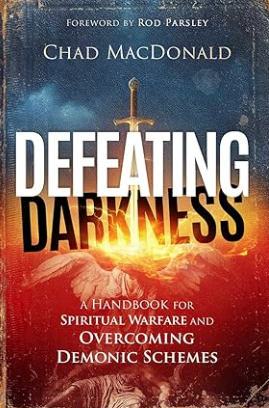
Order Chad MacDonald’s New Book, “Defeating Darkness” on Amazon.com!

God Has Given Believers Everything They Need to Stand

Much of the sermon focused on the armor of God in Ephesians 6.

Pettus explained that every piece of armor represents God’s provision for His people.

The belt of truth anchors believers in God’s Word.

The breastplate of righteousness protects the heart through Christ’s finished work.

The shoes of peace help believers stand firm during temptation and pressure.

The shield of faith extinguishes attacks from the enemy.

The helmet of salvation guards the mind.

The sword of the Spirit equips believers with the power of God’s Word.

“He will lie to you. He will lie about you,” Pettus said of the enemy.

Yet God has already provided everything necessary to stand strong.

“You have armor. Let’s don’t leave it on the table. Let’s not leave it on the shelf,” Pettus said.

For Pettus, spiritual warfare begins with daily dependence on God through Scripture, prayer and putting on the armor He has provided.

Standing Firm in Christ Releases His Victory in Our Lives

One of the strongest themes of the message came from Paul’s repeated instruction in Ephesians 6.

Stand.

Again and again, believers are called to stand firm.

Pettus said that command reveals the true nature of spiritual warfare.

“Spiritual warfare is standing firm not in our own victory, but in the victory of Christ,” he said.

The Christian life is not lived through personal strength. It is lived through dependence on Christ’s strength.

“We will never win spiritual warfare,” Pettus said. “Jesus won spiritual warfare.”

That truth frees believers from striving and empowers them to trust God in every circumstance.

Whether facing temptation, anxiety, uncertainty or opposition, believers can stand with confidence because Christ has already secured the victory.

Pettus concluded by reminding listeners that every piece of armor ultimately points to Jesus Himself.

He is our truth.

He is our righteousness.

He is our peace.

He is our salvation.

“We do not fight for victory. We fight from victory,” Pettus said.

Through every trial and every battle, believers can stand firm knowing Christ has already won. The call is simple: Put on the full armor of God, stand firm and walk forward in the power of what He has already done.

James Lasher, a seasoned writer and editor at Charisma Media, combines faith and storytelling with a journalism background from Otterbein University and ministry experience in Guatemala and at the LA Dream Center. A Marine Corps and Air Force veteran, he is the author of The Revelation of Jesus: A Common Man’s Commentary and a contributor to Charisma magazine. For interviews and media inquiries, please contact [email protected].



Meet Freddy: The German World Cup Tourist Winning Hearts with His Epic US Road Trip

A German soccer fan named Freddy (@FreddyLA7) came to the U.S. for the 2026 World Cup and accidentally turned into everyone’s favorite online hype man.

What started as a simple road trip to catch Germany’s matches has exploded into a wholesome viral sensation. His follower count skyrocketed from about 11,000 to nearly 380,000 in just a few days, with posts regularly pulling in hundreds of thousands to millions of views. All because he’s genuinely geeking out over everyday American life.

Freddy’s feed is packed with pure positivity — no complaints, just wide-eyed appreciation for the stuff we often take for granted. He’s been rolling through the South, posting everything from sunrises to late-night snacks with the enthusiasm of a kid in a candy store.

“Just had our first Waffle House experience at 1am. Great food, great prices, and friendly staff. 10/10, we will be coming back.” — That one post alone captured hearts everywhere.

He also made the ultimate pilgrimage: “Dinner from Buc-ee’s at 1am” — turning the legendary travel center (with its spotless bathrooms, massive snack selection, and beaver mascot) into internet gold. Walmart runs, Taco Bell stops, and random hotel evenings with “NBA Finals on the TV and Chipotle for dinner” have all become must-see content.


One of his most viral moments came when he discovered a store (a good ol’ Bass Pro Shop) with an indoor shooting range: “We found another surreal place on our way. I know some people will say I’m too positive about everything I see, but this place was crazy. They had a shooting range in the store.”


He’s also been shouting out at the people. After hotel staff randomly drove him and his friends to a stadium in the rain so they wouldn’t have to walk, he posted: “I love Americans…” Simple moments like “Good morning from Mobile Bay, Alabama” and Alabama sunsets have Americans smiling at their phones and half-jokingly demanding he gets fast-tracked for citizenship.

Order Jonathan Cahn’s New Book, “The Altar of Pergamon” on Amazon.com!

Why Freddy’s Story Hits Different

What makes this whole thing feel extra special is that Freddy’s fresh eyes are highlighting something deep about America. This country was founded on faith — the eternal belief that our Creator gave us unalienable rights, that liberty and personal responsibility go together, and that free people, guided by biblical and moral principles, could create something truly unique.

And create something unique, we did.

That foundation baked in optimism, generosity, abundance and a welcoming spirit that still shines through today. Freddy isn’t lecturing about history — he’s living the vibe: friendly strangers, wild variety (hello, shooting range in a store), late-night food options, and big dreams in action. In a cynical world, his genuine excitement reminds us why this nation still stands out.

Freddy didn’t set out to become a goodwill ambassador, but he’s absolutely crushing it. As he keeps rolling toward New Orleans and Houston in his Germany jerseys, he’s giving millions of us a chance to see our own backyard with fresh appreciation.

So here’s to Freddy — safe travels, more Buc-ee’s runs and keep the good vibes coming. Who knows what he’ll discover next?

James Lasher, a seasoned writer and editor at Charisma Media, combines faith and storytelling with a journalism background from Otterbein University and ministry experience in Guatemala and at the LA Dream Center. A Marine Corps and Air Force veteran, he is the author of The Revelation of Jesus: A Common Man’s Commentary and a contributor to Charisma magazine. For interviews and media inquiries, please contact [email protected].


He Had Been Imprisoned 13 Times, Then He Says Jesus Appeared to Him in Texas

Some stories are so unexpected they sound like they belong in the pages of Acts.

Jamie Winship recently shared one of those stories during an appearance on The Deep End podcast with Taylor Welch.

The story began with a question.

Working in the Middle East amid decades of conflict between Israelis and Palestinians, Winship said he and his team were praying for a way to demonstrate that peace was possible.

Most people had already decided it wasn’t.

“Do you know how many people just say it’s not going to ever happen? It’ll just never happen. This is going to be war forever,” Winship said. “That’s called quitting.”

Then an idea came to him.

A church in Texas had invited him to speak at a men’s retreat. What if, he wondered, he brought five militant Palestinian Muslims from the West Bank with him?

Not moderates. Not casual observers.

Men deeply committed to Islam.

“We wanted the Saul of Tarsus types,” Winship said.

One of those men was Hassan.

According to Winship, Hassan had been imprisoned by Israel 13 times. Both of his brothers had been killed in the conflict. If anyone represented the bitterness and hostility that had fueled the region for generations, it was him.

Almost everyone rejected the idea.

The retreat leaders didn’t want the men there. The Palestinians initially said no. Israeli officials resisted allowing them to travel. American officials laughed at the proposal.

Yet one obstacle after another moved out of the way.

Eventually, the five Palestinians boarded a plane for the United States.

For many of them, it was their first time leaving their communities.

Order Jonathan Cahn’s New Book, “The Altar of Pergamon” on Amazon.com!

Winship said some had never flown on an airplane. Some had never seen a large body of water. They arrived in America expecting constant scrutiny and interrogation.

Instead, they encountered something entirely different.

When they landed in Houston, Winship said they walked through the airport holding their identification cards above their heads, waiting for authorities to stop them.

No one did.

“They cried,” Winship recalled.

Then came the retreat.

The atmosphere was tense.

The Palestinian Muslims were spread throughout the bunkhouses rather than being housed together. Hundreds of Christian men filled the retreat grounds. Everyone wondered what would happen.

“The whole first night, everyone was afraid that someone was going to kill someone else,” Winship said.

Nothing happened.

The next morning, however, everything changed.

As Winship was speaking, Hassan suddenly stood up.

“I have something to say,” he announced.

He walked to the stage and addressed the crowd.

“Last night Jesus came to our bunk house,” Hassan said.

The room froze.

According to Winship, Hassan then described an encounter that had taken place during the night.

“Jesus came into my room into the dorm and he said to me that he wanted to give me a burden, a weight to carry,” Hassan said.

Hassan said he asked what that burden was.

“Jesus said, ‘I want you to carry back to your people. I want you to disband that group. I want you to go back and say we’re not fighting anymore. That we’re going to replace this with peace.’”

The declaration stunned the audience.

“This is the first night of the retreat,” Winship said.

Hassan didn’t stop there.

Standing before hundreds of witnesses, he publicly committed himself to obeying what he believed Jesus had told him.

“I want to stand up in front of all of you men and you hold me accountable to go back and do that,” he said.

According to Winship, the retreat continued to produce unexpected fruit.

“All five of those men came to faith very visibly in front of everybody else,” he said.

When the event ended, Hassan returned home.

Winship accompanied him as he met with members of his organization.

The message he delivered was direct.

“This place from now on will become the first place of prayer in our community because we are not fighting anymore,” Hassan said.

Then he explained why.

“Al-Masia met me in Texas and told me the Christians are not our enemy and we’re not going to fight anymore.”

Winship said Hassan eventually earned a doctorate and became a leader promoting freedom and reconciliation in the Middle East.

Looking back, Winship sees the story as evidence that God is often working in places believers least expect.

For him, the lesson is simple.

People may look at generations of hatred and conclude that nothing will ever change.

God sees possibilities where everyone else sees impossibilities.

And sometimes that story begins with a militant Muslim standing in a Texas men’s retreat and saying seven words that nobody in the room expected to hear:

“Last night Jesus came to our bunk house.”

James Lasher, a seasoned writer and editor at Charisma Media, combines faith and storytelling with a journalism background from Otterbein University and ministry experience in Guatemala and at the LA Dream Center. A Marine Corps and Air Force veteran, he is the author of The Revelation of Jesus: A Common Man’s Commentary and a contributor to Charisma magazine. For interviews and media inquiries, please contact [email protected].



Has the Algorithm Become the New Disciple-Maker?

A teenager may spend an hour listening to a sermon on Sunday.

That same teenager may spend dozens of hours each week consuming content selected by an algorithm.

One voice gets a few moments. The other gets access throughout the day.

That reality was at the center of a recent message from apostle Jim Raley, who challenged parents and grandparents to think differently about what is shaping the next generation.

“I want to tell you something. Your kids are being discipled every single day by screens, by friends, by cultures, by algorithms, by voices you never invited into your home,” Raley said.

“And the question is not whether or not this is happening. The question is, who has their ear?”

For years, Christians have talked about the importance of discipleship. Churches invest in youth ministries. Parents pray for their children. Pastors preach about spiritual formation.

Meanwhile, another disciple-maker has quietly moved into the home.

The algorithm.

The Disciple-Maker That Never Sleeps

Raley argued that many parents underestimate how much influence digital platforms have over their children.

“If you don’t disciple your children, screen time will, algorithms will,” he said.

Algorithms never stop speaking. They continually learn what captures attention and then serve more of it.

Children are learning lessons about identity, relationships, beauty, sexuality, truth and self-worth.

Raley asked a series of pointed questions.

“Who’s forming their imagination? Who’s teaching them what love really looks like? What relationship looks like? What marriage looks like? What sexuality looks like? What truth looks like? What real beauty looks like? What identity looks like? Who’s showing your family or your kids what gives a person worth?”

Those lessons are repeated every day.

And repetition is one of the most powerful tools of discipleship.

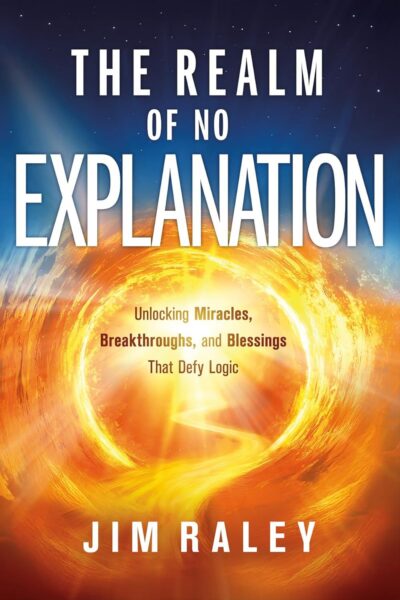
Order Jim Raley’s New Book, “The Realm of No Explanation” on Amazon.com!

Why the Battle Starts at Home

Raley pointed to Deuteronomy 6 as God’s blueprint for raising children.

The passage instructs parents to teach God’s truth throughout everyday life — while sitting at home, walking together, lying down and getting up.

The model is built around daily conversations.

“I want you to notice that the Lord didn’t say in that text, ‘Drop them off at a religious institution, drop them off and let some professionals handle it,'” Raley said.

“It doesn’t start at church.”

Faith, he said, belongs in ordinary family life.

“It needs to get in your home. Faith is designed to be part of your everyday life. Gets in the kitchen, in the school, at the table, in the den.”

The Great Disconnection

One of Raley’s strongest observations focused on how technology can separate families even while they occupy the same room.

“Social media has made people globally connected but locally disconnected,” he said.

“I’ve seen families sitting at dinner and I’ll watch them at the table. Five people, five screens, zero conversation.”

Every silent dinner table is a missed opportunity for discipleship. Conversations that once shaped values, convictions and faith are increasingly being replaced by screens.

Parents once shaped worldviews during car rides, around dinner tables and through bedtime conversations. Those moments remain some of the most effective opportunities for spiritual formation.

“A home is not a place where you just coexist and everybody lives in the same house, but you’re not building anything together,” Raley said.

The Battle for Influence

Raley called for intentional discipleship through boundaries, conversation, prayer and parental involvement.

“Boundaries are not a sign that you don’t trust your children. They’re a sign that you love them,” he said.

He also encouraged parents to move beyond interrogation and toward genuine connection.

“Conversation is better than interrogation.”

Parents who ask questions, listen carefully and speak biblical truth into everyday situations create opportunities to shape how their children think about life and faith.

The challenge, Raley argued, is influence.

Every child is being discipled by someone or something.

The question Christian families must answer is whether the loudest voice in a child’s life belongs to culture, an algorithm or Christ.

“You can’t let culture get louder in your home than conviction,” Raley said.

Parents often worry about what their children will face when they leave the house. Raley’s message turns that concern in a different direction. The greatest battle for the next generation may be happening every day on a device sitting in a child’s hand.

Algorithms are shaping a generation one click, one scroll and one video at a time. Parents cannot surrender that ground through neglect or distraction. Homes filled with truth, conversation, prayer and the presence of God remain one of the most powerful forces in a child’s life. If the next generation is going to follow Christ, someone has to have their ear first.

James Lasher, a seasoned writer and editor at Charisma Media, combines faith and storytelling with a journalism background from Otterbein University and ministry experience in Guatemala and at the LA Dream Center. A Marine Corps and Air Force veteran, he is the author of The Revelation of Jesus: A Common Man’s Commentary and a contributor to Charisma magazine. For interviews and media inquiries, please contact [email protected].



NFL Defensive Rookie of the Year Baptized as Cleveland Browns Players Boldly Proclaim Christ

Professional athletes are told to build a platform, grow a following and keep the spotlight fixed on themselves.

That is why what happened in Cleveland this week deserves attention.

While sports headlines revolve around contracts, endorsements, statistics and social media influence, several Cleveland Browns players used a public platform for something entirely different. They publicly declared their faith in Jesus Christ.

Members of the Browns joined local believers Sunday for a Cleveland for Christ gathering that featured worship music, prayer, testimonies and baptisms. The event brought together players, coaches, chaplains and members of the community for a day centered on faith.

Among those participating were quarterback Shedeur Sanders, running back Raheim Sanders, cornerback Tyson Campbell, safety Daniel Thomas and team chaplain Nobles C. Darby.

Order Kathryn Krick’s New Book, “Ignite Revival” on Amazon.com!

Several players chose to take another step in their walk with Christ through baptism, including linebacker Carson Schwesinger, the NFL’s Defensive Rookie of the Year.

Before entering the water, Schwesinger publicly affirmed his faith. According to Fox News, he was asked whether he believed Jesus Christ died on the cross and rose again for his sins.

“Yes,” Schwesinger replied.

He was then asked whether he was ready to make Jesus the Lord of his life.

“Yes,” he responded.

Moments later, he was baptized before those gathered at the event.

View this post on Instagram

A post shared by Christian Athletes(Chris✞hlete™️) (@_christhlete)


The scene stood in sharp contrast to the culture surrounding modern sports.

Athletes live under constant pressure to promote themselves. Every performance is analyzed. Every post is measured by engagement. Every opportunity to expand a personal brand is pursued.

Baptism sends a different message.

Rather than celebrating personal achievement, baptism declares surrender. Rather than directing attention toward self, it points to Christ.

That public declaration carries weight in a culture that increasingly pushes faith out of the public square.

Jesus addressed the importance of openly identifying with Him in Matthew 10:32-33: “Whoever acknowledges me before others, I will also acknowledge before my Father in heaven. But whoever disowns me before others, I will disown before my Father in heaven.”

For the players who stepped into the baptismal waters Sunday, the moment was not about recognition, applause or publicity. It was an act of obedience.

The NFL remains one of the largest stages in American culture. Every week, millions watch athletes compete for victories that last a season. On Sunday in Cleveland, several Browns players testified to a victory that lasts forever.

The crowd did not gather to celebrate a championship. It gathered to witness lives publicly surrendered to Jesus Christ.

In a sports culture built on self-promotion, these players delivered a message far more powerful than any highlight reel: Christ is worth following, and He is worth proclaiming.

James Lasher, a seasoned writer and editor at Charisma Media, combines faith and storytelling with a journalism background from Otterbein University and ministry experience in Guatemala and at the LA Dream Center. A Marine Corps and Air Force veteran, he is the author of The Revelation of Jesus: A Common Man’s Commentary and a contributor to Charisma magazine. For interviews and media inquiries, please contact [email protected].


These 11 Spiritual Giants Are Waging War Against Christians Everyday

Life has a way of confronting believers with battles that feel larger than life. Fear, discouragement, guilt and temptation often seem impossible to overcome. Yet according to Dr. David Jeremiah, these struggles are not new. They are modern-day giants, and Scripture provides a roadmap for defeating them.

During a recent interview with Sheila Walsh on Turning Point, Jeremiah discussed lessons from his teaching series Slaying the Giants in Your Life. Drawing on the story of David and Goliath, he explained that today’s believers face giants every bit as intimidating as the Philistine champion.

“I really wanted to concentrate on the giants that we face in our culture today and how they’re just as big to us as a 9-ft 6-in giant was to David,” Jeremiah said.

Here are the 11 giants Jeremiah highlighted, along with the biblical principles he shared for overcoming them.

1. Fear

Jeremiah spoke candidly about his battle with fear during his fight with cancer.

“People ask me when I had cancer, was I afraid. Were you afraid when you had cancer? And I think absolutely I was,” he said.

He explained that fear was eventually replaced by God’s peace and presence.

“We are not to live our lives in fear. I don’t think that’s the will of God for us.”

2. Discouragement

Jeremiah called discouragement one of the enemy’s most effective weapons.

“I think that’s Satan’s favorite tool to use on me,” he said.

His solution comes from the life of David.

“And David encouraged himself in the Lord.”

Jeremiah said worship music, Scripture, prayer and trusted relationships help him push back against discouragement when it appears.

3. Loneliness

Despite constant online interaction, Jeremiah believes loneliness has become a growing crisis.

“I sense that there’s so many people through social media, they think they’re connected, but they’re really not connected,” Walsh observed.

Jeremiah pointed to authentic Christian community as the answer, emphasizing the importance of meaningful relationships within the local church.

4. Worry and Anxiety

Jeremiah said anxiety is increasing as society moves further from God.

“The absence of God creates anxiety,” he said.

He pointed viewers back to Philippians 4.

“The Bible says, ‘Be anxious for nothing, but in everything by prayer and supplication, let your request be made known unto God.'”

He also emphasized the biblical command to encourage one another.

“That means we’re to pour courage into other people.”

Order Jonathan Cahn’s New Book, “The Altar of Pergamon” on Amazon.com!

5. Guilt

One of Jeremiah’s strongest teachings centered on guilt and forgiveness.

“There is no place in the Bible where it ever says anything about us forgiving ourselves,” he said.

Instead, believers should focus on receiving God’s forgiveness.

“God forgives completely, fully, unconditionally. And when God forgives, you are forgiven.”

Jeremiah added that Christians must continually remind themselves that they have been forgiven “by the highest authority in the forever world.”

6. Temptation

Jeremiah made a distinction many believers need to hear.

“It is not a sin to be tempted. It is a sin to yield to temptation.”

He pointed to Christ’s temptation in the wilderness and reminded viewers that temptation itself is not evidence of failure.

“Temptation is hearing a knock at the door, but yielding is opening the door and letting it in.”

He also highlighted God’s promise in 1 Corinthians 10:13.

“God is faithful who will not suffer you to be tempted above that you are able but will with the temptation also provide a way of escape.”

7. Anger and Resentment

Jeremiah noted that not all anger is sinful.

“Actually, the Bible says be angry and sin not.”

The greater danger comes when anger remains unresolved.

“Resentment is anger gone underground.”

He warned that buried anger eventually resurfaces.

“Then at an inappropriate moment that you never dreamed was going to happen, boom, you explode, and all that resentment comes out.”

8. Doubt

Jeremiah encouraged believers not to panic when questions arise.

“Somebody once said, ‘There is more faith in an honest doubt than in anything else you can ever have.'”

Rather than destroying faith, he said doubt often strengthens it by forcing believers to seek answers.

“Doubt drives you to find answers.”

He added that doubt becomes dangerous only when it is allowed to define a person’s entire spiritual life.

9. Procrastination

Jeremiah described procrastination as more than a bad habit.

“Here’s what I believe. That the time between when God tells you to do something and when you do it, that time belongs to the devil.”

He said delayed obedience creates opportunities for spiritual compromise.

“When God says do this, you do it.”

10. Failure

For Jeremiah, Peter’s denial of Jesus remains one of Scripture’s greatest examples of restoration.

“When you fail, you don’t become a failure.”

He reminded believers that setbacks do not have to define their future.

“Failure is never final unless you let it be.”

God often uses mistakes and disappointments to prepare His people for greater victories ahead.

11. Jealousy

In an age of social media comparison, Jeremiah said jealousy has become increasingly common.

“When you’re jealous, you have a person in your focus, and you’re jealous of that person.”

The answer is finding identity and joy in Christ rather than comparing lives.

“Joy is not happiness. Joy is a relationship.”

He said believers can overcome jealousy when they understand God has a unique purpose for every life.

“You shouldn’t be jealous of somebody else because you didn’t come here to do that. You came here to do this.”

Jeremiah concluded by returning to David’s encounter with Goliath. The lesson, he said, is not that giants disappear, but that believers face them differently.

“We can’t face our giants, Sheila, in our own strength.”

“But when we face our giants in the name of the Lord, in the power of his might, we can have the same victory that David had.”

James Lasher, a seasoned writer and editor at Charisma Media, combines faith and storytelling with a journalism background from Otterbein University and ministry experience in Guatemala and at the LA Dream Center. A Marine Corps and Air Force veteran, he is the author of The Revelation of Jesus: A Common Man’s Commentary and a contributor to Charisma magazine. For interviews and media inquiries, please contact [email protected].


A Historic Moment: The Tower of Jesus Lights Up the Night Sky For the Whole World to See

For one night, the skyline of Barcelona became a sermon.

Thousands gathered outside the Sagrada Família as the Tower of Jesus Christ was illuminated for the first time, marking one of the most significant milestones in the church’s 144-year history. The ceremony coincided with the 100th anniversary of architect Antoni Gaudí’s death and included a blessing from Pope Leo XIV.

The newly completed tower rises 172.5 meters, making the Sagrada Família the tallest church in the world. At its peak stands a massive cross designed to radiate light across the city, a fitting crown for a structure dedicated to Jesus Christ.

The event featured music, lights, drones and projections that transformed the night sky into a tribute to Gaudí’s vision. Yet the most striking image was not the technology. It was the tower itself.

Order Jonathan Cahn’s New Book, “The Altar of Pergamon” on Amazon.com!

In an age dominated by glass skyscrapers, concrete blocks and disposable design, the Sagrada Família stands as a reminder that architecture can still inspire awe. It can lift the eyes upward. It can communicate beauty, wonder and transcendence.

Gaudí famously envisioned the basilica as a proclamation of the Christian faith carved into stone. Every tower, façade and sculpture was designed to tell the story of the Gospel. And in perhaps the most powerful feature of all, the tallest tower belongs to Jesus. The apostles, evangelists and Mary all point toward the central Tower of Christ, reflecting the truth that He remains the focal point of the story.

The celebration did not stay in Barcelona.

Images and video of the illuminated Tower of Jesus spread rapidly across social media, drawing the attention of millions around the world. Among those sharing the moment was Elon Musk, who reposted footage of the event on X, placing one of the most openly Christian architectural celebrations of the modern era before a massive global audience.


The contrast was remarkable. A vision first conceived in the 19th century suddenly appeared on screens across the world in the digital age. More than a century after Gaudí dedicated his life to the project, the tower he designed to honor Christ became a worldwide spectacle.

Pope Leo spoke during the celebration about the power of beauty to lead people toward God, a theme reflected throughout the basilica’s design. The moment served as a reminder that beauty is not merely decoration. It can communicate truth. It can inspire worship. It can point beyond itself.

The Sagrada Família is not fully finished. Work continues on portions of the Glory Façade and surrounding structures. But with the Tower of Jesus now shining above Barcelona, the centerpiece of Gaudí’s dream is finally complete.

The moment offered a simple reminder: when Jesus is placed at the center, even stone and steel can become a testimony. More than 140 years after construction began, the tallest point of the world’s tallest church now shines over Barcelona—a beacon of beauty, craftsmanship and faith in Jesus Christ.

James Lasher, a seasoned writer and editor at Charisma Media, combines faith and storytelling with a journalism background from Otterbein University and ministry experience in Guatemala and at the LA Dream Center. A Marine Corps and Air Force veteran, he is the author of The Revelation of Jesus: A Common Man’s Commentary and a contributor to Charisma magazine. For interviews and media inquiries, please contact [email protected].


Trump’s Iran Threat Puts Prophetic Spotlight Back on a Region Scripture Says Will Shape the Future

President Donald Trump’s latest warning to Iran has drawn attention to one of the world’s most volatile regions and renewed interest in the Middle East’s role in biblical prophecy.

In a post on Truth Social, Trump threatened to target Iran’s oil infrastructure, including Kharg Island, the country’s primary oil export terminal. He also suggested the United States could eventually take control of Iran’s energy sector.

Trump said the U.S. military would hit Iran “VERY HARD” following a round of airstrikes and warned that America could take “total control” of Iran’s oil and gas markets.


Kharg Island handles roughly 90% of Iran’s crude exports, making it one of the most strategically important locations in the Persian Gulf.

Shortly after making the remarks, Trump addressed the possibility of seizing the island during a phone interview with Fox News.

“I think they’d like to see us come home, but we did it with Venezuela,” Trump said. “Venezuela’s worked out great for everybody.”

The comments come amid growing tensions between Washington and Tehran over Iran’s nuclear program, attacks on U.S. assets and security concerns surrounding the Strait of Hormuz, one of the world’s most important shipping lanes.

For most news outlets, the story centers on oil prices, military strategy and geopolitical calculations.

But the story goes deeper.

We recognize this region not merely as a battleground for competing powers, but as the very landscape where God unfolded much of biblical history and where Scripture says pivotal future events will occur. That does not mean every headline is a fulfillment of prophecy. It does mean we pay attention when nations named in Scripture continue to move across the world stage.

Order Jonathan Cahn’s New Book, “The Altar of Pergamon” on Amazon.com!

Why Iran Matters in Biblical Prophecy

Iran is ancient Persia, a nation specifically named in Ezekiel 38 among a coalition of countries involved in a future conflict centered on Israel.

No biblical prophecy predicts Trump’s actions, Kharg Island or an American operation against Iranian oil infrastructure. Yet Persia’s appearance in Ezekiel 38 has kept Iran at the center of prophetic discussion for generations.

For us, the significance is not Iran alone.

It is Iran’s relationship to Israel.

Throughout Scripture, Israel and Jerusalem stand at the center of future events. Ezekiel 38-39, Zechariah 12, Zechariah 14, Matthew 24 and Revelation all place the region at the heart of major prophetic developments.

As tensions rise among nations surrounding Israel, the same nations and territories that dominate today’s headlines continue to occupy the pages of biblical prophecy.

The current standoff also highlights the strategic importance of the Persian Gulf and the Strait of Hormuz. A significant portion of the world’s energy supply passes through those waters, making the region a critical piece of global commerce.

Scripture describes a future period marked by military conflict, political upheaval and economic turmoil before the return of Christ. Developments in the Middle East continue to draw attention because they unfold in the very region where those events are expected to culminate.

But we are not called to fear tomorrow’s headlines.

The same Scriptures that speak of future conflict also reveal the return of Jesus Christ as King. The same Holy Spirit who moved in the book of Acts is still moving today, saving souls, transforming lives and building God’s kingdom across the earth.

That reality gives us confidence no matter what unfolds in the nations. While the world focuses on military movements and political power, we can see God continuing to draw people to Himself and prepare His church for the days ahead.

That is the story unfolding behind the headlines.

James Lasher, a seasoned writer and editor at Charisma Media, combines faith and storytelling with a journalism background from Otterbein University and ministry experience in Guatemala and at the LA Dream Center. A Marine Corps and Air Force veteran, he is the author of The Revelation of Jesus: A Common Man’s Commentary and a contributor to Charisma magazine. For interviews and media inquiries, please contact [email protected].


The Devil Doesn’t Need to Defeat the Church If He Can Exhaust It

The headlines never stop.

Wars. Rumors of wars. Economic uncertainty. Political division. Cultural upheaval. Every day brings another crisis, another controversy, another reason to feel exhausted.

That growing fatigue was at the heart of a recent episode of Prophecy Live, where Joseph and Heather Z delivered a warning that reaches far beyond headlines, elections or international conflicts.

The greatest threat facing believers is not persecution.

It is passivity.

Heather Z described the current season as a “spiritual world war” and warned that many Christians are growing weary under the weight of constant pressure.

“And we’re in a place of a spiritual world war. And it takes all hands on deck. You can’t just be shrinking back right now,” she said.

She pointed to the endless stream of crises competing for attention and argued that the enemy’s strategy is not simply to attack believers, but to wear them down.

“The division is all by design,” she said. “All of the crisis fatigue is all by design.”

That observation cuts to the heart of a growing challenge facing the modern church.

Most Christians recognize obvious threats. They can identify anti-Christian sentiment in culture. They can spot attacks on biblical values. They can see the moral confusion unfolding across society.

The harder battle to recognize is the slow drift into spiritual numbness.

A believer rarely wakes up one morning and decides to abandon faith. More often, spiritual sensitivity is lost one distraction at a time. Prayer becomes less frequent. Discernment grows dull. Urgency fades. The noise of the world gradually drowns out the voice of the Holy Spirit.

Order Jonathan Cahn’s New Book, “The Altar of Pergamon” on Amazon.com!

Heather Z urged believers to fight against that trend.

“You got the spirit of the living God on the inside of you,” she said. “You need to begin to rise up and you need to begin to re-sensitize yourself back to the Holy Spirit.”

Joseph Z reinforced that message through an unexpected example: Iran.

During the broadcast, he highlighted footage showing Christians publicly celebrating Jesus in the streets of the Islamic nation. While many viewers focused on revival, a deeper question emerged.

Why are believers willing to openly proclaim Christ in a country where faith can carry significant consequences while many Christians in the West remain hesitant to share their beliefs despite extraordinary freedoms?

“I believe before this is done, we could see a great awakening of Christianity right in Iran,” Joseph Z said.

The contrast is striking.

Throughout church history, some of the most powerful revivals emerged from places marked by pressure, opposition and hardship. Meanwhile, comfort produced complacency.

The early church expanded under persecution. The apostles preached despite threats and imprisonment. Faith flourished in places where believers had every reason to remain silent.

Today, many Christians enjoy freedoms previous generations could scarcely imagine. Yet the modern battle is not persecution. It is a battle for attention, focus and spiritual awareness.

Joseph Z argued that believers must move beyond simply reacting to the natural world and learn to discern the spiritual realities behind it.

“We got to stand in faith and favor,” he said.

The warning is timely.

The church does not lose influence only when governments oppose it. It also loses influence when believers become distracted, exhausted and disengaged from the mission Christ has given us.

The Christians celebrating Jesus in Iran are not the biggest story.

The bigger story is the question their courage forces us to answer.

If believers can boldly proclaim Christ where the cost is high, what excuse remains for silence where the cost is low?

James Lasher, a seasoned writer and editor at Charisma Media, combines faith and storytelling with a journalism background from Otterbein University and ministry experience in Guatemala and at the LA Dream Center. A Marine Corps and Air Force veteran, he is the author of The Revelation of Jesus: A Common Man’s Commentary and a contributor to Charisma magazine. For interviews and media inquiries, please contact [email protected].


5 Signs Demonic Opposition Is Affecting Your Walk With God

Pastor Vlad Savchuk of HungryGen Ministries is warning believers not to dismiss every spiritual struggle as burnout, distraction or a bad season. While acknowledging that many spiritual challenges have natural causes, Savchuk recently argued that some Christians may be experiencing the effects of what he calls high-ranking territorial spirits—demonic powers that influence regions, cultures and atmospheres.

Drawing from passages such as Daniel 10 and Ephesians 6, Savchuk outlined five signs that spiritual resistance may be more than a personal struggle.

1. You Are Consistently Numb to Spiritual Things

According to Savchuk, one of the clearest warning signs is a persistent dullness toward God.

A believer may still attend church, serve faithfully and maintain spiritual disciplines, yet feel disconnected from God’s presence. Worship no longer stirs the heart. Scripture feels lifeless. Prayer becomes a burden instead of a joy.

Savchuk described it this way: “You still believe. You actually still attend church. You still serve and you still tithe. But you feel spiritually dull like your spirit is wrapped in some kind of a cotton. Worship doesn’t move you anymore. Scripture feels flat. Prayer feels like you’re pushing a boulder up the hill.”

He pointed to Jesus’ experience in Nazareth, where unbelief hindered mighty works, arguing that some regions can develop an atmosphere of spiritual resistance that affects believers living within it.

At the same time, he cautioned Christians to examine their own hearts for unforgiveness, bitterness and unrepentant sin before blaming outside spiritual forces.

2. Heaviness Appears When You Pray or Fast

Savchuk said another indicator is unusual resistance whenever a believer attempts to seek God more deeply.

Tasks and responsibilities may seem manageable throughout the day, but the moment prayer or fasting begins, an overwhelming heaviness sets in. Fatigue increases. Focus disappears. Irritability rises.

“You can do hundred other things but the moment you begin to seek God, you feel this crushing heaviness. You feel sudden sleepiness and you’re very irritable, moody, cranky and your distractions, they multiply like crazy,” Savchuk said.

He connected this experience to Daniel 10, where the prophet encountered spiritual opposition while pursuing God through prayer and fasting.

Savchuk suggested that intense resistance can sometimes indicate that a believer is pushing against genuine spiritual opposition.

Order Vlad Savchuk’s New Book, “Make the Devil Homeless” on Amazon.com!

3. Confusion and Discernment Become Clouded

A third sign is an unusual level of confusion that interferes with spiritual discernment.

Instead of clarity, believers may find themselves trapped in cycles of uncertainty, second-guessing and mental fog. Simple decisions suddenly feel overwhelming. Persistent “what if” scenarios dominate the mind.

“Soon you feel mental fog. Suddenly you’re second-guessing everything. You have uncertainty about simple things and you have a constant what if, what if, what if ruminating in your mind,” he said.

Savchuk emphasized that God does not communicate through confusion. While the Holy Spirit brings conviction and correction, he argued that hopelessness, deception and generalized confusion often originate elsewhere.

He believes territorial spirits frequently attempt to blanket regions with confusion, compromise and spiritual deception.

4. Sin and Compromise Feel Normal

Savchuk also pointed to cultures where darkness is celebrated rather than hidden.

In some places, behaviors that Scripture condemns become socially accepted, applauded and defended. Over time, constant exposure can weaken a believer’s sensitivity to holiness.

“Immorality in those regions is very casual. Drunkenness exists and is normal. Occultic practices are trendy. Mockery of holiness is actually entertaining,” Savchuk said.

He warned that remaining immersed in such environments without spiritual vigilance can slowly reshape a person’s convictions.

Referencing Romans 12:2, Savchuk encouraged believers to resist conformity to the culture around them and remain anchored in biblical truth.

5. Strife, Division and Offense Dominate the Church

The final sign focuses on the body of Christ itself.

Savchuk argued that one of the enemy’s most effective strategies is turning believers against one another. Rather than advancing God’s kingdom, Christians become consumed by offense, jealousy, gossip and conflict.

“Territorial spirits love to bind the region by keeping believers fighting each other,” he said.

He added, “The way you bind it is that you have believers no longer fighting the warfare that they’re anointed to fight, but believers now are fighting each other.”

According to Savchuk, unity creates an environment where God moves freely, while division produces confusion and weakens the church’s spiritual effectiveness.

What Should Christians Do?

Despite discussing territorial spirits, Savchuk repeatedly warned against becoming obsessed with identifying or confronting them directly.

Instead, he urged believers to focus on strengthening their relationship with Christ, putting on the armor of God, pursuing prayer and fasting, maintaining unity with other believers and remaining spiritually grounded.

“You don’t need to talk to the territorial spirits. You need to talk to God,” Savchuk said.

Pointing again to Daniel’s example, he encouraged Christians to respond to spiritual resistance with sustained prayer, consecration and perseverance rather than dramatic confrontations.

His message was simple: Stay focused on Jesus, remain rooted in Scripture, walk in unity with other believers and continue seeking God until breakthrough comes.

James Lasher, a seasoned writer and editor at Charisma Media, combines faith and storytelling with a journalism background from Otterbein University and ministry experience in Guatemala and at the LA Dream Center. A Marine Corps and Air Force veteran, he is the author of The Revelation of Jesus: A Common Man’s Commentary and a contributor to Charisma magazine. For interviews and media inquiries, please contact [email protected].