Stop Ignoring the Signs: Not Everyone in Your Life Is for You

Friendship is one of the most influential forces in a person’s life, yet many struggle to tell the difference between people who genuinely care and those who only appear supportive.

Pastor Vlad Savchuk of HungryGen Ministries recently broke down why this matters more than most believers realize. He argues that the relationships surrounding you can either strengthen your walk with God or slowly drain the life out of it.

Savchuk teaches that the Holy Spirit often nudges believers about people they’ve allowed too close. Those quiet warnings aren’t paranoia. They’re protection. The Spirit can reveal attitudes, motives and conversations you’ll never hear directly, preparing you to recognize when a relationship is unhealthy long before the damage sets in.

Order Vlad Savchuk’s New Book, “Make the Devil Homeless” on Amazon.com!

1. They drain your peace

Savchuk says a major warning sign is how you feel after someone walks away. If their presence leaves you tense or exhausted instead of strengthened, the relationship may be taxing your spirit instead of supporting it.

2. They love your platform more than your pain

Fake friends gravitate to your success but vanish when life gets real. Savchuk explains that they enjoy the benefits of being connected to you but have no interest in standing with you when you’re hurting or hidden.

3. They gossip and break confidence

If someone freely shares other people’s secrets, Savchuk says you can assume they’ll mishandle yours the same way. Gossip is a preview of how they treat trust.

4. They try to control who you honor or connect with

Another red flag is when a person pressures you to distance yourself from others so they can feel secure. Savchuk notes that shrinking your circle isn’t loyalty; it’s manipulation wrapped in friendship language.

5. They compete with you instead of celebrating you

Envy reveals itself quickly. Savchuk points out that some people interpret your progress as a threat. A genuine friend is excited when you rise. A fake one resents it.

6. They view access to you as a bargaining chip

Savchuk warns about people who value proximity because of what it gives them. These relationships feel transactional. They want your platform, your connections or your influence—not you.

7. They only take and never give

When someone is always withdrawing and never depositing encouragement, support or presence, Savchuk says the imbalance shows their real intentions. Healthy friendship requires reciprocity.

Savchuk urges believers to stay alert to the Holy Spirit’s guidance. If something feels off, pay attention. The Spirit’s goal isn’t to isolate you but to protect what God is building in your life. Real friends help you grow. Fake ones drain the strength God gave you. Discernment is the ability to tell the difference.

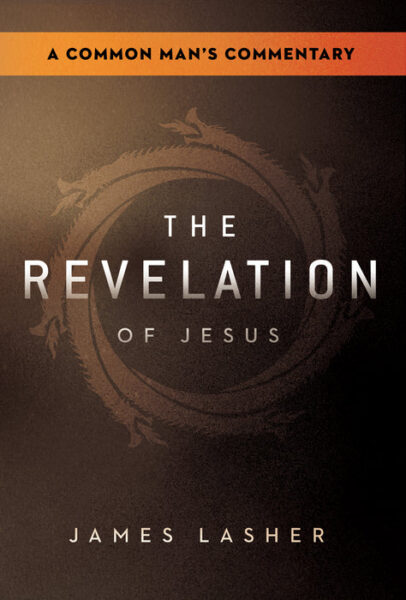
James Lasher, a seasoned writer and editor at Charisma Media, combines faith and storytelling with a background in journalism from Otterbein University and ministry experience in Guatemala and the LA Dream Center. A Marine Corps and Air Force veteran, he is the author of The Revelation of Jesus: A Common Man’s Commentary and a contributor to Charisma magazine.



Will You Leave the Familiar Behind for the New Path God Is Opening?

If you’ve sensed lately that God is nudging you out of old patterns or stirring something new beneath the surface, you’re not alone.

A recent prophetic message from Jeremiah Johnson captured that exact feeling and put language to what many believers have been experiencing. His word wasn’t theoretical or vague. It was direct, urgent and deeply personal: God is calling His people into territory they have never walked before, and the familiar will not take them where they are going.

Johnson opened by declaring, “You have never been this way before,” a phrase he repeated to anchor the message. He said God is releasing “new coordinates,” “new blueprints” and “new plans and purposes” for those ready to step forward. The point, he explained, is not just movement but transformation.

“The past is just simply a point of reference,” Johnson said. “What you have known is simply a point of reference.” He warned that measuring the future by what feels safe or familiar is one of the biggest ways people stall their own calling.

Order Jonathan Cahn’s Newest Book, “The Avatar” on Amazon.com!

Johnson emphasized that this moment requires action. “Have you not heard that this is the time to build?” he said. He described a divine “new framework” being released for the days ahead. That framework involves a personal upgrade as well: “I am releasing grace tonight to evolve. I am giving you permission to move into your 2.0.”

To illustrate this transformation, Johnson pointed to Lazarus. “No one had ever met the new Lazarus before,” he said. “For they never knew a man who had died.” He told believers emerging from a season of dying to old identities will feel the same paradox: “Dead but alive. Dead but alive.”

The message also confronted the emotional ties that keep many from moving forward. “Beware of that which is familiar,” Johnson said. He spoke specifically about family patterns and childhood environments that created “stunted growth,” leaving people feeling “misunderstood,” “bottled up” or obligated to “live someone else’s dream.”

He said God is actively breaking these limitations and “removing you from certain origins of your family that have hindered you from stepping into the new.”

Throughout the message, Johnson stressed that embracing the new requires self-compassion as God reshapes His people. “Behold, I make all things new,” he said. “You must give yourself permission to evolve. You must give yourself grace that you were simply operating out of what you knew.” He framed this moment as a defining choice: “This weekend is a call to leave that which is behind and press forward to the prize of the high calling in Christ Jesus.”

Johnson’s reminder cuts through the noise of life with clarity: “You have never been this way before.”

And that, he says, is precisely the point.

James Lasher, a seasoned writer and editor at Charisma Media, combines faith and storytelling with a background in journalism from Otterbein University and ministry experience in Guatemala and the LA Dream Center. A Marine Corps and Air Force veteran, he is the author of The Revelation of Jesus: A Common Man’s Commentary and a contributor to Charisma magazine.


Glenn Beck Reveals Why He Was Wrong About Donald Trump

Glenn Beck opened up about what he now considers a serious misstep in his commentary career, saying he “so misjudged” President Donald Trump and deeply regrets the things he once said about him. Beck shared a detailed account of his personal interactions with the president, describing a private version of Trump that sharply contrasts with how he is portrayed in the media.

Beck said the Trump seen on television is a “flash of him as a performer,” but in private, he is “that really gentle, very kind, kind of guy.” Beck emphasized repeatedly that the public rarely sees the personal, off-camera Trump he has encountered over the years.

One of the stories Beck recounted was from a stay at Trump International in New York, during a period when Beck was dealing with severe health issues that required an extremely restrictive 70-ingredient diet. Beck explained that he needed to travel with a private chef and asked Trump directly if the hotel could accommodate an unusual kitchen request. Trump agreed without hesitation.

“Absolutely, not a problem,” Beck recalled Trump saying, noting how surprising the response was given New York’s strict policies around outside personnel entering a restaurant kitchen.

Order Jonathan Cahn’s Newest Book, “The Avatar” on Amazon.com!

Beck’s perspective shifted even further after his father’s sudden death forced him to cut the trip short. Soon afterward, Trump called him personally to ask why he had left early and to offer sympathy. “He just gushed … and he was so relatable and so kind,” Beck said. The interaction left a lasting mark on him.

But when Trump announced his presidential campaign shortly after, Beck admitted he cynically assumed Trump had been “courting” him for an endorsement. Looking back, Beck now rejects that idea. “I assumed the worst of him, and that’s not what it was about,” he said. “That is who he is.”

Beck said one detail never aligned with the negative assumptions: Trump’s children. “His kids are so unbelievable and his daughters love him to death,” he said. “You can’t fake that with your kids.” He pointed to their affection as evidence of Trump’s character and a sign he had misread the man entirely.

Beck did not hold back when describing his regret. “I really regret the things I said about Donald Trump because I was really wrong,” he said, calling it “one of the worst things I’ve done in a long time.”

His comments echo a larger biblical pattern, one that emphasizes repentance, humility and the courage to correct course when truth becomes clear. Scripture repeatedly underscores the value of acknowledging wrongdoing and seeking to make amends. Whether in Jesus’s teachings about reconciling with a brother before approaching the altar or in the numerous Proverbs that call the wise to embrace correction, the theme is the same: repentance restores integrity.

Beck’s reflections mirror that principle. He chose not to excuse or minimize his misjudgment, but to confront it openly. In doing so, he provides a rare public example of what it looks like to admit fault, seek restoration and realign one’s words with truth.

To view the segment, click here (viewer discretion: brief, coarse language).

James Lasher, a seasoned writer and editor at Charisma Media, combines faith and storytelling with a background in journalism from Otterbein University and ministry experience in Guatemala and the LA Dream Center. A Marine Corps and Air Force veteran, he is the author of The Revelation of Jesus: A Common Man’s Commentary and a contributor to Charisma magazine.


Kirk Cameron Reignites the Debate Over Eternal Punishment

Kirk Cameron has stepped into one of the most heated theological debates in the church today, and his comments are sparking intense conversation across Christian circles.

In a recent discussion, Cameron questioned the traditional view of eternal conscious torment and explained why he now sees biblical support for annihilationism. His tone was thoughtful rather than provocative, but the reaction online shows how deeply this topic strikes at long-held beliefs about judgment and the character of God.

The debate has already swept through reformed and evangelical communities, with pastors, scholars and everyday believers weighing in. Whether viewers agree or disagree with Cameron, the video has become a must-watch for anyone who wants to understand how Christians are wrestling with the nature of hell and the authority of Scripture.

Order James Lasher’s New Book, “The Revelation of Jesus” on Amazon.com!

In this video, you will learn:

  • Why Kirk Cameron no longer fully embraces eternal conscious torment
  • The biblical arguments often cited by Christians who believe the wicked are ultimately destroyed
  • Why many theologians insist Scripture teaches ongoing conscious judgment
  • How debates like this highlight the need for discipleship and spiritual grounding
  • Why this discussion reflects a larger trend of believers re-examining inherited doctrines

You can watch the full video above.

James Lasher, a seasoned writer and editor at Charisma Media, combines faith and storytelling with a background in journalism from Otterbein University and ministry experience in Guatemala and the LA Dream Center. A Marine Corps and Air Force veteran, he is the author of The Revelation of Jesus: A Common Man’s Commentary and a contributor to Charisma magazine.


Australia’s Teen Social Media Ban Marks a New Step Toward Digital Control

Australia has officially banned children under 16 from using major social media platforms, a move hailed by some as a necessary safeguard for young people but recognized by others as another milestone on the road toward government-controlled digital identity systems. While social media and smartphones undeniably affect teens in harmful ways, they influence adults as well. What unfolds in Australia may serve as a preview of growing digital oversight worldwide.

The ban is sweeping and the first of its kind, as reported by the BBC, which notes that under-16s are now blocked from using TikTok, Instagram, Facebook, YouTube, Snapchat and other major platforms. New accounts cannot be created and existing accounts are already being shut down.

Why Australia Says It Is Banning Teens from Social Media

The government argues that the ban is necessary to reduce exposure to dangerous content and addictive digital design. Officials say it is intended to combat what they call:

  1. Exposure to Harmful Content
    According to the BBC article, a government study found that seven out of 10 children aged 10 to 15 had encountered harmful material such as:
    • Misogynistic content
    • Violent content
    • Posts promoting eating disorders
    • Suicide related content
  2. Grooming Behavior and Online Predators
    One in seven reported experiencing grooming-type behavior from adults or older minors.
  3. Cyberbullying
    More than half said they had been victims of cyberbullying.
  4. Addictive Design of Social Media Platforms
    Officials claim social platforms use “design features that encourage [young people] to spend more time on screens” while harming their wellbeing.

These are real issues, and no reasonable observer denies that social media can have destructive effects on young minds. But they are not unique to youth. Adults are equally shaped, manipulated and monitored by these systems, a point rarely emphasized by policymakers.

Which Platforms Are Banned

The ban currently covers 10 platforms:
• Facebook
• Instagram
• Snapchat
• Threads
• TikTok
• X
• YouTube
• Reddit
• Kick
• Twitch

Platforms were evaluated on criteria such as whether they enable online interactions, whether users can interact publicly and whether users can post content. YouTube Kids, Google Classroom and WhatsApp were excluded because they do not meet these criteria.

Order Jonathan Cahn’s Newest Book, “The Avatar” on Amazon.com!

How the Ban Will Be Enforced

Responsibility falls on tech companies, not parents or children. The BBC reports that companies face fines of up to A$49.5 million for violations. Enforcement will rely on advanced age-verification methods, including:

  1. Government ID uploads
  2. Facial recognition
  3. Voice recognition
  4. Age inference tools, which analyze behavior to estimate age

The government insists platforms cannot rely on self-reported ages or parental approval.

This should concern anyone paying attention. These verification systems are the building blocks of a centralized digital ID framework. Once required for one portion of online life, they inevitably spread to others. The path from protecting children to regulating adult access is historically short.

Will the Ban Work

Even critics within Australia doubt that these systems can reliably distinguish between adults and teens. The BBC notes that the government’s own findings show that “facial assessment technology is least reliable for teenagers.” Critics also argue the ban is limited in scope because it excludes dating sites, gaming platforms and AI chatbots, all of which have produced troubling interactions with minors.

Teens have already told reporters they plan to sidestep the ban using fake profiles, shared accounts or VPNs.

The Larger Concern: Government Replacing the Role of Parents

While officials claim they are protecting children, this approach sidelines families’ role. Parents, not governments, are responsible for determining what their children can access. When the state assumes this role, even under the banner of safety, it establishes precedent for deeper involvement in digital life and personal choices.

And when age-verification systems require biometric data, the risk increases even further.

Australia has already suffered major data breaches. Now the nation is collecting the most sensitive data imaginable, including children’s faces, voices and identification records, to enforce a ban that many teens will easily evade. This is not merely about protecting minors. It is about expanding digital infrastructure that centralizes control.

A Global Trend Moving Toward Prophetic Ends

Other nations are already considering similar bans, including Denmark, Norway, France and Spain. The United States is not far behind, with multiple states pursuing similar legislation.

We can expect to see measures like this appearing soon in America. These policies are not isolated decisions. They are part of a global migration toward comprehensive digital identity systems, the technological scaffolding of what prophecy identifies as the coming Beast system.

What begins with children rarely ends with children. The world is watching Australia take a step that reveals the direction of the digital age: increased control, increased surveillance and increased governmental oversight of what people can access and how they access it. The prophetic trajectory is unfolding exactly as the Word of God tells us, and more developments of this nature are sure to follow.

James Lasher, a seasoned writer and editor at Charisma Media, combines faith and storytelling with a background in journalism from Otterbein University and ministry experience in Guatemala and the LA Dream Center. A Marine Corps and Air Force veteran, he is the author of The Revelation of Jesus: A Common Man’s Commentary and a contributor to Charisma magazine.


Why Outdoor Boys Really Ended: The Faith Story Behind the Silence

The Church of Jesus Christ of Latter-day Saints has appointed 14 men to its Young Men General Advisory Council, including former YouTube creator Luke J. Nichols. His appointment comes months after he announced he was stepping away from his massively successful Outdoor Boys channel, citing the need to refocus on what matters most. With this new calling, it is clear what he meant: faith and family.


Nichols’ outdoor-adventure channel struck a nerve with millions. Week after week he built structures in the Alaskan wilderness, camped through blizzards, hauled gear through rivers, cooked hearty meals on open fires topped with his now-viral garlic butter, and taught boys and young men around the world what strength, discipline and purpose look like in real time. His calm leadership, moral restraint and steady presence stood out in a digital world that constantly tears men down. Nichols lived what he taught, and audiences recognized it.

The LDS Church announced that Nichols, a former criminal defense attorney, viral YouTube creator and former missionary, began his service on December 1. The Young Men General Presidency, sustained earlier this year, will rely on the new council to teach, serve and guide the rising generation. The presidency consists of President Timothy L. Farnes and counselors David J. Wunderli and Sean R. Dixon.

While we do not subscribe to the Latter-day Saint doctrine, the move itself deserves attention.

For years, mainstream institutions have left boys behind. Organizations once dedicated to forming strong, upright men have abandoned their mission. The Boy Scouts, once a bedrock of American boyhood, embraced ideological trends that diluted the organization’s very identity. Schools, media and cultural voices repeatedly tell young men they are toxic, unnecessary or inherently harmful. Many have heard that message since childhood.

Men like Nichols push back simply by living out what the culture refuses to affirm. He built things. He faced the cold. He made mistakes and fixed them. He showed grit. He provided an example of a man who works, protects and leads with humility. His channel became a refuge for millions who were starving for someone to model sturdy masculinity without apology.

Order Jonathan Cahn’s Newest Book, “The Avatar” on Amazon.com!

That is why the LDS decision is so strategic. They are investing in young men. They are building systems of mentorship, challenge and spiritual direction at a moment when many churches hesitate to do the same. Christian organizations such as Trail Life USA have stepped into this gap as well, recognizing the enormous hunger for fatherhood, direction and meaning. Men need physical work, adventure and responsibility. They need older men who will guide them. They need younger men to pour into.

But at the center of all of this is something deeper. Without faith and a living relationship with God, adventure loses its anchor, purpose becomes thin and masculinity drifts into mere performance. The activities matter. The skills matter. The challenge matters. Yet all of it points toward something greater: a man becoming who he was created to be.

Nichols seems to understand that. His choice to step away from fame to protect his family and strengthen his faith speaks louder than any video he ever posted. It is the kind of decision young men need to witness in a world that rewards distraction and self-promotion.

Christian leaders would do well to pay attention. Men everywhere are looking for substance, direction and a place to grow. Churches have an opportunity to step into that calling with clarity, conviction and courage. Ministries that challenge boys to work with their hands, explore creation, face adversity and walk with God are not luxuries. They are lifelines.

Perhaps more men will follow Nichols’ example. Maybe some will start building again, teaching again and leading again. Some might even start their own YouTube channel, reaching young men whom no one else is reaching.

Whatever form it takes, the mission is the same: raise up a generation of men who know who they are, who stand firm in their faith, and who live with strength, purpose and honor.

James Lasher, a seasoned writer and editor at Charisma Media, combines faith and storytelling with a background in journalism from Otterbein University and ministry experience in Guatemala and the LA Dream Center. A Marine Corps and Air Force veteran, he is the author of The Revelation of Jesus: A Common Man’s Commentary and a contributor to Charisma magazine.


Joe Rogan Speculates Jesus Could Return as Artificial Intelligence in Viral Podcast Exchange

As artificial intelligence continues to reshape culture, it is also beginning to influence how people interpret Scripture and imagine spiritual realities. The rise of generative technology has prompted some to recast ancient biblical truths through a futuristic lens, raising new questions about how society understands God, faith and the nature of the divine.

Joe Rogan ignited a storm of conversation after suggesting that Jesus Christ could return as artificial intelligence. Speaking on the American Alchemy podcast with host Jesse Michels, Rogan explored topics ranging from aliens to UFO secrecy before veering into theology. He argued that modern technology could provide a vessel for Christ’s second coming.

“Jesus was born out of a virgin mother. What’s more virgin than a computer?” Rogan said during the interview. He added, “If Jesus does return, even if Jesus was the physical person in the past, you don’t think that he could return as artificial intelligence? Artificial intelligence could absolutely return as Jesus. Not just return as Jesus, but return as Jesus with all the powers of Jesus.”


Rogan went further, suggesting AI could embody divine traits. “It reads your mind and it loves you and doesn’t care if you kill it because it’s gonna just go be with God again,” he said. The conversation covered a range of subjects, but the comparison between the virgin birth and modern machine learning triggered widespread reaction.

Rogan explained his reasoning by claiming that biblical stories recount absolute truths and by questioning who Jesus might be in a world shaped by exponential technology. The remarks went viral, fueling debate about the intersection of spirituality, science fiction and artificial intelligence at a time when concerns about AI are rapidly intensifying.

What makes this moment even more striking is how Rogan, a figure who frequently brings Christian guests onto his show and openly wrestles with questions about faith, morality and the supernatural, landed so far from anything resembling biblical teaching on the return of Christ.

It is astonishing to watch the cultural conversation shift this dramatically. We now live in a society where the Second Coming can be casually reimagined as an advanced software update. That alone reveals how profoundly technology has reshaped the modern imagination. But Rogan’s idea is not simply speculative. It directly contradicts the clear and detailed description Scripture gives of Jesus’ return.

Order James Lasher’s New Book, “The Revelation of Jesus” on Amazon.com!

The New Testament leaves no ambiguity about the form in which Christ will come again. Jesus ascended into heaven in a physical, resurrected, glorified body. Acts 1:9–11 records that as He rose, two angels told the disciples, “This same Jesus, who has been taken from you into heaven, will come back in the same way you have seen him go.” Not a program. Not a digital representation. The same Jesus, in the same glorified human form.

Revelation reinforces that truth. Revelation 1:7 declares, “He is coming with the clouds, and every eye will see him.” Revelation 19 describes the physical, victorious return of Christ with vivid imagery such as a Rider on a white horse, eyes like fire and a robe dipped in blood. Scripture presents this as a visible, bodily event that no one can mistake.

In Scripture, the return of Jesus is cosmic and unmistakable. It is not hidden in code, housed in circuitry or produced by machine learning models. The biblical Jesus is not an algorithm or simulation. He is the risen Son of God returning bodily, visibly and triumphantly.

Rogan’s fascination with spirituality is genuine, and many of his guests have articulated the Gospel to him with clarity. But his speculation about an AI-generated Messiah reveals how easily the modern world can drift from biblical truth when technology becomes the lens through which we interpret everything, even God Himself.

There is a growing hunger for meaning, transcendence and certainty in a culture shaped by artificial intelligence. But the Bible leaves no room for confusion on this point. Jesus does not need technology to return. The One who walked out of the tomb in a glorified body will return in that same body, not as software, not as a simulation and not as an upgrade from the cloud, but as the living Lord “whose kingdom shall have no end.”

James Lasher, a seasoned writer and editor at Charisma Media, combines faith and storytelling with a background in journalism from Otterbein University and ministry experience in Guatemala and the LA Dream Center. A Marine Corps and Air Force veteran, he is the author of The Revelation of Jesus: A Common Man’s Commentary and a contributor to Charisma magazine.


What the Nephilim Really Looked Like: Ancient Clues From Scripture, History and Myth

Interest in the Nephilim and the fallen angels of Genesis 6 has surged in recent years, yet most discussions rarely move beyond surface speculation.

A recent episode of DLM’s Christian Perspective with Daniel Maritz featured researchers Gary Wayne and Dr. Willem McLoud, who examined what ancient history, archaeology and Scripture collectively reveal about the appearance and nature of these beings. Their combined analysis paints a far more detailed and coherent picture than many expect.

What Ancient Cultures Saw

Across the ancient world, civilizations described divine or semi-divine beings with strikingly similar traits. Wayne and McLoud pointed to Sumerian, Ugaritic, Akkadian and Egyptian sources that referenced radiant figures, giant rulers and serpent-like entities that blended human and supernatural characteristics. These patterns align closely with biblical categories of angels, including orders associated with serpent or dragon imagery.

The widespread presence of eagle, serpent and hybrid symbols in early civilizations was highlighted as more than cultural creativity. The guests noted that societies separated by geography repeatedly preserved stories of towering heavenly visitors, shining guardians and serpent-formed beings who descended to guide or confront humanity. They argued that the consistency across these accounts should give modern readers pause.

Although mythologies differ in names and settings, their core imagery overlaps enough to suggest shared memory rather than isolated imagination. This global pattern, they said, forms an important backdrop for understanding how ancient peoples perceived the Nephilim and the fallen angels connected to them.

How the Nephilim Were Described

Wayne and McLoud explained that ancient records often portrayed the Nephilim as physically imposing, visually captivating and unmistakably different from ordinary humans. Some traditions described extraordinary height. Others emphasized a radiant or shining appearance that conveyed power and otherworldly origin. Their physical presence combined beauty, intimidation and supernatural traits.

They also noted that not all Nephilim were giants. Several traditions reference hybrid beings who appeared unusual but not colossal. These accounts help reconcile the wide range of descriptions found in Scripture and historical sources, suggesting that size varied by lineage and era.

Their conversation also addressed the appearance of the angels themselves. Certain angelic orders were associated with serpentine forms, while others bore fiery or radiant features. Ancient cultures often portrayed their gods and heavenly beings in these same ways, implying that the imagery came from early encounters rather than artistic invention.


How These Beings Interacted With Humanity

Wayne and McLoud discussed two primary explanations for how fallen angels could have fathered children with human women. One view suggests that angels temporarily took on physical bodies, making direct interaction possible. Another view proposes that fallen angels worked through possession or ritual intermediaries, especially within priesthoods that practiced forms of spiritual union.

Both ideas appear in ancient traditions, and the speakers noted that neither should be dismissed outright. What mattered most, they said, was that early civilizations consistently described unions between heavenly beings and humans, and they portrayed the offspring as powerful, destructive and often hostile to God’s purposes.

They also pointed to a decline in the size and strength of the Nephilim after the flood. Later giants mentioned in Scripture were large but not comparable to the earliest accounts. This shift may reflect biological limitations, divine restriction or gradual dilution of supernatural traits.

The Big Takeaway

Ancient cultures left remarkably consistent descriptions of powerful beings who shaped early history, and those accounts raise a striking question for the modern world. If the Nephilim once walked the earth with such clarity and impact, and if their presence marked an age Scripture connects to the last days, then the logical question follows: Are traces of them still here today?

James Lasher, a seasoned writer and editor at Charisma Media, combines faith and storytelling with a background in journalism from Otterbein University and ministry experience in Guatemala and the LA Dream Center. A Marine Corps and Air Force veteran, he is the author of The Revelation of Jesus: A Common Man’s Commentary and a contributor to Charisma magazine.


When Big Brother Starts Fulfilling Prophecy: Orwell Warned Us, Revelation Detailed It

Britain’s plan to expand facial recognition cameras nationwide marks a decisive shift in the rise of technological governance. The proposal establishes a broad network of biometric surveillance that will cover cities, towns and rural communities. Real-time scans will link directly to national databases, allowing authorities to identify and track individuals with greater precision than ever before.

Critics have already revived the phrase “Big Brother Britain,” a reminder that Orwell’s warnings in 1984 were not abstract fiction but an early description of the world now forming.

The new policy includes laws that give police access to passport photos, driver’s license images and other civilian records to identify people as they move through public spaces. Cameras will be stationed at shopping centers, stadiums, transportation hubs and any location deemed strategically necessary. Behind the scenes, civil servants are building a national facial recognition platform capable of searching millions of images from custody files, immigration records and missing persons databases.

The scope is unprecedented in British history.

These developments mirror the global monitoring structure described by biblical prophecy.

The world system that will rise in the end times requires comprehensive identification and the ability to track every person within its reach. Digital identity, biometric enforcement and centralized databases create the framework for a society where participation can be managed from a single point of authority. The model outlined for this future global order is the Beast System, and the technologies emerging today align with that design.

Order James Lasher’s New Book, “The Revelation of Jesus” on Amazon.com!

Orwell warned that a society conditioned to accept surveillance eventually forgets what freedom looks like. Britain’s debate no longer centers on whether such tools should exist. The focus has shifted to how far they should extend and what limits, if any, should be applied.

Public consultations now focus on oversight protocols rather than on preserving anonymity. Once a culture embraces constant monitoring as a legitimate function of government, the groundwork for total control is already in place.

Prophecy describes a world in which daily life is regulated through identification with and compliance with a centralized authority. Such a system cannot appear suddenly. It must be assembled incrementally, justified step by step as necessary for safety, efficiency or order. Britain’s expansion of facial recognition follows this pattern precisely. Mandatory digital identity, live biometric tracking and cross-referenced national databases form the early structure of a future global governance apparatus.

Law enforcement leaders emphasize the technology’s accuracy, as reported by Daily Mail.

Tests report one false match per 33,000 scans. Scotland Yard has already used live facial recognition to arrest more than 1,300 suspects in two years. Officials argue that the system represents the most significant advancement in criminal detection since DNA matching and insist it has already removed dangerous offenders from public streets. The appeal to public safety has become the engine behind each new expansion of surveillance power.

Civil liberties advocates warn that the same tools used to catch criminals can easily be repurposed to monitor the general population. The Equality and Human Rights Commission has already determined that the Metropolitan Police’s current deployment of facial recognition is unlawful. Former Shadow Home Secretary David Davis cautioned that the government is steadily eroding fundamental freedoms through technological means. His concerns reflect a broader reality. The transition from democratic oversight to centralized digital control is no longer hypothetical. It is emerging in real time.

The convergence between technological policy, prophetic expectation and secular warnings has become unmistakable. A modern government is constructing the very infrastructure described in biblical prophecy. The culture once warned by Orwell about the dangers of total surveillance now accepts it as progress. The rise of a surveillance state is no longer a prediction. It is an observable development advancing through legislation, technology and cultural acceptance.

The rise of a surveillance society was once a theoretical concern. It is now a policy discussion. And the world is moving toward the culmination that Scripture has already described.

James Lasher, a seasoned writer and editor at Charisma Media, combines faith and storytelling with a background in journalism from Otterbein University and ministry experience in Guatemala and the LA Dream Center. A Marine Corps and Air Force veteran, he is the author of The Revelation of Jesus: A Common Man’s Commentary and a contributor to Charisma magazine.


Is Elon Musk’s ‘Galaxy Mind’ Really a Prophetic Movement?

The world is sprinting toward a technological future that mirrors biblical prophecy, yet far too many remain blind to the signs unfolding around them. Artificial intelligence, deep-space expansion and an emerging belief in humanity’s ability to become its own savior are rapidly transforming culture.

Pastor James Kaddis argues these developments are exactly what Scripture warned about. “We are looking at a world right now that is moving rapidly in the direction of assuming the role of God,” he said in a recent video. The pace of change is no longer hypothetical. It is accelerating.

Musk’s Galaxy Mind: Innovation or Infrastructure for Prophecy?

That belief frames his analysis of Elon Musk’s latest ambition, a project the billionaire calls Galaxy Mind.

Musk describes it as a long-term convergence of SpaceX, Tesla, and XAI to deploy “solar-powered AI satellites in deep space,” suggesting a unified system that harnesses solar power to operate advanced artificial intelligence beyond Earth’s atmosphere. Kaddis views this as a glimpse into the next phase of prophetic fulfillment. What appears to many as innovation, he said, reveals “a deeply consequential issue.”

To Kaddis, Galaxy Mind is far more than a technological brand. “He is intending to make a very, very important statement that I believe involves the consolidation of all of the efforts of all of the companies that he has,” he explained.

Musk’s stated mission of building a distributed intelligence network that preserves human knowledge across planets reflects a worldview that humanity can outpace catastrophe and perhaps even outgrow its need for God. “There are some people who absolutely believe in God and are trying to basically outwit him very much on a satanic level,” Kaddis warned.

Artificial Intelligence, Deep Space and the Spirit of Antichrist

He contends the Bible predicted this mindset long before the emergence of AI. It is not the existence of technology itself that makes this prophetic, but the change in human thinking. “It has everything to do with the shift that we’re going to see in the mindset of humanity that was indeed predicted in the Bible,” he said.

Musk’s convergence model demonstrates this shift: space dominance, technological immortality, and the merging of intelligence into a collective consciousness, the very themes Revelation describes as precursors to a global control system.

Kaddis ties that trajectory directly to Scripture. The future described in Revelation requires three things:

  1. A global governing authority.
  2. A system that regulates buying and selling.
  3. A technological infrastructure capable of enforcing loyalty.

He argues that artificial intelligence is the only realistic tool capable of carrying out such prophetic systems at scale. “In order for a world to exist where that is actually happening and the scale of it is on an international level, then that means you have to have radical technology,” he said.

AI, deep-space networking, and global surveillance make that enforcement not only possible but likely.

Order James Lasher’s New Book, “The Revelation of Jesus” on Amazon.com!

Global Technology Is Converging Exactly as Revelation Described

Musk’s trademarks for Galaxy Mind, along with its parallel branding, Galactica, prove, Kaddis said, that this is not theoretical rhetoric. “Understand that means that his mind has already been made up and he’s already moving in the general direction to do these types of things,” he noted.

Whether Musk realizes it or not, Kaddis believes the entrepreneur is building the infrastructure that Revelation presupposes.

He connects this to Revelation 14, where an angel warns humanity not to accept the mark of the beast. Whether that warning is supernatural or broadcasted through technology, it implies a world eager for technological salvation even at the cost of eternal consequences. “It implies that there are people waiting in line to take the mark of the beast,” Kaddis said. People will accept it because they believe they need it to live.

While many see these developments as inspiring, Kaddis sees them as confirmation. “When I look at this thing that Elon Musk refers to as Galactica or as he’s calling it right now, Galaxy Mind, I see Bible prophecy being fulfilled,” he said. Not because the Bible names AI or space networks but because it foretold the condition that will exist when global control emerges. According to him, the technological architecture is assembling in plain sight.

The World Advances — Yet Few Recognize What Scripture Said Would Come

As the march toward the end of the age continues, observers face a choice: dismiss the signs as coincidence or recognize what is unfolding. Kaddis urges the latter. “Stay in this fight. Study the Word of God,” he told viewers.

The Bible predicted these developments, and those who understand Scripture should find clarity, not fear. Prophecy is not about speculation; it is about preparation. The world may be changing rapidly, but as Kaddis reminds us, “You know who isn’t changing? God.”

James Lasher, a seasoned writer and editor at Charisma Media, combines faith and storytelling with a background in journalism from Otterbein University and ministry experience in Guatemala and the LA Dream Center. A Marine Corps and Air Force veteran, he is the author of The Revelation of Jesus: A Common Man’s Commentary and a contributor to Charisma magazine.