Maduro Receives Powerful ‘Prophecy’ of Victory and Revival in 2025, Then Gets Captured in 2026

It’s hard to believe, but events in Venezuela have taken a remarkable twist that echoes a “prophet’s” words in ways no one anticipated.

In Nov. 2025, a prominent self-proclaimed prophet prayed over President Nicolás Maduro, decreeing victory, national revival, and the exaltation of Jesus’ name, as reported by Christian media outlet Protestia.

Less than two months later, Maduro was captured and deposed in a U.S. military operation. While we do not regard this man as a true prophet (his extravagant claims about himself make that clear), elements of his prophecy over Venezuela may yet prove accurate, just not as he or Maduro intended.

David Edward Owuor, the wealthy Kenyan founder of Repentance and Holiness Ministry, has long made bold assertions: that he is the greatest prophet ever, that he is Elijah, and even that he embodies both of the two witnesses in Revelation 11. These claims rightly undermine his credibility as a genuine prophet of God.
Order Jonathan Cahn’s Newest Book, “The Avatar” on Amazon.com!

Yet Owuor visited Miraflores Palace, met with Maduro, and prayed fervently over him amid growing U.S. pressure on the regime. In a video from his ministry channels, Owuor decreed protection, strength and triumph.

Here is the full quote of his prayer:

I want to pray for the president of this country, in the powerful name of Jesus. And I am saying this very aware that this is a special nation, and that the Lord is with this country. And let me lay my hand upon you and make a decree, Father, in the powerful name of Jesus.

Lord, I decree with my prophetic tongue today, that you protect the president of this nation, and protect the entire land of Venezuela, even as you have shown me in a dream, you will cast out the enemy. The enemy will not come near, and this nation will rise. I decree health and strength upon the president of this land, Nicolas Maduro, so that in this land, Lord, you will always be glorified.

Lord, I decree today that as this nation rises, the name of Jesus will be exalted in this land. I have decreed today victory, victory, victory: victory three times in the mighty name of Jesus.

On Jan. 3, 2026, Maduro and his wife were captured in a U.S. operation and flown to face federal charges. With the dictator removed, Venezuela now has a real opportunity for recovery. The “enemy” cast out could well refer to Maduro’s corrupt regime itself. A freer nation may see economic renewal, genuine revival, and greater opportunity for the gospel to flourish, something severely restricted under his rule. The name of Jesus could indeed be exalted in new ways.

Owuor clearly intended his prayer to bolster Maduro’s position, aligning himself with a repressive government. Neither he nor Maduro would have wanted this outcome. Yet the Lord often works in mysterious ways, and Venezuela’s future may reflect the prophecy’s words more closely than anyone expected, through the very downfall both men sought to prevent.

James Lasher, a seasoned writer and editor at Charisma Media, combines faith and storytelling with a background in journalism from Otterbein University and ministry experience in Guatemala and the LA Dream Center. A Marine Corps and Air Force veteran, he is the author of The Revelation of Jesus: A Common Man’s Commentary and a contributor to Charisma magazine.



Is the US Dollar in Trouble? A Prophetic Warning About What’s Coming

Global financial pressure is no longer limited to market swings or short-term volatility. Mounting debt, declining confidence in currencies and strategic moves by central banks indicate a deeper structural shift underway.

That shift was the focus of a recent podcast discussion led by Pastor Mike Signorelli, joined by Kingdom entrepreneur and financial strategist Pedro Adao. Together, they examined current economic signals through a prophetic and historical lens, centering their discussion on one defining concept: reset.

Signorelli approached the moment pastorally, emphasizing that warning precedes disruption. From his perspective, God does not alert His people to create fear, but to invite preparation. The significance of the moment lies not in speculation, but in timing. The signs are converging, and discernment is required now.

Adao grounded that warning in financial history. Fiat currency systems, defined as money not backed by tangible assets, have never endured indefinitely. Every one has eventually collapsed, often after reaching a similar point of leverage and debt. The U.S. dollar now sits within that same historical window, strained by unprecedented obligations at both national and global levels.

Order Jonathan Cahn’s Newest Book, “The Avatar” on Amazon.com!

For Adao, this is not conjecture. It is the predictable outcome of unsustainable systems.

He pointed to actions taking place quietly among global institutions. Central banks are acquiring gold at accelerated rates. Precious metals have risen sharply. At the same time, nations are actively reducing reliance on the U.S. dollar in trade and reserves. These decisions reflect strategic positioning, not emotional reaction.

Both men framed this moment as a correction rather than a catastrophe. A reset, they explained, is not collapse for collapse’s sake. It is reordering when the imbalance can no longer be maintained. Scripture repeatedly reflects this pattern, especially where unchecked debt and distortion require realignment to restore stability.

The warning, they stressed, is not a call to panic or withdrawal. It is a call to stewardship. Trusting systems simply because they are familiar may no longer be sufficient. Preparation begins with awareness, flexibility, and responsibility rather than fear-driven responses.

The concept of a wealth transfer was addressed carefully. It was not portrayed as sudden enrichment or speculation, but as the natural movement of value during disruption. History shows that when systems reset, value shifts rather than disappear. Those positioned with clarity and discipline are often able to recognize opportunity while others remain immobilized by uncertainty.

Financial strain is increasing. Confidence is shifting. The conditions for change are forming.

A reset does not automatically signal loss. For those willing to respond with wisdom instead of fear, it may represent the beginning of a different order altogether.

James Lasher, a seasoned writer and editor at Charisma Media, combines faith and storytelling with a background in journalism from Otterbein University and ministry experience in Guatemala and the LA Dream Center. A Marine Corps and Air Force veteran, he is the author of The Revelation of Jesus: A Common Man’s Commentary and a contributor to Charisma magazine.
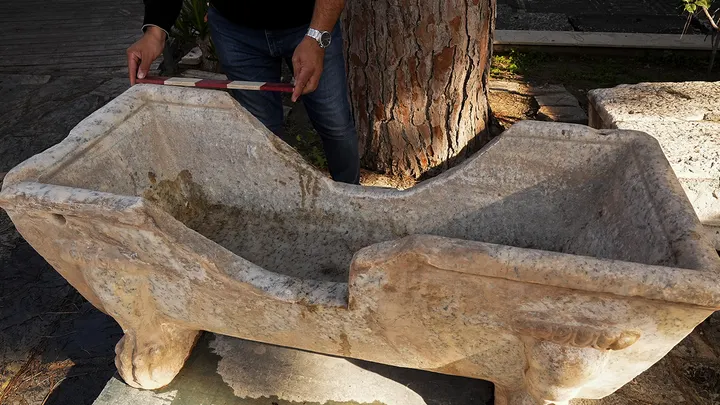


Exploring the Shamir Conspiracy: The Lost Technology Behind Solomon’s Temple

There is a single line tucked into the Old Testament that feels easy to read past until you really stop and think about it. Solomon’s Temple, one of the most ambitious construction projects in ancient history, was built without the sound of a hammer, axe or iron tool at the site. The stones arrived already cut. Already shaped. Already perfect.

That detail alone is strange enough. But once you start asking how, things get weird fast.

That is exactly where Josh Hooper, Andy DeNoon and Lily Hooper take listeners in a recent episode of the Ninjas Are Butterflies. What begins as a casual Bible observation quickly spirals into one of the strangest conspiracies tied to a biblical event most people think they already understand.

Hooper points straight to the verse in 1 Kings 6:7. No iron tools on the Temple Mount. None. Not during construction. Not even the sound of them. The stones were shaped elsewhere using a method the Bible never explains.

That silence is where the conspiracy lives.

To fill the gap, the hosts turn to Jewish tradition, specifically stories preserved in the Talmud. They are careful to flag this as extra-biblical material, written long after the events of Scripture and not authoritative for Christians. Still, it is the place where ancient Jewish thinkers tried to answer the same question modern readers ask today.

Their answer? Something called the Shamir.

Order Jonathan Cahn’s Newest Book, “The Avatar” on Amazon.com!

According to those traditions, Solomon didn’t rely on chisels or blades. He used a mysterious object or entity capable of cutting stone without touching it. The descriptions sound less like craftsmanship and more like science fiction. A green ray that splits rock effortlessly. A force that causes stone to part the way a flower opens. Sometimes it is described as a worm-like creature. Other times as a stone. Other times as something closer to raw energy.

Lily notes how quickly the language moves from practical to supernatural. Whatever the Shamir was supposed to be, it did not behave like a tool. It behaved like a power.

In the Talmudic account, Solomon is forbidden from using iron because it is associated with warfare and bloodshed. God’s house, the tradition says, should not be built with instruments of death. That leaves Solomon with an impossible problem until he is told the Shamir exists and can be obtained from Ashmedai, a figure described as a king of demons. Or perhaps better known as a principality (rulers of darkness, etc.)

According to the story, Ashmedai is captured through deception, questioned and forced to reveal the Shamir’s location. It turns out the Shamir is guarded by a mythical bird, described as a rooster-like mountain creature that uses the Shamir to cut stone for its nest. Solomon’s men trick the bird, steal the Shamir and use it to build the Temple without iron.

If this sounds like a fever dream, that is part of the appeal. The hosts are not presenting this as hidden Scripture. They are walking listeners through an ancient conspiracy that sits alongside the biblical text, not inside it.

They then connect the Shamir legend to ancient stone structures around the world. Massive blocks in Peru and elsewhere fit together so precisely that they look melted into place. Some tunnels appear glassy, as if they had been exposed to intense heat. In many cases, the building techniques appear suddenly in history and then vanish just as suddenly.

What if ancient civilizations had access to something we no longer understand? What if the Shamir story is a distorted memory of a lost technology? The tradition that the Shamir could only be contained in lead adds fuel to the fire, since lead is used today to shield radiation. That detail alone has led some to speculate about energy-based tools or forces far beyond primitive assumptions about the ancient world.

The story gets even stranger. Some Jewish traditions claim that the Shamir existed before Adam and Eve, alongside objects such as Moses’ staff. In that framework, the Shamir is not an invention at all. It is a relic of creation itself, later handled by beings both divine and rebellious.

At this point, the hosts do something important. They slow down.

None of this, they stress, comes from the Bible. These are not scriptural accounts. They are traditions, legends and speculative explanations layered around a real biblical event. And that distinction matters. Scripture stands on its own, and the Bible explicitly instructs believers to test everything rather than accept claims uncritically.

But there is also room for wonder. The Bible is not shy about the supernatural. It records miracles, divine interventions and events that defy natural explanation. Exploring wild traditions like the Shamir does not rewrite our faith. It simply reminds us that history may be stranger than modern categories allow.

This is a conspiracy wrapped in biblical history, not because it replaces Scripture, but because it orbits it. A reminder that one unexplained verse can open the door to centuries of speculation, myth and unanswered questions.

Whether the Shamir was fiction, metaphor or something else entirely, the fact that people have been trying to explain Solomon’s Temple for thousands of years says something profound.

James Lasher, a seasoned writer and editor at Charisma Media, combines faith and storytelling with a background in journalism from Otterbein University and ministry experience in Guatemala and the LA Dream Center. A Marine Corps and Air Force veteran, he is the author of The Revelation of Jesus: A Common Man’s Commentary and a contributor to Charisma magazine.


2.5 Million People Witness Jesus Fill the Sky in Record-Setting Display

A record-breaking New Year’s Eve celebration in Rio de Janeiro placed Jesus Christ at the center of the world’s largest countdown, offering a striking and uplifting start to the year.

According to The Gateway Pundit, drones formed the image of Christ the Redeemer emerging from the Atlantic Ocean before an estimated 2.5 million people gathered along Copacabana Beach. The moment drew cheers from the massive crowd as fireworks illuminated the shoreline.


The scale of the event was formally recognized by Guinness World Records. “Rio’s New Year’s Eve celebration has been officially recognized by Guinness World Records as the Biggest New Year’s Eve Celebration in the World,” the organization stated, citing “the projected 2.5 million people on Copacabana Beach in 2025.”

The Gateway Pundit noted that despite Rio’s natural beauty, the city is often highlighted internationally only during moments of crisis or corruption. Large tourism-driven events remain the exception. “The nice exception are the mega events that take place in this city that is designed for tourism,” the article said, pointing to major global gatherings that briefly reshape Rio’s image.

Order Jonathan Cahn’s Newest Book, “The Avatar” on Amazon.com!

This year’s focal point stood apart. The display involved “1,200 drones, synchronized with fireworks and a special soundtrack by DJ Alok,” blending modern technology with one of the most recognizable symbols of the Christian faith.

Rather than centering the celebration on celebrity culture or abstract imagery, the world’s largest New Year’s Eve gathering openly elevated Jesus Christ before millions of attendees and viewers worldwide. The moment carried a clarity that resonated far beyond the shoreline.

As the new year began under the image of Christ rising above the sea, the question lingers: what better way to welcome the year ahead than by honoring our Lord and Savior, Jesus Christ?

James Lasher, a seasoned writer and editor at Charisma Media, combines faith and storytelling with a background in journalism from Otterbein University and ministry experience in Guatemala and the LA Dream Center. A Marine Corps and Air Force veteran, he is the author of The Revelation of Jesus: A Common Man’s Commentary and a contributor to Charisma magazine.


Jaw-Dropping Moment as Live Jesus Portrait Sells for $2.75 Million

President Donald Trump welcomed the New Year at Mar-a-Lago with a black-tie gala that placed Christian worship, charity and public service at center stage, culminating in a $2.75 million auction of a live-painted portrait of Jesus Christ.

The painting was created on stage in roughly 10 minutes by Christian worship artist Vanessa Horabuena, whose speed-painting performance unfolded as guests watched the image emerge on a black canvas while a slow rendition of “Hallelujah” played.

Trump announced that the proceeds from the auction would be donated to St. Jude’s Hospital and the local sheriff’s office, directing millions of dollars toward the care of seriously ill children and support for law enforcement.

“There’s a young lady named Vanessa who’s one of the greatest artists anywhere in the world,” Trump said as he introduced Horabuena to the audience. “To me, she’s one of the greatest… She’s a speed painter, and she’s a great painter, but I think she’s one of the great living artists.”

Order Jonathan Cahn’s Newest Book, “The Avatar” on Amazon.com!

The bidding opened at $100,000 and quickly escalated. Trump accepted a $1 million offer early on and kept the atmosphere lively as competing bids pushed the price higher. “These people are loaded with cash, just so you know,” he said. At one point, he jokingly asked, “$5 million or $2.5 million?” before the final bid landed at $2.75 million.

Trump invited the winning bidder on stage, teasing them about the financial impact of the purchase as the crowd looked on.

First Lady Melania Trump attended the event wearing a silver, floor-length gown. Guests included Israeli Prime Minister Benjamin Netanyahu and his wife, Sara, along with Homeland Security Secretary Kristi Noem, former New York City mayor Rudy Giuliani, House Majority Whip Tom Emmer, U.S. Attorney for the District of Columbia Jeanine Pirro, Emirati billionaire Hussain Sajwani and filmmaker Brett Ratner.

Before the auction, Trump addressed attendees by criticizing Democratic leadership in Minnesota, highlighting the success of his reciprocal tariffs program and stating that his New Year’s resolution was to secure “world peace.”

Following the event, Horabuena explained the deeper meaning behind the moment in a Facebook post.

“This moment wasn’t about me, it wasn’t about a painting…this moment was about President Trump setting worship of the Lord on the main stage. What God did this New Years Eve is only the beginning. It’s going to be a beautiful season of God’s great outpouring.”

The evening publicly united Christian worship with tangible charity. Millions of dollars were raised in a single night for seriously ill children and for local law enforcement, placing faith, generosity and public service at the forefront of the New Year’s celebration and marking the event as both consequential and unmistakable in purpose.

James Lasher, a seasoned writer and editor at Charisma Media, combines faith and storytelling with a background in journalism from Otterbein University and ministry experience in Guatemala and the LA Dream Center. A Marine Corps and Air Force veteran, he is the author of The Revelation of Jesus: A Common Man’s Commentary and a contributor to Charisma magazine.


Attack on JD Vance’s Home Sparks Alarm Over Growing Hostility in America

A growing hostility has taken root in the United States toward leaders who refuse to separate faith from public life. The tension has moved beyond policy disputes and partisan outrage. It has become personal, confrontational, and at times, physical. When public officials openly acknowledge God, defend biblical values, and resist cultural pressure to remain silent, the backlash is often swift and unforgiving.

This moment in American life reflects a spiritual struggle unfolding in full view.

That reality surfaced early Monday morning, as reported by Fox News, when a man was taken into custody after damaging property at the Ohio residence of Vice President JD Vance.

According to the report, “Secret Service agents physically detained the adult male shortly after midnight.” Authorities said the suspect allegedly caused “property damage, including breaking windows on the exterior of a personal residence.” The agency stressed that “the residence was unoccupied at the time of the incident, and the Vice President and his family were not in Ohio.” After the detention, “the man was taken into custody by the Cincinnati Police Department,” while prosecutors review possible charges.

Order Jonathan Cahn’s Newest Book, “The Avatar” on Amazon.com!

The absence of Vance and his family prevented what could have been a far more serious outcome, but the incident itself remains telling.

Vance has spoken increasingly about the role of faith in guiding moral leadership and public service. His refusal to compartmentalize belief places him at odds with a political environment that often treats religious conviction as a liability. That posture aligns with an administration under President Donald Trump that has taken visible steps to defend religious liberty and allow faith to exist openly in government rather than be hidden.

Shortly after news of the incident became public, Vance addressed the attack directly in a public statement.

Statement from Vice President JD Vance:

I appreciate everyone’s well wishes about the attack at our home. As far as I can tell, a crazy person tried to break in by hammering the windows. I’m grateful to the secret service and the Cincinnati police for responding quickly.

We weren’t even home as we had returned already to DC.

One request to the media: we try to protect our kids as much as possible from the realities of this life of public service. In that light, I am skeptical of the news value of plastering images of our home with holes in the windows.


The statement shows us a reality many Americans overlook. Leaders who speak openly about faith do so at personal cost. When public service is combined with conviction, it invites scrutiny that often crosses into hostility. While political opposition is expected in our constitutional republic, acts of intimidation reveal something deeper than disagreement. Faith-based leadership challenges a worldview that rejects accountability to anything higher than self.

The damage to Vance’s home can be repaired. The larger concern is what it represents. It is a reminder that the conflict facing the country is not only about elections or ideology. It is a spiritual battle being waged all around us.

As this administration continues to affirm faith rather than suppress it, resistance should be expected. The question is whether Americans will recognize the nature of that resistance and refuse to be intimidated by it.

James Lasher, a seasoned writer and editor at Charisma Media, combines faith and storytelling with a background in journalism from Otterbein University and ministry experience in Guatemala and the LA Dream Center. A Marine Corps and Air Force veteran, he is the author of The Revelation of Jesus: A Common Man’s Commentary and a contributor to Charisma magazine.


Soul Ties Explained: How Certain Relationships Open Doors to Spiritual Oppression

In a recent podcast interview, Pastor Vlad Savchuk of HungryGen Ministries and deliverance minister Rikhard Hartikainen examined the concept of soul ties, presenting them as powerful relational bonds that can either strengthen a person’s life or become a lasting source of spiritual and emotional bondage.

The discussion begins with a clear distinction between healthy and unhealthy soul ties. Soul ties, as they explain, are part of God’s design for human relationships and are meant to function within defined boundaries. Marriage, family relationships, and close friendships represent healthy expressions of these bonds, fostering trust, stability, and emotional security.

Disorder enters when soul ties form outside that design. Sexual relationships outside marriage are identified as one of the primary ways unhealthy soul ties are created. In those cases, emotional and spiritual bonds form without covenantal protection. When the relationship ends, the bond does not simply disappear. Attachment lingers, often producing confusion, emotional conflict and continued vulnerability.

Soul ties are not limited to sexual relationships. Deep emotional bonds forged in toxic or abusive environments can have the same binding effect. Relationships marked by manipulation, control, betrayal or domination create attachments that persist even after physical separation, continuing to influence thoughts, emotions, and behavior.

Order Vlad Savchuk’s New Book, “Make the Devil Homeless” on Amazon.com!

These unhealthy bonds are also presented as gateways for spiritual oppression. A soul tie does not have to be inherently demonic to become dangerous. Once formed, it provides ongoing access, allowing torment to persist, particularly when the other individual involved carries destructive spiritual patterns or unresolved issues.

Personal history plays a significant role in how soul ties develop. Those raised in unstable or emotionally absent homes often bond quickly in search of validation or security. Others, shaped by emotionally distant environments, struggle to form deep connections at all, including within marriage. These relational patterns tend to carry into adulthood, shaping how attachments are formed and maintained.

The discussion expands beyond romantic relationships to include spiritual environments. Unhealthy soul ties can form between leaders and followers when authority replaces accountability. In extreme cases, this dynamic produces dependence and control rather than healthy discipleship, laying the groundwork for manipulation.

Freedom from unhealthy soul ties requires deliberate action. The process centers on repentance for sin, forgiveness toward those who caused harm, and intentional renunciation of the bond itself. Identifying specific relationships during prayer is described as a practical way to bring clarity and finality, not as a ritual with inherent power.

Fear-driven responses, particularly within marriage, are firmly rejected. A believer married to an unbeliever is not instructed to violate the marital covenant out of spiritual anxiety. Obedience to God’s design for marriage is framed as protection, not exposure.

Not every struggle traces back to a soul tie, and not every emotional wound has a spiritual root. When deep bonds form outside proper boundaries, those connections remain active until they are addressed.

Soul ties, as described by the ministry leaders, help explain why some relationships are difficult to let go of and why healing often does not come with time alone. Freedom requires acknowledging the bond, confronting it honestly and restoring order where it was broken.

To listen to the full interview, watch the video above.

James Lasher, a seasoned writer and editor at Charisma Media, combines faith and storytelling with a background in journalism from Otterbein University and ministry experience in Guatemala and the LA Dream Center. A Marine Corps and Air Force veteran, he is the author of The Revelation of Jesus: A Common Man’s Commentary and a contributor to Charisma magazine.


Roman-Era Discovery in Revelation’s Ephesus Draws Global Attention

Archaeologists have uncovered unexpected Roman-era artifacts in Ephesus, a city deeply rooted in early Christian history and named as one of the seven churches in the book of Revelation.

The discoveries were announced Dec. 12 by Anadolu Agency, Fox News reports. As excavations along the city’s ancient Stadium Street revealed a rare first-century marble bathtub and a fragmented Roman statue, both offering new insight into daily life during the era of the early church.

The marble bathtub, carved from Greco Scritto marble and measuring nearly five feet long, dates back to the first century A.D. Archaeologist Serdar Aybek said the find stood out because it was intended for private use rather than a public bath complex.

Order James Lasher’s New Book, “The Revelation of Jesus” on Amazon.com!

“It is an unusual discovery because it is not something we encounter frequently,” Aybek said.

“We believe it belonged to the Terrace Houses and was used in the first century A.D.,” he added. “We found it during work at the theater, and its size shows it was used in a house.”

After its original use by a wealthy Roman household, the bathtub was later repurposed as a fountain trough, reflecting how structures and objects were reused as the city evolved.

Archaeologists also uncovered a fragment of a male statue, dated between the first century B.C. and first century A.D., which had been dismantled and reused as a paving stone. Aybek described the discovery as “completely unexpected.”

The finds are the latest in a growing list of discoveries across Asia Minor tied to early Christianity and the Roman world. In recent months, a 1,500-year-old Christian floor mosaic was unearthed in Urfa, traditionally regarded as the birthplace of Abraham. Meanwhile, archaeologists in Laodicea, another city named in Revelation, uncovered the remains of a massive Roman council hall.

Taken together, the steady stream of discoveries in biblically significant locations is drawing worldwide attention. For many observers, the timing is striking. Cities mentioned in Scripture are once again at the center of global focus, their buried histories resurfacing rapidly as interest in the ancient world and biblical prophecy continues to intensify.

James Lasher, a seasoned writer and editor at Charisma Media, combines faith and storytelling with a background in journalism from Otterbein University and ministry experience in Guatemala and the LA Dream Center. A Marine Corps and Air Force veteran, he is the author of The Revelation of Jesus: A Common Man’s Commentary and a contributor to Charisma magazine.


Why John Bevere Is Talking About UFOs When Most Pastors Won’t

Most pastors avoid UFOs like a live wire. It’s messy, controversial and guaranteed to invite criticism from every direction. That’s why it’s genuinely surprising, and honestly refreshing, to hear ministry leader John Bevere wade directly into the conversation, not as a provocateur, but as a shepherd.

On a recent episode of The John Bevere Podcast, Bevere and his son Arden tackled what many church leaders quietly sidestep: the growing public conversation around UFOs, now rebranded as UAPs, and the spiritual questions they raise. What unfolds is not speculation for speculation’s sake, but a sober attempt to frame a cultural moment through Scripture rather than fear or fascination.

Bevere makes it clear this wasn’t a topic he was eager to address. In fact, he admits that not long ago he would have laughed at the idea of discussing UFOs at all. What changed was a growing conviction that silence could leave believers unprepared. With government officials, military pilots and intelligence agencies openly discussing unexplained aerial phenomena, he argues that Christians need theological grounding, not avoidance.

Rather than treating UFOs as evidence of extraterrestrial life from distant galaxies, Bevere reframes the issue as spiritual. The key distinction he emphasizes is that many of these phenomena are described as interdimensional rather than extraterrestrial. That distinction matters. Scripture already affirms an unseen realm populated by spiritual beings, both faithful and fallen. From that perspective, the idea of nonhuman intelligences interacting with the physical world is not a threat to biblical faith. It’s already embedded in it.


Bevere walks listeners through familiar but often overlooked passages, drawing attention to biblical descriptions of unseen rulers, authorities and powers that operate beyond human perception. He points out that angels in Scripture routinely appear, disappear, traverse realms and interact physically with the world. The Bible, he suggests, is far less materialistic than modern believers sometimes assume.

Where Bevere grows especially firm is in rejecting the idea that these phenomena are neutral or benevolent. He cautions that spiritual deception rarely presents itself as obviously evil. Scripture warns that Satan disguises himself as an angel of light, which means deception can appear advanced, enlightened, or even comforting. In that sense, he sees the modern UFO narrative as fertile ground for confusion, particularly if it is framed as something that could rewrite humanity’s understanding of God, creation, or salvation.

That concern drives Bevere’s pastoral urgency. He repeatedly stresses that his goal is not to sensationalize the topic but to prevent believers from being shaken as these discussions become more mainstream. If Christians are unprepared, he warns, they may either panic or become overly fascinated, and both responses are dangerous.

He distills that concern into two clear dangers:

  • Ignorance that leads to shaken faith.
    Bevere warns that believers who lack biblical grounding may hear talk of nonhuman intelligence and assume it contradicts Scripture. That reaction, he argues, stems from unfamiliarity with what the Bible already teaches about the unseen realm.
  • Obsession that leads to distraction.
    He is equally concerned about Christians who become fixated on UFOs, conspiracies and hidden knowledge, allowing curiosity to replace devotion. Fascination, he notes, can quietly pull people away from the central focus of the faith.

Throughout the discussion, Bevere returns to a steady refrain: none of this should surprise believers. Scripture has long described a world where unseen powers operate, deception increases, and signs in the heavens unsettle humanity. What is new is not the phenomenon, but the volume of public attention being given to it.

The episode ultimately lands on a grounded, almost old-fashioned conclusion. Bevere does not call for deeper investigation, secret knowledge or constant vigilance over the skies. He calls for focus. Christians, he insists, are not meant to chase every mystery or decode every headline. They are meant to keep their eyes fixed on Jesus, remain rooted in Scripture, and stay faithful to the mission they’ve been given.

In a media environment obsessed with the spectacular, Bevere’s willingness to address UFOs without glorifying them may be the most unexpected part of all. He steps into unfamiliar territory, not to stir fear or hype, but to remind believers that even the strangest conversations of the moment do not sit outside the biblical worldview.

The takeaway from this unusual discussion is simple and steady: whatever may be unfolding in the unseen realm, it does not change who Christ is, what Scripture teaches, or what believers are called to do. The focus remains the same. Stay grounded. Stay discerning. And above all, keep your eyes on Jesus.

James Lasher, a seasoned writer and editor at Charisma Media, combines faith and storytelling with a background in journalism from Otterbein University and ministry experience in Guatemala and the LA Dream Center. A Marine Corps and Air Force veteran, he is the author of The Revelation of Jesus: A Common Man’s Commentary and a contributor to Charisma magazine.


Elon Musk’s Neuralink Expansion Signals a New Era of Brain-Implant Technology

The merger of human bodies and advanced technology is no longer speculative or theoretical. It is accelerating, normalized through innovation headlines and framed as medical progress. What once sounded like science fiction is now being presented as the next logical step in human evolution, quietly reshaping how society views the boundary between flesh and machine.

That shift became unmistakable this week when Neuralink, the brain-implant company founded by Elon Musk, revealed plans that move far beyond experimental trials. Musk stated that Neuralink will begin “high-volume production of brain-computer interface devices and move to a streamlined, almost entirely automated surgical procedure in 2026.” He pointed to the significance of the technology itself, noting, “Device threads will go through the dura, without the need to remove it. This is a big deal.”


According to Reuters, the implant is designed to help people with conditions such as spinal cord injuries. The first patient has already used the device “to play video games, browse the internet, post on social media, and move a cursor on a laptop.”

Reuters also reported that “12 people worldwide with severe paralysis have received its brain implants and were using them to control digital and physical tools through thought,” a milestone that signals how quickly this technology is moving from medical aid to direct human-machine integration.

Neuralink’s progress did not come without resistance. The company “began human trials of its brain implant in 2024 after addressing safety concerns raised by the U.S. Food and Drug Administration, which had initially rejected its application in 2022,” Reuters reported.

Order Jonathan Cahn’s Newest Book, “The Avatar” on Amazon.com!

Those concerns, however, did not slow momentum for long. By June, the company had “secured $650 million in a funding round,” demonstrating strong institutional confidence in a future where the human brain becomes a programmable interface.

This is where the implications grow darker. Once embedding technology inside the human body becomes commonplace, the infrastructure for total dependence is already in place. A system that can control access, participation, communication and functionality through internalized technology no longer requires coercion. It only requires consent, convenience and compliance. When bodies themselves become terminals, exclusion becomes effortless.

None of this should surprise us. We were warned about a future system that governs buying, selling and participation through submission to a unified authority. The pathway to that system was never going to arrive with sirens and announcements. It would come quietly, efficiently and wrapped in promises of healing and progress. The trajectory is visible now. The destination was written long ago in biblical prophecy.

James Lasher, a seasoned writer and editor at Charisma Media, combines faith and storytelling with a background in journalism from Otterbein University and ministry experience in Guatemala and the LA Dream Center. A Marine Corps and Air Force veteran, he is the author of The Revelation of Jesus: A Common Man’s Commentary and a contributor to Charisma magazine.