Los Angeles Protest Turns Violent as U-Haul Drives Into Crowd at Anti-Iran Rally

A peaceful anti-Iranian regime rally in Westwood descended into chaos Sunday afternoon after a U-Haul truck drove into a crowd of demonstrators outside of a federal building, prompting violent clashes and police intervention.

Video captured the moment the truck moved toward protesters on Veteran Avenue around 3:30 p.m., sending people screaming and running for safety. Officers were seen pulling the driver from the vehicle as demonstrators surrounded him, attempting to strike him with flag poles, trash and their hands. One protester climbed onto the truck and kicked in its windshield.


After police removed the driver, protesters chased him as officers escorted him away in handcuffs. Authorities said the driver was hospitalized for injuries and is expected to face attempted assault with a deadly weapon charges. One protester suffered minor injuries and was treated at the scene.

Sean Zarrabi, who recorded video of the arrest, said, “People are getting their voice out, and this person comes through the crowd and tries to kill people.”

The rally was held in solidarity with ongoing protests in Iran, where demonstrators are demanding regime change amid economic collapse and political repression. Human rights activists claim at least 538 people have been killed and more than 10,000 detained during recent demonstrations.

Shilla Aran, whose family remains in Iran, described the situation as dire. “Young people are dying every day there,” she said. “They have no freedom. … Women don’t have freedom. They have to wear hijabs. They have no rights.”
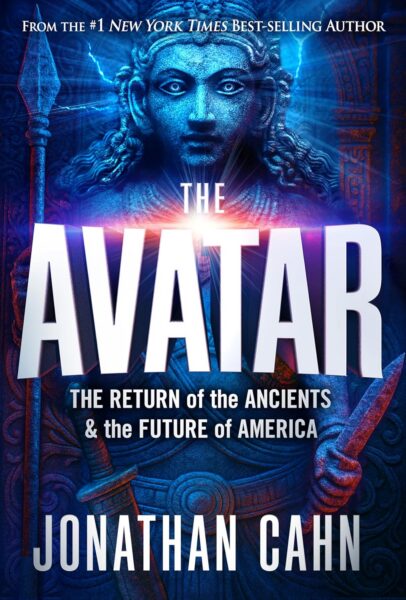
Order Jonathan Cahn’s Newest Book, “The Avatar” on Amazon.com!

The incident comes as international tensions rise over Iran’s violent crackdown. President Donald Trump warned that Iran may have crossed a “red line,” saying the U.S. has “strong options” if peaceful protesters continue to be killed.

Police eventually issued a dispersal order, and the crowd dispersed. The damaged U-Haul was later seen surrounded by shattered glass, debris and crime scene tape. The investigation remains ongoing.

As the dust settles in Westwood, we must pray for those injured in this vile attack and for the people of Iran who continue to risk their lives in the fight for freedom against a radical and oppressive regime.

James Lasher, a seasoned writer and editor at Charisma Media, combines faith and storytelling with a background in journalism from Otterbein University and ministry experience in Guatemala and the LA Dream Center. A Marine Corps and Air Force veteran, he is the author of The Revelation of Jesus: A Common Man’s Commentary and a contributor to Charisma magazine.


Golden Globes Put Demons Center Stage As Spiritual Warfare Is Rewritten Through Entertainment

There is something deeper happening in popular entertainment right now, and it deserves our attention.

At the recent Golden Globe Awards, animated films centered on demons, demon-human hybrids and spiritually deceptive narratives were not merely nominated. They were celebrated.

KPop Demon Hunters took home Best Motion Picture – Animated, while its song “Golden” won Best Original Song – Motion Picture. At the same ceremony, Demon Slayer: Kimetsu no Yaiba Infinity Castle – Akaza Sairai received a nomination in the same animated category.

To many viewers, this may seem like a cultural footnote, another awards show honoring popular films. Spiritually, however, it should stop us in our tracks.

These stories are not just entertainment. They are shaping how millions of people, including Christians, perceive the unseen realm.

Scripture tells us plainly that “we do not wrestle against flesh and blood, but against principalities, against powers, against the rulers of the darkness of this world, against spiritual wickedness in high places” (Eph. 6:12). Yet what we are seeing now is a steady reimagining of those very forces as misunderstood, conflicted or even redeemable.

Both KPop Demon Hunters and Demon Slayer revolve around a recurring and dangerous theme: the merging of human identity with demonic power. In Demon Slayer, the central emotional hook is a demonized sister who retains her humanity.

In K-pop Demon Hunters, the revelation that the main character herself is half-demon is not treated as a curse. It is framed as a strength. The film goes even further by portraying demons as capable of redemption.

That message directly contradicts Scripture.

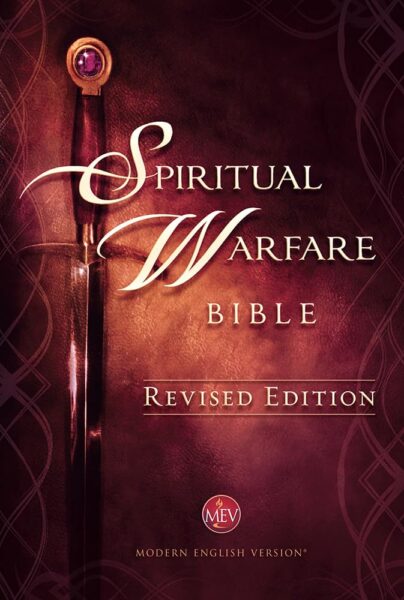
Order the Spiritual Warfare Bible on Amazon.com!

Jesus never treated demons as morally complex beings in need of understanding. He cast them out. He rebuked them. He exposed them. James 2:19 reminds us that even demons believe in God and tremble. There is no biblical framework in which demons are rehabilitated, redeemed or reconciled to God. They are rebels, deceivers and destroyers, fully aligned against His will.

Yet modern storytelling is steadily softening that reality.

The common defense is predictable. “But the shows portray demons as bad. The heroes are fighting them.” That argument misses the point entirely. The danger is not simply the presence of demons as villains. The danger lies in their normalization, humanization and rebranding.

Second Corinthians 11:14 warns us that “Satan himself is transformed into an angel of light.” Deception rarely announces itself openly. It disguises itself as something appealing, relatable and emotionally compelling. When demonic imagery is wrapped in stunning animation, catchy music, heroic narratives and sympathetic backstories, it lowers spiritual defenses. What once would have caused discomfort now feels familiar, and sometimes even admirable.

And this content is not niche.

KPop Demon Hunters premiered on Netflix in June 2025 and quickly became a cultural juggernaut. It topped the U.S. weekend box office, became Netflix’s most-streamed film globally, and surpassed 300 million views. Its soundtrack dominated the Billboard charts. For 15 consecutive weeks, it remained in Netflix’s Top 10.

This is not fringe entertainment. This is mass influence.

Children are watching it. Teenagers are watching it. Adults are watching it. Christians are watching it.

And many are defending it, unaware that the spiritual framing beneath the surface is subtly rewriting what Scripture has already made clear.

First Peter 5:8 tells us to be sober and vigilant, because our adversary, the devil, walks about like a roaring lion, seeking whom he may devour. That warning does not disappear because the lion is animated, musical or marketed as heroic.

We are living in a moment where spiritual warfare is being reframed as fantasy, demons are being portrayed as allies or victims and discernment is being replaced with cultural acceptance. That is not accidental, and it is not harmless.

The question is not whether Christians should watch animated films. The question is whether we recognize when entertainment begins to rewrite spiritual truth, and whether we are willing to call it what it is.

James Lasher, a seasoned writer and editor at Charisma Media, combines faith and storytelling with a background in journalism from Otterbein University and ministry experience in Guatemala and the LA Dream Center. A Marine Corps and Air Force veteran, he is the author of The Revelation of Jesus: A Common Man’s Commentary and a contributor to Charisma magazine.



‘Project Anchor’ Rumors Highlight a Growing Crisis of Deception in the Digital Age

A viral claim about a supposed NASA initiative known as “Project Anchor” has swept across social media, drawing millions of views and reigniting a familiar pattern: sensational claims spreading faster than truth, leaving many unsure of what to believe.

The rumor describes Project Anchor as a secret government program preparing for a brief loss of Earth’s gravity in 2026. Posts circulating on TikTok and other platforms promote specific dates, dollar figures and technical language, creating the impression of insider knowledge. Yet no official confirmation exists, and no scientific authority has identified any mechanism by which gravity could simply cease.

While the claim itself has been widely debunked, the larger issue extends far beyond one viral story. The rapid spread of the Project Anchor narrative exposes how easily deceptive information takes root in a culture flooded with content but starved for discernment.

Jesus warned us that this would be a defining characteristic of the last days.

In Matthew 24, He cautioned that deception would not merely appear, but multiply, growing so persuasive that it would mislead many. His warning was not directed only at the uninformed, but also at those who assumed they were prepared. Deception, He said, would arrive with confidence and authority, often cloaked in credibility and urgency rather than obvious falsehood.

Order Jonathan Cahn’s Newest Book, “The Avatar” on Amazon.com!

The appeal of the Project Anchor narrative reflects this reality. In an online environment driven by virality, dramatic claims paired with official-sounding language and precise details can feel trustworthy at first glance. Specificity is mistaken for authenticity, and repetition is confused with verification.

The speed at which the rumor spread illustrates how misinformation now outpaces correction. A single unverified post can cross platforms in hours, shaping perception long before scrutiny follows. By the time doubts emerge, the narrative has often already taken root.

This pattern has left many people uncertain about what to trust. When authoritative voices are drowned out by louder, more sensational ones, confusion fills the gap. In that uncertainty, deceptive narratives flourish, drawing attention away from truth and toward fear, speculation and hidden explanations.

The reaction to Project Anchor, ranging from curiosity to alarm, underscores how fragile trust has become in the digital age. Not every viral claim signals something prophetic, but the conditions that allow such claims to thrive are unmistakable.

As information multiplies and certainty erodes, discernment becomes indispensable. The challenge is no longer access to information, but the ability to recognize truth when deception is packaged to look convincing. In a time marked by confusion, remaining anchored to truth matters more than ever.

James Lasher, a seasoned writer and editor at Charisma Media, combines faith and storytelling with a background in journalism from Otterbein University and ministry experience in Guatemala and the LA Dream Center. A Marine Corps and Air Force veteran, he is the author of The Revelation of Jesus: A Common Man’s Commentary and a contributor to Charisma magazine.


Air Force Sergeant Ordered to Remove ‘Jesus Is My King’ Flag From Residence

A U.S. Air Force sergeant is fighting for his right to express his Christian faith by flying a flag in his front yard after he was forced to take it down.

First Liberty Institute, a faith-based non-profit legal group, has sent a demand letter on behalf of Air Force Technical Sergeant Robert Durrant, who was ordered by an employee at a military base to take down his “Jesus is my King, Trump is my President” flag from his residence.

According to the letter, Durrant and his family moved into their residence on Malmstrom Air Force Base in 2023. Shortly after moving in, he noticed his neighbors displayed a wide variety of flags outside their homes. Some flags represented college and professional sports teams, a state, foreign nations, seasons of the year, support for law enforcement, and “straight ally” LGBTQ pride.

Order Jonathan Cahn’s Newest Book, “The Avatar” on Amazon.com!

Durrant first decided to hang “a hybrid US-Israel flag.” While that flag was on display, he never received any notice of lease violation from Balfour Beatty, the housing management group on the base.

Then, in the middle of last year, Durrant removed that flag and replaced it with a flag displaying the words, “Jesus is my King, Trump is my President.”

In September, a Balfour Beatty employee contacted Durrant by phone, ordering him to remove his “Jesus is my King” flag from his property, stating that it violated “all sorts of policies,” First Liberty outlines.

“As a Christian, TSgt Durrant feels compelled by his religious beliefs to display this flag in recognition of a duty to publicly acknowledge Christ’s divine lordship, and as an expression of loyalty to the commander in chief, so he did not want to remove it and asked for the policy or policies in writing,” the demand letter explains.

Durrant also received an email from the housing management alleging a violation of his lease and a second request to remove the flag. In the email, he was told he had 48 hours to comply with the request.

If you would like to read the full story, you can visit our content partners at CBN News.

Reprinted with permission from cbn.com. Copyright © 2026 The Christian Broadcasting Network Inc. All rights reserved.


5 Powerful Keys That Separate a Routine Fast From a Life-Changing One

Fasting is not a trendy spiritual exercise or a religious add-on for especially motivated believers. Scripture presents it as a normal, expected discipline for those who want to draw nearer to God.

Jesus did not say if you fast, but when you fast, assuming His followers would practice it as part of a healthy spiritual life. Throughout the Bible, fasting is tied to repentance, clarity, breakthrough, humility and deeper dependence on the Lord. It is meant to quiet the flesh so the spirit can hear more clearly.

That perspective is at the heart of a recent teaching by Vlad Savchuk, pastor and founder of HungryGen. In a message focused on what believers should do after they begin a fast, Savchuk emphasizes that fasting is not just about what you stop doing, but what you intentionally replace it with. His approach is practical, pastoral and rooted in Scripture, aiming to help believers avoid missing the spiritual purpose of the fast altogether.

Below are the five key principles he encourages Christians to do during a fast:

1. Replace food with God’s Word

Savchuk stresses that fasting creates space, and that space must be filled with Scripture and prayer. Hunger becomes a reminder to pause, pray and feed on the Word rather than on food. Reading, meditating on, and even writing out Scripture helps realign the heart with God’s voice and purpose. Worship also plays a role, creating an atmosphere where the Holy Spirit can guide and speak more clearly.

2. Handle physical weakness with wisdom

Fasting affects the body, and Savchuk encourages believers not to ignore that reality. Staying hydrated, resting when needed, and reducing intense physical activity are all part of fasting wisely. The focus shifts away from physical performance and toward spiritual pursuit. While the body may feel weaker, the spirit grows stronger through dependence on God.

Order Vlad Savchuk’s New Book, “Make the Devil Homeless” on Amazon.com!

3. Cut out distractions and noise

One of the most common mistakes during fasting, according to Savchuk, is keeping the same level of entertainment and media intake. Constant noise from social media, television and nonstop content can drown out God’s voice. Fasting is meant to be a reset, a spiritual and soulish detox that clears away distractions so sensitivity to the Holy Spirit can increase.

4. Fast with humility, not visibility

Savchuk warns against turning fasting into a public display. The goal is not recognition from people but humility before God. While there is nothing wrong with acknowledging a fast when necessary, making it a focal point or seeking attention undermines its purpose. Fasting is meant to draw God’s attention, not applause from others.

5. Persevere through discomfort and finish strong

Finally, Savchuk highlights the importance of endurance. Starting a fast may come from passion, but finishing it requires discipline. Most of the battle takes place in the mind, not the body. Pushing through discomfort builds spiritual strength, mental resilience and obedience. Breakthrough often follows perseverance, not quitting early.

Fasting is not about perfection or performance. It is about pursuit. It strips away reliance on comfort and trains the heart to lean more fully on God. When approached with humility, focus and perseverance, fasting becomes a powerful invitation to renewal. It sharpens spiritual sensitivity, strengthens resolve and reminds believers that true sustenance comes not from bread alone, but from every word that proceeds from the mouth of God.

James Lasher, a seasoned writer and editor at Charisma Media, combines faith and storytelling with a background in journalism from Otterbein University and ministry experience in Guatemala and the LA Dream Center. A Marine Corps and Air Force veteran, he is the author of The Revelation of Jesus: A Common Man’s Commentary and a contributor to Charisma magazine.


Scott Adams, Creator of ‘Dilbert,’ Says He Will Convert to Christianity in His Final Days

Scott Adams’ recent comments about converting to Christianity land with both hope and unease. Hope, because a man facing the end of his life is finally looking beyond this world and asking eternal questions. Unease, because the way he speaks about faith sounds less like surrender and more like calculation.

The Dilbert creator and political commentator, now in the final stages of a battle with cancer, has said he plans to convert to Christianity. He speaks kindly of believers who cared enough to urge him toward Christ and acknowledges that it is never too late to turn to God. That matters. Eternity matters.

Yet Christianity is not a contingency plan. Heaven is not something earned by “living a good life,” nor is salvation secured by weighing odds and outcomes. Scripture is clear that eternal life is not a wager to be won, but a gift of grace received through repentance and faith in Jesus Christ.

Scott Adams’ Statement on Conversion

“So I have great respect for people who care enough that they want me to convert and go out of their way to try and convince me. So, you’re going to hear for the first time today that it is my plan to convert.

So, I still have time. My understanding is you’re never too late. And on top of that, I think any skepticism I have about reality would certainly be instantly answered if I wake up in heaven.

I do believe that the dominant Christian theory is that I would wake up in heaven if I have a good life … and so, to my Christian friends, yes, it is coming. You don’t have to talk me into it. I am now convinced that the risk/reward is completely smart. If it turns out that there’s nothing there, I’ve lost nothing. But I’ve respected your wishes … if it turns out there is something there and the Christian model is the closest to it, I win.

So, with your permission, I promise you that I will convert … Argument made, argument accepted.”


These words reveal a man still standing at the doorway, reasoning his way toward God rather than falling at the feet of our Savior. Logic has its place, but no one reasons their way into the kingdom. Salvation comes when pride is laid down, sin is acknowledged and trust is placed fully in Christ and His finished work on the cross.

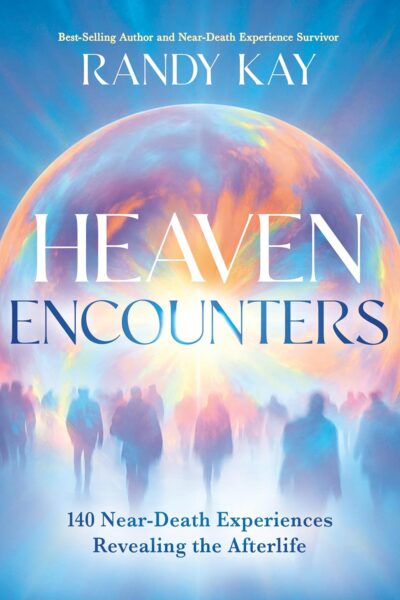
Pre-Order Randy Kay’s New Book, “Heaven Encounters” on Amazon.com!

Time is a fragile thing. No one knows the hour or the day.

The right response now is prayer. Prayer that Scott Adams does not merely adopt Christianity as an idea, but encounters Jesus as the living, risen Lord. Prayer that his heart moves beyond analysis to repentance, beyond probability to faith and beyond belief in a system to a real, personal relationship with Jesus Christ.

James Lasher, a seasoned writer and editor at Charisma Media, combines faith and storytelling with a background in journalism from Otterbein University and ministry experience in Guatemala and the LA Dream Center. A Marine Corps and Air Force veteran, he is the author of The Revelation of Jesus: A Common Man’s Commentary and a contributor to Charisma magazine.


Joy Villa Leaves Church of Scientology and Returns to Jesus After 15 Years

For singer Joy Villa, walking away from Scientology marked the end of a long chapter and the beginning of something she describes as far more important.

Villa spent 15 years inside the Church of Scientology, living at the Celebrity Centre in Hollywood, training at the highest levels, and becoming one of the organization’s most visible public figures.

“From the outside, my life inside Scientology looked like a success story,” she wrote in an op-ed for the magazine Evie. “Inside, it was slowly destroying me.”

Villa said she gave everything she had to the organization. “I had given my time, my labor, my voice, my platform, and my influence.” Her image was widely used. “My face was everywhere. Posters of me lined Scientology churches. I was used as proof that it ‘worked.’”

During that time, Villa says her career reached heights many artists never experience. She walked the Grammy Awards red carpet multiple times, had Billboard No. 1 hits, and appeared on national and international news outlets.

“I was visible, successful and influential,” she wrote. “And Scientology took credit for all of it.”

Villa says she was raised Christian and loved Jesus. She says Scientology told her she could keep Him. Over time, she wrote, the framework around success changed.

“Every achievement was attributed not to God, not to talent, not to perseverance, but to auditing, donations and loyalty to the organization.”

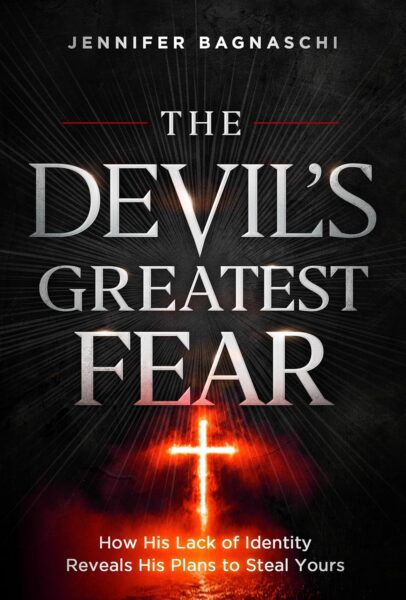
Order Jennifer Bagnaschi’s New Book, “The Devil’s Greatest Fear” on Amazon.com!

She says the financial toll was significant, estimating she was drained of nearly $2 million by the time she left. She also described an assignment working for the organization in the United Kingdom that left her “deeply depressed” and ultimately led to her decision to leave permanently.

Her assessment of the experience is direct. “Scientology is not a self-help system,” she wrote. “It’s a control system.”

After Villa made her departure public, the Church of Scientology released a statement responding to her claims via the Daily Mail.

“When Ms. Villa came to the Church, she was grappling with profound personal difficulties,” the statement said. “She was given counseling and community support to rebuild her troubled life.”

The organization also accused her of financial motives. “She now seeks to exploit those who supported her during her darkest moments in hopes of making a buck,” the statement read. “How un-Christian.”

The church urged Villa to “move forward with her life and cease these false claims.”

Villa closed her essay by reflecting on what leaving ultimately meant for her.

“Leaving cost me years I will never get back,” she wrote. “But it gave me something infinitely more valuable. My soul. My faith. My freedom in Jesus Christ. And I will never go back.”

Her words frame the story not as a dispute, but as a testimony. She describes a return to faith, a reclaimed sense of purpose, and a renewed commitment to Jesus Christ.

Villa does not present her decision as a temporary break or a personal rebrand. She presents it as a permanent turning point.

And in her own words, it is one she has no intention of reversing.

James Lasher, a seasoned writer and editor at Charisma Media, combines faith and storytelling with a background in journalism from Otterbein University and ministry experience in Guatemala and the LA Dream Center. A Marine Corps and Air Force veteran, he is the author of The Revelation of Jesus: A Common Man’s Commentary and a contributor to Charisma magazine.


What Comes Next for America, Israel and the Middle East in 2026?

As the Middle East enters a volatile and uncertain chapter, Jerusalem Dateline is turning its focus toward 2026, a year expected to be shaped by elections, wars, rising antisemitism and profound spiritual crossroads. From unrest inside Iran to fragile ceasefires surrounding Israel, the coming year is framed not as a period of calm, but as a decisive moment that could redefine regional stability, global alliances and the future of Israel itself.

The predictions were outlined during a special edition of Jerusalem Dateline, produced by CBN News. The discussion featured Senior Editor John Waage, Middle East Correspondent Julie Stahl, and Bureau Chief Chris Mitchell, each offering analysis on political, military, and spiritual trends they believe will define the year ahead for Israel, the United States and the broader Middle East.

Here are their predictions for the upcoming year:

  • 2026 will be driven by elections in both the U.S. and Israel
    The U.S. midterm elections and Israel’s Knesset elections are expected to shape policy, stability and leadership direction well beyond their borders. The panel predicts these votes will significantly influence Middle East strategy and global alignment.
  • Benjamin Netanyahu is likely to remain in power through 2026
    Against historical norms in Israeli politics, they predict Benjamin Netanyahu may complete his full term and prevail in elections toward the end of 2026, despite sustained political pressure.
  • The Trump administration’s survival hinges on the midterms
    The panel predicts the fate of Donald Trump’s agenda will be determined by whether Republicans hold Congress. A Democratic takeover could rapidly reshape U.S. policy, including toward Israel.
  • Ceasefires with Gaza and Hezbollah will not hold
    They predict continued instability, describing current ceasefires as fragile and temporary. Renewed conflict, particularly in Gaza, is seen as likely rather than avoidable.
  • Israel will likely be forced to resume military action in Gaza
    Because Hamas has refused disarmament, the panel predicts the war in Gaza will restart, with Israel as the only actor willing and able to dismantle Hamas militarily.
  • Iran will remain a flashpoint and could provoke Israeli strikes
    Ongoing protests, economic collapse, and reports of advanced weapons development lead to the prediction that Iran will remain volatile, with the possibility of additional Israeli military action.
  • Syria will become a more hostile neighbor to Israel
    Rather than stabilizing, Syria is predicted to drift toward Islamist control, potentially backed by Turkey, creating a more dangerous northern front for Israel.
  • Turkey’s regional influence will expand in destabilizing ways
    The panel predicts Turkey will play an increasingly assertive role in regional politics, often at odds with Israeli and Western interests.
  • Global antisemitism will continue rising in 2026
    They predict antisemitism will intensify worldwide, further pressuring Jewish communities and shaping political and social decisions.
  • Aliyah to Israel will increase
    As antisemitism rises and identity pressures grow, the panel predicts a noticeable increase in Jewish immigration to Israel, especially from Western nations.
  • The Church will face a defining moment
    Spiritually, they predict the global Church will be forced to choose whether it will openly stand with Israel amid rising hostility and moral confusion.
  • 2026 will bring more chaos, but not without resilience
    While the year is predicted to be turbulent politically and militarily, the panel expresses confidence that Israel will endure and that leadership in both Israel and the U.S. will ultimately prevail.

Order Jonathan Cahn’s Newest Book, “The Avatar” on Amazon.com!

Taken together, their outlook paints a picture of a year marked by instability, hard choices and mounting pressure on both leaders and nations.

Yet alongside warnings of renewed conflict and political upheaval, the panel emphasized endurance, clarity, and the role of faith as guiding forces through uncertainty. As 2026 progresses, the message is not merely to watch events unfold, but to recognize that decisions made in the coming months may have far-reaching consequences, shaping history, alliances and moral alignment for years to come.

James Lasher, a seasoned writer and editor at Charisma Media, combines faith and storytelling with a background in journalism from Otterbein University and ministry experience in Guatemala and the LA Dream Center. A Marine Corps and Air Force veteran, he is the author of The Revelation of Jesus: A Common Man’s Commentary and a contributor to Charisma magazine.


A ‘Systemic’ War on Christians Is Being Waged Through Kidnappings

Christians in north-central Nigeria are facing what experts describe as a deliberate and systematic campaign of kidnapping designed to devastate their communities economically and spiritually. Multiple sources say the abductions are not isolated crimes but a calculated strategy aimed at dismantling Christian life in the region.

The spate of kidnappings is being driven largely by Muslim Fulani militants, as reported by Fox News, with experts warning the tactic is meant to “target, bankrupt and destroy Christian communities.” Steven Kerfas, lead researcher for the Observatory for Religious Freedom in Africa, told Fox News Digital that “kidnapping for ransom is a strategic aim of the Fulani militants,” explaining, “They do it to fund their terrorism, but also to bankrupt the Christian community.”

In Nigeria’s Middle Belt, Kerfas said the kidnappings are explicitly targeted. “These mass abductions are targeted,” he said. “You have cases where 100 Christians will be marched into the forest and kept there for months.” Victims are forced to pay ransoms far beyond their means, leading to the destruction of their livelihoods. “They are forced to cough out ransoms they don’t have, so they have to sell everything – [including] their farmland,” Kerfas said.

The loss of land is devastating for families who survive through subsistence farming. “Now you force them to sell the farmland that they are surviving on to pay ransom,” Kerfas continued. “So by the time you release them, what do they go back to? Nothing.”

Data from Open Doors UK reinforces the claim that Christians are being singled out. The organization reported that 4,407 Christians were abducted in north-central Nigeria between 2020 and 2025. When adjusted for population size, “a Christian was 2.4 times more likely than a Muslim to be abducted,” according to Open Doors.

Order Jonathan Cahn’s Newest Book, “The Avatar” on Amazon.com!

Henrietta Blyth, CEO of Open Doors UK, said the pattern is unmistakable. “The kidnapping for ransom epidemic in north-central Nigeria doesn’t just affect Christians, but it’s clear that they are disproportionately singled out,” she told Fox News Digital.

Blyth added that “tactics by kidnappers include raids on churches and schools,” noting that “priests and pastors are singled out because they represent high-value targets.”

Families often sell land, livestock, and property to meet ransom demands, a burden Blyth warned “can bankrupt families for generations.” She described what she called a “horrific dilemma” facing Christian families: “Pay ransoms in the hope of saving lives, (knowing) that payment allows the attacks to continue, or refuse and risk their loved ones being slaughtered.”

Even paying does not guarantee survival. International Christian Concern reported that a kidnapped pastor, Rev. James Audu Issa, was held for weeks and then killed, “even though a ransom had been paid.”

A Nigerian lawyer, identified under the pseudonym Jabez Musa for safety reasons, told Fox News Digital that the religious targeting is clear. “In the (Nigerian) Middle Belt, they kidnap Christians, they kidnap the clergy, they abduct women. They hardly kidnap any Muslims,” he said. “The reason for these ransom demands is to economically weaken Christians. That is the way Christians look at it.”

The financial toll on churches has become crushing. Musa cited a case in which the Evangelical Church Winning All paid 300 million naira, about $205,000, for the release of roughly 50 kidnapped members. He said such payments place “an unbearable financial strain on the church and affected families.”

Kerfas warned the violence is fueled by jihadist ideology. “The Fulani militants are on a jihad, and, of course, they need to fund that jihad,” he said. “So the Christians being abducted have to cough out huge sums as ransoms.” He added that the danger never truly ends: “If you don’t pay ransom, you get killed. And sometimes, even after paying the ransom, you still get killed.”

Christian communities remain the majority in the Middle Belt, but experts say the long-term goal of these kidnappings is their eradication.

As believers around the world absorb these reports, the call is clear. Christians are urged to pray fervently for protection, endurance and deliverance for their brothers and sisters in Nigeria, and to remember those who are suffering for their faith in Jesus Christ under constant threat of violence, loss and death.

James Lasher, a seasoned writer and editor at Charisma Media, combines faith and storytelling with a background in journalism from Otterbein University and ministry experience in Guatemala and the LA Dream Center. A Marine Corps and Air Force veteran, he is the author of The Revelation of Jesus: A Common Man’s Commentary and a contributor to Charisma magazine.


Josh Howerton Reveals One Moment Where Eden, Moses and Jesus Collide

Pastor Josh Howerton of Lakepointe Church walked listeners through a sweeping biblical narrative on a recent episode of the Live Free Podcast, arguing that Scripture reveals a single, coherent story about humanity’s lost and restored access to God.

Howerton began in Genesis, explaining what was forfeited when sin entered the world. “What they lose in the garden is access to the face of the Father,” he said. Before the fall, Adam and Eve “walk with Him in the cool of the day, side by side as a friend,” but sin brought separation.

He then moved to Moses, whom Scripture describes as uniquely close to God. “Moses, the Bible says, is the only guy who talked face to face with God, quote, as with a friend,” Howerton said. Yet even Moses experienced limits. When Moses asked, “Show me your glory,” God responded that He could not reveal His face. “Because no man shall see my face and live,” Howerton quoted.

Describing the scene in Exodus, Howerton noted that God placed Moses in “the cleft of a rock,” covered him with His hand, and allowed Moses to see only His back. “Instead of showing him his face, he declares verbally his glory,” Howerton said.

Pre-order Chuck Pierce’s New Book, “Perspective” on Amazon.com!

Howerton emphasized that Moses was denied two things in his lifetime: seeing God’s face and entering the Promised Land. “Because of Moses’ disobedience, he struck the rock instead of speaking to it,” he said, “Moses was never allowed to enter into the promised land.”

The pastor then connected those moments to the New Testament, pointing to John 1. “Then the Word became flesh,” Howerton said, quoting the passage, “and we have seen his glory, glory as of the only Son from the Father.” He added, “Jesus is the glory of God.”

Howerton argued that this explains the commandment against graven images. “The reason that God commanded, ‘Don’t make any images of me,’ is He was saying, ‘Don’t make any images because someday I’m going to send one,’” he said. “When people are looking at the face of Jesus, they are looking at the face of God.”

He highlighted the Transfiguration as the climactic moment. On the mountain, Jesus’ “face [was] transformed like lightning,” revealing divine glory. Standing with Jesus Christ were Moses and Elijah. Howerton noted the location mattered. “The mountain was Mount Hermon, which is inside the promised land,” he said.

According to Howerton, the moment completes Moses’ story. “Thousands of years later after Moses was denied two things,” he said, “in Jesus, Moses is on that mountain.” There, Moses finally receives both. “He’s seeing the face of God in the glory of Jesus Christ,” Howerton said. “And guess where he is? He’s in the promised land.”

Reflecting on the connections, Howerton marveled at the unity of Scripture. “I love the Bible. I can’t believe how it all fits together,” he said.

James Lasher, a seasoned writer and editor at Charisma Media, combines faith and storytelling with a background in journalism from Otterbein University and ministry experience in Guatemala and the LA Dream Center. A Marine Corps and Air Force veteran, he is the author of The Revelation of Jesus: A Common Man’s Commentary and a contributor to Charisma magazine.