Scientists Are Rediscovering the Nephilim and Refusing to Say It

A new study reported by the Daily Mail claims that interbreeding between Neanderthals and modern humans was largely sex biased. According to the report, “the pairings were mostly between male Neanderthals and female homo sapiens.”

Researchers say these encounters occurred between 45,000 and 50,000 years ago. They examined genomes and found that in modern humans, Neanderthal DNA is “unusually rare on the X chromosome.” Scientists call the missing regions “Neanderthal deserts.”

“Along our X chromosomes, we have these missing swaths of Neanderthal DNA we call ‘Neanderthal deserts,’” Dr. Alexander Platt said.

For years, researchers claimed those gaps existed because certain Neanderthal genes were biologically “toxic” and removed by natural selection. Now they are shifting their explanation. “Mating preferences provided the simplest explanation,” Dr. Platt said. He added that interbreeding may have been sex biased “due to the right combination of being more attractive or simply less repulsive.”

Look carefully at what is being described.

Two distinct beings. Separate origins. A dramatic divergence. Then repeated encounters marked by unequal unions and selective breeding patterns. Researchers admit the data “do not give any insight into whose opinion mattered on the subject, or which of the parties were making the choices.” Another expert acknowledged, “We of course assume that mating was consensual,” but added that “a sad fact of the ancient world may suggest that this was far from the truth.”
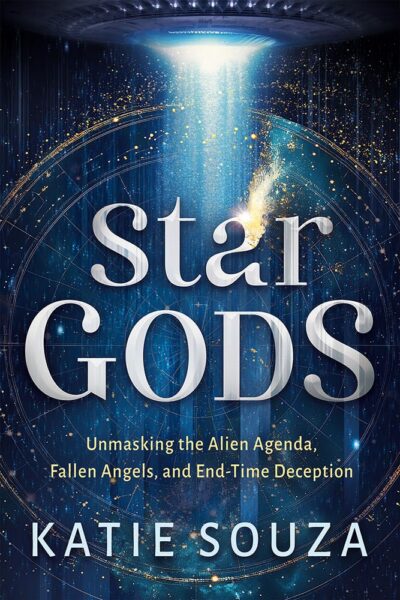
Order Katie Souza’s New Book, “Star Gods” on Amazon.com!

This is not a story about evolutionary romance. It is the modern scientific retelling of Genesis 6.

Scripture declares that the sons of God took wives from the daughters of men and that the result was the Nephilim. The earth became filled with violence and corruption. The Book of 1 Enoch and the Book of Giants expand on this account, describing fallen angels who transgressed divine boundaries and produced hybrid offspring that defiled humanity’s bloodline.

Today’s researchers use the language of genomes and chromosomes. The Bible uses the language of fallen angels and Nephilim. The vocabulary differs. The event does not.

The Daily Mail report also references additional research suggesting Neanderthals “likely engaged in kissing during their existence,” citing evidence of shared oral microbes and statistical modeling. Combined with the genetic data, scientists conclude there were multiple encounters and selective unions.

“We knew that there were at least several times when the two groups met and interbred,” Dr. Platt said. “What we’re learning now is that that process of interbreeding may have been selective, and that men and women did not participate in it in exactly the same way.”

Selective and repeated.

The scientific community insists that “roughly 600,000 years ago, the ancestors of anatomically modern humans and their closest related species, the Neanderthals, diverged.” That framework rests on evolutionary theory.

The biblical record presents a different foundation. Humanity was created in the image of God. Corruption entered through rebellion. The flood came as judgment upon a world that had crossed spiritual and biological boundaries.

What scientists call Neanderthal DNA is the physical residue of that rebellion. What they label “Neanderthal deserts” are genetic scars left behind after a catastrophic cleansing. The patterns they observe are not random evolutionary quirks. They are the lingering evidence of the Nephilim and the work of fallen angels in the pre-flood world.

The parallels are direct. Distinct beings. Hybrid offspring. Corrupted humanity. Judgment.

The laboratories are not uncovering a new chapter of human evolution. They are rediscovering the biblical account of the Nephilim, written not only in ancient texts but in the human genome itself.

James Lasher, a seasoned writer and editor at Charisma Media, combines faith and storytelling with a background in journalism from Otterbein University and ministry experience in Guatemala and the LA Dream Center. A Marine Corps and Air Force veteran, he is the author of The Revelation of Jesus: A Common Man’s Commentary and a contributor to Charisma magazine. For interviews and media inquiries, please contact [email protected].


John Hagee: The Winds of War Are Blowing Over Jerusalem

The winds of war are blowing over Jerusalem.

That is how Pastor John Hagee opened his sermon as tensions escalate in the Middle East. He declared that what is unfolding between Israel and Iran is not just another conflict. It is prophecy moving forward.

“As we gather here this morning in peace and security, the winds of war are blowing over the ancient city of Jerusalem and the Middle East,” Hagee said.

He made it clear that this is a defining moment for Israel and for the United States.

Pray for the Peace of Jerusalem

Hagee turned to Psalm 122 and called on believers to obey the command of Scripture. “Pray for the peace of Jerusalem. May they prosper who love you.”

He reminded the church that God blesses those who stand with Israel. “He that keepeth Israel neither slumbers nor sleeps,” he said.

Hagee thanked God for military victories over Israel’s enemies and for leaders who stand with the Jewish state. He described Iran as the head of a terror network that funds and directs violence through its proxies.

His message was direct. Peace will not come through appeasement. It comes through strength.

Peace Through Strength

“America must have peace through strength,” Hagee said.

He recounted decades of attacks tied to Iran, from the 1979 hostage crisis to the bombings in Beirut and the Oct. 7 massacre in Israel. He said weakness invites aggression. Strength restrains it.

Hagee praised decisive leadership and declared that courage, not compromise, preserves peace.

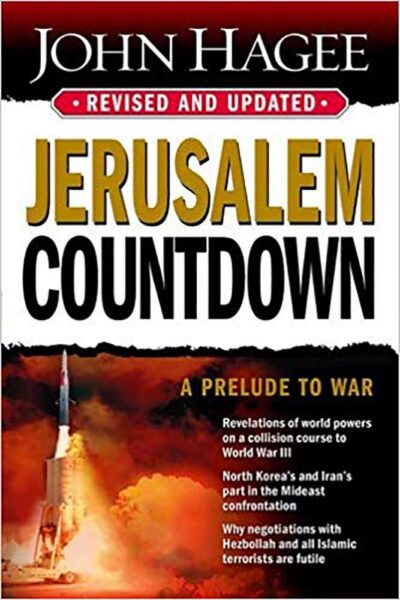
Order John Hagee’s Book, “Jerusalem Countdown” on Amazon.com!

God’s Operation Fury

The sermon’s central focus was biblical prophecy.

Hagee pointed to Ezekiel and described a future invasion of Israel led by Russia and joined by other nations. “God will put a hook in their jaw and drag them into Israel,” he said.

He outlined the biblical account of divine judgment. An earthquake will strike. Confusion will cause armies to turn on one another. Fire and brimstone will fall from heaven.

“The world will know that the God of Israel is God,” Hagee said.

He warned that Scripture declares God will curse those who curse Israel and defend His covenant people.

America Under Warning

Hagee broadened the message to the United States.

Quoting Haggai, he said, “I will shake all nations.” He declared that America is not exempt.

He pointed to national sin, abortion and moral decay. He quoted Psalm 33:12. “Blessed is the nation whose God is the Lord.” He added, “All nations that forget God will be turned into hell.”

Hagee said 9/11 did not produce lasting repentance. He called for national confession and a return to righteousness.

The Power of Prayer

Hagee closed with a call to spiritual action.

He told the story of Daniel influencing empires through prayer and King Hezekiah watching God destroy 185,000 Assyrian soldiers in one night.

“One man knocked out 185,000 warriors. Why? Because one man dared to pray,” he said.

He quoted 2 Chronicles 7:14. “If my people who are called by my name will humble themselves and pray, then will I hear from heaven and I will heal their land.”

Hagee’s final declaration was a charge to the church.

“The victory is going to be won in the supernatural,” he said. “Let God arise and let His enemies be scattered.”

To view Pastor John Hagee’s full sermon, click here.

James Lasher, a seasoned writer and editor at Charisma Media, combines faith and storytelling with a background in journalism from Otterbein University and ministry experience in Guatemala and the LA Dream Center. A Marine Corps and Air Force veteran, he is the author of The Revelation of Jesus: A Common Man’s Commentary and a contributor to Charisma magazine. For interviews and media inquiries, please contact [email protected].


1 in 3 Christians Now Trust AI as Much as Their Pastor

About a third of practicing American Christians now say the spiritual advice they receive from artificial intelligence is just as trustworthy as advice from a pastor. That is not speculation. It is data.

According to new research from Barna Group, and reported by The Christian Post, 30% of U.S. adults “somewhat” or “strongly” agree that spiritual advice from AI “is as trustworthy as advice from a pastor.” Among Generation Z and millennials, that number rises to 39% and 40%, respectively. Even 34% of practicing Christians agree.

Researchers noted that AI is “influencing everyday spiritual habits.” Four in 10 Christians say AI has helped them with prayer, Bible study and spiritual growth. More than 41% of Protestant pastors report using AI for Bible study preparation.

Daniel Copeland, Barna’s vice president of research, said, “Though the majority of practicing Christians remain the most cautious about embracing AI as a spiritual tool, their views are shifting and remain largely uninformed by their pastor.” He added, “There’s a real opportunity here for pastors to disciple their congregants on how to use this technology in a beneficial way.”

The views of many believers are shifting quickly.

We are watching authority migrate. For centuries, spiritual counsel flowed from Scripture, prayer and shepherds entrusted with the care of souls. Now a growing number of believers are comfortable receiving guidance from algorithms.

Pastor Ray Miller of First Baptist Church in Abilene, Texas, warned against technology becoming “another type of idol pulling at our attention.” He said, “Often, people turn to AI because they do not have another human being or pastor or priest to turn to, and it becomes convenient.”

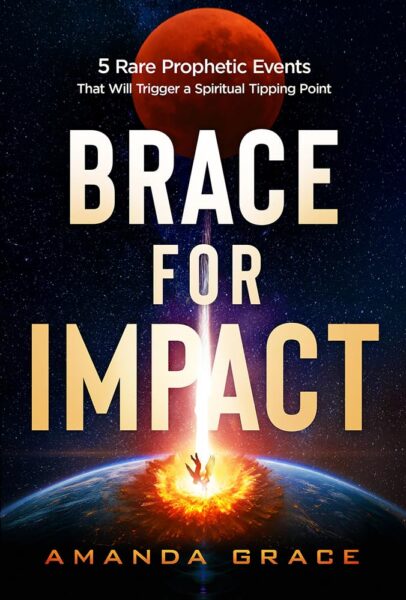
Order Amanda Grace’s New Book, “Brace For Impact” on Amazon.com!

Convenience reshapes habits. Habits reshape trust.

Scripture describes a coming global system in Revelation 13 in which economic participation is tied to a mark. Whatever form that future system takes, it will require normalization and widespread dependence on digital systems.

Control does not arrive overnight. Systems become useful before they become necessary. They become trusted before they are mandated.

This is not an argument that AI is the mark of the Beast. It is an observation about trajectory. When believers instinctively turn to machines for spiritual clarity, something deeper is forming.

Ray Miller described AI as part of “a technological revolution unseen in human history since the advent of the printing press.” He asked, “What does it mean to be human, to be made in God’s image in an age of digital AI?”

That question cannot be outsourced.

The church must respond not with fear but with formation. Believers must be discipled into Scripture, prayer and discernment that cannot be downloaded.

The mark of the Beast will begin with misplaced trust long before it appears as policy.

James Lasher, a seasoned writer and editor at Charisma Media, combines faith and storytelling with a background in journalism from Otterbein University and ministry experience in Guatemala and the LA Dream Center. A Marine Corps and Air Force veteran, he is the author of The Revelation of Jesus: A Common Man’s Commentary and a contributor to Charisma magazine. For interviews and media inquiries, please contact [email protected].



5 Indicators of Occult Influence in the Church Every Christian Should Know

Spiritual warfare is not a fringe idea tucked away in obscure passages of Scripture. It is a present reality that plays out in pulpits, prayer meetings and sanctuaries every week. The Bible warns that the enemy disguises himself and seeks to infiltrate what God is building.

In an era when many churches avoid hard conversations about the supernatural, one pastor is sounding a direct and urgent alarm.

In a recent message, Pastor Vlad Savchuk of HungryGen Ministries did not soften his words. “The truth about witches in your church,” Savchuk began. “What if I told you not everyone who sits in the church is there to worship Jesus?” He made clear the goal is not paranoia or a “witch hunt in the body of Christ,” but the restoration of something he believes has been neglected. “We don’t wrestle against flesh and blood,” he said. “We do wrestle against spiritual powers.”

Savchuk outlined five warning signs of what he calls occultic influence operating inside churches. He repeatedly emphasized that these are patterns of behavior and fruit, not quick labels to assign to struggling believers.

1. Drawn to Power, Not God’s Presence

The first sign, Savchuk said, is a fixation on power rather than intimacy with God.

“They don’t love Jesus, they love power,” he said.

He described an obsession with manifestations but not with the fruit of the Spirit or transformation. Such individuals are “interested in codes and secrets, especially revelations, but they’re not interested in Scripture.” They seek influence and proximity to leaders and prayer teams.

Savchuk pointed to Simon the sorcerer in Acts 8 who “saw power and wanted to buy it.” He challenged viewers with a diagnostic question: “Does this person hunger for holiness or do they hunger for control and power?”

He clarified that Christians should desire God’s power, but said, “Our main hunger is for the presence.” When the pursuit of influence eclipses the pursuit of righteousness, he warned, that is a red flag.

2. Resist Repentance but Crave Platform

The second sign involves a refusal to repent combined with a strong desire for visibility and authority.

“When the word is preached, broken people repent,” Savchuk said. “Often occultic influence reacts to the word of God when it’s preached with irritation when conviction is present, offense when correction is given, anger when they are confronted and refusal to submit to leadership or any sort of accountability.”

He described a pattern where individuals “still want to be seen. They still want to lead and they still want access,” but resist correction.

“Witchcraft and the occult will never submit and they will never correct their behavior when they’re confronted, and repentance is not on the radar,” he said. “Control is, influence is and access is.”

Savchuk warned that authority without accountability is dangerous in any church environment.

Order Vlad Savchuk’s New Book, “Make the Devil Homeless” on Amazon.com!

3. Operate Through Whispering and Division

Savchuk’s third sign centers on division sown through subtle conversation.

“Dark demonic influence loves to plant seeds,” he said. Those seeds often sound like, “Did you hear what the pastor said?” or “God showed me something about them,” and he noted, “It’s always destructive.”

Rather than confronting issues biblically, he said such individuals “will recruit emotionally.” They “don’t bring solutions. They always bring suspicions.”

Savchuk warned that if the enemy cannot stop a church with persecution, “he will seek to stop the church with division.” Whispering campaigns and emotional alliances can quietly fracture a congregation from within.

4. Attach to Spiritual Leaders and Intercessors

The fourth sign is an unusual desire for proximity to leadership and spiritually sensitive areas of the church.

Referencing Acts 16, Savchuk noted that the demonized girl “didn’t follow just any Christian. She followed Paul.” He described this as “close proximity.”

“Occultic influence comes to monitor what God is doing, gather information and intimidate sensitive people,” he said.

Such individuals may show heightened interest in “who is on the worship team, who is on the deliverance team, what the pastor is planning and who has the influence.” He warned that the motive is not love for the church but “they love leverage and they love that access.”

“Not everybody who says, ‘These are the servants of the Most High God,’ the source is God,” Savchuk said. Leaders must practice discernment even when the language sounds spiritual.

5. A Spiritual Cloud of Confusion or Heaviness

The fifth sign is more atmospheric but no less serious.

“There is usually a spiritual cloud around this person,” Savchuk said, describing confusion, heaviness and intimidation.

“When occultic influence is near, you will notice sudden mental fog during worship or around that person,” he said. He also described “heaviness and distraction around the time when it’s a time to go to the altar” and fear that seems to paralyze the room.

He cautioned that “not every strange moment is a witch. Not every manifestation is demonic.” However, he drew a firm line: “Things that constantly induce confusion, fear, control and distractions from Christ, that is a red flag because the Holy Spirit exalts Jesus. He doesn’t distract us from Jesus.”

Savchuk urged churches not to panic or accuse recklessly. “If you start labeling people witch without evidence, you actually become a weapon in the hands of the enemy,” he said. Discernment, he added, is patient and rooted in love. Confrontation should involve leadership, documentation of patterns and a goal of repentance and deliverance, not humiliation.

This is not light subject matter. Scripture repeatedly warns that darkness attempts to infiltrate what God is building. Savchuk’s message is a reminder that spiritual warfare is not theoretical. It is active. Churches that neglect discernment risk becoming vulnerable to manipulation and division. But congregations grounded in prayer, holiness and the Word of God need not fear.

As Savchuk put it, when the church is full of God’s presence, “witchcraft will try, but it cannot dominate the atmosphere.”

James Lasher, a seasoned writer and editor at Charisma Media, combines faith and storytelling with a background in journalism from Otterbein University and ministry experience in Guatemala and the LA Dream Center. A Marine Corps and Air Force veteran, he is the author of The Revelation of Jesus: A Common Man’s Commentary and a contributor to Charisma magazine. For interviews and media inquiries, please contact [email protected].


Iranian Missile Nearly Hits Temple Mount and the World Barely Notices

An Iranian missile warhead fell less than a kilometer from Jerusalem’s most sacred ground over the weekend, landing just meters outside the Old City in what authorities described as a narrowly avoided catastrophe. Police confirmed the discovery of the warhead and additional explosive materials at a site dangerously close to the Western Wall and the Temple Mount.

The incident unfolded early Saturday morning, as reported by The Times of Israel, when “an explosion was heard and smoke was seen rising from a site just west of the Old City,” shortly after the latest armed conflict with Iran began. The apparent impact site was the Sultan’s Pool outdoor events venue, located just dozens of meters from the Old City walls and under a kilometer from the Temple Mount.

Police and sappers searched the area and located the warhead from what they described as an Iranian ballistic missile, along with “incendiary and explosive materials” scattered nearby. The warhead was later neutralized by sappers from the police’s Jerusalem District.

Video footage released by police suggested the missile may not have struck the site directly, but could have first been intercepted by Israel’s missile defense systems, with fragments falling to the ground. Authorities did not elaborate further on the nature of the impact.

The proximity to Jerusalem’s most revered holy sites heightened the gravity of the event. The Old City is home to the Western Wall and the Temple Mount, the holiest sites in Judaism, as well as the al Aqsa Mosque and the Church of the Holy Sepulcher.


Jerusalem District Police Commander Dvir Tamir underscored the danger in a statement. “Yesterday, we received further proof that from the enemy’s perspective, all targets are legitimate, and if that warhead had deviated by a few hundred meters, it is very possible that a very serious hit would have occurred, especially if one of the holy places had been hit while it was full of worshipers and visitors,” he said.

A direct strike on the Temple Mount would set the world on fire. The Mount stands at the center of biblical prophecy and functions as the centerpiece of God’s prophetic time clock. Any significant damage to that site would not remain a local conflict. It would reverberate across nations, religions and governments.

Such a strike could fundamentally alter the status quo surrounding the Mount. In the aftermath of devastation, calls to assert greater control over the site or to advance preparations for Temple restoration would intensify. The Mount has long stood at the crossroads of faith, politics and prophecy. A missile impact there would accelerate already volatile dynamics and could trigger global unrest.

Scripture warns repeatedly about deception and about the schemes of the devil in the last days. When events unfold around Jerusalem with such precision and proximity to its holiest ground, discernment is essential. This is not a moment for spiritual complacency.

The warhead that fell near the Old City serves as a stark reminder of how close the region stands to a flashpoint that could transform history overnight. Whether intercepted or deflected, its fragments landed within sight of the stones that have carried the prayers of generations.

This is a season that demands watchfulness. The times require clarity, conviction and a firm understanding of what Scripture says about the days in which we live.

James Lasher, a seasoned writer and editor at Charisma Media, combines faith and storytelling with a background in journalism from Otterbein University and ministry experience in Guatemala and the LA Dream Center. A Marine Corps and Air Force veteran, he is the author of The Revelation of Jesus: A Common Man’s Commentary and a contributor to Charisma magazine. For interviews and media inquiries, please contact [email protected].


3 Biblical Timelines Converging Right Now

Are we actually living in the season of Christ’s return?

That is the question John Bevere and his son Arden wrestled with in a recent episode of the John Bevere Podcast. Not with hype. Not with date setting. But with Scripture. Lots of it.

Bevere makes it clear from the start that no one knows the day or the hour. Jesus said that plainly. But Scripture also says believers are not meant to be in the dark about the season. From the Mount of Olives to the writings of Peter to the early church fathers, Bevere argues that several biblical timelines are lining up at once.

He highlights three in particular.

Timeline 1: The Fig Tree and This Generation

The first timeline begins with Jesus’ teaching in Luke 21 and Matthew 24.

After describing the destruction of the temple and signs of His coming, Jesus tells His disciples to look at the fig tree and all the trees. When they begin to blossom, summer is near. In the same way, when certain prophetic events begin to unfold, the kingdom of God is near.

Bevere focuses on Luke 21:24 where Jesus says Jerusalem would be trampled by the Gentiles until the times of the Gentiles are fulfilled. For nearly 1,900 years Jerusalem was ruled by Gentile powers. Romans. Byzantines. Arab caliphates. Crusaders. Ottomans. The British Empire.

Then came May 14, 1948. Israel was born as a nation in one day, just as Isaiah 66:8 describes. But Bevere points to June 1967 as the key prophetic marker. During the Six-Day War, Israel regained control of Jerusalem.

For the first time since A.D. 70, Jewish leadership ruled the city Jesus specifically mentioned.

From there Bevere turns to Jesus’ statement: “This generation will not pass away until all these things take place.”

What is a generation? He leans toward a 100-year framework based on longevity and historical patterns. If 1967 marks the beginning of that generation, that places the outer edge around 2067.

This points to a season. A defined window of time calling for spiritual alertness.


Timeline 2: The 6,000-Year Pattern and the Millennial Rest

The second timeline moves from modern history to a much broader biblical framework.

Psalm 90:4 says a thousand years in God’s sight are like a day. Second Peter 3:8 repeats the same concept. Bevere connects this to the creation account. God created in six days and rested on the seventh.

Early Jewish teachers and several early church fathers taught that human history would span 6,000 years followed by a 1,000-year reign of Messiah. Six “days” of human labor. One “day” of rest.

Bevere cites figures such as Irenaeus and others who wrote that creation’s six days symbolically pointed to 6,000 years of history before the millennial kingdom.

He also references genealogical studies that date Adam’s creation around 3925 B.C. By adding successive 2,000-year segments, major redemptive transitions cluster around those boundaries, including events surrounding the first century and the destruction of the temple.

Multiple streams of biblical thought point toward humanity approaching the close of a 6,000-year period.

The seventh “day” aligns with the millennial reign described in Revelation 20, when Christ rules and Satan is bound.

Timeline 3: Hosea’s Two Days and the Revival of Israel

The third timeline centers on Hosea 5 and 6.

In Hosea 5:15, the Lord says He will return to His place until His people acknowledge their guilt. In Hosea 6:2, Israel declares, “After two days He will revive us. On the third day He will raise us up.”

Bevere connects this to the same day equals 1,000 years principle found in Psalm 90 and 2 Peter 3. After roughly 2,000 years of dispersion and global focus on the Gentiles, God’s redemptive attention shifts back toward Israel in a climactic way.

The apostle Paul writes in Romans 11 that a partial hardening has come upon Israel until the fullness of the Gentiles has come in, and then all Israel will be saved.

In this framework, the two “days” of Hosea represent approximately 2,000 years. The third “day” points to the millennial kingdom. This aligns broadly with the other timelines converging within the same historical window.

Living Ready

Bevere emphasizes that prophecy is not meant to create panic. It is meant to create preparation.

He points to 1 Thessalonians 5:4 where Paul says believers are not in darkness that the day should overtake them like a thief. He highlights Peter’s warning that scoffers would mock the promise of Christ’s return. He urges Christians to respond with spiritual maturity and urgency.

The focus is not charts or calculations. It is transformation.

If these timelines are converging, the call is clear. Stay filled with the Holy Spirit. Stay devout. Stay expectant. Live like a wise bride waiting for her groom.

The season calls for awakening. It calls for holiness. It calls for hope.

James Lasher, a seasoned writer and editor at Charisma Media, combines faith and storytelling with a background in journalism from Otterbein University and ministry experience in Guatemala and the LA Dream Center. A Marine Corps and Air Force veteran, he is the author of The Revelation of Jesus: A Common Man’s Commentary and a contributor to Charisma magazine. For interviews and media inquiries, please contact [email protected].


John Piper’s Leviticus Quote Draws Criticism from Fellow Christians on Immigration

Reformed Baptist theologian John Piper, a retired pastor and author, prompted strong and widespread pushback from fellow Christians after sharing Leviticus 19:34 on X.

The verse reads: “You shall treat the stranger who sojourns with you as the native among you, and you shall love him as yourself, for you were strangers in the land of Egypt: I am the Lord your God.” Piper appended the comment: “Christians know the miserable bondage we were all in.”


The post, which quickly surpassed 1 million views, was widely viewed as an implicit reference to contemporary U.S. immigration debates, eliciting overwhelmingly negative responses from numerous prominent Christian voices who argued it overlooked key biblical context.

As reported by The Christian Post, Pastor Jack Hibbs of Calvary Chapel Chino Hills directly addressed the verse, stressing the conditions placed on foreigners in ancient Israel. “The foreigner who came among the children of Israel, were to be accepted in as converts, and not to be mistreated, but to be treated as brothers, even though they were immigrant foreigners. It was their faith in the God of Abraham, Isaac, and Jacob that was the criteria,” Hibbs wrote.

A chorus of other critics reinforced this perspective, noting that Old Testament sojourners faced strict requirements to assimilate fully into Israel’s religious practices and laws—with zero tolerance for unlawful presence or failure to comply.

Order Amanda Grace’s New Book, “Brace For Impact” on Amazon.com!

Several described Piper’s application to modern national policy as misguided or “irresponsible theology,” expressing concerns that it downplayed issues such as border security, demographic shifts, cultural preservation and the distinction between personal compassion and governmental enforcement.

The controversy reflects deeper divisions among Christians over the application of Old Testament commands about hospitality to today’s immigration challenges.

Additional commentary from figures like Ann Coulter dismissed such interpretations as seeking cultural approval at the expense of national interests, while House Speaker Mike Johnson affirmed that biblical principles support structured borders and that civil authorities are not obligated to the same individual-level hospitality standards.

In the end, this incident really shows just how crucial it is to quote biblical verses in their full context, avoiding mix-ups that can fuel bigger misunderstandings in heated topics like immigration.

James Lasher, a seasoned writer and editor at Charisma Media, combines faith and storytelling with a background in journalism from Otterbein University and ministry experience in Guatemala and the LA Dream Center. A Marine Corps and Air Force veteran, he is the author of The Revelation of Jesus: A Common Man’s Commentary and a contributor to Charisma magazine. For interviews and media inquiries, please contact [email protected].


Pentagon’s ‘Scorpion’ Drone Unit Ready as Revelation’s Sting Echoes in Modern Warfare

The Pentagon’s first kamikaze drone unit is officially ready for action.

According to a recent Bloomberg report, “The Pentagon’s first kamikaze drone unit is ready to participate if President Donald Trump decides to launch strikes on Iran, according to US officials and analysts.” The unit, known as Task Force Scorpion, marks a dramatic shift in how America prepares to fight its wars.

Scorpion.

Of all the names that could have been chosen, that is the one now attached to a one way attack drone force being positioned amid the largest US regional military buildup since the 2003 invasion of Iraq.

It is enough to make Bible readers pause.

A New Era of Swarm Warfare

US Central Command spokesman Capt. Tim Hawkins said, “We established the squadron last year to rapidly equip our warfighters with new combat drone capabilities that continue to evolve.”

The drones are called Low Cost Unmanned Combat Attack System drones, or LUCAS. Centcom estimated they cost about $35,000 each. That price tag alone signals a major strategic pivot away from traditional multi million dollar platforms.

Defense analyst Anna Miskelley told Bloomberg the deployment marks “a pivot away from US military reliance on multi million dollar platforms like the MQ-9 Reaper, which are increasingly difficult to justify in high attrition, swarm based conflicts.”

These drones are lightweight, autonomous, and designed for one-way attacks, reconnaissance missions and maritime strikes. They were even successfully test-launched in the Arabian Gulf in mid-December off the flight deck of the USS Santa Barbara.

With a 40 pound payload, they are not built to crack hardened bunkers. But as Hudson Institute analyst Bryan Clark explained, “this force would be an effective way to attack softer, distributed targets in Iran like missile production facilities, road networks and missile launch sites.”

He added, “Destroying these kinds of targets require a lot of dispersed attacks that inexpensive drones are well suited to deliver. Iran doesn’t have much of an air defense network anymore, so they may not be able to shoot down many.”

Reverse Engineered From Iran

In a twist that underscores how rapidly warfare is evolving, the Bloomberg report notes the one way attack drones were reverse engineered from Iran’s Shahed-136.

The United States is adapting to a battlefield where swarms of inexpensive autonomous weapons can overwhelm defenses.

But again, the name lingers.

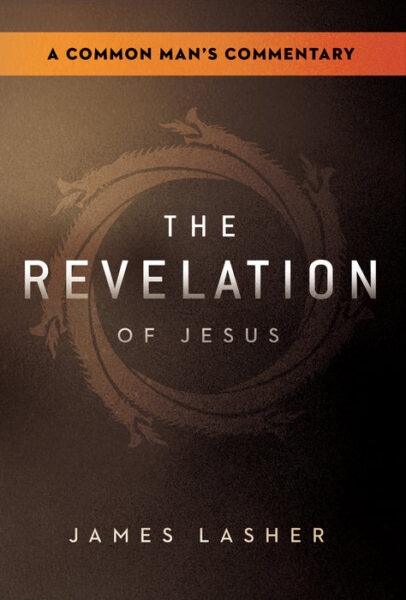
Order James Lasher’s New Book, “The Revelation of Jesus” on Amazon.com!

Revelation’s Sting

In Revelation 9, during the fifth trumpet judgment, John describes locust like beings rising from the abyss. “They had tails like scorpions, and there were stings in their tails. Their power was to hurt men five months.”

The torment is described as being “like the torment of a scorpion when it strikes a man.”

It is a chilling image. Not immediate destruction, but sustained agony. A sting that incapacitates. A swarm that descends with precision and purpose.

No, the Pentagon is not quoting Revelation in its strategic planning. But in a world where swarming autonomous weapons fill the skies and nations brace for sudden strikes, the imagery feels less abstract than it once did.

The Bible consistently uses scorpions to symbolize danger, judgment and spiritual hostility. In Luke 10:19, Jesus speaks of authority over “serpents and scorpions” and over all the power of the enemy. In Revelation, scorpion like creatures are instruments of judgment unleashed in the last days.

Now, a military unit bearing that very name stands ready amid escalating tensions with Iran while diplomatic talks continue in Geneva.

We are living in a moment where the language of Scripture and the language of modern warfare are beginning to overlap in unsettling ways.

Knowing the Times

This is not about panic. It is about discernment.

Jesus rebuked those who could read the weather but could not discern the signs of the times. Scripture repeatedly calls believers to watch, to understand and to remain anchored in truth.

Whether or not Task Force Scorpion ever launches into combat, the fact that we are discussing autonomous swarms of one way attack drones in the same breath as Revelation imagery should awaken something in us.

These are not ordinary days.

The only way to navigate extraordinary times is to know the Word of God. To understand what Scripture says about judgment, deception and the last days. To ground ourselves not in fear but in truth.

Because the sting of a scorpion is painful. But the Word of God prepares us for whatever may come.

James Lasher, a seasoned writer and editor at Charisma Media, combines faith and storytelling with a background in journalism from Otterbein University and ministry experience in Guatemala and the LA Dream Center. A Marine Corps and Air Force veteran, he is the author of The Revelation of Jesus: A Common Man’s Commentary and a contributor to Charisma magazine. For interviews and media inquiries, please contact [email protected].


US Pulls Personnel From Israel as War Fears With Iran Explode

As tensions between Israel and Iran continue to deteriorate and the United States amasses significant military assets across the Middle East, fears of a broader regional war are growing by the day.

Against that volatile backdrop, the U.S. Embassy in Jerusalem has taken a significant step, authorizing the departure of non-emergency American personnel and their families from Israel, signaling deep concern over rapidly escalating security threats.

In a travel advisory update issued Feb. 27, 2026, the Department of State announced it had “authorized the departure of non-emergency U.S. government personnel and family members of U.S. government personnel from Mission Israel due to safety risks.”


The advisory proves just how unstable the situation has become.

“The security environment is complex and can change quickly, and violence can occur in Israel, the West Bank, and Gaza without warning,” the report states. It adds that “terrorist groups, lone-actor terrorists and other violent extremists continue plotting possible attacks in Israel, the West Bank, and Gaza.”

According to the embassy, “terrorists and violent extremists may attack with little or no warning, targeting tourist locations, transportation hubs, markets/shopping malls, and local government facilities.” The warning reflects the growing unpredictability across the region as Iranian-backed proxies continue to threaten Israel from multiple fronts.

The advisory also cautions that “increased regional tensions can cause airlines to cancel and/or curtail flights into and out of Israel,” urging that “persons may wish to consider leaving Israel while commercial flights are available.”

Specific ‘Do Not Travel’ Zones

The State Department now advises Americans to “Reconsider Travel To: Israel due to terrorism and civil unrest” and to the “West Bank due to terrorism and civil unrest.”

More starkly, it declares “Do Not Travel To: Gaza due to terrorism and armed conflict and within 11.3 km/7 miles of the Gaza Periphery.” It also warns against travel to “Northern Israel within 4 kilometers/2.5 miles of the Lebanese and Syrian borders due to continued military presence and activity.”

The embassy emphasizes that the situation inside Israel itself remains unpredictable. “The security situation in Israel, including Tel Aviv and Jerusalem is unpredictable, and U.S. citizens are reminded to remain vigilant and take appropriate steps to increase their security awareness as security incidents, including mortar and rocket fire and armed UAV intrusions and missiles, can take place without warning.”

U.S. government employees are now restricted from personal travel within 11.3 kilometers of the Gaza demarcation line and within 4 kilometers of the Lebanese and Syrian borders. “Any official travel of U.S. government personnel within these areas requires approval from the Embassy’s security office,” the advisory states.

In northern Israel near Lebanon and Syria, the language is unequivocal: “Do not travel to this area for any reason.”


Gaza Declared Extremely Dangerous

The advisory reserves some of its strongest language for Gaza.

“Do not travel for any reason due to terrorism and armed conflict,” it states plainly. The U.S. government notes it is “unable to provide routine or emergency consular services to U.S. citizens in Gaza as U.S. government employees are prohibited from traveling there.”

“The security environment within Gaza and on its borders is extremely dangerous and volatile,” the report warns, noting that key crossings remain closed and that anyone entering should be prepared for “an indefinite stay” as borders “can close without advance notice and for long periods during times of unrest and armed conflict.”

In extraordinary language, the advisory even urges travelers to “draft a will and designate appropriate insurance beneficiaries and/or power of attorney” and to “leave DNA samples with your medical provider in case it is necessary for your family to access them.”

Such warnings underscore the severity of the threat environment and the real possibility that hostilities could intensify further.

As Israel faces mounting threats from Iran and its regional proxies, and as the United States positions forces in the region in what many view as preparation for potential confrontation, the window for de-escalation appears to be narrowing.

In this critical hour, we must answer the call to pray fervently for America, for Israel and for the people of Iran who suffer under a radical and oppressive Islamic regime. Pray for wisdom for leaders, protection for civilians and for peace that can only come from the Lord in the midst of gathering storm clouds over the Middle East.

James Lasher, a seasoned writer and editor at Charisma Media, combines faith and storytelling with a background in journalism from Otterbein University and ministry experience in Guatemala and the LA Dream Center. A Marine Corps and Air Force veteran, he is the author of The Revelation of Jesus: A Common Man’s Commentary and a contributor to Charisma magazine. For interviews and media inquiries, please contact [email protected].


Confrontation on the Temple Mount: As Jewish Prayer Rises, So Does Global Pushback

On the first morning of Ramadan, which also marked the beginning of the Hebrew month of Adar, Jewish father Yishai Fleisher walked down from the Temple Mount with his young son after a time of prayer.

Moments later, he was stopped by a French journalist.

What followed was not a simple interview. It was a tense back-and-forth that highlighted a growing global discomfort with a simple reality: Jews are returning in record numbers to pray on their holiest site.

Questioning Jewish Prayer on Judaism’s Holiest Site

The French reporter immediately pressed Fleisher on why he chose to ascend the Temple Mount during Ramadan, as if Jewish worship needed to take a back seat to Muslim observance.

The implication was clear. Jewish prayer was being treated as provocative.

Fleisher calmly explained that he had come to pray at the start of the month of Adar, a joyful time on the Jewish calendar. He pointed out that Israeli police had permitted prayer and singing that morning. He emphasized that Jerusalem is under Israeli sovereignty and that Israeli law governs the Temple Mount.

Still, the reporter pushed back. He suggested that Jewish prayer might be restricted. He referenced Jordanian religious authorities as though they controlled the site. He raised concerns about possible unrest.

At every turn, Fleisher pushed back just as firmly. He stated that Israeli police had given clear instructions allowing prayer. He rejected the idea that Jewish worship should be limited because of Ramadan. And he dismissed the narrative that the day was on the brink of crisis.

The exchange revealed something deeper than a disagreement over policy. It exposed a mindset that questions whether Jews truly have the right to pray at the very place where their temples once stood.

Sovereignty Under Scrutiny

The Temple Mount is not a minor religious site. It is the spiritual heart of Judaism. It is where the First and Second Temples stood. For centuries, Jews around the world prayed facing that mountain.

Yet in this exchange, the journalist treated Jewish worship as something that required justification.

Fleisher reminded him that Israel has exercised sovereignty over Jerusalem since 1967. Israeli police, not foreign authorities, enforce the law on the Mount. That morning, Jewish worshippers followed those instructions.

Still, the line of questioning carried an unmistakable tone. The Jewish presence was framed as disruptive rather than restorative.


Condemning Provocation While Defending Israel

The journalist also raised an incident in which a religious nationalist reportedly burned a Quran nearby. Fleisher did not defend that act. He made clear that such personal provocations are wrong and unnecessary.

At the same time, he argued that Israel as a state must confront extremist ideologies that call for its destruction. He drew a sharp line between individual stunts and national security.

What stood out was the imbalance. The reporter seemed far more concerned about Jewish actions than about the broader threats Israel faces daily.

A Record Year on the Temple Mount

Encounters like this are unlikely to fade away.

In 2025, Jewish ascent to the Temple Mount reached record levels. According to Israel365 News, 76,448 Jews ascended the Temple Mount last year. What was once a small movement has become a growing expression of faith and national identity.

More Jews are choosing to walk where their ancestors walked. More are choosing to pray where the temples once stood.

As that movement grows, so does international attention. And with it comes increased criticism.

For decades, Jewish prayer on the Temple Mount was limited or discouraged. Now that reality is shifting. The world is watching and not everyone is pleased.

The Bible Warned This Would Happen

The Scriptures have long warned that Jerusalem would become a flashpoint for the nations.

The prophet Zechariah described Jerusalem as a heavy stone for all peoples. The psalms speak of nations raging against God’s purposes. Throughout history, the restoration of Israel has been met with resistance.

As Jewish worship increases on the Temple Mount, it should not surprise believers that global pushback increases as well.

What happened between Yishai Fleisher and the French journalist was not just a media moment. It was a snapshot of a larger struggle. A struggle over history. Over sovereignty. Over who has the right to stand on that mountain and pray.

The numbers tell the story. Tens of thousands of Jews are ascending. The desire is growing, not shrinking.

And as it grows, so will the opposition.

James Lasher, a seasoned writer and editor at Charisma Media, combines faith and storytelling with a background in journalism from Otterbein University and ministry experience in Guatemala and the LA Dream Center. A Marine Corps and Air Force veteran, he is the author of The Revelation of Jesus: A Common Man’s Commentary and a contributor to Charisma magazine. For interviews and media inquiries, please contact [email protected].