L.A. Marzulli: Jesus’ ‘Days of Noah’ Warning Is More Relevant Than Most Christians Realize
When Jesus warned that the last days would be “as the days of Noah,” was He simply describing a world filled with sin—or was He pointing His followers to something much deeper?
Author and researcher L.A. Marzulli believes Christ’s words carried far greater significance than many Christians recognize today. Speaking with Taylor Welch on The Deep End, Marzulli argued that understanding what Jesus meant requires returning to Genesis 6 and reading it through the lens of Genesis 3:15.
“The seed war. Genesis 3:15, the offspring, the seed of the dragon, will be at war with the offspring of the woman,” Marzulli said. “The one coming from the woman, the protoevangelium, will crush the dragon’s head. The dragon will bruise His heel. That’s the whole Bible.”
Marzulli believes many believers miss the significance of Jesus’ warning because they misunderstand the events that preceded the Flood.
“Jesus warns us it’ll be like the days of Noah,” Marzulli said. “What differentiates the days of Noah? This is why the proper exegesis of Genesis 6, ‘the sons of God saw the daughters of men that they were beautiful and took wives’… the offspring is the Nephilim, which everything goes back to Genesis 3:15.”
Jesus’ Words Point Back to Genesis 6
During Jesus’ ministry, His audience understood exactly what He meant when He referenced Noah because they were familiar with the biblical account and the traditions surrounding it.
“When Jesus says to people in Jerusalem, ‘It’ll be like the days of Noah,’ they know what He’s talking about,” he said. “Oh, you mean the Nephilim? You mean the fallen angels coming down?”
Marzulli said that understanding remained common during the first century.
“The early church fathers and people in Jesus’ time knew exactly what He’s talking about—the commingling of the seed. Genesis 3:15.”
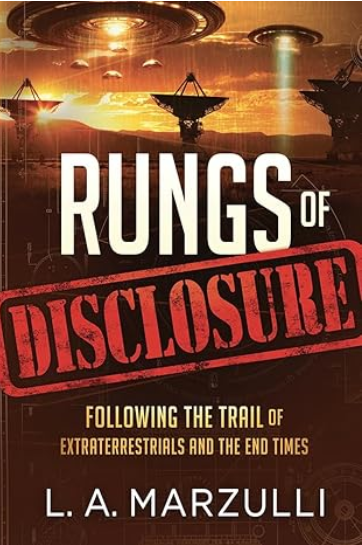
Order L.A. Marzulli’s Book, “Rungs of Disclosure” on Amazon.com!
Marzulli said one of the greatest obstacles to understanding Jesus’ teaching is what has become known as the Sethite theory, which interprets the “sons of God” in Genesis 6 as the descendants of Seth rather than fallen angels.
“This is why if you have the Sethite theory, you can’t possibly get to where we are,” he said. “You’ll never understand. You can’t get there from here.”
Instead, Marzulli argued that Genesis 6 records a literal supernatural event that helps explain why the Flood became necessary.
“If you hold to the literal interpretation of what Genesis 3:15 says, so when you get to Genesis 6, ‘Oh, okay, seed war.’ This is where we are.”
That framework, he said, continues throughout Scripture.
“When we get to Daniel 2:43, ‘Oh, seed war.’ When we hear about abductions and the offspring… ‘Oh, seed war. I get it.’ This is where we are.”
Marzulli believes that perspective transforms some of the Bible’s most difficult passages from isolated events into one continuous spiritual conflict.
“So there’s a seed war that’s going on that’s been going on on the planet for millennia essentially,” he said.
Why the ‘Days of Noah’ Matter Today
Marzulli also pointed to the book of Enoch as an important historical resource for understanding how many Jews viewed Genesis 6, while acknowledging it is not part of the biblical canon.
“The Book of Enoch tells us exactly what happened in Genesis 6,” Marzulli said. “It tells the story of the fallen angels coming to earth, taking human women as wives, and procreating with them, creating what has become known as the Nephilim. This is the amplification of Genesis 3:15 and the ongoing seed war.”
Jesus wasn’t merely referencing a period of increasing wickedness before the Flood. Christ deliberately directed believers back to one of the defining moments in biblical history.
“We are in the days of Noah as I speak,” Marzulli said. “Hybrids are being created. This whole thing is happening, and the church, for the most part, is completely asleep.”
He believes Jesus’ warning deserves renewed attention from Christians seeking to understand the times in which we live.
“We are told by Jesus Himself it’ll be like the days of Noah,” Marzulli said. “The question is, what made the days of Noah different?”
James Lasher, a seasoned writer and editor at Charisma Media, combines faith and storytelling with a journalism background from Otterbein University and ministry experience in Guatemala and at the LA Dream Center. A Marine Corps and Air Force veteran, he is the author of The Revelation of Jesus: A Common Man’s Commentary and a contributor to Charisma magazine. For interviews and media inquiries, please contact [email protected].