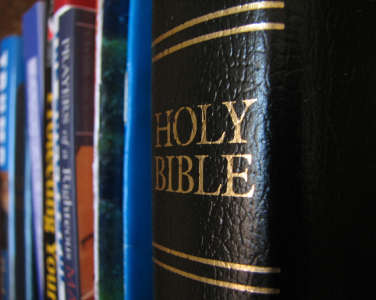
Seizure of 15,000 Bibles in Malaysia Stuns Christians

Malaysian port and customs authorities have seized at least 15,000 Bibles in recent months because the word “Allah” for God appears in them.

Some 10,000 of the Bahasa Malaysia-language Bibles, which were printed in Indonesia, are in Kuching, capital of Sarawak in East Malaysia, and another 5,000 copies are in Kelang near Kuala Lumpur.

The Christian Federation of Malaysia (CFM) on Wednesday called for the immediate release of the confiscated Bibles. At the same time, CFM Executive Secretary Tan Kong Beng told Compass that the federation is striving for amicable relations with government authorities.

“We are open to and desire further discussion with officials so that this problem can be resolved,” the CFM official said.

The CFM officially represents the three major Christian groups in the country: The Catholic Bishops’ Conference of Malaysia, the Council of Churches of Malaysia and the National Evangelical Christian Fellowship Malaysia.

A strong Christian community in Indonesia, estimated 37 million by Operation World, has long produced large amounts of literature for export to Malaysia. In 2005 the government of Malaysia agreed to allow the use of “Allah” in non-Muslim literature, according to CFM.

“The government and CFM have exchanged letters on this matter previously,” reads the CFM statement, “and we have a written agreement in December 2005 that Bahasa Malaysia Bibles can be distributed so long as the symbol of the cross and the words ‘A Christian publication’ are printed on the front page.”

With the exception of the temporary suspension of publication of the Roman Catholic Herald newspaper in 2007 and the ongoing court battle over the weekly’s use of “Allah,” few problems were encountered in the policy. This past March, however, authorities suddenly began seizing CDs, Sunday school materials and Bibles containing the word “Allah.”

Church leaders were stunned that no one had informed them of a change in policy. Quiet negotiations failed to resolve the situation, and several lawsuits began working their way through the court system. These suits challenge the right of the Minister of Home Affairs to restrict the use of “Allah” and to limit freedom of religion.

“To withhold the use of the Bahasa Malaysia Bibles is an infringement of Article 11 of the Federal Constitution, which gives every Malaysian the right to profess his/her faith as well as to practice it,” according to the CFM.

A government official in Malaysia was unavailable for comment. Officially, the government says only that use of the word “Allah” by non-Muslims could create “confusion” among Muslims.

The Kuala Lumpur High Court in Malaysia was scheduled to determine the legality of the word “Allah” in non-Muslim literature on July 7 but postponed the decision. The newspaper had been allowed to use the term until a final court decision was to be handed down, but the Kuala Lumpur High Court on May 30 overturned that brief reprieve.

The Rev. Lawrence Andrew, editor of the Herald, has cited examples from Malay dictionaries going back to the 17th century that use “Allah” as the vernacular translation for God. He has also noted that “Allah” is an Arabic term derived from the same roots as the Hebrew Elohim, and that the word pre-dates Muhammad, Islam’s prophet.

The Herald has a circulation of 13,000 and an estimated readership of 50,000. The newspaper is sold in Catholic churches and is not available from newsstands.

While the issue is tied up in the courts, many are hoping for a more harmonious solution to the problem. Both Indonesia and Malaysia use variations of Malay as their national languages, and all translations of the Bible in both countries used “Allah” for God until Malaysian authorities decided in the past few years that it was an Islamic term that should be used only by Muslims. In so doing, Malaysia effectively shut off the importation of Christian literature from Indonesia.

Malaysia’s population is about 60 percent Muslim, 19 percent Buddhist and 9 percent Christian. About 6 percent are Hindu, with 2.6 percent of the population adhering to Confucianism, Taoism and other traditional Chinese religions.


What Are the Things Real Women Struggle With?


When you disrespect your husband or show that coworker a notsopleasant side of your personality, do you beat up on yourself for failing to act in a godly manner—again? We all have imperfections in us, but God sends conviction to reveal our weaknesses and get us back on the right path. When struggles get the best of you, don’t concede defeat and think you’ll never get the victory in a given area of your life. The Holy Spirit comes to convict believers of sin, and then empower us to live free from it. Click below to watch video.

{youtube}HnMofx1Iixw{/youtube}


Why Me, Lord?

Have you ever asked God why? “Why me, Lord?” “Why not pick somebody else for this?” “Why am I always the one going through the fire?”

In the good times we say, “Lord, I love You.” We quote, “Oh, in the volume of the book it is written of me I delight to do Your will, O Lord.” Then we add, “Father take me, mold me, use me. Take my life, and let it be consecrated to Thee.”

We say all this until God asks us to do something or we go through something that is very uncomfortable—something we have never done or experienced before.

Then we start singing a different tune. “I’ve never passed this way before, Lord. It’s dark, and I’m not sure where I’m going. I can’t see the light at the end of the tunnel. You’re making me step into the unknown.

“Yes, I know You are holding my hand. I know You are more concerned about me than the many sparrows You so carefully watch over. I know You have numbered the very hairs on my head. I know You will never leave me or forsake me. But Lord, I don’t know about this!

“This doesn’t make any sense. This goes beyond my ability to understand. Why are You doing this, Lord? I’m going to trust You in it, but I don’t understand it. I can’t do this by myself. Carry me, Lord. Let me know You are with me in it.”

We have all experienced those times when our world falls apart. Nothing is working out as it should. We receive awesome prophetic words about future ministry, husbands, families, wealth—and get so excited. But just when everything seems to be going well, the bottom falls out. Our entire world is shaken.

The difficulties come in many forms: Perhaps you are lied about in ministry or your husband has an affair with a best friend or a family member is diagnosed with cancer. It could be you are trapped in a bad relationship. Maybe you are facing eviction or you’ve lost your job. Perhaps you are so sick you want to die.

During times like this, have you been tempted to ask, “Why me, Lord?”

I’m sure Joseph must have been. He knew his destiny was to rule—but he found himself at the bottom of a pit, discarded by his own brothers. Later, just when it appeared he was beginning to walk in purpose, he was consigned to prison—for rightly fleeing from his master’s wife when she tried to seduce him!

Do you think Joseph might have asked, “Why me, Lord?” and “Where are You in all this?” But God had a greater purpose. He was preparing Joseph to save two nations.

We tend to see our circumstances through our natural eyes. We live in time and space, so we live in today. But God sees eternity. He sees the end from the beginning. He knows the outcome already. And He knows the plans He has for us—plans to prosper us and not harm us, plans to give us hope and a future (see Jer. 29:11).

Those who stood at the foot of the cross on Calvary and watched Jesus die lived in agony for a time. Perhaps they asked, “Why, Lord?” when they heard Him cry out, “My God, My God, why have You forsaken Me?” Though Jesus had prophesied His own resurrection, the people did not understand and could not anticipate the eventual glorious outcome of this terrible scene.

But we know that God had a greater purpose for Jesus—to save the lost and to reproduce Himself in a new creation called the sons of God who would be joint heirs with Him in God’s kingdom.

Not too long ago, the Lord allowed me to go through some intense spiritual warfare that caused me to question Him. In the process He did a deep work within me, and when I asked, “Why, Lord?” His response was simple: “For the greater purpose.”

Perhaps you are going through something you don’t understand. You are bombarded on every side with doubts, fears and uncertainties. Know that you can trust God in and through your circumstances. Believe that He has a plan for you and that the end result will be good.

Even more important, know that there is a higher purpose you can’t see yet—one that may include your being the means of salvation for someone else. Just as Joseph was used to save two nations and Jesus to bring salvation to the world, so the Lord will use you for His greater purpose.

You may not be able to see the light at the end of the tunnel, but you know the One who is holding that light. Are you willing to trust Him to lead you through? He will turn your trial around for your good—and answer your cry by pointing to the fulfillment of His plans.


Seizure of 15,000 Bibles in Malaysia Stuns Christians

Malaysian port and customs authorities have seized at least 15,000 Bibles in recent months because the word “Allah” for God appears in them.


Some 10,000 of the Bahasa Malaysia-language Bibles, which were printed in Indonesia, are in Kuching, capital of Sarawak in East Malaysia, and another 5,000 copies are in Kelang near Kuala Lumpur.

The Christian Federation of Malaysia (CFM) on Wednesday called for the immediate release of the confiscated Bibles. At the same time, CFM Executive Secretary Tan Kong Beng told Compass that the federation is striving for amicable relations with government authorities.

“We are open to and desire further discussion with officials so that this problem can be resolved,” the CFM official said.

The CFM officially represents the three major Christian groups in the country: The Catholic Bishops’ Conference of Malaysia, the Council of Churches of Malaysia and the National Evangelical Christian Fellowship Malaysia.

A strong Christian community in Indonesia, estimated 37 million by Operation World, has long produced large amounts of literature for export to Malaysia. In 2005 the government of Malaysia agreed to allow the use of “Allah” in non-Muslim literature, according to CFM.

“The government and CFM have exchanged letters on this matter previously,” reads the CFM statement, “and we have a written agreement in December 2005 that Bahasa Malaysia Bibles can be distributed so long as the symbol of the cross and the words ‘A Christian publication’ are printed on the front page.”

With the exception of the temporary suspension of publication of the Roman Catholic Herald newspaper in 2007 and the ongoing court battle over the weekly’s use of “Allah,” few problems were encountered in the policy. This past March, however, authorities suddenly began seizing CDs, Sunday school materials and Bibles containing the word “Allah.”

Church leaders were stunned that no one had informed them of a change in policy. Quiet negotiations failed to resolve the situation, and several lawsuits began working their way through the court system. These suits challenge the right of the Minister of Home Affairs to restrict the use of “Allah” and to limit freedom of religion.

“To withhold the use of the Bahasa Malaysia Bibles is an infringement of Article 11 of the Federal Constitution, which gives every Malaysian the right to profess his/her faith as well as to practice it,” according to the CFM.

A government official in Malaysia was unavailable for comment. Officially, the government says only that use of the word “Allah” by non-Muslims could create “confusion” among Muslims.

The Kuala Lumpur High Court in Malaysia was scheduled to determine the legality of the word “Allah” in non-Muslim literature on July 7 but postponed the decision. The newspaper had been allowed to use the term until a final court decision was to be handed down, but the Kuala Lumpur High Court on May 30 overturned that brief reprieve.

The Rev. Lawrence Andrew, editor of the Herald, has cited examples from Malay dictionaries going back to the 17th century that use “Allah” as the vernacular translation for God. He has also noted that “Allah” is an Arabic term derived from the same roots as the Hebrew Elohim, and that the word pre-dates Muhammad, Islam’s prophet.

The Herald has a circulation of 13,000 and an estimated readership of 50,000. The newspaper is sold in Catholic churches and is not available from newsstands.

While the issue is tied up in the courts, many are hoping for a more harmonious solution to the problem. Both Indonesia and Malaysia use variations of Malay as their national languages, and all translations of the Bible in both countries used “Allah” for God until Malaysian authorities decided in the past few years that it was an Islamic term that should be used only by Muslims. In so doing, Malaysia effectively shut off the importation of Christian literature from Indonesia.

Malaysia’s population is about 60 percent Muslim, 19 percent Buddhist and 9 percent Christian. About 6 percent are Hindu, with 2.6 percent of the population adhering to Confucianism, Taoism and other traditional Chinese religions.


God Has Willed All to Us

Hebrews 9:13-28 When my mother died, I could not come into my inheritance until all the legal requirements were met. Only then could I receive what she had willed to me many years earlier when she wrote her will.

In the very beginning of time God wrote a will for all of His children to inherit. Even though Christ had not yet been made flesh, He was present with the Father in the Spirit. Jesus was the very living Word of God that spoke the worlds into being. God intended for all who believed on His Son to inherit eternal and abundant life. The legal requirements had to be fulfilled first. For a will to be activated, the person who has written the will must be dead. Christ died once for all men, and because He died, we now can inherit all God intended for us to inherit from the beginning of time.

When my mother died, I had to go to the courthouse to claim my inheritance. I had to give proof of my identity and sign some papers. When Jesus died, the availability of His inheritance was there, but we now have to claim it. We claim our inheritance by believing and receiving by faith Jesus as our Lord and Savior. The sad part is that so many do not know anything about their great inheritance. If they never have heard the gospel, how can they claim their inheritance? What is even sadder is that some when they hear the gospel refuse to claim their inheritance. I have never understood this.

After the law was given to Moses, he sprinkled the blood of calves and goats upon the book, the people and the tabernacle. Without the shedding of blood there is no remission of sins. After Jesus died, His blood was made available to us to cleanse and sanctify our earthly tabernacles (our body, soul and spirit). Because Jesus said, “Lo, I come (in the volume of the book it is written of me,) to do thy will, O God,” we now have the privilege of entering into all God has willed for us.

Father, I pray for all those today who have missed becoming a joint heir with Christ. I pray these lost people will have the eyes of their understanding opened, and I pray You will deposit the gift of faith to them so that they might believe and receive Jesus Christ, Your Son, as their Lord and Savior. I pray that soon they will be able to claim their full inheritance. Thank You, Father, for sending Your Son to earth, not only to live, but also to die and to live again.

READ: Ezekiel 20:1-49; Hebrews 9:13-28; Psalm 107:1-43; Proverbs 27:11


A Pattern of Prayer

Hebrews 9:1-12 David Yonggi Cho, who pastors a church of over a million Koreans, uses the tabernacle as a pattern of prayer. In today’s reading we see the order of the tabernacle. This passage describes three of the parts of the tabernacle. Each division of the tabernacle included certain altars and emblems, which all represent the different parts of prayer we are to experience daily. Cho prays four hours a day, utilizing each of these parts of prayer. Here are the three parts of the tabernacle and what they represent in our own prayer life:

THE OUTER COURT

Enter His courts with praise (Ps. 100:4-5); praise and thanks.

  • The Brazen Altar—Offer your body as a living sacrifice and confess (Rom. 12:1)
  • The Brazen Laver—Wash your heart and mind with the WORD (Ps. 119)

THE INNER COURT OR HOLY PLACE

The veil is torn, and we can enter boldly.

  • The Golden Candlestick—Be filled with His Spirit (Isa. 11:1).
  • The Table of Showbread—Consider God’s provision in His Word (Ps. 104:15).
  • The Altar of Incense—Your prayers and supplication are as a sweet incense (Rev. 8:4).

THE HOLY OF HOLIES

Worship God (Ps. 24:3, 46; Heb. 10:19-24; Isa. 57:15-21).

Cho reverses this pattern of prayer because now that Jesus has shed His blood for us, we can enter boldly into His throne of grace and find help in time of need. Jesus also reverses the order of the tabernacle when He gives His disciples His pattern of prayer:

Our Father which art in heaven, hallowed be Thy name

The Holy of Holies—Worship God

Thy kingdom come, Thy will be done on earth as it is in heaven

The Altar of Incense—Making our requests known unto the Lord

Give us this day our daily bread

The Table of Showbread—God’s Word, our daily feeding

Forgive us our debts as we forgive debtors

The Laver—The washing of the water of God’s Word and cleansing of our sin as we make confession for them

And lead us not into temptation

The Candlestick—We’re now ready to go out into the world with our light shining brightly filled with the fresh oil of the Holy Spirit. We are the light of the world.

For Thine is the kingdom, and the power, and the glory forever.

The Outer Court—As we exit our prayers with thanksgiving and praise through the gates of praise into the world, we are reminded of our mission in life. We were created for the praise and glory of God.

Father, glorify Yourself in my heart (spirit) and soul (mind, will and emotion), and let me glorify You, Lord, today in attitude, word and deed. Amen.

READ: Ezekiel 18:1-19:14; Hebrews 9:1-12; Psalm 106:32-48; Proverbs 27:10


Why Your Prayer Life Should Mirror the Tabernacle

Hebrews 9:1-12 David Yonggi Cho, who pastors a church of over a million Koreans, uses the tabernacle as a pattern of prayer. In today’s reading we see the order of the tabernacle. This passage describes three of the parts of the tabernacle. Each division of the tabernacle included certain altars and emblems, which all represent the different parts of prayer we are to experience daily. Cho prays four hours a day, utilizing each of these parts of prayer. Here are the three parts of the tabernacle and what they represent in our own prayer life:

THE OUTER COURT

Enter His courts with praise (Ps. 100:4-5); praise and thanks.

  • The Brazen Altar—Offer your body as a living sacrifice and confess (Rom. 12:1)
  • The Brazen Laver—Wash your heart and mind with the WORD (Ps. 119)

THE INNER COURT OR HOLY PLACE

The veil is torn, and we can enter boldly.

  • The Golden Candlestick—Be filled with His Spirit (Isa. 11:1).
  • The Table of Showbread—Consider God’s provision in His Word (Ps. 104:15).
  • The Altar of Incense—Your prayers and supplication are as a sweet incense (Rev. 8:4).

THE HOLY OF HOLIES

Worship God (Ps. 24:3, 46; Heb. 10:19-24; Isa. 57:15-21).

Cho reverses this pattern of prayer because now that Jesus has shed His blood for us, we can enter boldly into His throne of grace and find help in time of need. Jesus also reverses the order of the tabernacle when He gives His disciples His pattern of prayer:

Our Father which art in heaven, hallowed be Thy name

The Holy of Holies—Worship God

Thy kingdom come, Thy will be done on earth as it is in heaven

The Altar of Incense—Making our requests known unto the Lord

Give us this day our daily bread

The Table of Showbread—God’s Word, our daily feeding

Forgive us our debts as we forgive debtors

The Laver—The washing of the water of God’s Word and cleansing of our sin as we make confession for them

And lead us not into temptation

The Candlestick—We’re now ready to go out into the world with our light shining brightly filled with the fresh oil of the Holy Spirit. We are the light of the world.

For Thine is the kingdom, and the power, and the glory forever.

The Outer Court—As we exit our prayers with thanksgiving and praise through the gates of praise into the world, we are reminded of our mission in life. We were created for the praise and glory of God.

Father, glorify Yourself in my heart (spirit) and soul (mind, will and emotion), and let me glorify You, Lord, today in attitude, word and deed. Amen.

READ: Ezekiel 18:1-19:14; Hebrews 9:1-12; Psalm 106:32-48; Proverbs 27:10


The Law Written on Hearts

Hebrews 8:1-13 Earlier this month we saw God’s promise to turn the hearts of stone of His chosen people into hearts of flesh. Israel was disobedient to God, and Jesus was rejected by His own. Yet, God has not rejected Israel. He promises to make a new covenant with them when He will write the law of God on their hearts and put the laws in their minds. Yesterday we shared the only sin we cannot remit for others is rejection of Jesus Christ. Even though many of our Jewish brothers and sisters have rejected Jesus Christ, we can still pray for God to give them the gift of faith to believe and also godly sorrow so they will repent.

Once we have received Christ, we have the challenge of walking in obedience to Him daily. Make no mistake, none of us can obey without the power of the Holy Spirit dwelling within us. Yes, people can obey the laws of God outwardly by not committing adultery, but Jesus made it quite clear that if a man lusts for a woman in his heart, he has committed adultery. He also said murder is committed if a man is angry against his brother. The law of God is only written on our hearts when we are born again. God’s promise to write His law on the hearts of His chosen people tells us that there will be a day when many Jews are born again.

Jesus did not come to destroy the Law or abolish it. He came to fulfill the Law, and because He did fulfill the Law we now can have the law of God written on our hearts. When we receive Christ, God promises to no longer remember our sins and iniquities because we are now a covenant people. The old has passed away, and all things become new. One of the greatest new things that comes to pass when we are born again is that we now have a willing heart that seeks to please God and obey Him in both word and deed.

It was such a relief when I gave up trying to obey God in my own strength. When I realized it was God who worked within me both to will and to do of His good pleasure, I asked Him for grace (supernatural power and ability) to obey and please Him daily. The two laws God wants us to obey daily are first to love Him with all of our hearts, and to love our neighbor as ourselves. These laws are not grievous. On the contrary they give us great joy when we obey them.

We recently attended a meeting where a man who has fifteen children is fighting to get the Ten Commandments back into our public buildings and schools. When he was burdened with the fact the schools were not able to post the Ten Commandments, the Lord spoke to his heart and asked him if his own children could quote the Ten Commandments. When he tested them, none of his children passed the test. He had to ask the Lord’s forgiveness for his own neglect in teaching the law to his children. We need to know the Ten Commandments, but more than that, we need to do them.

Thank You, Father, for sending the Obedient One, Jesus, to fulfill the Law so I can be empowered to keep Your law.

READ: Ezekiel 16:43-17:24; Hebrews 8:1-13; Psalm 106:13-31; Proverbs 27:7-9


The Gospel in Surround Sound

Ever wonder how multitudes of people were able to hear Jesus speak even though He had no megaphone to help project His voice? When He delivered His famous Sermon on the Mount, He sat down on the mountainside and taught the people, saying: “Blessed are the poor in spirit, for theirs is the kingdom of heaven. Blessed are those who mourn, for they shall be comforted. Blessed are the pure in heart, for they shall see God” (Matt. 5:1-5, NKJV). When Jesus spoke, the wind did not wisk away His words. The Holy Spirit carried them from heart to heart, and the listeners were transformed forever. To see one of Israel’s natural outdoor theaters, click below to watch the videos.

{flv}MountBeatitudes1{/flv}


{flv}MountBeatitudes2{/flv}


She’s on a Rescue Mission

Pam Cope didn’t close her heart when she learned about vulnerable African orphans. Today she is reaching children around the world.

She’s on a Rescue MissionSome people can read an article about an alarming human rights issue without giving it a second thought. Not Pam Cope.

On October 29, 2006, The New York Times reported that a 6-year-old named Mark Kwadwo and other young children were working as slaves on fishing boats in Ghana. Cope and her husband, Randy, read the article during a trip to New York, and Cope was so moved that, upon returning to their home in Neosho, Missouri, she tracked down the reporter and put the wheels in motion to rescue Mark and six other children who had been sold into slavery.

Nine weeks later, the mission was accomplished. The children were safe in a Christian-run orphanage in Accra, Ghana, where they would receive an education.

Oprah Winfrey noticed the same newspaper article and sent correspondent Lisa Ling to investigate. Much to Ling’s surprise, Mark and some of his friends had been rescued by the time she arrived. She reported her findings on The Oprah Winfrey Show in February 2007. Oprah invited Cope to appear on the program and honored her for her heroism.

“The next time you see a story and the story grabs your heart and it haunts you, you’ll think about Pam and what one woman can do to make a difference,” Oprah told the audience.

Cope, now 47, made her seventh visit to Ghana this fall. She and her team rescued 13 more children and placed them in three homes, where they will be cared for, educated and provided life skills. Village of Life, a new center built by donations Cope helped raise through her Touch a Life Foundation, celebrated its grand opening in March. It is located in Kete-Krachi, a fishing town near the Lake Volta region, and can accommodate 24 children and house-parents.

Led by the Spirit, Cope is following the biblical mandate to serve orphans and those who have no means to return a favor. To date, she has helped free 69 children by working closely with George Achibra, a former teacher in Kete-Krachi who now holds an administrative position in the region’s educational system.

Careful negotiations with the fishing village’s “master” have enabled him to rescue the children; no money changes hands for their release. Achibra explains to the masters that their activities are against the Human Trafficking Act, a law passed by the Ghanaian government in December 2005.

Russell Simmons, who was recently appointed United Nations Goodwill Ambassador for the Permanent Memorial to Honor the Victims of Slavery and the Trans-Atlantic Slave Trade, says some 27 million people worldwide are being exploited through human trafficking. This broad category covers child labor, migrant smuggling, sex worker trafficking, debt bondage and “old-fashioned slavery.”

In Ghana, part of the challenge in rescuing children is finding good homes for them. If returned to their parents, they will likely be resold. “Unfortunately, we don’t have the money to care for all of them long term,” Cope says. “We budget for approximately 10 years of support per child [$100 per child a month].”

Investing for Eternity

If she had not experienced deep sorrow herself, Cope might not be rescuing kids on the other side of the world. But her son, Jantsen, died unexpectedly on June 16, 1999, from an undiagnosed heart ailment when he was only 15 years old. The tragedy rocked the Copes’ small Missouri town, where Pam owned a hair salon and Randy worked as a publishing executive.

After Jantsen’s death, Cope spent time re-examining her life, as she details in her book, Jantsen’s Gift (Grand Central Publishing/Hachette). “When tragedy comes, you are forced to sit and reflect and evaluate what has been driving your life, what your focus and true core values have been—and it can be pathetic,” she told Charisma.

“As I was going through that process, I asked myself, ‘What am I investing my life in that truly doesn’t have any eternal impact?’ I discovered that, when I was really honest, most of it didn’t have any eternal impact. I was ready to turn things around.”

Her journey initially took her to Vietnam. She and Randy had decided to give a portion of Jantsen’s memorial fund to some family friends involved in adoption and missions work.

While in Vietnam, they became enamored with a baby abandoned by his mother and living in an orphanage. Their own 11-year-old adopted daughter, Crista, begged them to adopt him. They finally relented, and Van Cope became part of their family in August 2000.

Shortly after that trip, Cope and her husband decided to donate the remainder of Jantsen’s memorial fund to a woman named Mai Lang, whose focus was getting children off the streets in Vietnam and providing them with an education and a safe place to live.

Cope’s big turning point occurred in late 2000. She had been trying to raise more funds to benefit Lang’s efforts in Vietnam (without much success) and came to grips with the fact that she had personally not made any huge financial sacrifice. She felt it was time to give up something she valued: her diamond solitaire wedding ring.

“My decision to give up that ring was the moment that things really started to happen,” Cope says. “At that point, I began to take my work—and myself—seriously.”

In 2001 Cope learned about a 2-year-old girl in Vietnam who lived in the same orphanage Van had come from. The child had developed mild cerebral palsy as a result of physical abuse the mother experienced while pregnant. After seeing pictures of the little girl, Cope couldn’t stop thinking about her. In October she and Randy adopted her and named her Tatum.

Since the inception of Touch a Life in 2000, Cope has gone the extra mile to alleviate suffering, one child at a time. Early on, she established what she calls “The Fixer Fund” to help meet the serious medical needs of children who might otherwise die or spend their lives crippled. For example, she lined up a sponsoring physician in the United States and obtained a medical visa for a Vietnamese girl named Phoo Twee Do, whose legs had been blown off by a homemade bomb and who was battling a serious infection.

Phoo received prosthetic legs—and was adopted by a loving couple from Tulsa, Oklahoma. Without Cope’s intervention, Phoo might have become another sad statistic.

An Expanded Worldview

Cope didn’t grow up in a churchgoing family. Her faith journey stems from a prediction in 1980 that the world was coming to an end. At that time, Cope was a senior in high school. She remembers going to a revival every night with her friends—hungry and searching for answers.

“I can remember one night when the pastor asked who wanted to become a Christian, and I felt this magnetic pull. I went forward and said, ‘I’m ready to do this.’ ” Unfortunately, Cope did not have an intimate relationship with Jesus, and for years she struggled with her faith.

“Up until the point of losing Jantsen,” she says, “there was this constant struggle of wavering back and forth between not being worthy, not being knowledgeable enough of the Word, and really trying to get my arms around forgiveness. I wasn’t sure that forgiveness was something that was truly for me.

“When Jantsen died, I was forced to reflect on everything I had read in the Bible and my relationship with God up to that point. I was desperate for an authentic relationship.”

Cope says after Jantsen’s death, she would beg God to fill her with His presence. “I would feel His peace wash over me and know it was His presence,” she says. “Even though it was such a painful time of grief, it was so powerful with God.”

Cope admits she was a performance-oriented perfectionist before Jantsen died. “Everything was focused on my immediate family, my needs. My world was pretty small,” she says, noting that Jantsen and Crista had most things money can buy.

Since then, traveling to Third World countries has opened Cope’s eyes. It is hard to justify spending $150 on something as frivolous as matching pajamas and slippers after seeing three generations of the same family living in a one-room apartment in Vietnam, she says.

In recent years, the Copes have made some significant financial adjustments to help support more children in need. For example, they got rid of their credit cards and committed to an all-cash budget. They also downsized by moving into a smaller house.

Cope sometimes struggles to find a balance between work and family life. But she hopes her children will learn through her example that we have a responsibility to take care of people in need.

Being Jesus’ hands and feet starts with a simple prayer, says Cope: “Jesus, break my heart for what breaks Yours.”

A few weeks after Jantsen died, Cope says her brother-in-law told her, “Your life will definitely be sad, but it’s also possible that it will be richer and fuller than ever before.” Neither of them had any idea how prophetic his words would turn out to be.

Cope, whose family now lives in a Dallas suburb, never dreamed she would be involved in global outreach. Last year in Ghana, some 7,000 miles away from home, she felt God’s presence in a special way, she says. Standing under a tree on a 110-degree day eating banana Laffy Taffy, she knew she was right where she needed to be, doing what God called her to do—rescuing children who otherwise had no hope of a normal life.


Carol Chapman Stertzer is a journalist living in the Dallas/Fort Worth Metroplex.


BE A LIFE-CHANGER

Find quick and inexpensive ways to help transform someone else’s life at lifechanger.charismamag.com.