‘Prince of Preachers,’ COGIC Bishop James L. Whitehead Jr., Dead at 81

The Church of God in Christ has announced the death of Bishop James L. Whitehead Jr. on March 8, 2023, at age 81. At the time of his death, he was prelate of the Michigan Southwest Second Ecclesiastical Jurisdiction of the church.

Saints City COGIC in Romulus, Michigan, shared the announcement of his death on Facebook, referring to him as a “Gospel Giant,” “Mr. Hospitality” and the “Prince of Preachers:”

Whitehead served COGIC in various capacities through the years, including as the state dean of Sunday schools (1964-1984) and first administrative assistant to Bishop Earl Wright (1985-2015). On the national level, he served as editor-in-chief of the “Whole Truth Paper,” the official organ of COGIC. From 1965-1970, he was community relations director and coordinator of Interfaith Night in COGIC’s International Youth Congress. Attendance at the night grew in attendance from an average of 200 to 2,000. In 2005, he was given the honor of delivering the quadrennial sermon for the inauguration of Bishop Gilbert E. Patterson, the General Board and the installation of national church officials.

Whitehead also served as doctrinal reviewer for COGIC publishing, president of the O.T. Jones Memorial Training Institute and longtime pastor of both Whitehead Memorial COGIC, Ypsilanti, Michigan, and Saints City COGIC, Romulus, Michigan, congregations.

The local church and jurisdictional memorial service was held on March 15, 2023, at 6 p.m. at Burning Bush International Ministries COGIC, Westland, Michigan. COGIC also held a National Homegoing Celebration on March 16, 2023, at 10 a.m. at the Greater Immanuel Institutional COGIC, Detroit, Michigan. Watch the National Homegoing Celebration at this link, and watch Presiding Bishop Emeritus Charles Blake’s tribute to Whitehead here.

Whitehead leaves behind his wife, Evangelist Mollie Whitehead, also a COGIC leader, three grown children and multiple grandchildren. {eoa}

March CM Cover Bring Charisma magazine home with a subscription today!


4 Powerful Reasons Why Revival Often Starts With Young People

Over the past month, we have watched as the fires of prayer and revival have swept across colleges and universities nationwide. Some of those, like Asbury, Lee, Samford, Cedarville and Belmont are private Christian universities. LSU, Western Kentucky University and Texas A&M are public institutions. This most recent outpouring is not selective.

Denominational affiliations, campus size, public, private… none of these descriptors seem to matter. As of today, media outlets report over 20 campuses that have experienced something very special taking place. Add that number to the list of middle schools, high schools and churches experiencing similar outpourings of the Holy Spirit. Some describe what is happening as a prayer meeting or vigil. Others call it a revival or awakening. No matter what name is ascribed, one simply cannot deny that God is at work.

“Behold, I am doing a new thing; now it springs forth, do you not perceive it? I will make a way in the wilderness and rivers in the desert” (Isa. 43:19).

As a college professor at a Christian university, I have been touched by what has happened on our campus and across the nation. I have been inspired. I have been moved. And I have been personally changed. The past few weeks have caused me to wonder, “Why do so many revivals seem to start with young people?” Below are four reasons why I believe this often happens.

1. Desperation – Young people are desperate. They are desperate to know their purpose in life. They are desperate for hope and a love that is real. They are desperate to know that their past does not define their future. They have tried everything, and they are longing for something that satisfies.

They are desperate for the power and presence of God.

“There is power in desperation. What would it take for you to be desperate for God?”Jesus Revolution (2023)

2. A longing for change – We see the startling statistics. According to a study conducted by Lifeway Research (2019), 66% of young adults surveyed (ages 23-30) said they stopped attending church for at least one year between the ages of 18-22. Of those, 31% return and now attend, 39% attend infrequently and 29% do not attend at all.

The past several weeks have been both exciting and heartbreaking. I have been excited to watch thousands upon thousands of young people across the nation worshipping God, falling on their knees in prayer, seeking His face, repenting of their sins, being baptized, sharing Christ with others and running to the One who created them.

At the same time, I have been heartbroken to watch those same young people and the universities they attend being attacked and critiqued because the power of the Holy Spirit and this mighty move of God didn’t happen the way the critics felt it should.

Young people want change, and to be quite honest…rightfully so.

“Revival is when God gets so sick and tired of being misrepresented that He shows Himself.” – Leonard Ravenhill

3. A genuine desire for what is real – Young people can spot inauthenticity and because of that, they long for what is real and true. Our world has shown them all that it has to offer…fake happiness, fake acceptance, fake identities, fake doctrines, fake people, fake, fake, fake. Because of that, they are searching for truth. And that truth can only be found in Jesus.

Jesus said to him, “I am the way, and the truth, and the life. No one comes to the Father except through Me” (John 14:6).

4. A childlike faith – “At that time, the disciples came to Jesus, saying, ‘Who is the greatest in the kingdom of heaven?’ And calling to Him a child, He put him in the midst of them and said, ‘Truly, I say to you, unless you turn and become like children, you will never enter the kingdom of heaven. Whoever humbles himself like this child is the greatest in the kingdom of heaven'” (Matt. 18:1-4).

humble: not proud or haughty: not arrogant or assertive reflecting, expressing or offered in a spirit of deference or submission; ranking low in a hierarchy or scale

March CM CoverWhy do we see revivals start with young people? Because they are desperate for a mighty move of God. They long for change. They have a genuine desire for what is real. And they represent the humble, childlike faith that Jesus described in Matthew 18. That is why revival often begins with young people.

“Every move of God can be traced to a kneeling figure.”D.L. Moody

No matter what age you are, this is the time to seek revival for yourself. Revival is not about a building or a place. Revival is about the heart. May the fire now fall in our homes, churches, schools, communities, nation, and around the world.

This article original appeared at thinke.org. {eoa}

Bring Charisma magazine home with a subscription today!

Dr. Jason Robinson is an Associate Professor of Education at Lee University in southeast Tennessee. Jason is a local, state and national award-winning educator passionate about teaching and equipping the next generation of leaders. He and his family reside in Cleveland, Tennessee. You can follow him on Twitter at drjrobinson23.


7 Tips for Coming into Agreement with Spiritual Disciplines

Discipline

This article originally appeared on Curt Landry Ministries.

*Note: This is the first of a two-part series.

Spiritual disciplines are habits and patterns that produce spiritual maturity and growth. They feed your faith and starve your fears. As I have been discussing spiritual warfare, we will further discuss the spiritual disciplines—habits and patterns—that prepare and protect you and your family from enemy attacks.

There are seven tips I want to talk to you about that you can come into agreement with for spiritual discipline. And these are just easy things that you can practice.

I know you’re born-again, you’re saved, you’re filled with the Holy Spirit, but now we’re coming together, Jew and Gentile, as One New Man. And when we do that, the Lord says He wants to do, according to Ephesians 3:20, “exceedingly abundantly above all we could ask or think.”

We’re stronger together than apart. And so, there are some things that we do. They’re not legalistic, but they’re things we can do that are habits, patterns and reminders that help us stay in that overcoming spirit of spiritual warfare. Again, spiritual disciplines are habits and patterns that produce spiritual maturity and growth that feed your faith and starve your fears.

7 Tips to Help You Walk in Spiritual Discipline

  1. Create a Routine

It’s important to create a routine in your life that fosters spiritual discipline and grows your faith. That’s one of the reasons I personally (if I’m here and I’m in town), I’m always in House of David for Shabbat. I’m actually not legalistic, but we have been Shabbat-keepers, Christie and I, for more than 30 years. If you get into the habit of the routine, it becomes familiar and you honor the Lord’s Day.

  1. Have Quiet Time

You need to give yourself quiet time with the Lord intentionally. Start by spending 10 minutes. Listen to worship and music, pray out loud or quietly, and decree Scriptures. Spend your quiet time as the Holy Spirit leads you. But choose this, every day, saying, “You know what? I’m going to have a quiet time. I’m going to disconnect, and I’m going to reset.”

  1. Read God’s Word

The Word of God is living and powerful. One of the things I do is I never put anything on top of my Bible. I don’t put my phone. I don’t put keys or other books or anything. Because, for me, it’s just this, and I’ve been doing it for 33 years, is that the Word became flesh, and it dwelt amongst us.

So, in my mind, out of respect for Jesus and respect for what He did and paid for, for me, I just don’t put anything on top of the Word. But when you read the Word, you need to understand, it’s like no other book you read. I love to read. I have different reading things. I read secular stuff and business things, and I encourage you to have a well-rounded experience. But at the same time, when I put everything at the top of the funnel of my mind, I filter it through the Bible. Constantly. When I read something, I hear something, I say, “Well, where is that in the Word?”

And it’s funny with Christie and I because we have a friend that has a business, and I don’t want to say he’s not saved, but he’s not really walking in the Spirit as we do. And so, he’s going through his business and how they do business. He’s extremely successful. And as he went through some business things when Christie and I were with him, and I think sometimes we drive him a little bit crazy. I almost feel like we’re on Jeopardy. He’ll say this, and then both of us are going like, “Oh, oh, oh. Yeah. As a man thinks in heart, so he is. Oh, oh, oh. Yeah. Meditate on the Word of God day and night. Yeah, yeah. Oh, yeah.” And it’s almost like we’re sitting there on Jeopardy and go, “Okay. Another Scripture for 200, please.”

But what happens is that’s how we’ve programmed ourselves in our minds. We work with secular people. I do consulting with them. And what I’m always looking for is, if you understand that you’re doing it scripturally, it increases your faith and gives you a deep peace of mind that God’s on your side. Moses said, “Listen, God. This job’s way too big for me, but if Your presence goes with me, I’ll be fine” (I’m paraphrasing right here). Moses said, “If Your presence doesn’t go with me, I just can’t do this.”

So, a lot of times, it’s just being able to read the Word of God. That is a turning point of transformation because God’s Word will speak things into existence. His voice changes and transforms your mind. His Word gives birth to abundant life. And without the Word in your soul, really, you have no anchor. And without the Word, you are tossed to and fro, and you’re turned in every situation. So, God’s Word is a sword for battle.

  1. Blow the Shofar

Blowing the shofar is interesting. Blowing the shofar releases powerful spiritual protection, according to Numbers 10:9:

  • “When you go to war in your land against the enemy who oppresses you, then you shall sound an alarm with the trumpets, and you will be remembered before the Lord your God, and you will be saved from your enemies.”

It says that by sounding the trumpet or the shofar going to war, you’ll be remembered before the Lord your God. And understand that there is a spiritual battle set before you every day. The enemy is always looking to devour you.

Blowing the shofar creates an awakening in your soul and an awakening of the Word that you speak in the Courts of Heaven. Because the Scripture says that the angels of the Lord harken onto the trumpet. When they hear the trumpet, and they hear the Word that’s being spoken, then they have to show up and perform it. {eoa}

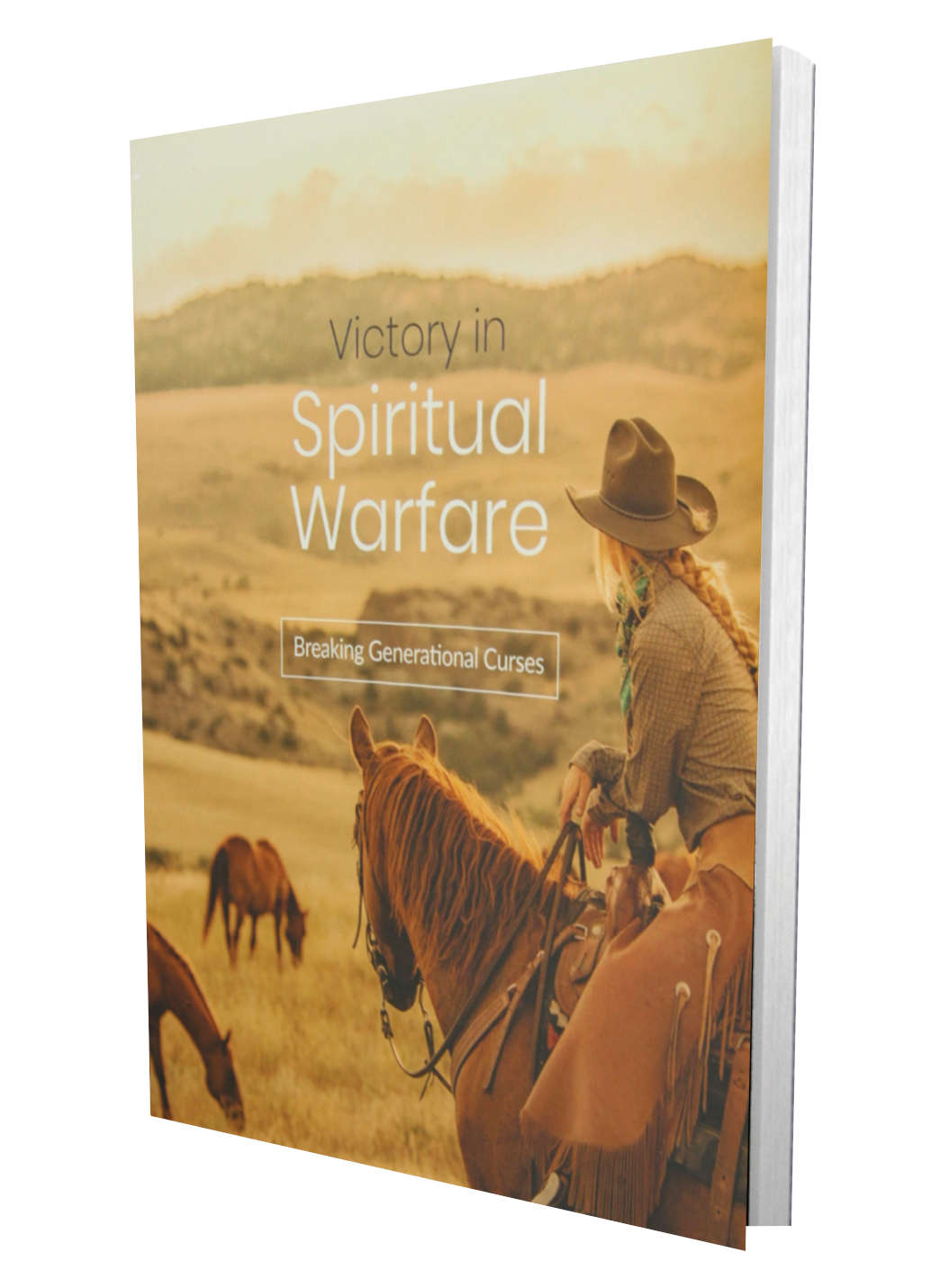
VIctory in Spiritual WarfareClick here to view Rabbi Landry’s book on spiritual warfare!

Hayford screenshotBring Charisma magazine home with a subscription today!

Curt Landry, founder of Curt Landry Ministries, and his wife, Christie, travel extensively, preaching and teaching about the Jewish roots of the Christian faith. Together, their passion is to empower families to live and leave Kingdom legacies and understand their own personal heritage.


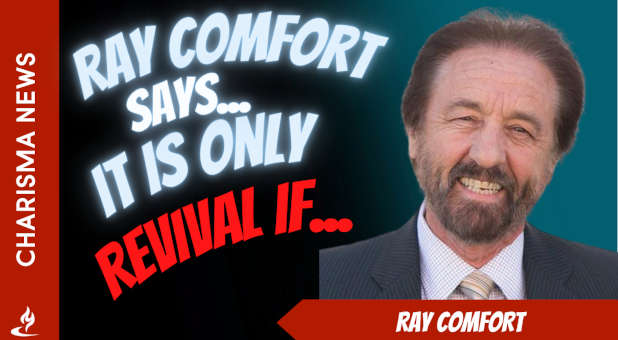
Evangelist Ray Comfort: It’s Only Revival If…

Ray Comfort Revival

There are so many questions and expectations about revival these days, frankly it can seem a bit overwhelming.

Living in the information age grants everyone with a web-connected device and a social media account a voice in the public square, and this can lead to confusion for some with the sheer number of opinions to sort through to find the truth of a matter.

Charisma News sat down with Evangelist Roy Comfort to discuss these outpourings of God and help believers understand what is happening in the world around them.

“I’m very excited about the revivals that are breaking out,” Comfort shared. “The question people are asking, ‘Is this a real move of God or is it just an emotional thing?’ Well, we’ll see. Time will tell if it’s a move of God.

“I’ll be impressed when people move out of the building, we call a church and take the gospel to a dying world. We’ve forgotten the world’s going to hell and we’ve got a lot of Christians who are really great at worshipping God but they’re not too great at the irksome task of…of evangelism,” he added.

While what occurred at Asbury University is wonderful, and many people needed this outpouring for whatever they were going through in life as an answer to prayer, Comfort brings up the excellent point of now turning the supercharging of faith within a building into action on the streets.

The Great Commission will never be fulfilled if Christians don’t take the instruction of James chapter 2 to heart.

It is a foundational principle to have faith in Jesus Christ, but there must be more than simply believing in Him according to Scripture.

That same faith must be put into action if believers hope to have any impact on the world.

“People are going to hell and we need to get a burden in our heart for them,” says Comfort. “We need to make sure that we go out for the biblical gospel.

“We should preach as Jesus preached. We should open up the Commandments and show people are sinners otherwise they won’t find a place of genuine repentance and they’ll be false converts and they’ll fall away in a time of tribulation.”

Comfort highlights the importance of preaching the full message of the Bible, not just the feel-good portions that will stir the emotions of sinners.

There is nothing wrong with having an emotional reaction to the words of the Bible, but there must be a spiritual stirring along with it, or else, as Comfort shares, sinners will not find a place of genuine repentance which is an essential part of proclaiming Jesus Christ Lord and Savior over one’s life.

“This will be seen as being a true move of God if they move out of that building into the world,” Comfort says. “That’s what the church needs. Something to stir us up. Something like a Saul of Tarsus to create havoc in the church so that we’re scattered everywhere preaching the Word.

“So, let’s just wait and see. Hopefully we’re going to see a great move of God that’s going to change this nation and bring it to peace with God.”

As Comfort shares, people are on a track to hell. It is up to followers of Jesus Christ to answer the call of the Great Commission and take the saving knowledge of the cross to those who are in desperate need of it. {eoa}

Hayford screenshotBring Charisma magazine home with a subscription today!

James Lasher is Staff Writer for Charisma Media.


You Must Use the Proper Pronouns at Work, But Don’t Mention Jesus

Corporations and companies may claim that they are promoting freedom of speech and harmony in the workplaces among all employees, but a new survey reveals that 60% of employees are fearful of sharing their religious views in the workplace.

The Freedom at Work Survey, taken last fall, polled more than 3,000 adults employed across a wide variety of professions and found that 3 of 5 respondents say that respectfully expressing religious or political viewpoints—especially ones company heads don’t agree with—would result in negative repercussions, and possible employment termination.

And that’s not just at work, either. It’s even while off the clock, including comments on social media.

The survey was commissioned as part of Alliance Defending Freedom’s Viewpoint Diversity Score initiative. The survey suggests that companies “might be” alienating their workforce by taking political stands on contentious social issues like abortion, the LGBTQ agenda and critical race theory, as well as Christianity itself, among others.

The Viewpoint Diversity Score Business Index says that the survey is the “first comprehensive benchmark designed to measure corporate respect for religious and ideological diversity in the marketplace, workplace and public square.

“Employees shouldn’t fear that their religious or political views could cost them their job,” said ADF Senior Counsel and Senior Vice President for Corporate Engagement Jeremy Tedesco. “Yet these survey results show that a significant number of employees do. We created the Viewpoint Diversity Score Business Index to help companies measure and improve their respect for religious and viewpoint diversity.

And, Tedesco says, there are steps companies can take to win back their employees’ trust, as well as minimize for “negative consequences and avoid preemptively chilling the speech of the workforce.

“Companies could make big strides … by doing four things:

  • Adopt our model religious accommodation policy.
  • Adopt our model policy protecting employees’ exercise of their civil rights outside work.
  • Include religious charities in employee charitable giving programs.
  • Participate in the survey portion of the Business Index, which asks companies to disclose internal policies and practices that implicate civil liberties.”

The survey reveals that more than half of all employees (54%) say they fear that sharing political content on their own social media accounts could result in negative consequence in their workplace. Viewpointdiversityscore.org says that “Data collected on Fortune 1000 companies’ policies and practices as part of the Viewpoint Diversity Score 2022 Business Index demonstrates that employees have good reason to fear: Of 50 benchmarked companies, only one—Paychex—confirms that it respects employees’ civil rights outside of work.”

Important questions are raised as to whether such companies are violating employees’ rights protected under Title VII of the 1964 Civil Rights Act, and that the survey’s findings come at a time when many companies are facing unprecedented challenges in recruiting and retaining talent.

In essence, post-pandemic, employees or potential employees have become leery and much more savvy of many companies’ practices and are steering clear of those companies in fear of future repercussions.

The survey showed these revealing statistics:

  • Large majorities (60% and 64%) say that respectfully expressing religious or political viewpoints would “likely or somewhat likely” carry negative consequences on their employment.
  • Employees believe these negative consequences for expressing religious viewpoints most often include hostile treatment from colleagues or supervisors (19%), as well as exclusion from professional development or advancement opportunities within the company (12%).
  • Employees believe these negative consequences for expressing political viewpoints also most often include hostile treatment from colleagues or supervisors (18%), as well as exclusion from professional development or advancement opportunities within the company (12%).

March CM CoverCompanies’ public stances on hot-button issues are often at odds with their workforce and customers. In other words, refuse to use the proper pronouns and you are either harassed, chastised or even fired. Speak about Jesus and the same consequences rear their ugly heads.

  • A plurality (44%) say they are uncomfortable with their employer taking a stance on a hot-button cultural issue that contradicts the views of many employees and customers.
  • A majority (64%) say companies should not be able to coerce their employees to affirm or celebrate social or political views that violate their personal beliefs.

Whatever your views or your company’s views, this survey is indeed a revealing one. {eoa}

Bring Charisma magazine home with a subscription today!

Shawn A. Akers is the online editor at Charisma Media.


Satan’s Diabolical Plan to Divide the Body of Christ

Demons and deliverance have become a very hot topic in the church today, especially on the heels of the release of Pastor Greg Locke’s movie Come Out in Jesus’ Name. It opened Monday night in nearly 2,000 theaters and was followed by Pastor Locke coming on live in these theaters via livestream and conducting a mass deliverance service.

In Pastor Locke’s own words, “This is a historic church moment. This has never happened! It’s almost like God says, ‘OK, you want to run my spirit out of church? Well, I’m going to take you into a movie theater.”

What are we to make of this?

Before the movie aired (so I could neither endorse it or criticize it), Pastor Locke asked if he could join me on my show to talk about the movie. You can listen to our discussion here (starting at the 27-minute mark), where you will hear Pastor Locke lay out his theological views.

Can a Christian have a demon? Have we even defined what this means? Should we use the term demon possession? Should we speak instead of demonization? And where does the ministry of deliverance fit in the lives of Christians? Is this just something we practice on non-believers who want to be set free? Do Christians ever need deliverance?

Be assured that each of these questions is packed with lots of emotion, and the moment you raise the topic of deliverance, things will get heated pretty quickly.

In the last 24 hours alone I have received passionate appeals from godly leaders on both sides of the issue. Some have urged me to speak out against the new deliverance fad while others have urged me to repent of the error of allegedly differing with this new wave of deliverance.

And all this happened without me making a clear public statement “for” or “against.” I wanted to hear the different teachings for myself as well as see the movie. How can I comment on something I haven’t seen?

That being said, the reaction to my Facebook post on Tuesday night, March 14, was quite intense, from all sides.

I wrote: “Do I believe that genuine believers can come under demonic power and need to be delivered and set free? Absolutely yes. Do I believe that genuine believers can be indwelt by demons and need exorcism? Absolutely not.

“Over the decades, I had some seasons where I came under severe demonic attack and needed prayer and fasting and spiritual agreement with colleagues in order to break free (and I’m sure, in some cases, my flesh opened the door to the attack). But I have never needed to have demons cast out of me. If the Spirit dwells inside you, demons cannot dwell there with Him.”

In my mind, this was a fairly generic post, not intended “to take sides” on the issue but rather to state my own views, having delved into the topic of demons and deliverance in the 1980s and 1990s. And in my mind, it wasn’t very different than what Pastor Locke said on my show. (He might differ with that assessment.)

But, to repeat, the controversy has been intense, with the heat rising on both sides of the debate.

That’s why I posted this on Wednesday night, March 15: “A word of wisdom here for everyone. Christian leaders WILL have some differences about the subject of demons and deliverance. That’s fine! There’s no reason to take sides or get into camps or attack one another. In fact, that’s exactly what Satan wants us to do! Let’s step higher, since we are fully aware of the evil one’s devices. And where we have differences, let’s listen to each other, learn from each other, and agree to disagree if it comes to that in the end, determined to stand UNITED against the devil.”

You see, this is the one thing we know for sure: Satan wants to divide us. He fully understands that, “Every kingdom divided against itself is laid waste, and no city or house divided against itself will stand” (Matt. 12:25). And so, whatever he can do to sow discord and dissension, he will do it.

He will try to divide us into factions (as in, “I’m in his camp” or “I’m in her camp”), and he will try to get us to separate over secondary matters (as in, “I’m pro-deliverance but you’re anti-deliverance”).

How about we determine to step higher and give no place to the evil one? (For the principle, see Ephesians 4:25-27.)

How about we find out accurately what key leaders actually teach and practice when it comes to deliverance, coming to our own conclusions after prayer and study rather than making this the topic we divide over.

If we agree on the fundamentals of the faith—I mean, the eternal, non-negotiables—and we agree that Satan is our enemy whom we overcome in Jesus’ name, then we are more in harmony than not.

March CM CoverWe will certainly have our differences in beliefs and practices, and we should be clear about what we believe and where we stand. Let the differences be articulated and let them be known.

But let us do so as brothers and sisters in the faith, all of us subject to the lordship of Jesus. Let us not give the devil an inch of ground, in particular in a dispute about deliverance from demons.

That would be as tragic as it is ironic. {eoa}

Bring Charisma magazine home with a subscription today!

Dr. Michael Brown (askdrbrown.org) is the host of the nationally syndicated Line of Fire radio program. His latest book is “The Political Seduction of the Church: How Millions of American Christians Have Confused Politics with the Gospel.” Connect with him on Facebook, Twitter or YouTube.


Ever Wondered What Prominent Leaders Are Pre-Trib and Post-Trib?

There are three main schools of eschatological thought when it comes to the Millennial Reign of Christ mentioned in Revelation 20. Leaders across the body of Christ are divided on the timing of the Millennial Reign and the rapture, or if there even is a literal rapture.

Charisma magazine sat down with author and itinerant minister Joel Richardson to break down the three main thoughts and where he stands from a biblical perspective.

As you survey the landscape of the Christian End Times perspectives, Richardson says the Church is divided by the Reformed movement and the Dispensationalists.

“The main point is the return of Jesus, the renewal of all things,” Richardson points out.

Here is a breakdown of the three main schools of thought:

Pre-Millennialism

The pre-millennialist category can be divided into two different groups. The Historical Pre-Mills or the Dispensationalist Pre-Mills.

The Historical Pre-Millennialists believe that the day Jesus returns, He will establish His kingdom on the earth for the next 1,000 years. Some view this as literal, others symbolic. They do not believe there will be a sudden rapture before the Great Tribulation. Instead, this camp believes the Antichrist will come to the earth and after that, the seven-year tribulation will start. Following the tribulation is the rapture.

Richardson holding to the historical pre-mill view says, “We believe that Jesus will return before the millennium and that He will literally establish His rule and reign on the earth in Jerusalem according to the prophets. The millennium is literal. It’s called historical because it’s the view of the earliest church writers.”

Dispensationalist Pre-Millennialists believe that Jesus will rapture the church before the Great Tribulation. This is one of the key distinctions. Once the body of Christ has been raptured they believe that God will work with the Jews and they will preach the gospel. They believe many Israelites and Gentiles will put their faith in Christ before He returns. As far as the Millennial Reign, they believe the world is in a continued progression toward the millennium which is a time known for great prosperity. They hold to a pre-tribulation viewpoint.

Well-known dispensationalist advocates are John Hagee, Hal Lindsey, Tim LaHaye and the Left Behind series.

As you survey the landscape of the Christian End Times perspectives, Richardson says the Church is divided by the Reformed movement and the Dispensationalists.

Post-Millennialism and A-Millennialism

The post-millennialist group believes that the Millennial Reign happens before Jesus’ Second Coming to earth. Finally, the a-millennialists are under the impression there is no millennium, but it is merely a symbolic picture.

“Bethel, Bill Johnson, Chris Vallaton, in Redding California are post-millennial. So this is sometimes called victorious eschatology. In partnership with Jesus, we as the body of Christ will eventually conquer the world, after which Jesus will return,” Richardson says.

This view is also widely held in the reformed world with prominent voices like Jeff Durban and Douglas Wilson also supporting the post-mill viewpoint.

“You also have a view called pre-wrath and post-tribulation. I will say all of the early church writers, in fact, all of the early church until a couple of hundred years ago were all post-tribulation. They believe the church is raptured once Jesus returns, at the end of the millennium,” Richardson says.

He says at that point, Jesus brings with him those who had fallen asleep, had previously died, that were already saved in Christ. Then, if we happen to be alive when He returns we will be raptured.

A Message to Pastors

“Jesus made one of the most profoundly sober warnings in all scripture, his sermon on the End Times. Mathew 24:9,” Richardson says. Jesus says many will fall away from the faith and the love of most will grow cold. In that season, in particular, there will be a profound falling away and many will be deceived.

The apostle Paul talks about this in 2 Thessalonians 2:3 as he refers to the time of great ‘apostasy.’ People will have itching ears and fall astray to the doctrines of demons.

“The reality is we may very well be the generation that sees that. Not just the generation, this could be something that is coming upon us quickly,” he says.

Richardson says to be careful trying to pin time frames, but the Bible does tell us to live with a sense of urgency in case we are the generation to face those very harsh realities.

“If we are the generation to be alive during that time, this is one of the single most important pastoral realities. Every shepherd and every pastor out there should be preparing their people. Yet we have massive leaders in the body of Christ, telling the body of Christ, ‘hey run the race hard but don’t worry you don’t have to take the finals.’ The Scriptures are very clear, if we are alive during that time, we will face the finals,” Richardson says.

Tune in to the rest of the interview to hear his thoughts on preparing for the End Times and the Great Tribulation. {eoa}


Bring Charisma magazine home with a subscription today!

Shelby Bowen is an assistant editor for Charisma Media.


What is God’s Purpose in Allowing Affliction and Infirmity?

I used to believe God never used physical affliction to do a spiritual work in the hearts of His people. I was taught that God has many means at His disposal to deepen our love and purify our faith, and sickness and infirmity were not among those tools.

Affliction always comes from the hand of the enemy, I was told, Christ would never send such a thing our way because He died to deliver us from all the works of the enemy. So sickness is never God’s will for the saint, and if it lingers then there’s something wrong. These were things I believed and preached, until infirmity hit me.

I still believe it is God’s will to heal. But the Lord has adjusted my theology in this area and helped me to see that He sometimes uses affliction and infirmity as tools to refine His servants.

Infirmity came to me at a time when I was feeling spiritually dry. I knew there was more in God than what I had experienced, but I couldn’t seem to touch it. At that time, a deep cry rose up in my heart, and I sought the Lord fervently for a fuller experience in Him. In retrospect, I realize that that cry was placed in my heart by God—and that He had destined an answer to that cry.

God’s answer was to lead me into a great spiritual wilderness, launched through physical infirmity. I became physically handicapped with no hope, according to doctors, of recovery. I went through many months of great darkness as I wrestled with God and pressed into Him to try to understand what He was doing in my life. Slowly I began to understand His purpose in allowing physical affliction: to build character in us.

l am not saying all sickness and infirmity is intended by God to produce character. Much of it accomplishes nothing but destruction, and God desires that we appropriate the provision of Calvary for divine healing. At times, however, God gives Satan permission to touch us (Job is an example), and He will not bring an immediate solution because He intends for the crisis to produce something deep in our hearts.

Often the Lord uses affliction to correct disobedience. He does not discipline us simply to punish us for wrong behavior, but rather to restore us to right behavior. God’s discipline is always for the good. “It is good for me that I have been afflicted, that I may learn Your statutes” (Ps. 119:71).

When affliction strikes, it’s wise to let your first response be one of broken repentance. Ask the Holy Spirit to reveal any way in which your life may be out of order. But do not assume that the presence of affliction automatically means you need to repent. That was the wrong assumption Job’s three friends made, and they incurred God’s anger because of it.

Nevertheless, the Scriptures testify, “He who has suffered in the flesh has ceased from sin, that he no longer should live the rest of his time in the flesh for the lusts of men, but for the will of God” (1 Peter 4:1-2). Physical affliction is instrumental in the hands of God to help us cease from sin.

Affliction naturally produces desperation within us. God purposes that we channel our desperation toward a fervent pursuit of His face. Jesus modeled this for us: “And being in agony, He prayed more earnestly” (Luke 22:44). How did Jesus respond when His pain increased? He sought God more earnestly. This is what God wants you to do.

If you allow your desperation to push you into Christ, you will come to know Him in a profoundly new and intimate way, as the apostle Paul did: “For this reason I also suffer these things; nevertheless I am not ashamed, for I know whom I have believed” (2 Tim. 1:12).

Because of his sufferings, he is able to say, “I know whom I have believed.”

He is incarcerated, demeaned, shackled, subject to ignominious circumstances in a dungeon, exposed to ridicule and scorn, but there is one thing that causes him not to be ashamed: He knows Jesus!

God did not create pain and sickness in order to cultivate maturity in His people. They are products of sin and the curse. God is the Master Redeemer, however, and He redeems evil circumstances, causing them to further His purposes.

Calamity can thus become a catalyst for accelerated spiritual growth. God’s intention is not to keep us interminably in the crisis but to use it to establish His kingdom rule in our lives.

The vital ingredient for turning affliction into maturity is perseverance. Romans 5:3-4 tells us, “We also glory in tribulations, knowing that tribulation produces perseverance; and perseverance, character; and character, hope.” James 1:2-4 reiterates this truth: “My brethren, count it all joy when you fall into various trials, knowing that the testing of your faith produces patience. But let patience have its perfect work, that you may be perfect [mature] and complete, lacking nothing.”

There is no pathway to spiritual maturity apart from perseverance. And there is no perseverance without pressures. Fruitfulness is found only as we endure through crisis and hardship.

I never thought I was judgmental, until infirmity hit. Then the Lord began to show me that I had carried judgmental attitudes toward weak people. When someone was in crisis, my first inclination was to try to discover where he had blown it. I was insensitive to the fact that some people are caught up in situations over which they have no control.

But I no longer assume that suffering people have done something wrong. That judgmental attitude has been removed by the purifying fires of affliction in my own life.

The Bible says, “Mercy triumphs over judgment” (James 2:13).

Where there is great persecution, there is only one category of Christian: disciples. Where there is no persecution, there are two categories: believers and disciples. The Western world has many believers and few disciples. It’s sick.

But in the absence of persecution, God has other ways of applying pressure to His jewels-in-the-making. I’m referring to the fire of delayed answers.

One reason God allows financial, physical and family distress is because He wants the fire of delayed answers to ignite and rekindle our zeal for the Lord.

Where there is no distress, Christianity stagnates. It is maintained in its pristine purity only under inflamed resistance. This is why Jesus said to the believers in Laodicea, “So then, because you are lukewarm, and neither cold nor hot, I will vomit you out of My mouth'” (Rev. 3:16).

The church in Laodicea knew very little persecution. The climate was one of religious tolerance. The challenge for the Laodiceans was to serve Christ in the midst of a very permissive, hedonistic society. The Laodicean church had become lukewarm because the fires of resistance had burned low.

So Jesus came to them and said, “I counsel you to buy from Me gold refined in the fire, that you may be rich” (Rev. 3:18). He issues this same invitation to us.

The Holy Spirit wants to baptize us with fire (Matt. 3:11). One way He does that is in the fiery furnace of affliction. His purpose is to ignite within us a zeal and fervency for the Lord that will restore to us red-hot Christianity.

The disciples asked Jesus why a certain man was born blind. They thought that perhaps he or his parents had sinned. But Jesus said he was born blind, that the works of God should be revealed in him. (John 9:3). Jesus then proceeded to reveal His glory by healing the man.

For reasons we don’t fully understand, there are times when the forces of evil are allowed to gain the upper hand over God’s people. Daniel says, “I was watching; and the same horn was making war against the saints, and prevailing against them.” (Dan. 7:21). In the book of Revelation, John echoes these words: “It was granted to him to make war with the saints and to overcome them.” (Rev. 13:7).

Notice that this power is “granted” to the evil one, and he can make no headway against the saints without God’s approval.

The verse in Daniel goes on to say, “until the Ancient of Days came, and a judgment was made in favor of the saints of the Most High, and the time came for the saints to possess the kingdom” (Dan. 7:22).

When God renders a judgment on behalf of the saints, everything changes! This is the answer for which we wait.

The book of Revelation also testifies, “The angel whom I saw standing on the sea and on the land raised up his hand to heaven and swore by Him who lives forever and ever.. that there should be delay no longer” (Rev. 10:5-6). What a wonderful moment! There is coming a day, O afflicted soul, when the Lord will declare, “There shall be delay no longer.”

Chances are that some of you reading this article are presently experiencing great affliction. If that’s you, take heart: God will complete the work He is doing in you! “Being confident of this very thing, that He who has begun a good work in you will complete it until the day of Jesus Christ” (Phil 1:6). His purposes shall be accomplished!
Bring Charisma magazine home with a subscription today!


Bob Sorge is a teacher and author of several books, including “Exploring Worship,” “In His Face” and “The Fire of God’s Love.” Through his own sustained crisis, he has learned to walk through darkness to great heights of intimacy with God. Bob and his wife, Marci, live in Kansas City, Missouri, with their three children.


What Should the Rainbow Mean to God’s People?

The story of Noah and the Flood is one of the go-to Bible stories for parents when it comes to raising their children anchored in the Word of God.

Children are taught that the rainbow represents God’s promise to never destroy the earth by way of flood again.

These days, Satan has co-opted this beautiful symbol for a much more deviant movement that has done everything in its power to overwrite the promise God made to Noah.

But what are the deeper concepts that believers should know about this ancient symbol that radiates the glory of the Lord?

On a recent episode of “Discovering the Jewish Jesus,” Messianic Rabbi Kirt Schneider reminds us that the rainbow cannot be taken away from God and that it is a visible manifestation of God’s glory.

“The rainbow reminds us that we can trust the promises of God,” Rabbi Schneider explains. “That He will do what He said He is going to do. That is why it’s so important for us to know God’s Word and to know what His promises are, because we incorporate into our life the fullness of Messiah, His substance, by having faith in His promises.

“We inherit the kingdom through faith in His promises,” he added.

What better way for Satan to get believers to forget the goodness of God’s promises than by replacing the meaning of the rainbow with a lifestyle the Lord finds abominable? People around the world who have never heard of the story of Noah, will instead say that it is a Pride symbol representing the homosexual lifestyle.

Except now even the original seven colors have been twisted and altered.

Next, Rabbi Schneider highlights that the rainbow represents a fresh start with God.

People the world over have regrets, but there is forgiveness, renewal and grace in a relationship with God that erases the sins of the past when one repents with a contrite heart.

“Secondly … the rainbow reminds us of new beginnings. Remember the earth had just gotten destroyed by the flood, but the flood subsided and a rainbow appeared in the sky,” Schneider says. “And what that communicated to Noah and his family is that it was a time of new beginnings. The storm had passed. So, I want you to be encouraged that the same God that put the rainbow in the sky for Noah, is still putting His rainbows in the sky for you and I, His people today, to remember that when we go through hard times, those hard times will not last forever.”

Schneider continues, “There’s going to be a new beginning, that you’re coming out into something brand new. God is always a God of new beginnings, and the rainbow that appeared after the storm should remind us all that Satan will never have the last laugh.”

The devil might win a few battles, but he knows that he has lost the war. This is especially important for Christians who are enduring a season in the wilderness to remember that after their appointed time of wandering, there is something great ahead for them from the Lord.

“The rainbow reminds us…that something good is going to follow something bad in your life,” says Rabbi Schneider.

“You see our lives are cycles, where the Lord brings us through challenges and trials so that we can learn to cling to Him by faith when we’re going through hard times. But those trials that challenge…that you might be going through right now, it’s going to end.

“Remember, something good is coming… have faith, that the trial that you might be going through right now or that you’re going to face sometime in the future, it will not last forever,” Schneider continued.

The Word of God tells of how even Jesus endured trials and tribulations in His life, and that anyone who claims to be a follower of His will endure them as well.

When you look up and see the beauty of God’s glory materialized in a rainbow, do not allow bitterness or anger at how Satan is trying to corrupt this gift, but thank the Lord for His goodness, mercy and strength to persevere through the trials in your life.

Hayford screenshotBring Charisma magazine home with a subscription today!
James Lasher is Staff Writer for Charisma Media.


40 Gang Members Crash Revival with Mario Murillo

A palpable presence of God covered Mario Murillo’s, Bakersfield tent revival as gang members poured in from the streets riddled with fentanyl overdoses. As soon as their feet hit the tent grounds they knew they were walking through in desperate need of one thing, Jesus.

In a Charisma News interview, Murillo describes an unprecedented unity among the local churches as the national yearning for God continues to grow in the country.

Bakersfield is located right off the Kern River, just north of Los Angeles, California. “There is no doubt the laws of science are being overruled,” Murillo says. Life-long physical body injuries are being healed along with emotional trauma.

Murillo and his ministry chose to leave the Christian corridor of the city and pitch the tent right next to the infamous local strip club. “Gang bangers have been converted,” he says. In fact, 40 gang members showed up to the revival and 20 of them repented of their sins and gave their lives to Jesus.

It’s truly a remarkable moment. The crowds aren’t filled with Christians, they are mostly filled with unbelievers. Murillo preaches the Word of God, piercing the hearts of the crowd and bringing an awareness of sin and the decision of everlasting life.

The city, ravaged by the devil, is experiencing a visitation from the Lord. An opportunity to turn from their wicked ways, into the loving arms of Christ.

Eighteen months ago, Murillo had a moment with God similar to Elijah on Mount Carmel. God spoke to him and asked him in faith to write a book about the coming harvest in America. Faithfully, Murillo wrote “‘It’s Our Turn Now,” as a manual to help the body of Christ prepare for what was to come. A movement far greater than the Jesus Movement.

We have clearly seen that word from the Lord come to pass. Revival hit Asbury University and has awakened churches across America, bringing the dead back to life. Christian films, like Jesus Revolution, have outperformed at the box office, revealing something surprising. Christians in America aren’t lukewarm, they are hungry for the real thing.

Murillo shares an urgent message to pastors in America. He urges them to stop trying to please the segment of their church that wants things to stay the same way. “The treasures are coming out of the darkness. They want God,” he says.

The ignition of the Jesus Movement was a pastor who had to get over his hang-ups. God will move through the least likely. Americans are hungry and thirsty for the true manna from heaven. They are no longer satisfied by the appetizers of the world, they want bread and water that will never run dry.

Watch the full interview with Mario Murillo to learn how you can get involved with the tent revivals. {eoa}


Bring Charisma magazine home with a subscription today!
Shelby Bowen is an assistant editor for Charisma Media.