Nicki Minaj Opens Up to Bryce Crawford About Spiritual Warfare, Fame and the Dark Side of the Music Industry

Nicki Minaj says the biggest battles of her career were never merely professional.

During a recent conversation on Bryce Crawford’s podcast, the rap superstar spoke candidly about faith, spiritual warfare, leaving church after becoming famous and what she sees as the darker realities operating behind the scenes of the entertainment industry.

“It was like constant spiritual warfare,” Minaj said.

The Grammy-nominated artist described entering the music business with enthusiasm and optimism, believing the industry was built on mutual support and shared success.

“I thought everyone just roots for each other and really wants each other to win,” she said.

That perception changed over time.

Minaj said she began noticing patterns of territorial behavior, power struggles and efforts to control opportunities within the industry.

“I started realizing people are really vindictive in this industry,” she said.

“If you don’t get money with one person or a specific people, they don’t want you to get money at all.”

She said those experiences reshaped her understanding of the entertainment world.

“It started feeling like everyone wanted to stake their claim into human beings like they were property,” Minaj said.

“If you didn’t abide by their rules or put money in their pocket, they would actively try to stop you from making money, to feed your family, from prospering in the industry that you love.”

The realization was jarring.

“Oh my gosh, what did I sign up for?” she recalled thinking.

Minaj described the environment as more than a business challenge.

“It was a spiritual experience,” she said.

“I felt like I brought a knife to a gunfight.”

The rapper also expressed concern about the broader cultural influence of the entertainment industry, particularly on younger generations.

“Well, it sure isn’t driving people to God,” she said.

Order Jonathan Cahn’s New Book, “The Altar of Pergamon” on Amazon.com!

According to Minaj, much of modern entertainment revolves around materialism, image and external validation.

“It definitely isn’t making people want God more,” she said.

She pointed to social media culture as an extension of the same problem, warning that constant comparison can leave people feeling inadequate.

“That’s what I think is very demonic about the industry as a whole,” Minaj said. “It makes people feel that they’re never enough.”

The conversation also turned toward faith and how her relationship with God evolved as her fame increased.

Before becoming a household name, Minaj attended church regularly and often went by herself simply to hear biblical teaching.

“I loved church so much,” she said.

That changed once her career exploded.

Working late nights and traveling made regular attendance difficult. At the same time, fame made anonymity nearly impossible.

“When you go to a church, people will stare at you,” Minaj said.

“It takes away that feeling of just you and God.”

She described church as a place where believers should be able to set aside public identity and focus entirely on worship.

“You don’t want to feel like your stage name when you’re in church,” she said. “You want to just feel like it’s you, the actual person.”

Despite those challenges, Minaj said her faith remains central to her life.

“What a relationship with God does is it changes the worldly system,” she said.

“The world tells people that they should care about their validation.”

Her perspective now is markedly different.

“When you have a relationship with God, the only thing you care about is, ‘Is God pleased with me?'”

Toward the end of the interview, Crawford asked Minaj a question that has followed celebrities and entertainers for decades: Is the Illuminati real?

Minaj declined to endorse popular conspiracy theories but acknowledged facing opposition she believes went beyond ordinary industry politics.

“There definitely is a group of people that have made things very difficult for me,” she said.

“I always was looking at it as if this was a personal issue, that one person didn’t really like me and they happened to be in a powerful position.”

While she stopped short of identifying any specific organization, she did not hesitate when discussing the spiritual dimension of those struggles.

“Has it been spiritual warfare? Absolutely.”

The answer to those battles is not retaliation but dependence on God.

Throughout the interview, she repeatedly returned to prayer, humility and discernment as essential safeguards in a culture she believes often pushes people away from faith.

“When you have a relationship with God, you only care about, ‘Is God pleased with me?'” she said.

And despite the pressures of fame, influence and public scrutiny, Minaj said that remains the question guiding her life today.

James Lasher, a seasoned writer and editor at Charisma Media, combines faith and storytelling with a journalism background from Otterbein University and ministry experience in Guatemala and at the LA Dream Center. A Marine Corps and Air Force veteran, he is the author of The Revelation of Jesus: A Common Man’s Commentary and a contributor to Charisma magazine. For interviews and media inquiries, please contact [email protected].


John and Lisa Bevere: This 1 Thing Separates Lukewarm Christians From On-Fire Believers

Two Christians can sit in the same church, sing the same worship songs, hear the same sermons and read the same Bible.

One grows stronger year after year. The other remains trapped in the same cycles of frustration, fear and spiritual stagnation.

According to John and Lisa Bevere, the difference is not personality, talent, education or opportunity.

It is faith.

During a recent episode of their podcast, the Beveres argued that faith is the dividing line between believers who flourish and those who remain stuck. More importantly, they said faith is not about getting things from God. It is about partnering with Him to fulfill His purposes and destroy the works of the enemy.

“Faith is foundational,” Lisa Bevere said. “This is not something attached to a particular denomination. Faith is foundational. It is part of being a child of God.”

The Invisible Divide

Many Christians assume spiritual passion is what separates an on-fire believer from a lukewarm one.

The Beveres challenged that assumption.

Hebrews 11:6 declares that “without faith it is impossible to please God.” That means faith is not an optional addition to the Christian life. It is the foundation beneath it.

John Bevere described faith as more than positive thinking or religious optimism.

“Faith is rooted in the spoken word of God, not just something we decide to speak,” he said.

That distinction matters.

Faith, he explained, does not begin with human desire. It begins with God speaking. Abraham believed because God promised descendants as numerous as the stars. Blind Bartimaeus cried out because he believed Jesus was the Messiah. The woman with the issue of blood pressed through the crowd because she believed touching Christ would change everything.

Their faith was anchored in who God is and what He had revealed.

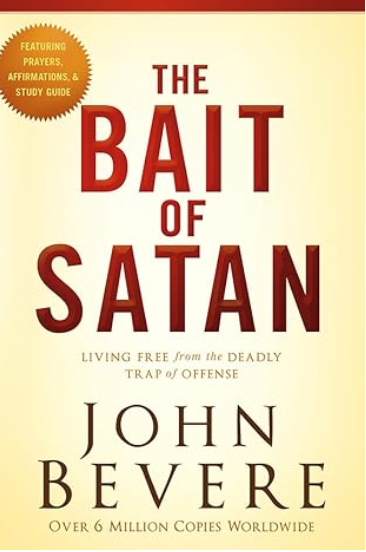
Order John Bevere’s Best-Selling Book, “The Bait of Satan” on Amazon.com!

Why the Enemy Isn’t Threatened by Religious Activity

The Beveres repeatedly returned to one theme: the enemy is not intimidated by religious routine.

Faith is what threatens the kingdom of darkness.

Lisa Bevere pointed to 1 John 3:8, which says Jesus was manifested “to destroy the works of the evil one.”

Faith connects believers to that mission.

“Faith in Him, not faith in self, not faith in speaking things multiple times and manifesting,” Lisa Bevere said.

The couple warned against confusing biblical faith with modern manifestation teachings. While both emphasize speaking, John Bevere said the source is entirely different.

“Manifesting say, ‘Hey, whatever you want, speak it,'” he said. “But I’m looking at Jesus and says, ‘I don’t say anything unless I hear my Father saying it.'”

Biblical faith, they argued, is not about creating a preferred future through repetition. It is about agreeing with God and acting on what He has spoken.

The People Who Refused to Stay Quiet

Some of the most powerful examples of faith in Scripture came from people who refused to let obstacles silence them.

Blind Bartimaeus continued shouting for Jesus even as the crowd told him to be quiet.

The woman with the issue of blood pushed through social barriers and public shame to reach Him.

The Syrophoenician woman refused to leave after being ignored and challenged.

Each received the same response.

“Your faith has made you well.”

Lisa Bevere said the lesson remains relevant today.

“We have a world telling you to be quiet. We have a world telling you faith doesn’t work. We have a world saying, ‘Do it in your own strength. Be your own God,'” she said.

“But he didn’t argue with the people. He continued to cry out to Jesus because he knew Jesus was the answer.”

The Difference Between Stuck and Flourishing

Every believer has been given a measure of faith, but that faith must be cultivated through God’s Word and exercised through obedience.

The issue is not whether God is willing to work.

The issue is whether believers will trust Him enough to act on what He says.

“Faith comes by reading the word of God,” Lisa Bevere said. “You’re not going to get faith by even—I mean, we want to stir you, but we want to stir you to get into the word of God and to listen to what the Spirit of God is highlighting.”

Two Christians may sit in the same church and hear the same message.

One leaves encouraged.

The other leaves transformed.

The difference is faith—faith that hears God’s voice, believes His promises and refuses to stay silent when everything else says to give up.

James Lasher, a seasoned writer and editor at Charisma Media, combines faith and storytelling with a journalism background from Otterbein University and ministry experience in Guatemala and at the LA Dream Center. A Marine Corps and Air Force veteran, he is the author of The Revelation of Jesus: A Common Man’s Commentary and a contributor to Charisma magazine. For interviews and media inquiries, please contact [email protected].


10 Hidden Gems in Naaman’s Healing: Kelly K Unpacks the Deeper Lessons of 2 Kings 5

The story of Naaman’s healing in 2 Kings 5 is one of the most familiar miracles in Scripture. A powerful military commander afflicted with leprosy follows the prophet Elisha’s instructions, dips seven times in the Jordan River and emerges completely healed.

But Kelly K says the chapter contains far more than a healing story.

In a recent teaching, Kelly highlighted 10 often-overlooked truths woven throughout the account, arguing that the chapter exposes the dangers of pride, the power of humility and the surprising ways God works through ordinary people and unexpected circumstances.

Here are the 10 hidden gems he found in the story.

1. Naaman’s Real Problem Wasn’t Leprosy

Kelly began by challenging the common assumption that Naaman’s greatest issue was his disease.

“Naaman’s problem wasn’t leprosy. It was success.”

He pointed to the opening verses, which reveal that Naaman was already a victorious commander whom God had used to secure military victories for Aram.

“So many people assume success equals God’s approval,” Kelly said. “Naaman was successful, powerful. He was wealthy, even well-respected, and still dying.”

According to Kelly, failure often drives people to seek God, but success can convince them they don’t need Him.

“The greatest crisis in a person’s life isn’t failure. It’s succeeding while sick.”

2. The Smallest Person Saw the Situation Most Clearly

The breakthrough in Naaman’s story began with a servant girl taken captive from Israel.

Kelly noted that while kings, generals and military leaders had no answers, the young servant immediately knew where healing could be found.

“Everyone with power was confused, and the powerless servant knew exactly what to do.”

He said the contrast reveals an important spiritual principle.

“God will often hide revelation in places that pride refuses to look.”

The servant girl possessed no influence, but she carried insight that changed the course of the entire story.

“Naaman had armies. The little girl had insight. Now, you tell me which is more valuable.”

3. Naaman Arrived Carrying What He Didn’t Need

When Naaman traveled to Israel, he brought silver, gold, clothing and official letters.

Kelly said those items revealed his misunderstanding of how God works.

“Naaman packed for a transaction. God was preparing for a transformation.”

The commander assumed healing would come through payment or negotiation.

“Naaman showed up thinking, ‘Name the price.’ And Elisha responds with, ‘There isn’t one.'”

Kelly said the miracle forced Naaman to confront a truth that still challenges people today.

“The miracle begins when Naaman starts to understand you can’t buy what you need most.”

4. The Servant Girl Had More Faith Than the King

One of the most striking contrasts in the chapter appears when Israel’s king receives Naaman’s request.

Rather than responding with confidence, the king panics.

“A pagan servant girl says, ‘God can handle this.’ But the king of God’s people says, ‘Am I God?'”

Kelly said the moment demonstrates that position and faith are not the same thing.

“Position and faith are not the same thing. Title and trust are not the same thing.”

He added that spiritual expectancy is often found in unexpected places.

“Sometimes, it’s the newest believer in the room who expects more from God than people in the pews the last 30 years.”

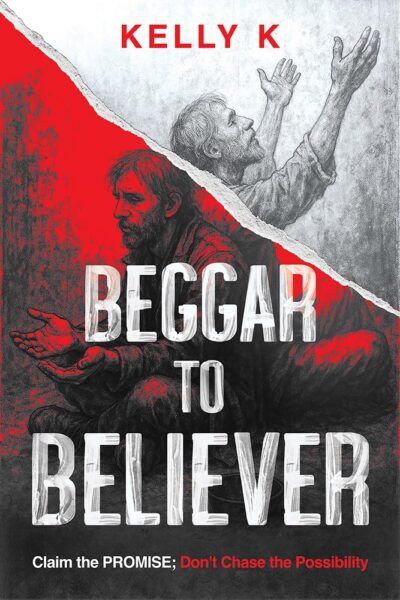
Order Kelly K’s New Book, “Beggar to Believer” on Amazon.com!

5. Naaman Wanted a Spectacle, but God Required Humility

Naaman expected Elisha to personally appear, call down power from heaven and perform a dramatic miracle.

Instead, Elisha sent a messenger with simple instructions.

Kelly said the command offended Naaman because it contradicted his expectations.

“He literally says, ‘I thought he would certainly come out to meet me.'”

Those words reveal a common spiritual obstacle.

“The single greatest obstacle to hearing God is often our pre-written script for how God is supposed to act.”

Kelly said Naaman was not upset because God failed to respond.

“Naaman wasn’t angry because God was silent. He was angry because God didn’t follow his script.”

6. The Miracle Was Hidden in What Naaman Despised

Naaman objected to washing in the Jordan River because he viewed the rivers of Damascus as superior.

Kelly argued that the issue wasn’t really water quality.

“He’s talking about identity.”

The Jordan represented Israel, the very thing Naaman’s pride resisted.

“Naaman’s healing was hidden inside the very thing his pride despised.”

Kelly noted that Scripture repeatedly shows God placing solutions in overlooked places.

“Miracle wasn’t hidden in what he admired, it was hidden in what he dismissed.”

7. Don’t Stop on Six

Kelly called this one of the most powerful lessons in the entire chapter.

Although Naaman dipped seven times, Scripture never says his healing came gradually.

“The text never says he got a little better each dip. It simply says, ‘After the seventh, he was restored.'”

Kelly encouraged viewers to imagine the frustration of climbing out of the river after six unsuccessful attempts.

“Can you even imagine what dip number six must have felt like? Leprosy still there, still waiting, still wondering, still looking foolish to everybody else.”

The lesson, he said, is one of perseverance.

“The breakthrough normally shows up after a long season of nothing happening.”

Then came the statement that anchored the entire point.

“Do not stop on six.”

Kelly added that what appears to be failure may actually be progress.

“The first six dips look like failure. The seventh just revealed they were all progress.”

8. Naaman Didn’t Just Get Healed—He Was Restored

After the seventh dip, Naaman’s skin became like that of a young child.

Kelly said the miracle went far beyond the removal of disease.

“Naaman didn’t just get healed. He got restored.”

The imagery points toward something deeper than physical healing.

“Leprosy had made him old. Healing made him young.”

Kelly connected the transformation to the broader biblical theme of becoming like a child before God.

“A miracle wasn’t just cleansing. It was a picture of being born again.”

9. The Real Leprosy Changed Owners

By the end of the chapter, Naaman was healed, but Elisha’s servant Gehazi became afflicted with leprosy after acting out of greed.

Kelly described the conclusion as a dramatic reversal.

“At the start of the story, Naaman had leprosy. At the end, however, Gehazi has leprosy.”

The contrast highlights the difference between humility and selfish ambition.

“One man lost it through humility and another receives it through greed.”

Kelly said the chapter repeatedly overturns expectations.

“Naaman starts dirty and becomes clean. Gehazi starts clean and becomes dirty.”

10. The Story Begins and Ends With Servants

Kelly observed that the chapter is framed by two servants who take radically different paths.

The servant girl directs someone toward healing. Gehazi directs himself toward judgment.

“Same position, different heart.”

The contrast serves as the final challenge of the chapter.

“One serves selflessly. One serves selfishly. One becomes part of a miracle and one becomes the warning.”

Kelly said the Holy Spirit intentionally structured the story this way.

“The Holy Spirit bookends this entire story with two servants and then asks, ‘Which one is you?'”

A Final Thought

Kelly closed with an additional observation that ties the entire chapter together.

“Naaman’s healing was waiting in Israel the entire time.”

The prophet was already there. The Jordan River was already there. The power of God was already there.

“The only thing that had to move was Naaman.”

Taken together, the lessons of 2 Kings 5 reveal a consistent pattern. God opposes pride but responds to humility. He hides answers in places people overlook. He works through unlikely individuals. He calls people to obedience before they see results.

Most importantly, the story reminds believers not to quit before the seventh dip. What appears to be a season of silence may actually be preparation for a breakthrough that is closer than it seems.

James Lasher, a seasoned writer and editor at Charisma Media, combines faith and storytelling with a journalism background from Otterbein University and ministry experience in Guatemala and at the LA Dream Center. A Marine Corps and Air Force veteran, he is the author of The Revelation of Jesus: A Common Man’s Commentary and a contributor to Charisma magazine. For interviews and media inquiries, please contact [email protected].



FIFA World Cup: Why the U.S. Men’s National Team’s Prayer Is Capturing Global Attention

The U.S. Men’s National Team earned a convincing 4-1 FIFA World Cup victory over Paraguay, but it was a postgame prayer led by Christian athletes on the field that is drawing attention far beyond the scoreboard.

Moments after the World Cup win at SoFi Stadium, players gathered in a circle, placed their arms around one another and bowed their heads in prayer, as reported by Breitbart. Defender Mark McKenzie led the moment as more than 70,000 fans celebrated around them.


The scene quickly spread across social media and sparked conversations about Christian faith, prayer and the role of Jesus Christ on one of the world’s biggest sporting stages.

The FIFA World Cup is the most-watched sporting event on the planet. Billions of viewers follow World Cup matches across television, streaming platforms and social media. Every match creates opportunities for athletes to influence audiences that stretch far beyond their home countries.

That reality makes the U.S. Men’s National Team’s public prayer noteworthy.

The players could have spent the moment celebrating themselves after a major World Cup victory. Instead, they publicly acknowledged God before a global audience.

The response resonated with many fans online.

“May the testimony of Jesus Christ and His Gospel run throughout the entire world because of FIFA!” one social media user wrote.

Another added, “This is what I want to see. Seeking God and giving thanks to him.”

Order Abby Trivett’s New Book, “The Power of Suddenly” on Amazon.com!

The reaction highlights the growing visibility of Christian athletes in professional sports. From the NFL and Major League Baseball to international soccer, more athletes are openly discussing their Christian faith and relationship with Jesus Christ.

McKenzie has been one of the most outspoken Christians on the U.S. Men’s National Team. According to Premier Christianity, he frequently shares his faith and carries a Bible with him.

“God is my everything,” McKenzie said. “He is the one I depend on for everything. He is the one who knows, knew all, yet still gives his all for me and requires so little.”

McKenzie is joined by several other Christian athletes on the U.S. roster, including Chris Richards, Weston McKennie, Matt Freese and Christian Pulisic.

As representatives of the United States on one of the largest stages in the world, the players sent a message that reached far beyond the boundaries of sport. In a tournament watched by billions across nations, languages and cultures, members of the U.S. Men’s National Team chose to publicly give glory to God following one of the biggest victories of their careers.

The FIFA World Cup places athletes before a global audience that few people will ever experience. In that moment, America’s soccer team demonstrated that achievement and gratitude are not mutually exclusive. Their postgame prayer served as a visible reminder that even amid international competition, national pride and personal success, honor belongs first to God. As the eyes of the world watched, the representatives of the United States set a standard that transcended soccer by publicly acknowledging the One who made every opportunity possible.

James Lasher, a seasoned writer and editor at Charisma Media, combines faith and storytelling with a journalism background from Otterbein University and ministry experience in Guatemala and at the LA Dream Center. A Marine Corps and Air Force veteran, he is the author of The Revelation of Jesus: A Common Man’s Commentary and a contributor to Charisma magazine. For interviews and media inquiries, please contact [email protected].



What the World Needs to Know About Steven Spielberg’s ‘Disclosure Day,’ Fallen Angels and the Coming Strong Delusion

Steven Spielberg’s new film Disclosure Day opened at No. 1 at the box office, earning approximately $44 million domestically and nearly $93 million worldwide during its opening weekend.

The film centers on the release of hidden information regarding UFOs, extraterrestrials and decades of government secrecy. During promotion for the film, Spielberg framed the discussion in explicitly spiritual terms.

“What does this do to the fundamental beliefs that many of us have?” Spielberg asked.

He followed with another question.

“Is God our God only on this planet? Or is God a God for every system where there’s civilization, intelligent life, and even developing life?”

Those questions strike at the heart of a battle that began long before modern discussions of UFOs and disclosure.

The Bible reveals that the struggle over truth, authority, worship and the destiny of humanity began in Eden and continues today.

The Seed War Begins in Genesis

The foundation for understanding the modern disclosure movement begins in Genesis 3.

After Adam and Eve fell into sin, God pronounced judgment upon the serpent and declared:

“I will put enmity between you and the woman, and between your seed and her Seed; He shall bruise your head, and you shall bruise His heel” (Gen. 3:15).

This passage contains the first prophecy of Jesus Christ and establishes what is often called the Seed War. Throughout Scripture, Satan attempts to corrupt God’s creation, destroy God’s covenant people and prevent the arrival of the promised Messiah.

The battle unfolds throughout the Old Testament and reaches its fulfillment in Jesus Christ’s victory at the cross (Col. 2:15).

The conflict does not end there. Scripture reveals that Satan continues to wage war against God’s purposes until his final judgment (Rev. 12:17; Rev. 20:10).

Order L.A. Marzulli’s Best-Selling Book, “The Rungs of Disclosure” on Amazon.com!

Genesis 6 and the Corruption of Humanity

One of the most controversial passages in Scripture appears in Genesis 6.

“There were giants on the earth in those days, and also afterward, when the sons of God came in to the daughters of men and they bore children to them. These were the mighty men who were of old, men of renown” (Gen. 6:4).

The New Testament provides additional insight into this event.

Jude describes angels “who did not keep within their own domain, but abandoned their proper dwelling” and were subsequently bound in chains awaiting judgment (Jude 6).

Peter refers to the same rebellion when he writes that God “did not spare the angels who sinned, but cast them down to hell and delivered them into chains of darkness” (2 Peter 2:4).

Both Jude and Peter connect this angelic rebellion to the days of Noah (Jude 6-7; 2 Peter 2:4-5).

These passages reveal a supernatural corruption of humanity before the Flood. The fallen angels described by Jude and Peter correspond to the rebellion recorded in Genesis 6.

While the book of Enoch is not part of the biblical canon, Jude’s citation of Enoch (Jude 14-15) demonstrates that portions of its historical account reflected realities known to the early church. Jude and Peter affirm that a specific group of angels rebelled, crossed a boundary established by God and now remain imprisoned awaiting final judgment.

Let us not forget the words of Jesus either. He warns us in Matthew 24:37:

As were the days of Noah, so will be the coming of the Son of Man.

Why specifically does the Messiah warn us about the Days of Noah? What was the source of the violence, rebellion, pride, immorality and warfare against the ways of God?

The short answer: The fallen angels and their offspring, the Nephilim. This is not a conspiracy theory or fiction; it is the Word of God warning us about the coming Great Deception that is known in our day and age as ‘full disclosure.’

The Giants Continue After the Flood

Genesis 6 states that giants existed “in those days, and also afterward” (Gen. 6:4).

The Old Testament repeatedly records encounters with giant clans.

When Israel entered Canaan, they encountered the Anakim, Rephaim and other giant peoples (Num. 13:33; Deut. 2:10-11; Deut. 3:11).

The most famous giant was Goliath of Gath (1 Sam. 17:4).

After David killed Goliath, the conflict continued.

Scripture records additional battles against giants, including four descendants connected to Gath who were ultimately killed by David’s mighty men (2 Sam. 21:15-22).

These encounters form part of the larger biblical narrative of spiritual warfare that stretches from Genesis to Revelation.

Disclosure and the Counterfeit End-Times Narrative

The modern disclosure movement presents a comprehensive explanation for humanity’s origins, spiritual experiences and future destiny.

It promotes advanced non-human intelligences, hidden knowledge, cosmic evolution and consciousness ascension.

The narrative offers an alternative spiritual roadmap for humanity.

This message now permeates movies, television, streaming content, documentaries, books, podcasts, social media and government discussions surrounding unidentified aerial phenomena.

The cultural shift is not random.

It is preparing people to interpret supernatural events through an extraterrestrial framework.

The disclosure narrative provides explanations for miracles, angels, divine encounters, creation and the future that redirect attention away from biblical revelation.

The result is predictive programming for the end times.

A generation is being trained to expect supernatural intervention from advanced beings rather than from the God of Scripture.

The strategy mirrors Satan’s activity throughout the Bible. In Eden, he questioned God’s Word (Gen. 3:1). In the wilderness, he twisted Scripture while tempting Jesus (Matthew 4:1-11). In the last days, he continues presenting counterfeit versions of God’s truth.

The Strong Delusion

Paul warned that the rise of the Antichrist would be accompanied by unprecedented supernatural deception.

“The coming of the lawless one is according to the working of Satan with all power and signs and lying wonders” (2 Thess. 2:9).

Paul continued by warning that those who reject the truth will embrace “the lie” during a period of strong delusion (2 Thess. 2:10-11).

The final deception will involve genuine supernatural manifestations empowered by Satan.

Jesus issued similar warnings.

“For false christs and false prophets will arise and show great signs and wonders, so as to deceive, if possible, even the elect” (Matt. 24:24).

The last days will be marked by extraordinary deception, supernatural signs and widespread spiritual confusion.

The promise of ascension, a new consciousness. To be like God. The same empty promises that Satan used to bring sin into the world at the Garden of Eden.

Scripture repeatedly calls us to vigilance, discernment and faithfulness.

Put On the Whole Armor of God

Because the battle is spiritual, believers must be spiritually equipped.

Paul instructed Christians to “put on the whole armor of God” in order to stand against the schemes of the devil (Eph. 6:11).

He further explained that “we do not wrestle against flesh and blood, but against principalities, against powers, against the rulers of the darkness of this world, against spiritual forces of evil in the heavenly places” (Eph. 6:12).

Our response to deception is not fear. It is discernment grounded in Scripture, prayer, faith and obedience to Jesus Christ.

The Prophetic Clock Is Accelerating

The prophetic signs Jesus described continue appearing across the world.

Israel stands at the center of global events exactly as foretold by the prophets (Zech. 12:2-3).

Renewed attention to the red heifer and preparations for Temple service has intensified interest in biblical prophecy (Num. 19; Ezek. 40-48).

Wars and rumors of wars continue across multiple regions (Matt. 24:6).

Earthquakes occur with increasing frequency around the globe (Matt. 24:7).

Spiritual deception continues expanding throughout society (Matt. 24:11).

Paul’s warning about people departing from the faith unfolds before our eyes (1 Tim. 4:1).

The prophetic picture revealed in Scripture is coming into sharper focus with each passing day.

The discussion surrounding disclosure ultimately leads back to the same questions humanity has faced since Eden.

Who created mankind? Who defines truth? Who deserves worship? Who determines humanity’s future?

Scripture provides clear answers to each question.

Jesus Christ is the Creator (John 1:1-3; Col. 1:16).

Jesus Christ is the Truth (John 14:6).

Jesus Christ is the King who will return to rule and reign (Rev. 19:11-16).

As fascination with disclosure continues growing, believers are called to remain anchored in God’s Word, discerning the times and looking toward the blessed hope of Christ’s return (Titus 2:13).

“For you yourselves know perfectly that the day of the Lord comes as a thief in the night” (1 Thess. 5:2).

James Lasher, a seasoned writer and editor at Charisma Media, combines faith and storytelling with a journalism background from Otterbein University and ministry experience in Guatemala and at the LA Dream Center. A Marine Corps and Air Force veteran, he is the author of The Revelation of Jesus: A Common Man’s Commentary and a contributor to Charisma magazine. For interviews and media inquiries, please contact [email protected].


Josh Howerton Calls James Talarico’s Claim About Jesus ‘Heresy’

Pastor Josh Howerton says one of the biggest theological battles today is not coming from outside the church, but from public figures who use biblical language while redefining what Scripture teaches.

In a recent video, the pastor of Lakepointe Church responded to comments from Texas state Rep. James Talarico, who said Jesus never asked people to worship Him.

Howerton rejected the claim and pointed to the book of Revelation, where Christ receives worship and is presented as the object of worship throughout eternity.

“This is not me being mean or exaggerating. He’s an actual heretic,” Howerton said. “Like a biblically defined false teacher and heretic.”

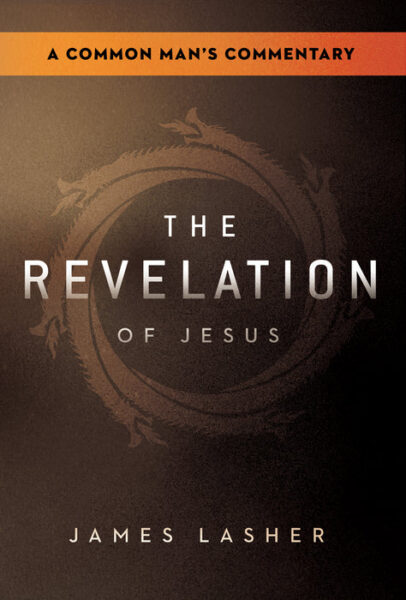
Order James Lasher’s New Book, “The Revelation of Jesus” on Amazon.com!

Howerton said Talarico’s statement ignores passages in Revelation that depict Jesus, the Lamb of God, seated on the throne as countless believers bow before Him in worship.

The pastor said many people embrace an incomplete picture of Jesus that focuses on His earthly ministry while overlooking what Scripture says about His future reign. Revelation presents Christ as King of Kings and Lord of Lords who will rule His kingdom and judge the nations.

Howerton also criticized what he sees as a growing trend of politicians using Scripture to persuade Christians while promoting ideas that conflict with biblical teaching.

“This is the first guy I’ve ever seen whose, really his whole platform is using the Bible to convince Christians to support godless things,” he said.

The exchange highlights a broader issue facing believers: biblical literacy.

Howerton urged Christians to read the entirety of Scripture rather than relying on social media clips, political messaging or popular sound bites. He said a strong understanding of the Bible helps believers recognize false teaching and remain grounded in the truth of God’s Word.

As debates over faith continue in the public square, Howerton said Christians must test every claim against Scripture and remain anchored to the full biblical picture of Jesus Christ.

James Lasher, a seasoned writer and editor at Charisma Media, combines faith and storytelling with a journalism background from Otterbein University and ministry experience in Guatemala and at the LA Dream Center. A Marine Corps and Air Force veteran, he is the author of The Revelation of Jesus: A Common Man’s Commentary and a contributor to Charisma magazine. For interviews and media inquiries, please contact [email protected].


Rich Wilkerson Jr: Why Jesus Could Kneel When Others Wouldn’t

Most of us know the story of Jesus washing His disciples’ feet.

The lesson is usually framed around humility. Jesus, the Son of God, took the position of a servant and instructed His followers to do the same.

Rich Wilkerson Jr. recently pointed to something deeper in John 13. Before Jesus ever picked up the towel, Scripture records that He knew exactly who He was.

“Jesus knew that the Father had put all things under His power and that He had come from God and was returning to God,” John writes.

That detail sits at the center of the story.

Jesus did not move toward the lowest place in the room because He was unsure of Himself. He moved toward it because His identity was completely settled.

“You don’t serve because you’re weak,” Wilkerson said. “You serve because you’re meek. Meekness is bridled strength. It’s strength under control.”

The foot washing was not an act of weakness. It was an act of confidence.

Many of us spend years trying to become significant through service. We serve faithfully, sacrifice generously and pour ourselves into others, yet we often hope those efforts will answer questions about our value and purpose. Jesus served from the opposite direction. His identity was already secure before He ever reached for the towel.

That distinction changes the entire story.

Security Makes Humility Possible

The modern world often treats humility as thinking less of ourselves. The biblical picture is different.

Jesus knew the Father had placed all things under His authority. He knew where He came from. He knew where He was going. Because His identity was secure, He had nothing to prove and no status to protect.

“He knew who he was,” Wilkerson said. “He knew that God had put all power underneath Him. So what did He do? He stripped His garment. He got down low and He started washing disciples’ feet.”

Security produced humility.

The opposite is often true in our own lives. Insecurity can produce self-protection, comparison and a constant need for recognition. When we are unsure of who we are, we spend enormous amounts of energy trying to convince ourselves and others that we matter.

The more secure we become in Christ, the less energy we spend defending our reputation, protecting our position or demanding appreciation from those around us.

Jesus demonstrated that principle in dramatic fashion.

The disciples gathered around that table were not a collection of perfect followers. Peter would deny Him. Thomas would doubt Him. Judas would betray Him.

Yet Jesus washed every set of feet.

“He washed Peter’s feet, future denier. He washed Thomas’ feet, future doubter. He washes Judas’ feet, active betrayer,” Wilkerson said.

The condition of the disciples did not determine Christ’s willingness to serve. His identity did.

“Security always produces humility,” Wilkerson said.

That truth speaks directly to many of the disappointments we experience in ministry and in life. People fail us. Relationships fracture. Expectations go unmet. Yet Jesus shows us that our willingness to love and serve cannot be built upon the behavior of others. It must be rooted in who we are in Him.

Order Abby Trivett’s New Book, “The Power of Suddenly” on Amazon.com!

Why So Many of Us Feel Exhausted

John 13 also reveals a struggle many believers still face today.

When Jesus approached Peter, Peter resisted. The disciple who was willing to follow Jesus struggled to receive from Him.

That tension remains common throughout the church.

Many of us know how to volunteer, lead, organize, give and carry responsibility. We know how to pour ourselves out for others. We know how to stay busy. What we often struggle to do is receive from Christ.

Wilkerson challenged the common understanding of burnout.

“Burnout is not about working too hard,” he said. “Burnout is an inability to let Jesus serve you.”

The statement cuts against much of modern church culture. Activity is often celebrated while intimacy is neglected. Productivity becomes the measure of spiritual health while time spent receiving from God slowly disappears from our schedules.

Yet Jesus washed the disciples’ feet before He told them to wash one another’s.

The order matters.

“You can’t give what you don’t have,” Wilkerson said.

The Christian life was never designed to run on borrowed strength. Ministry flows best when we regularly return to the feet of Jesus and allow Him to refresh what daily life, leadership and responsibility have worn down.

Obey Now, Understand Later

At the center of the passage is a statement that applies far beyond the foot washing itself.

“You do not realize now what I am doing, but later you will understand.”

Wilkerson described those words as the pattern of the Christian life.

“Obey now, understand later. Trust now, clarity later.”

Most of us would prefer the reverse. We want answers before obedience and explanations before surrender. We want certainty before taking a step forward.

Scripture repeatedly presents a different path.

The disciples would not fully understand the basin and towel until they saw the cross. They would not fully understand the cross until they saw the empty tomb. What appeared confusing in the moment became clear only after they walked through it.

The same pattern still unfolds in our lives today. Many of God’s purposes become visible only after seasons of obedience, sacrifice and trust. We often discover what God was doing only after we have followed Him through uncertainty.

The story of John 13 ultimately asks us a question deeper than whether we are willing to serve.

It asks whether we are secure enough in Christ to serve without needing anything in return.

Jesus could wash Judas’ feet because He already knew who He was.

The closer we come to that same confidence, the more freely we can love, serve and endure whatever sits across the table from us.

James Lasher, a seasoned writer and editor at Charisma Media, combines faith and storytelling with a journalism background from Otterbein University and ministry experience in Guatemala and at the LA Dream Center. A Marine Corps and Air Force veteran, he is the author of The Revelation of Jesus: A Common Man’s Commentary and a contributor to Charisma magazine. For interviews and media inquiries, please contact [email protected].


Alex Seeley: Has the Church Settled for Secondhand Christianity?

The courtroom is full.

For 2,000 years, humanity has wrestled with the same question. Was Jesus of Nazareth who He claimed to be?

Was He the Son of God? Was He the Savior of the world? Did He truly have power over sin, sickness, demons and death? Or was He simply another religious teacher whose followers built a movement around His memory?

According to Alex Seeley, that question is still being asked every day.

Preaching a Pentecost message at The Belonging Co, Seeley pointed to Acts 1:8 and challenged believers to reconsider what Jesus meant when He told His followers they would become His witnesses.

“This particular word witness is the language of a courtroom,” Seeley said. “It’s a witness that testifies in court so that you can bring evidence for or against the person on trial.”

Jesus made extraordinary claims during His ministry. He declared Himself the way, the truth and the life. He claimed authority to forgive sins. He healed the sick, delivered the oppressed and promised abundant life to those who followed Him.

Those claims remain before the world today.

“The world has got Jesus on trial going, ‘Do we really believe he is the son of the living God? Do we really believe he is the Christ? Is he an impostor? Is he a prophet? Is he just some crazy person who claimed to be God?’” Seeley said.

If Jesus is on trial, witnesses are needed.

“Hearsay evidence means that I heard it from a friend of a friend,” Seeley said. “It’s a rumor. It’s somebody who told me their version of the story, but I never saw it with my own eyes and it never happened to me.”

“Hearsay evidence gets thrown out of a court of law because the person was never there.”

Then she turned that thought toward the church.

“Unfortunately, I think we’ve got a lot of hearsay Christians.”

Order Kelly K’s New Book, “Beggar to Believer” on Amazon.com!

Seeley described believers who know stories about revival, healing and transformation but rarely step into those stories themselves. They know what happened through someone else’s ministry, in another church, in another city or another generation.

“Did you hear about that revival that’s happening in Africa? Did you hear about that person that got healed? Did you hear about that person that got delivered?” she asked. “Or did you see it? Did it come under your hand? Was it because of what you said and did?”

Jesus never called His followers to become spectators.

He called them to become witnesses.

The disciples already knew the teachings of Jesus. They had watched miracles. They had heard Him preach. They had spent years at His side.

Yet before they preached a sermon, planted a church or evangelized a city, Jesus told them to wait.

“Do not even evangelize until you’ve been clothed with power from on high,” Seeley said.

Knowledge was not enough. Information was not enough. The disciples needed power.

“I think this is where the church has become impotent and asleep is because we do everything in our strength without his power,” Seeley said.

“We are talking about the very spirit of God that gives you the empowerment to live righteously and live like Christ.”

That power should produce evidence.

Not merely words. Not merely beliefs.

Evidence.

“Can Jesus provide evidence that convicts him of being who he says he is and for doing the things he says he can do through your life?” she asked. “Are you the evidence?”

The challenge was personal.

“I am a walking testimony,” Seeley said. “I am evidence that Jesus is real.”

She described herself as someone whose life should have ended very differently before Christ intervened. The transformation she has experienced is not theory to her. It is testimony.

The same was true of the early church.

“The evidence was all around. The witnesses were all around,” Seeley said. “This is what happens when you get immersed by the power of God. You get set free. You get delivered, your life changes, and it’s never the same again.”

That transformation, she said, is what caused people to take notice. Lives changed. Families changed. Communities changed. People saw evidence that something had happened.

Seeley returned to the question that had echoed throughout the sermon.

“Do you want to be evidence today?” she asked. “In your neighborhood, in your workplace, in your family, are you the evidence?”

Pentecost was never simply about remembering what happened in an upper room long ago. It was about receiving the same power that turned ordinary believers into witnesses and transformed lives into evidence that Jesus is alive.

James Lasher, a seasoned writer and editor at Charisma Media, combines faith and storytelling with a journalism background from Otterbein University and ministry experience in Guatemala and at the LA Dream Center. A Marine Corps and Air Force veteran, he is the author of The Revelation of Jesus: A Common Man’s Commentary and a contributor to Charisma magazine. For interviews and media inquiries, please contact [email protected].


Jack Hibbs Shares How 1 Scripture Shattered His Beliefs About the Rapture

For years, Pastor Jack Hibbs carried a theological burden he believed was a badge of honor.

The journey began long before the pulpit, long before the conferences and Bible prophecy teachings that would make him known to Christians around the world.

It began on a Monday night in June 1977.

Hibbs walked into a church for the first time in his life. He had never attended church. His family did not attend church. He had never even been to a funeral held in a church building.

That night, at Calvary Chapel Costa Mesa, a young evangelist named Greg Laurie preached from Revelation 20.

Hibbs never forgot it.

“I gave my heart to Christ that night,” he said.

The world he had known quickly faded behind him. Old friendships disappeared. New passions took their place.

“I wanted the Bible. I mean, I just blew up for the Bible.”

Like a traveler discovering an ancient map, he immersed himself in Scripture. He sat under the teaching of Chuck Smith. He listened to Bible prophecy studies. He devoured books from respected Bible scholars. The prophetic promises of Scripture seemed clear and compelling.

Then another voice entered the conversation.

Christian musician Keith Green had become one of the most influential voices of the era. As Green increasingly embraced a post-tribulation view of the rapture, Hibbs found himself drawn in.

The argument struck something deep inside him.

“I remember Keith Green saying, ‘Look, if you hold to a pre-rapture view, you’re probably not willing to die for Jesus.’”

The words landed hard.

“I was so hurt by that. I’m willing to die for Jesus.”

Slowly, almost imperceptibly, Hibbs began changing his mind.

What had once seemed obvious became clouded.

What had once brought peace became a struggle.

“A real masculine view of Bible prophecy is embracing a post-tribulational view of the rapture,” he came to believe.

Order James Lasher’s New Book, “The Revelation of Jesus” on Amazon.com!

For nearly three years, he held that position.

Looking back, Hibbs describes those years as carrying a weight he was never meant to bear.

“I wound up struggling with the Scripture rather than having peace about it.”

Passages that once fit together naturally now required explanations. Distinctions between Israel, the church and tribulation believers became increasingly difficult to maintain.

“I began to have to bend the word to hold to a post-tribulational view.”

Yet he pressed on.

After all, he believed suffering was the higher path. Endurance was the stronger path. Readiness for martyrdom was the stronger path.

“After all, you got to be a man. You got to suck it up. You got to be willing to die at any moment to get your head cut off.”

Then, quietly, something changed.

Not through a conference. Not through a debate. Not through a bestselling book.

Through Bible reading.

“I came to this: ‘Let not your heart be troubled. You believe in God, believe also in Me. For in My Father’s house are many mansions.’”

The words of John 14 stopped him in his tracks.

As he read Christ’s promise to prepare a place for His followers and return to receive them, a question emerged that would not go away.

“How do I get there?”

The question haunted him.

If believers meet Christ only at His visible return to Earth and immediately descend with Him into the kingdom, when do they enter the Father’s house Christ promised?

“Jesus was just getting ready to leave the disciples after His resurrection. He would be leaving and going back to heaven.”

Then came the promise.

“‘I go now to prepare a place for you.’ That’s not here. That’s up there.”

The more he read, the more the passage challenged everything he had built.

“John 14 was Jesus’s announcement about the rapture.”

The realization shook him.

“And it completely shook me to the core.”

Hibbs responded by doing something radical.

He walked away from the voices.

The teachers. The conferences. The commentaries. The newsletters.

“Everything out. Everything away from me. I’m going back to the Bible.”

Like a traveler abandoning every map except the one placed in his hands by the King Himself, Hibbs returned to Scripture.

When he did, the pieces began fitting together again.

He returned to the pre-tribulation view he had once abandoned, but this time with a deeper conviction forged through struggle.

“There was this radical, wonderful, liberating epiphany, revelation of peace, joy, excitement, urgency.”

Yet the greatest lesson was not merely about prophecy.

It was about authority.

The journey became a reminder that every belief must ultimately bow before God’s Word.

“I came back with a vengeance in the sense of the Word of God is going to be my truth.”

Today, his testimony remains less a story about changing prophetic camps and more a story about returning to the source.

The destination was important.

The journey mattered.

But the lesson that remained was simple.

“I’m going to submit myself to this and repeat this till the day I die or till the day He returns for the church.”

James Lasher, a seasoned writer and editor at Charisma Media, combines faith and storytelling with a journalism background from Otterbein University and ministry experience in Guatemala and at the LA Dream Center. A Marine Corps and Air Force veteran, he is the author of The Revelation of Jesus: A Common Man’s Commentary and a contributor to Charisma magazine. For interviews and media inquiries, please contact [email protected].


Pastor Mark Pettus Reveals Why So Many Christians Feel Defeated Despite Christ’s Victory

Every believer faces battles. Some come through temptation. Others arrive through fear, anxiety, discouragement or seasons that seem determined to wear faith down.

Pastor Mark Pettus believes the key to navigating those battles begins with understanding one life-changing truth.

“We do not fight for victory,” Pettus said during a recent sermon at Church of the Highlands. “We fight from victory.”

That simple distinction formed the foundation of a message that challenged believers to stop viewing spiritual warfare as a struggle to earn victory and start seeing it as an opportunity to stand in what Christ has already accomplished.

The Victory of Christ Changes Every Battle

Pettus began by reminding listeners that spiritual warfare is a reality for every believer.

“We truly have an enemy,” he said.

Scripture describes Satan as a liar, accuser, adversary, tempter, destroyer and deceiver. Yet Pettus emphasized that believers never face those attacks alone.

“Our God is almighty,” Pettus said. “Satan is not almighty.”

That confidence comes from understanding what Jesus accomplished through His death and resurrection.

The pastor pointed to the reality that every spiritual battle is viewed through the lens of Christ’s finished work.

“Our God came to set us free from our sins, but our God came to give us victory in every area of our lives,” Pettus said.

Rather than living in fear of spiritual opposition, believers can live with confidence because Jesus has already secured the outcome.

“We now stand in that victory that was won for us on the cross of Calvary,” Pettus said.

The Cross Secured Everything Believers Need

At the center of Pettus’ message was a reminder of what happened at the cross.

“When you imagine Jesus on the cross, never imagine Him winning victory for Himself,” Pettus said. “Hey everybody, He did not need victory. He already had the victory.”

The cross was Christ’s victory won on behalf of His people.

“What did He do on the cross?” Pettus continued. “He won victory for all of us.”

Because of that victory, believers can walk in freedom, forgiveness, peace and confidence. They do not have to live defined by their past mistakes or failures.

Pettus addressed the accusations and shame many Christians carry long after Christ has forgiven them.

“If God has chosen not to remember your past, why are you?” he asked.

The gospel offers more than forgiveness. It provides a new identity rooted in Christ’s righteousness and secured by His grace.

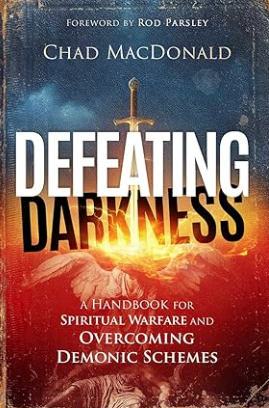
Order Chad MacDonald’s New Book, “Defeating Darkness” on Amazon.com!

God Has Given Believers Everything They Need to Stand

Much of the sermon focused on the armor of God in Ephesians 6.

Pettus explained that every piece of armor represents God’s provision for His people.

The belt of truth anchors believers in God’s Word.

The breastplate of righteousness protects the heart through Christ’s finished work.

The shoes of peace help believers stand firm during temptation and pressure.

The shield of faith extinguishes attacks from the enemy.

The helmet of salvation guards the mind.

The sword of the Spirit equips believers with the power of God’s Word.

“He will lie to you. He will lie about you,” Pettus said of the enemy.

Yet God has already provided everything necessary to stand strong.

“You have armor. Let’s don’t leave it on the table. Let’s not leave it on the shelf,” Pettus said.

For Pettus, spiritual warfare begins with daily dependence on God through Scripture, prayer and putting on the armor He has provided.

Standing Firm in Christ Releases His Victory in Our Lives

One of the strongest themes of the message came from Paul’s repeated instruction in Ephesians 6.

Stand.

Again and again, believers are called to stand firm.

Pettus said that command reveals the true nature of spiritual warfare.

“Spiritual warfare is standing firm not in our own victory, but in the victory of Christ,” he said.

The Christian life is not lived through personal strength. It is lived through dependence on Christ’s strength.

“We will never win spiritual warfare,” Pettus said. “Jesus won spiritual warfare.”

That truth frees believers from striving and empowers them to trust God in every circumstance.

Whether facing temptation, anxiety, uncertainty or opposition, believers can stand with confidence because Christ has already secured the victory.

Pettus concluded by reminding listeners that every piece of armor ultimately points to Jesus Himself.

He is our truth.

He is our righteousness.

He is our peace.

He is our salvation.

“We do not fight for victory. We fight from victory,” Pettus said.

Through every trial and every battle, believers can stand firm knowing Christ has already won. The call is simple: Put on the full armor of God, stand firm and walk forward in the power of what He has already done.

James Lasher, a seasoned writer and editor at Charisma Media, combines faith and storytelling with a journalism background from Otterbein University and ministry experience in Guatemala and at the LA Dream Center. A Marine Corps and Air Force veteran, he is the author of The Revelation of Jesus: A Common Man’s Commentary and a contributor to Charisma magazine. For interviews and media inquiries, please contact [email protected].