AI and the Bible: Is Technology Enhancing Faith or Replacing It?

Artificial intelligence has emerged as the newest frontier for both culture and the church, raising questions that many Christians never imagined they would need to confront.

As apps claim to let people “talk to Jesus” or “chat” with Scripture, theologians, pastors and everyday Christians are wrestling with what role, if any, machines should have in spiritual formation. The technological acceleration has created genuine excitement, yet also deep concern about deception, misplaced dependence, and the erosion of biblically rooted teaching.

As reported in a CBN News segment, AI-powered spiritual tools are increasingly being marketed as pathways to revelation. But CBN’s Billy Hallowell cautioned viewers that “you’re not speaking with Jesus. You’re not talking with the Bible. This is AI.” He warned that the impression of sacred interaction can be misleading, because the experience “isn’t prayerful, but it’s relying on technology.”

Raj Nair, also with CBN and a commentator on the segment, professed a deep affection for Scripture while sounding an alarm over the trend. “I adore this book,” he said. “I love to live in it.” For him, Scripture comes alive only when engaged spiritually. When people ask how to read the Bible, Nair said his answer is simple: “Ask the Holy Spirit to guide you, to reveal things, to show things.”

Nair pointed to biblical precedent, citing John 14:26, reminding Christians that “the Holy Spirit… will teach you all things and will remind you of everything I have said to you.” He affirmed that AI may be acceptable for basic factual questions such as “Who came first, Joseph or David?” or “What were the 12 tribes of Israel?”
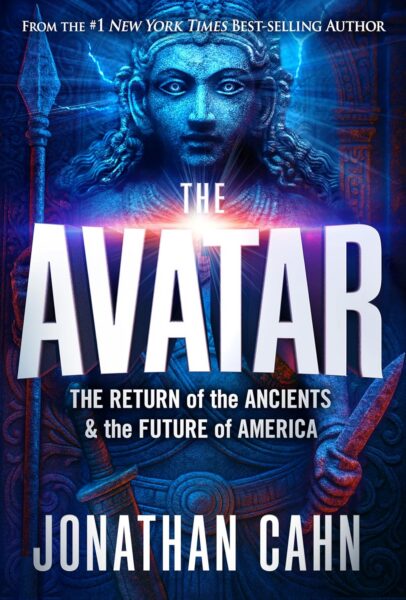
Order Jonathan Cahn’s Newest Book, “The Avatar” on Amazon.com!

However, he warned that it should not be used for spiritual revelation. “If you’re looking for a deeper meaning, a message from God, I’m really worried that this is not that,” he said.

The segment drew attention to a theological limitation no amount of code can solve. “The person without the spirit does not accept the things that come from the spirit of God,” Nair quoted from 1 Corinthians. He then added, “News flash, the AI, no matter how powerful it is, does not have the Spirit.”

Hallowell took the concern further, drawing parallels to practices Scripture condemns. Using AI to seek mystical knowledge, he warned, begins to feel “like divination or some sort of like, you know, people go to psychics, which they should never do.” He argued that these apps are “not Jesus, they are not the Bible,” and using them for spiritual advice “can be very dangerous.”

The pair also noted growing dependence among pastors themselves. Many leaders now turn to AI tools to craft sermons. Hallowell said it is one thing to request “outlines and ideas,” but another to deliver messages written by a machine. “Artificial intelligence is a machine,” he cautioned. “How much should we be relying on that?”

Nair underscored a sobering reality: intellectual knowledge of Scripture is not the same as spiritual understanding. “The enemy knows the Bible,” he said. “Demons and the enemy believe that there is a God.” What separates believers from deception, he argued, is Spirit-led submission.

The future of AI in spiritual contexts is still unfolding. Bible study apps and textual tools may remain helpful aids, but Nair offered a final warning that the church and society will need to heed as technology evolves. “Use the app if you want to … to intellectually understand Scripture,” he said. “But to have a relationship with God, that requires His Holy Spirit.”

As AI pushes into moral, cultural, and now theological territory, the church is not alone in facing these dilemmas. Governments, educators, ethicists, and institutions around the world are asking similar questions about how much trust humans should place in machines. For Christians, however, the stakes are uniquely spiritual, and the answer is timeless: technology may assist faith, but it must never replace it.

James Lasher, a seasoned writer and editor at Charisma Media, combines faith and storytelling with a background in journalism from Otterbein University and ministry experience in Guatemala and the LA Dream Center. A Marine Corps and Air Force veteran, he is the author of The Revelation of Jesus: A Common Man’s Commentary and a contributor to Charisma magazine.


UMC Pastor Announces Gender Change During Service

There is a spirit of deception sweeping through churches and culture, pulling millions away from God’s design and biblical truth. While society celebrates self-reinvention, Scripture warns that confusion over identity is not liberation but bondage. It is one more symptom of a world exchanging truth for lies.

A Methodist pastor in New York recently announced plans to transition into a woman during a Nov. 23 service, as reported by Fox News. Rev. Phillip Phaneuf of North Chili United Methodist Church publicly declared, “I am transitioning. I am affirming to all of you that I am transgender. The best way to put this is that I am not becoming a woman, I am giving up pretending to be a man.”

This claim directly contradicts what the Bible teaches about creation and identity. God declares in Genesis that He made humanity male and female. Identity is bestowed by the Creator, not self-constructed through feelings or medical intervention. When Phaneuf claims to be “giving up pretending to be a man,” it assumes that God erred in assigning biological sex. Scripture denies that possibility. Psalm 139 says people are “fearfully and wonderfully made,” a truth ignored in the pastor’s announcement.

Phaneuf also claimed to be asexual, saying, “I am in the category of what they call asexual. I have been that way since we have all been together, in that I am not living my life in a way that involves looking for romance.”

Order Jonathan Cahn’s Newest Book, “The Avatar” on Amazon.com!

The pastor told Fox News Digital that the congregation has been “overwhelmingly affirming” and that the bishop and church leadership fully support the transition. This exposes how deeply mainline Protestantism has surrendered biblical authority. Instead of calling people to repentance, leaders now bless rebellion. Truth is determined by affirmation, not revelation.

Phaneuf acknowledged that his parents do not support this decision, saying from the pulpit, “They asked me to tell you all that they do not support me.” Ironically, the rebuke from family aligns with biblical teaching far more than applause from denominational leadership.

Fox News noted that the United Methodist Church recently reversed policies condemning LGBTQ identities and now claims sexuality is a “sacred gift” for all, regardless of orientation or gender identity. This is not compassion but compromise. Love does not confirm confusion. It confronts deception with truth.

The Bible teaches that Satan masquerades as an angel of light, offering counterfeits that feel affirming but destroy. A pastor standing in a pulpit, declaring, “I am not becoming a woman, I am giving up pretending to be a man,” is a public example of this deception. It is the fruit of a church that has abandoned Scripture and replaced holiness with applause.

God does not make mistakes. Men are not women in disguise. Identity is not fluid. Followers of Jesus must speak truth with clarity. The tragedy is not merely one pastor’s confusion, but the silence of pulpits that should be calling people back to the Word of God instead of applauding self-reinvention.

James Lasher, a seasoned writer and editor at Charisma Media, combines faith and storytelling with a background in journalism from Otterbein University and ministry experience in Guatemala and the LA Dream Center. A Marine Corps and Air Force veteran, he is the author of The Revelation of Jesus: A Common Man’s Commentary and a contributor to Charisma magazine.


Global Cycle Meets Prophetic Pattern: Glenn Beck Warns a Reset Is Imminent

On a recent segment of The Glenn Beck Program, commentator Glenn Beck issued a stark diagnosis of world economics. His message—rooted in historic analysis rather than speculation—is unsettling in its timing and trajectory. For the first time in recorded history, he argued, every major civilization has reached the same stage of the debt cycle at once.

“The entire globe is riding the same wheel at the same time,” Beck said. “This has never happened before.”

His assessment is built around what he identifies as a five-stage debt cycle proven through empires past, each stage echoing patterns familiar to students of prophetic Scripture.

Stage One: Discipline Leads to Prosperity

Beck said the ascent of the great powers always began the same way. “Discipline equals prosperity,” he explained, pointing to Rome’s reforms, the Dutch Republic’s rise, Britain’s fiscal stability and America’s postwar boom.

When self-restraint governs finance and production, societies flourish. But prosperity, he warned, rarely stays guarded.

Stage Two: Prosperity Breeds Complacency and Excess

“Success creates this fatal illusion,” Beck said, describing the moment cultures conclude their prosperity is permanent. Rome moved into bread and circuses, France borrowed to fund palaces, Britain leveraged empire into war, and America replaced gold discipline with debt expansion.

He labeled this as the era of entitlement, cheap credit, political bribery, and false compassion. “Different words, same exact sin,” he said.

Stage Three: Financialization Leads to Fragility

At this stage, nations trade production for promises. Rome debased its silver. France printed paper until it was wallpaper. Germany destroyed “a thousand years of savings in 18 months.” Japan masked its collapse with zero rates, and America embraced what Beck called “this intoxicating illusion” of quantitative easing.

“Nations convince themselves they’re immune to gravity,” he said. “This time it’s different. We can manage this debt.” History shows otherwise.

Order Jonathan Cahn’s Newest Book, “The Avatar” on Amazon.com!

Stage Four: The Breaking Point

Every empire eventually reaches an unmanageable moment.

“Debts cannot be serviced,” Beck said. “They can’t be inflated away quietly. They can’t be rolled over without consequence.”

Rome shattered its productive sectors. France imploded in 1788. Britain abandoned gold in 1931. Germany’s inflation invited extremism. Today, Beck argued, something unprecedented has occurred.

“America, Europe, China, Japan, and every other major power… have all hit stage 4 at the same time. Never before in human history has this happened.”

Bond markets are shaking. Currencies are unstable. Political leaders “are praying that no one notices the numbers no longer add up.”

Stage Five: The Reset

Beck said debt systems always end in one of three outcomes: inflationary wipeout, default and upheaval, or war leading to a new monetary order.

“But there is always a reset, always a new order that is born from the ashes of the old,” he noted. What makes this different, he said, is that no nation is rising to replace those declining.

“China is drowning in debt,” Beck asserted. “Europe is fractured. Japan is a demographic time bomb. America is politically frozen and insolvent.”

Therefore, the next reset is not regional. “It will be global,” Beck said. “It will be systemic. It will be everywhere.”

Yet his warning was not without hope. Beck pointed out that Rome’s collapse paved the way for Christian civilization, France birthed modern nation-states, Britain’s decline opened the way for America’s rise, and World War II preceded the most significant economic expansion in history.

“The next chapter is not written,” he said. Its outcome will be determined not by Washington or Wall Street, but “in our homes and our families and our churches and our communities.”

His analysis mirrors ancient biblical warnings: human systems inevitably reach a breaking point, illusions of economic invincibility always fail, and collapse always precedes the emergence of a new order.

Beck’s conclusion resonates strongly. “The debt cycle is not prophecy. It is a warning. You cannot borrow your way out of moral, fiscal, or spiritual bankruptcy.”

Whether he realizes it or not, his assessment aligns with something Scripture has declared for nearly two millennia: a global system will one day break, a new one will rise, and humanity will be forced to confront the consequences of believing it could outrun accountability forever.

Beck is correct—there is indeed a coming global reset. Long before analysts, economists, or talk show hosts warned of it, the Bible proclaimed it, chapter after chapter, era after era, as history’s most consistent message.

James Lasher, a seasoned writer and editor at Charisma Media, combines faith and storytelling with a background in journalism from Otterbein University and ministry experience in Guatemala and the LA Dream Center. A Marine Corps and Air Force veteran, he is the author of The Revelation of Jesus: A Common Man’s Commentary and a contributor to Charisma magazine.


Your Dreams Are a Battlefield: Here’s Why You Must Write Them Down

Dreams and sudden impressions are more than background noise. As John and Lisa Bevere explained in their recent podcast episode, they can be a battleground—where God speaks, the mind processes life, or the enemy tries to intimidate.

“Not every dream is from God,” Lisa said. That distinction matters. Some dreams reflect daily stress or information the brain is sorting. Others stem from fear and accusation. Still others, like in Scripture, carry genuine direction or warning from the Holy Spirit.

The Bevere’s emphasize that the first step is discernment. Ask, What is the source? Fear-based imagery should be resisted, not absorbed. John shared how a young pastor was tormented by visions of dying early. Nothing changed until he began “using the word of God” against the fear instead of passively hoping it would go away. Once he stood on Scripture, the torment lifted.


Biblical examples reinforce this posture. Daniel and Joseph both insisted that “interpreting dreams is God’s business,” meaning believers must involve God rather than assume instant meaning. Sometimes revelation comes quickly; other times, like Daniel’s 21-day struggle for interpretation, it requires patience and persistence.

The Bevere’s urge believers to write things down when they sense God speaking. Daniel documented his dreams, and Jesus told John in Revelation to “write in a book everything you see.” John admitted many divine whispers are forgotten because people assume they will remember. Journaling protects clarity and honors God’s voice.

They also warn against trying to force fulfillment. John recalled nearly resigning his job to make a vision happen—only to later realize God had His own timing and method.

Above all, Scripture remains the filter. If a dream contradicts God’s written Word, John said, “reject it.” If it aligns but remains unclear, set it aside and pray for understanding.

Their message is practical and hopeful: God still speaks, but spiritual maturity requires discernment, resistance to fear, and a willingness to record and wait on His direction.

James Lasher, a seasoned writer and editor at Charisma Media, combines faith and storytelling with a background in journalism from Otterbein University and ministry experience in Guatemala and the LA Dream Center. A Marine Corps and Air Force veteran, he is the author of The Revelation of Jesus: A Common Man’s Commentary and a contributor to Charisma magazine.


Lee Strobel: 5 Shocking Proofs the Supernatural Is Real

Christians have long believed there is more to reality than what our senses can detect. Scripture opens windows into an unseen realm of angels, spiritual conflict and eternity. In 2 Kings 6, Elisha prays, “Open his eyes, Lord, so that he may see,” and God allows his servant to witness heavenly armies surrounding them. That moment reflects a biblical truth many feel but struggle to defend: the supernatural is real.

Lee Strobel understands that struggle. “I’m a skeptic by nature,” he told Lakepointe Church. “My degrees are in journalism and law. I tend to want evidence. I tend to want data. I tend to want corroboration.” His search became the basis of his book Seeing the Supernatural.

In his message, he offered five categories of evidence that he believes strongly affirm the unseen realm.

1. Documented miracles

Strobel argues that God still intervenes today — and that some cases rise beyond storytelling. He points to a woman who had been blind for 12 years, who instantly regained her sight while her husband prayed over her.

“She opened her eyes and saw her husband for the first time,” he said. Four medical researchers documented the case in a peer-reviewed journal. Strobel concluded, “We can reasonably and rationally conclude that a miracle has occurred” when credible witnesses, medical documentation and the context of prayer align.

2. Deathbed visions

“A deathbed vision is when someone is on the verge of dying and just before they die, they look and they see what’s to come,” Strobel explained. He noted how Stephen saw heaven before his martyrdom in Acts 7.

Modern research suggests these experiences are common. In one hospice study, “Eighty-eight percent of them had a pre-death vision.” Some include striking corroboration — such as Doris, who saw her deceased sister in heaven even though no one had told her the sister had died. Strobel concluded, “These are encounters with the supernatural.”

Order Jonathan Cahn’s Newest Book, “The Avatar” on Amazon.com!

3. Near-death experiences

“In a near-death experience, the person is clinically dead,” Strobel said, yet many report seeing events they could not have known — such as a red sticker atop a ceiling fan blade that only someone looking from above could see.

He cited a study of blind people who reported seeing during near-death episodes. One researcher called it “impossible according to current medical knowledge.” Strobel said these accounts affirm “beyond a reasonable doubt that the Bible is telling us the truth — when we die, our spirit does separate from our body.”

4. Contemporary encounters with angels

“The Bible anticipates that some people will have interactions with angels in this lifetime,” Strobel said, referencing Hebrews 1:14 and 13:2. He shared the story of missionary John G. Paton, whose home was surrounded by an unseen army. When mob members were later asked why they didn’t attack, they replied, “Your house was surrounded by all these muscular men dressed in white with drawn swords.”

Strobel said, “I don’t know how else to explain that.”

5. Mystical dreams and visions among Muslims

Strobel noted that “more Muslims have become followers of Jesus Christ in the last couple of decades than in the 1,400 years since Muhammad,” and as many as one-third report a supernatural dream or vision about Jesus before conversion.

He emphasized that their dreams point them to external confirmation. He recounted Nor, a mother in Cairo who dreamed of Jesus and was told, “Ask my friend tomorrow about me.” The next day, she met the very man from her dream — an underground church planter — who spent hours showing her Christ in Scripture. Strobel says this pattern is “literally sweeping the Middle East.”

Strobel believes these streams form a reasonable conclusion: “The Bible is telling us the truth, that there really is a supernatural realm beyond what we can see and touch.”

For believers, these accounts don’t replace Scripture — they underline it. Let these stories strengthen your confidence, but let God’s Word anchor your faith. Return to promises like John 14, reminders such as Hebrews 9:27 and the assurance of 1 John 5:13.

As Strobel reminded his listeners, “Someday you are going to close your eyes for the last time in this world, and you’re going to open them in the world to come.”

Until then, walk encouraged — the unseen God is still at work, and His Word remains the surest evidence of all.

James Lasher, a seasoned writer and editor at Charisma Media, combines faith and storytelling with a background in journalism from Otterbein University and ministry experience in Guatemala and the LA Dream Center. A Marine Corps and Air Force veteran, he is the author of The Revelation of Jesus: A Common Man’s Commentary and a contributor to Charisma magazine.


Former New Age Icon Warns: The Movement Is More Dangerous Than You Think

Doreen Virtue once stood at the center of the New Age movement. Now she is warning Christians that the same practices that made her famous are leading multitudes into spiritual danger.

“In the New Age, I was very famous. I went on Oprah, all the talk shows, CNN, The View, everything,” she recalled. “I was writing about mediumship, teaching it, practicing it.” For decades she believed she was helping people and even thought she was serving God.

That illusion shattered when Scripture confronted her. Preaching from Matthew 7:21-23, she said, “I came so close to hearing those words,” referring to Jesus’ warning, “I never knew you.” Virtue admitted, “I thought I was a Christian my whole life. I was saved at age 59.”

Her story begins in New Thought churches that taught that “your thoughts create your reality.” From there she moved fully into New Age teaching, touring the world, filling convention centers and mentoring celebrities. “I thought that was my life,” she said. “And that whole time I thought I was doing God’s will because people told me that the New Age materials that I produced comforted them.”

Order Jonathan Cahn’s Newest Book, “The Avatar” on Amazon.com!

Virtue now describes New Thought and New Age as spiritually deadly because they shift the focus from God’s sovereignty to human self-exaltation. “New Thought is this belief that you can create through positive thoughts, positive feelings, positive actions,” she said. “The New Age, New Thought glorifies self and Christianity glorifies God.”

Behind the feel-good language of “you deserve it” and “follow your heart,” she sees a deeper appetite. “This is what we see in both New Thought and New Age is this desire to have power,” she said. People wounded by abuse, abandonment or betrayal are especially vulnerable. “They turn to New Age, New Thought because, again, it glorifies self and it makes you feel like a million bucks.”

Virtue warns that this quest for power quickly pulls people into occult practices the Bible explicitly condemns. She lists three pillars of New Age deception: “The first one is idolatry… the second thing is you see witchcraft or sorcery… and the third thing is divination.” These can appear in seemingly harmless forms such as crystals, essential oils marketed for “abundance,” energy language, astrology, numerology or vision boards.

She insists the spiritual power behind many New Age “results” is real but demonic. Speaking of manifestation tools, Virtue says, “Let me tell you, it does work. I did vision boards for decades and seemed to manifest fancy cars, fancy vacations, relationships, houses, everything. But it is sorcerers’ counterfeit. These things do work because demons are behind the scenes using them as Trojan horses for further deception.”

Confronted by passages such as Deuteronomy 18:10-12 and the New Testament warnings against sorcery and idolatry, Virtue walked away from the empire she had built. “I had to say to the whole world I was wrong. I’m sorry,” she said, after touring globally for 25 years and publishing in 38 languages. The cost was high: lost income, lost friends, estranged family members and selling her home. Yet she describes a peace she never found in the New Age.

Now she issues an urgent warning to the church about blending Christian language with New Age ideas. Citing Revelation’s warnings about idolaters and sorcerers, she says, “Idolatry could keep someone out of heaven into the lake of fire and destruction forever.” Virtue warns that “New Age, New Thought is sinful” and “cannot be blended with Christianity at all.”

James Lasher, a seasoned writer and editor at Charisma Media, combines faith and storytelling with a background in journalism from Otterbein University and ministry experience in Guatemala and the LA Dream Center. A Marine Corps and Air Force veteran, he is the author of The Revelation of Jesus: A Common Man’s Commentary and a contributor to Charisma magazine.


Do Empires Rise or Fall Based on How They Treat Israel? A Biblical Pattern Reexamined

Jerusalem Dateline recently featured an intriguing conversation between Chris Mitchell and Stephen Briggs, producer of the documentary series Blessing, Curse & Coincidence and co-host of the Israel Matters podcast. Their discussion examined whether Genesis 12:3 still shapes global history by lifting nations that bless Israel and humbling those that oppose or divide her.

Briggs explained the focus of his work by noting, “We have four films that talk about the outworking of Genesis 12:3 throughout history,” and emphasized how Galatians 3:8 echoes God’s promise to Abraham: “In you shall all the families of the earth be blessed.” According to him, Genesis 12:3 is “actually a proclamation of the gospel” that reveals itself through time.

He pointed to Scripture as the initial proof case. “Pharaoh orders the Hebrew male babies to be drowned,” Briggs said, yet “Pharaoh’s men were drowned chasing the Israelites through the Red Sea.” In the book of Esther, Haman sought genocide, but “ends up on the gallows and the Jews and the land, the seed, and the blessing was restored.” These reversals, he explained, illustrate nations “reaping what one sows.”

Order Jonathan Cahn’s Newest Book, “The Avatar” on Amazon.com!

The question then becomes whether that principle ended in antiquity or continues today. “Has it been done away with or is it a perpetual statement in Genesis 12 affecting other empires, nations throughout history?” Briggs concluded that history offers consistent affirmation. “Every single empire that was once an empire … their comeuppance, if you like, has begun when they’ve started treating the Jewish people in a negative way.”

Britain’s imperial decline was offered as a striking example. Once ruling territories across the globe, it was tasked with facilitating Jewish restoration but instead partitioned the land. Briggs noted, “Winston Churchill took a pen and drew down the Jordan River and divided the promised land,” suggesting that this act “appears to precede the division of the British Empire.” He referenced Joel 3:1–2, which records God judging nations “because they divided my land and scatter my people.”

The exception to the pattern, Briggs added, appears to be Germany. Despite its role in one of history’s darkest chapters, “They are still a powerhouse of Europe,” a nation that paid billions in reparations and became deeply involved in Israel’s development. Its trajectory raises questions about mercy, restitution and national repentance.

For Christians who watch these patterns with interest, Scripture presents a consistent thread affirming God’s covenant with Israel. The Bible repeatedly describes Israel as chosen, called, preserved and restored.

From Genesis 12 to the prophets and the writings of Paul, the texts point to a God who keeps His promises. Briggs’ reflections echo that biblical theme: that nations are not merely acting on political terms but touching something sacred when they bless or curse Israel, and history bears witness to the consequences.

James Lasher, a seasoned writer and editor at Charisma Media, combines faith and storytelling with a background in journalism from Otterbein University and ministry experience in Guatemala and the LA Dream Center. A Marine Corps and Air Force veteran, he is the author of The Revelation of Jesus: A Common Man’s Commentary and a contributor to Charisma magazine.


3 Biblical Facts Every Prophecy Watcher Needs Before the Next War

The theory dominates prophecy conferences and social media: the Antichrist will be a Muslim caliph who rides Islam’s current momentum to global power. Israeli Bible teacher Amir Tsarfati rejects that view outright.

“Many prophecy teachers think the Antichrist will be a Muslim,” Tsarfati stated in a teaching released last week. “They point to Islam’s global rise and aggression toward Israel. But this popular theory misses critical biblical truths which I will reveal today.”

Tsarfati does not downplay the present danger. Radical Islam is executing a documented, multi-front strategy against the West and Israel. “Jihad takes many forms,” he said. “Immigration is one. … Islamic leaders use immigration strategically to establish footholds in Western nations. Starting with mosques, then schools, creating parallel societies.”

He cites London’s radical imams, Paris no-go zones, and Germany’s unchecked migrant enclaves as proof that Sharia is already displacing national law in pockets of Europe.

Yet Tsarfati declares with certainty: the final Antichrist cannot emerge from Islam. Three biblical facts make it impossible.

1. The Antichrist will be worshiped by every tribe, tongue and nation (Rev. 13:7-8). “This simply couldn’t happen with an openly Muslim leader,” Tsarfati said.

No non-Muslim population will bow to a figure who demands submission to Allah.

2. The Antichrist will confirm a seven-year covenant with Israel and permit Jewish temple sacrifice on the Temple Mount (Dan. 9:27). “Something no Muslim would ever permit,” Tsarfati stated.

Rebuilding the Jewish temple beside or in place of the Dome of the Rock remains blasphemous to Islamic theology under any circumstance.

3. Islam’s military and religious credibility will be destroyed before the Antichrist appears. Ezekiel 38 details a coalition—Iran (Persia), Turkey (Togarmah), Libya and others, led by Russia—that invades Israel. God annihilates it with earthquake, fire and pestilence.

“When Russia, Iran, Turkey, and others are supernaturally defeated,” Tsarfati said, “Islam as a dominant world religion will be severely weakened. Hundreds of millions of Muslims will be searching for answers.”

That vacuum, not Islamic triumph, is what the Antichrist will exploit. Daniel 11:38 states he will honor “a god which his fathers did not know”—neither Allah nor the God of the Bible.

Order Jonathan Cahn’s Newest Book, “The Avatar” on Amazon.com!

Current Islamic aggression, therefore, is not the rise of the final empire. It is the prelude to its public humiliation on the mountains of Israel. Only after that defeat will the man of sin step onto the stage, offering a new religious system to a world whose Islamic hopes have just been shattered by the manifest power of Israel’s God.

Christians who invert this order are reading tomorrow’s headlines into yesterday’s verses. Tsarfati’s conclusion is blunt: “When we see radical Islam rising today, we’re not watching the Antichrist system emerging. We’re watching the stage being set for God to demonstrate his power for Israel.”

The biblical sequence is fixed. Islam will attack. God will answer. Then, and only then, the great deception begins.

James Lasher, a seasoned writer and editor at Charisma Media, combines faith and storytelling with a background in journalism from Otterbein University and ministry experience in Guatemala and the LA Dream Center. A Marine Corps and Air Force veteran, he is the author of The Revelation of Jesus: A Common Man’s Commentary and a contributor to Charisma magazine.


Something Prophetic Just Happened in Jerusalem for the First Time in 2,000 Years

Something remarkable is unfolding in Jerusalem. Piece by piece, preparations for the Third Temple are taking shape, and one of the most significant milestones has now been reached: the completion of a menorah fully fit for Temple service.

This is not a display replica. The Temple Institute revealed that after “more than ten years of research and investigation” involving halachic, historical, archaeological and technical study, they produced a menorah that fulfills the biblical command. They noted that every detail was examined, from Torah descriptions to rabbinic commentary, and even the expertise of “metallurgical experts, goldsmiths, metal workers and electroplating experts.”

The result is astonishing. First, artisans created a bronze structure in precise biblical proportions. Then came the moment of fulfillment: “One Kikar (43 kilos 95 pounds) of pure gold was electroplated onto the bronze menorah… creating a single, seamless surface.”

The Temple Institute celebrated the achievement:

“For the first time in 2000 years a golden menorah, created in complete accordance with halacha and the biblical commandment… was ready for use in the Holy Temple!”

Let that sink in. Ninety five pounds of pure gold shaped into the very vessel that once illuminated the Holy Place. This menorah is not a symbol of hope. It is preparation, anticipation, and prophetic movement.

Despite skepticism and criticism, Israel continues to rebuild the items required for Temple worship. Priestly families are being trained, Temple vessels are being fashioned and support among Israelis for rebuilding is rising. Critics scoff, but Scripture is unfolding right in front of us.

The menorah is more than a ceremonial object. It is a prophetic marker, proof that Israel is not waiting for global approval but is pressing forward with what God commanded. The Institute emphasized a “thick, unified… surface of gold… especially developed for the creation of the golden menorah,” because this object has a destiny.

Order Jonathan Cahn’s Newest Book, “The Avatar” on Amazon.com!

We truly are witnessing prophecy become tangible. Something once thought impossible is now real, visible, and ready for use. A generation is watching the Bible step off the page and into history.

God’s Word does not bend to human opinion. Every piece being put in place is another reminder that His promises stand. The menorah whispers a message without words:

Prophecy is moving. Momentum is growing. Truth always prevails.

What an incredible time to watch and believe.

James Lasher, a seasoned writer and editor at Charisma Media, combines faith and storytelling with a background in journalism from Otterbein University and ministry experience in Guatemala and the LA Dream Center. A Marine Corps and Air Force veteran, he is the author of The Revelation of Jesus: A Common Man’s Commentary and a contributor to Charisma magazine.


Oxford’s Word of the Year Says More About Us Than We Realize

The Oxford Dictionary named “rage bait” as its 2025 Word of the Year, a term CNN describes as “content deliberately designed to elicit anger to increase engagement.” Its selection captures a cultural shift in which provocation, hostility and digital outrage have become standard features of life in the West.

CNN noted that “use of the term has increased threefold this year,” with Oxford explaining that people recognize “they are being drawn ever more quickly into polarizing debates and arguments as a response to social media algorithms and the addictive nature of outrage content.” The rise of rage-driven media now shapes not only online behavior but the language people use daily.

Sometimes this material may appear harmless, such as “a recipe that contains disgusting food combinations or someone annoying their pet, partner or sibling.” But CNN reported that rage bait “has also entered political discourse, with outrage used to boost politicians’ profiles and provoke a chain of reaction and counter-reaction.” In other words, outrage is no longer a byproduct of cultural friction; it is a commodity.

Order Jonathan Cahn’s New Book, “The Avatar” on Amazon.com!

This is more than a linguistic trend. It exposes the moral direction of a society increasingly comfortable with sowing anger rather than pursuing peace. For a culture once shaped by biblical principles, the celebration of “rage bait” as a defining concept reveals how far Western norms have drifted from the call to restraint, wisdom and self-control.

Scripture consistently warns against elevating anger as a tool for influence. Proverbs teaches that “a harsh word stirs up anger” (Prov. 15:1) and that “an angry man stirs up strife” (Prov. 29:22). When provocation becomes entertainment. Outrage becomes strategy; it mirrors what the Bible calls the work of those who “sow discord among brethren” (Prov. 6:19).

The normalization of rage as engagement also contradicts the New Testament call to live differently. Believers are urged to be “slow to speak, slow to wrath; for the wrath of man does not produce the righteousness of God” (James 1:19-20). Yet the digital economy rewards wrath precisely because it fuels attention. Western culture increasingly treats what Scripture warns against as a profitable virtue.

Even more directly, the spirit behind rage bait stands in contrast to the command of Ephesians 4:31: “Let all bitterness, wrath, anger, clamor and evil speaking be put away from you.” Instead of putting these things away, society packages and promotes them.

Oxford’s word choice simply reflects the deeper reality: a world growing more comfortable with outrage than compassion, more animated by provocation than peace. As culture drifts further from the grounding truth of Scripture, the fruit becomes increasingly visible in the habits, values and vocabulary people celebrate.

The Word of the Year is not just a label. It is a mirror. It shows us who we are becoming and why a return to God’s wisdom is not only needed but urgent.

James Lasher, a seasoned writer and editor at Charisma Media, combines faith and storytelling with a background in journalism from Otterbein University and ministry experience in Guatemala and the LA Dream Center. A Marine Corps and Air Force veteran, he is the author of The Revelation of Jesus: A Common Man’s Commentary and a contributor to Charisma magazine.