Celebrity Evangelist Reveals What Ozzy Osbourne Said After Receiving a Bible

Ministry is not confined to pulpits, platforms or seminaries. It is the heartbeat of the Great Commission, the mandate Jesus gave every believer to carry His message into the world. Wherever Christians go, faith goes with them, and God often works through ordinary people positioned in extraordinary places. Sometimes the calling is public, other times unseen, but each assignment matters in shaping lives for eternity.

That truth is embodied in the work of Tennessee youth pastor Dylan Novak. For the past decade, Novak has quietly walked into rooms most believers never enter, sharing the Gospel with Hollywood actors, rock icons, and globally known figures.

What began as simple conversations at Comic Con as a teenager has grown into a ministry that has reached more than 2,000 well-known individuals. “Reality hit me one day that these celebrities… their souls, just like you, just like me, who are on their way to heaven or hell,” he told Fox News Digital.

In his interview with Fox News, Novak explained how one encounter in 2015 helped shape his calling. A church member encouraged him to share the Gospel with musician James Taylor after Novak discovered Taylor was open to hearing about Jesus. He hesitated but obeyed.
Order Jonathan Cahn’s Newest Book, “The Avatar” on Amazon.com!

“I was joyful because I was doing what the Lord had asked me to do,” Novak said. “But I was also burdened because I thought, wow, this is a forgotten mission field.” His approach is deeply personal, customized gift bags, a Bible embossed with a celebrity’s name and handwritten letters responding to their doubts or questions. His testimony includes the remarkable encounter with Ozzy Osbourne. Novak said Osbourne flipped open the modern translation and told him, “I can actually understand this.”

Weeks later, Jack Osbourne approached Novak to share how moved his father had been, keeping the Bible at his bedside and showing it to visitors. After Osbourne’s passing, Novak said, “We had, no exaggeration, hundreds of people emailing us… ‘I want to be saved’ and that is just so beautiful to see.”

Stories like these remind us that obedience often opens doors we never imagined. God calls each of us to different assignments, some visible and some hidden, but every calling matters. The apostle Paul taught that God appoints apostles, prophets, evangelists, pastors and teachers, yet all members of the body work together to advance His kingdom.

All of us are invited to step into the places God leads, whether across the world or across the street. When we seek first His kingdom and walk boldly into the mission He gives us, we discover that ministry is not limited to titles. It is simply obedience, lived one faithful step at a time.

James Lasher, a seasoned writer and editor at Charisma Media, combines faith and storytelling with a background in journalism from Otterbein University and ministry experience in Guatemala and the LA Dream Center. A Marine Corps and Air Force veteran, he is the author of The Revelation of Jesus: A Common Man’s Commentary and a contributor to Charisma magazine.


California Church Wins Major Legal Victory After State Drops $67K in COVID Fines

California regulators have backed down from a major enforcement action against a Bay Area church and Christian school, dismissing all citations and fines issued during the height of the state’s pandemic restrictions. The case really shows how contentious the relationship between government power and religious liberty remains.

As reported by The Christian Post, Calvary Chapel San Jose and its affiliated Calvary Christian Academy were hit with 15 citations totaling $67,330 after state inspectors alleged children were not wearing masks in 2020. Cal/OSHA pursued a warrant to conduct further inspections, triggering a lengthy legal battle.

Attorneys with Advocates for Faith & Freedom challenged the warrant as unconstitutional, arguing that state officials relied on “a faulty affidavit” and lacked the specific factual basis required under the Fourth Amendment. The judge agreed, suppressing all evidence obtained during the inspections. Once the evidence collapsed, Cal/OSHA “ultimately withdrew all remaining citations,” and confirmed there was “no finding of wrongdoing,” according to the ministry’s lawyers.

Order Jonathan Cahn’s Newest Book, “The Avatar” on Amazon.com!

The outcome is not a minor procedural win but a revealing reminder of how aggressively state agencies exercised authority over churches during the pandemic. Joel Oster, vice president and chief of trial litigation for Advocates for Faith & Freedom, declared, “This is a complete victory, not only for Calvary Christian Academy, but for every church and Christian school in California.” He added, “The State tried to use OSHA as a weapon to intimidate a religious institution. They failed. And they were forced to walk away from their own claims.”

Attorney Nicolai Cocis emphasized that the ruling goes beyond paperwork and directly reinforces constitutional protections, stating the court “upheld the constitutional rights” of the ministry and exposed “the importance of due process and the protection of religious freedoms against unwarranted governmental overreach.”

This case is more than a local dispute. It is a preview of the environment religious institutions may face when the next large-scale crisis arrives. The machinery of state regulation has shown its willingness to move aggressively, and only diligent legal resistance kept these ministries from setting a precedent where compliance replaced conviction.

For now, the withdrawal of fines stands as a decisive ruling in favor of religious liberty. Whether it signals restraint or merely a pause before future confrontations is a question many Christian leaders already understand without needing to say aloud.

James Lasher, a seasoned writer and editor at Charisma Media, combines faith and storytelling with a background in journalism from Otterbein University and ministry experience in Guatemala and the LA Dream Center. A Marine Corps and Air Force veteran, he is the author of The Revelation of Jesus: A Common Man’s Commentary and a contributor to Charisma magazine.


Ancient Bible Map Study Uncovers Something Scholars Missed

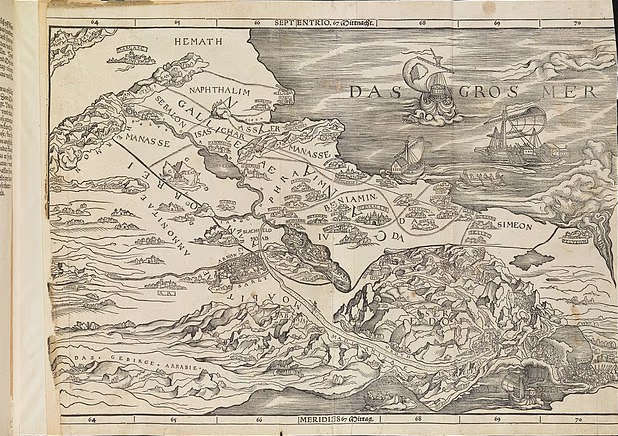
A new Daily Mail report takes readers on a curious journey into a 500–year–old Bible map and suggests it still shapes how we view territorial borders today. It is an intriguing claim, especially since the map itself was printed backwards.

According to the article, “this map is simultaneously one of publishing’s greatest failures and triumphs,” which certainly grabs attention.

The map appeared in a 1525 Old Testament printed in Zurich and drawn by Renaissance artist Lucas Cranach the Elder. It shows Israel divided among the 12 tribes descended from Jacob. That part is biblically accurate. Scripture traces each tribe’s inheritance across the Promised Land and records their encampments during the 40–year wilderness journey. The Daily Mail even acknowledges that the tribes were the “foundation of God’s chosen people and the ‘inheritance of all things by Christians.’”

Where the reporting begins to wander is in its interpretation. The Bible does not teach that Christians replaced Jews as heirs of the land. It teaches that believers share spiritual inheritance through Christ without erasing Israel’s covenant identity. Romans 11 preserves both.

Likewise, the Daily Mail suggests that the tribal divisions were spiritual rather than territorial. Yet the book of Joshua presents borders as geography, not metaphor. The land was given to an actual people, with descriptions detailed enough to trace on a map even today.

The conversation becomes more revealing when Professor Nathan MacDonald remarks that “the Bible has never been an unchanging book.” He is referring to physical forms: scrolls becoming bound volumes, maps added and later removed, digital versions replacing printed ones. On that surface level, he is correct. People have encountered Scripture differently across centuries, and formats continue to evolve.

Order Jonathan Cahn’s Newest Book, “The Avatar” on Amazon.com!

What the secular study overlooks is that Christians distinguish between the container and the content. Paper, ink, maps and chapter numbers change, but the message remains the same. Generations have held translations in many languages, but the core story of covenant, redemption, judgment and promise remains intact. The tools around Scripture—whether ancient fold–out maps or modern study charts—do not rewrite the text.

The Daily Mail piece is fascinating because it looks at an imperfect map to claim shifting meaning, yet the map itself did not change biblical truth. If anything, it reflects humanity’s ongoing attempt to visualize what God already declared. Formats can distort or embellish, but they cannot undo what Scripture says.

So while academics debate the influence of a backward Holy Land map, believers continue to read the same enduring words. The Bible has traveled through scrolls, codices, printing presses and now screens, but its central message stands unmoved. The debate over where the Mediterranean was printed may be interesting, but the God who authored the story has never shifted one inch.

James Lasher, a seasoned writer and editor at Charisma Media, combines faith and storytelling with a background in journalism from Otterbein University and ministry experience in Guatemala and the LA Dream Center. A Marine Corps and Air Force veteran, he is the author of The Revelation of Jesus: A Common Man’s Commentary and a contributor to Charisma magazine.


Frank Turek Asserts Dispensationalism Has Never Been ‘Heresy’

Christian apologist Frank Turek is pushing back against rising accusations that dispensationalism and Christian Zionism are heresies, urging believers to slow down before condemning fellow Christians over End Times disagreements.

Speaking during a Nov. 21 event in Eagle, Idaho, Turek addressed a Gen Z audience member who said he increasingly hears friends and family branding dispensationalists as heretical.

In response, Turek challenged the rhetoric, “A good question to ask them is, ‘What is a heresy?’” He argued that most theologians agree on only one actual heresy regarding eschatology. “Because theologians almost universally agree, when it comes to eschatology, the only true heresy is preterism,” he said, as reported by The Christian Post.

View this post on Instagram

A post shared by Frank Turek (@drfrankturek)

Preterism, he explained, holds that “everything that happened in the Bible, including the book of Revelation, has already happened; that Jesus has already come and set up His Kingdom.” Turek dismissed that view bluntly: “It’s quite obvious He hasn’t [returned], OK?”

Turek insisted that dispensationalism, along with other End Times perspectives, is not heretical. “When Jesus comes back, I’ll welcome Him, but it’s not a heresy to be a dispensationalist. It never has been,” he said.

Order Jonathan Cahn’s Newest Book, “The Avatar” on Amazon.com!

He warned that believers misuse theological labels, “throw terms around, not understanding what the meaning really is.” Instead, Christians should debate prophecy “without losing the Gospel” and ask clarifying questions such as, “What do you mean by heresy? How did you come to that conclusion? What evidence do you have for that?”

Turek further suggested that the Bible intentionally leaves much of the second coming shrouded in mystery. “Just like He kept His first coming veiled, He’s keeping His second coming veiled,” he said. That uncertainty underscores his core point: End Times speculation is secondary to faithfulness.

So what exactly is dispensationalism? At its simplest, it is the belief that God works through distinct stages, or “dispensations,” throughout history. It interprets prophetic Scripture literally rather than allegorically. In practical terms, this means dispensationalists take prophecies about Israel’s national restoration, global conflict, and end-times turmoil as concrete future realities, not metaphors.

That raises an uncomfortable question for critics: if dispensationalism is supposedly “wrong,” why do global headlines appear to track so closely with what dispensationalists have been teaching for centuries?

The rebirth of Israel in 1948, rising hostility toward Jerusalem, geopolitical instability in the Middle East, and the resurgence of antisemitism all look eerily similar to what the Bible describes. Perhaps, just maybe, some attacking dispensationalists are opposing something they have not taken time to understand.

Whether one agrees with every detail or not, Turek’s reminder stands: eschatology should be debated with humility. And if Scripture’s predictions about Israel continue to align with world events, dismissing dispensationalism outright may say more about spiritual blindness than theological insight.

James Lasher, a seasoned writer and editor at Charisma Media, combines faith and storytelling with a background in journalism from Otterbein University and ministry experience in Guatemala and the LA Dream Center. A Marine Corps and Air Force veteran, he is the author of The Revelation of Jesus: A Common Man’s Commentary and a contributor to Charisma magazine.


5 Toxic Relationships God is Telling You to Remove From Your Life

Many believers feel a subtle unease around certain people in their lives. They cannot always explain it, but something feels off, draining, distracting or spiritually compromising.

Bible teacher David Diga Hernandez addressed this tension in a recent message, saying that sometimes “you’ve been looking for confirmation from the Holy Spirit,” and that discomfort may be precisely that.

According to Hernandez, Scripture calls believers to steward their time, hearts and relationships wisely. He warns that some connections are not harmless. They are spiritually corrosive. “Life is sacred,” he said. “God’s given to you as a gift. When He created you, He created you for a purpose.”

That purpose gets suffocated when believers cling to relationships God is calling them to let go of. Hernandez outlines five categories of connections that drag people backward rather than propel them toward Christ.

Below are the five kinds of relationships he says you need to end, and why.

1. Distractors

These are people who pull you away from purpose and keep you centered on the temporary instead of the eternal. Hernandez describes them as friends who “get you to think only in terms of the here and now,” absorbed with entertainment, social circles and surface-level living.

The problem is not enjoying life or resting. It is wasting years “before you know it,” he said, realizing you have not applied yourself to what God deposited in you. Growth exposes their stagnation, so instead of celebrating your progress, they try to dull it. “People who lack purpose don’t like change,” Hernandez explained. “Because that change reminds them that they’re running out of time.”

2. Gossipers

These people betray confidence, create strife and cannot be trusted with your heart. Hernandez warns that gossip is not just slander. It is the inability to keep a secret. “A gossip is someone in which you cannot confide,” he said.

If someone repeatedly tears down others in front of you, expect they to do the same to you when you are not present. Hernandez cautions that subtle gossip is often disguised as “venting,” but the Holy Spirit reveals when something is manipulative or reputation-destroying.

3. The Negative

These individuals drain faith, cloud hope and constantly frame life through pessimism and complaint. Hernandez describes them as people who are “perpetually offended” and for whom “nothing is ever good enough.”

Believers should give grace, communicate concerns and confront patterns. However, when the mindset never changes, it becomes spiritually toxic. “If every time they come around you go from expecting good things to anticipating bad things,” he said, “something’s wrong there.”

Paul’s instruction to “fix your thoughts on what is true… honorable… lovely… admirable” becomes nearly impossible in relationships that constantly pull you toward cynicism.

Order David Diga Hernandez’s Book, “25 Truths About Demons and Spiritual Warfare” on Amazon.com!

4. Takers

These relationships demand constant pouring out, while offering nothing in return. Hernandez says compassionate and empathetic believers are especially vulnerable to these connections.

There may never be a perfectly equal exchange in relationships. Still, you should notice when someone constantly drains you emotionally, financially or spiritually, while making you feel guilty for not giving more. Hernandez describes it as “pouring water into a cup that has no bottom.”

Some takers even weaponize their wounds to manipulate your guilt. According to Hernandez, this is because “they’ve taken advantage of your compassion” and use you to fill a void only God can heal.

5. The Sinful

This category often includes sexual compromise, addiction and friendships that normalize rebellion against God. Hernandez speaks directly. “If you claim to be a Christian and you are intentionally living this lifestyle of sin, then there’s something very wrong there.”

Romantic relationships outside marriage that include sexual behavior must end or repent and realign. “Period,” he emphasized. But the warning extends beyond romance. People can draw you into drunkenness, substance abuse or spiritual dullness. If someone influences you to sin or excuses it, Hernandez says plainly, “It’s time to cut it off.”

Relationships Shape Destiny. So Choose Biblically

Hernandez’s teaching is not about isolation or superiority. It is about stewardship. God uses people to sharpen us, strengthen us, and sanctify us. Yet the enemy uses people to drain us, distort us and derail us.

Scripture calls believers to guard their hearts, walk in wisdom and pursue holiness. Sometimes, obedience requires courageous separation.

We cannot cling to relationships God is pruning and still expect spiritual flourishing. As Hernandez reminded, “The hour calls for bold Christians.”

James Lasher, a seasoned writer and editor at Charisma Media, combines faith and storytelling with a background in journalism from Otterbein University and ministry experience in Guatemala and the LA Dream Center. A Marine Corps and Air Force veteran, he is the author of The Revelation of Jesus: A Common Man’s Commentary and a contributor to Charisma magazine.


Chris Pratt Reminds America What Christmas Is Really About

It is rare these days to hear a Hollywood celebrity speak plainly about Jesus. In a culture saturated with commercialism, distractions and self-promotion, hearing actor Chris Pratt publicly point people back to Jesus at Christmas is refreshing.

In a recent video promoting the Christian prayer app Hallow, Pratt urged viewers to slow down and remember why the season matters. He began playfully: “It’s the most wonderful time of year, Christmas, the joy, the family time, the presents, the cookies,” he said while tossing a cookie over his shoulder.

View this post on Instagram

A post shared by Chris Pratt (@prattprattpratt)

Then he got serious. “The real reason I love Christmas—it’s so much more important—it’s because we are celebrating the greatest gift God has ever given us, and that is His Son, Jesus Christ.”

In a cultural moment where faith is often sidelined or repackaged into something sentimental and vague, Pratt’s words stand out. He did not soften the message. He did not abstract it. He pointed straight to Jesus.

“Together, we can focus on what’s really important about this extraordinary season,” he encouraged, inviting people to re-center their hearts.

Pratt also shared the Scripture he meditates on daily: Psalm 46:10. “The words ‘Be still and know that I am God’ are words I recite in my head every single day,” he wrote. “Our lives are moving so fast, we just need to take a minute, especially at Christmas, and focus on the reason for the season, which is for sure not cookies.”

Order Jonathan Cahn’s Newest Book, “The Avatar” on Amazon.com!

That single line exposes something Christians, churches and families easily forget. Christmas is not about nostalgia, shopping or sweets. It is about worshiping the God who came to save. When a Hollywood figure says it plainly, it cuts through the noise.

In a season where Jesus is easily buried under gift wrap and digital distractions, Pratt’s message lands with clarity and conviction: slow down, remember God and keep Christ at the center. After all, as he said, Jesus is the “greatest gift” ever given.

James Lasher, a seasoned writer and editor at Charisma Media, combines faith and storytelling with a background in journalism from Otterbein University and ministry experience in Guatemala and the LA Dream Center. A Marine Corps and Air Force veteran, he is the author of The Revelation of Jesus: A Common Man’s Commentary and a contributor to Charisma magazine.


Pete Hegseth Revives Christmas Spirit at the Pentagon

For years, Americans have watched the war on Christmas unfold as secular forces strip nativity scenes from public squares, ban manger displays from schools and scrub the name of Jesus from celebrations that exist because of Him. Yet under the current administration, the pendulum is swinging the other way.

Rather than apologizing for Christmas, the Trump administration is elevating it, and nowhere is that clearer than at the Pentagon.

Secretary of War Pete Hegseth, a combat veteran known for putting action behind conviction, is leading that charge.

The Blaze reported that Hegseth is launching an initiative to uproot woke culture in federal institutions, “by bringing Christmas to the Department of War.” This includes the first-ever Pentagon Christmas Tree Lighting Ceremony and newly expanded holiday décor “at this scale,” not seen under prior leadership, as reported by The Blaze.

Order Jonathan Cahn’s Newest Book, “The Avatar” on Amazon.com!

This is not a symbolic gesture. It is a visible course correction after years of cultural retreat. The Pentagon grounds, once home to a fading Amelanchier tree planted around 2008, have now been transformed. Hegseth signed off on replacing it with a “14-foot Nellie Stevens Holly,” sourced from Virginia, signifying new life and a renewed direction. Officials told The Blaze that bald eagles were seen flying overhead as the new tree was planted, a moment loaded with national symbolism.

This is not just about decorations. It is about messaging. Every staff member and their family has been invited to the lighting ceremony. One Department of War official told Blaze News, “We are pro-family and pro-Christmas at the department.”

That statement alone signals a dramatic shift. The Pentagon is not embarrassed by Christmas, family, faith or tradition.

Hegseth’s move reflects the belief that culture must be lived, not merely talked about. Leaders shape environments, and public displays of conviction are contagious. While previous Pentagon leadership toned down religion within federal spaces, Hegseth is doing what warfighters do: advancing rather than retreating.

As Christmas nears, our nation is reminded that cultural battles are never neutral.

If Christians do not show up, secularism will. The Pentagon’s bold return to Christmas points to a larger truth. The holiday is more than lights, holly and pageantry. At its core stands the birth of Jesus Christ. The Pentagon’s new Christmas emphasis underscores why it matters: America is better when it remembers where its hope comes from.

James Lasher, a seasoned writer and editor at Charisma Media, combines faith and storytelling with a background in journalism from Otterbein University and ministry experience in Guatemala and the LA Dream Center. A Marine Corps and Air Force veteran, he is the author of The Revelation of Jesus: A Common Man’s Commentary and a contributor to Charisma magazine.


Tucker Carlson Named Finalist for ‘Antisemite of the Year’

Antisemitism is surging across political and cultural lines, and this escalation is not random. It aligns with the prophetic trajectory Scripture has warned about. Hatred toward Israel is not merely ideological. It is spiritual, historic and eschatological.

In this climate, Israel365 News reports that conservative commentator Tucker Carlson has been named a finalist for “Antisemite of the Year,” a symbolic but telling marker of where influential rhetoric is trending.

StopAntisemitism, a watchdog organization, stated Carlson has spent years “downplaying white supremacy” and packaging extremist narratives “into broadcast-ready talking points.” Their case intensified after Carlson’s two-hour interview with white nationalist Nick Fuentes, where Fuentes claimed that “organized Jewry in America” stands in the way of national unity. Carlson did not challenge the claim and praised Fuentes multiple times. Senior Republicans, including leading pro-Israel voices, condemned the exchange as legitimizing Holocaust denial and white nationalism.

Order Jonathan Cahn’s Newest Book, “The Avatar” on Amazon.com!

Carlson’s own remarks deepened the uproar. He described Christian Zionists as suffering from a “brain virus,” prompting Senator Ted Cruz to call his rhetoric a “dangerous poison.” Carlson also stated, “There is no such thing as God’s chosen people. This is heresy. God does not choose a people who kill women and children.” Jewish leaders rebuked the statement as “theologically hostile” and politically incendiary.

StopAntisemitism’s finalists illustrate that antisemitism is not confined to one ideology or party. Some of the nominees identified for amplifying anti-Jewish sentiment include:

Ms. Rachel, a children’s YouTuber accused of “spreading Hamas-aligned propaganda”
Cynthia Nixon, cited for her BDS activism and public commentary on Gaza
Bryce Mitchell, UFC fighter described as a Holocaust denier
Stew Peters, far-right media personality
Cenk Uygur and Ana Kasparian, associated with The Young Turks network.


These represent only part of the more exhaustive list. Notably, last year’s recipient, Candace Owens, was not nominated despite continued controversy, signaling the organization’s intent to spotlight additional figures advancing antisemitic narratives.

Israel365 News emphasizes that while the contest is symbolic, the ideas being flagged are not. Words spoken from influential platforms shape public thought, normalize hostility toward Jews and mainstream ideologies that once existed on the fringes. When those ideas target the Jewish people, they collide directly with the covenantal promise God made, a promise that remains unchanged.

Scripture is explicit. Hostility toward Israel will grow and converge before the return of Jesus Christ. We are commanded to pray for the peace of Jerusalem, but we also recognize where this rising hatred ultimately leads. It leads to the moment when Christ Himself returns to confront it and establish true peace.

James Lasher, a seasoned writer and editor at Charisma Media, combines faith and storytelling with a background in journalism from Otterbein University and ministry experience in Guatemala and the LA Dream Center. A Marine Corps and Air Force veteran, he is the author of The Revelation of Jesus: A Common Man’s Commentary and a contributor to Charisma magazine.


Hacker Exposes a Vast Satanic Cult Network Hiding in Plain Sight

There is evil in this world that is not theoretical, symbolic or distant.

It has structure, belief, ritual and intent. Its fingerprints can be found in movements fueled by hatred, violence, exploitation and manipulation. Christians often talk about spiritual warfare, but rarely do we see its tactics exposed so plainly.

Recent revelations from cybersecurity investigator Ryan Montgomery reveal a chilling subculture steeped in occult ideology and cruelty. It is a reminder that darkness is not passive. It is active. It hunts.

Montgomery, known for uncovering hidden criminal networks, told Shawn Ryan that one of the largest online groups he infiltrated was directly influenced by a movement openly connected to Satanism. Describing its ideology, he said the group was shaped by the Order of Nine Angles, which he called a “Satanist group outside of the internet,” combining “Satanism, neo-Nazism, occultism and all kinds of things.”

Its belief system demanded “rejected empathy,” “promoted ritual violence” and embraced the idea that “real power comes from harming others without hesitation.” Montgomery summed it up bluntly: “That is like a whole Satanist belief.”

Key Revelations From Montgomery’s Investigation

• The cult is massive and purposely organized. Montgomery estimated one faction alone had “20,000, 30,000 people.”

• They operate manuals like scripture. Members circulate a “240-page manual on how to do this to children,” documenting tactics of manipulation and psychological warfare.

• Their ideology is overtly spiritual in its corruption. Montgomery explained the core teaching demanded the absence of empathy, ritualized harm and dominance rooted in occult and Satanist doctrine.

• They seek out the vulnerable, especially minors. He reported their typical targets are “9 to 17 years old,” prowling online spaces where youth seek belonging or emotional help. Montgomery said the movement began with a teenager “luring minors on Minecraft,” and added that similar recruitment happens across gaming platforms where children congregate, including Roblox and other social applications.

• They masquerade as helpers or friends. Montgomery said the group lures victims by pretending to “give them actual mental health therapy” before turning to coercion and extortion.

• They indoctrinate victims into the same system. According to Montgomery, many exploited youth became perpetrators, creating a “vicious cycle that needs to be broken.”

• Law enforcement knows and struggles to contain it. Montgomery referenced more than “250 ongoing investigations” tied to the group, yet sentencing for caught perpetrators is often “nothing, man… absolutely mind-blowing.”

• Their ultimate agenda is domination, humiliation and spiritual corruption. One of their goals, Montgomery explained, was to build a “lure book,” a trophy archive of control and destruction.

• Their actions confirm something Christians already know. Evil is real, intentional and seeks to destroy.

Order Jonathan Cahn’s Newest Book, “The Avatar” on Amazon.com!

This investigative work does more than reveal internet crime. It uncovers ideology, worldview and spiritual allegiance. Montgomery’s findings reveal a self-conscious embrace of what the Bible refers to as the works of darkness.

The group celebrates power through pain, bonding through destruction, and loyalty through fear. It is not accidental wickedness. It is chosen wickedness.

That is why the Church cannot retreat. The world is not neutral ground. Scripture calls it a battleground. Montgomery exposed practices rooted in spiritual rebellion, not just criminal depravity, and that means the response must also be spiritual.

This is not a time for soft Christianity or private faith. We are witnessing what Paul warned about: “We do not wrestle against flesh and blood, but against principalities, against powers, against the rulers of the darkness of this age.”

So the call is simple and urgent.

Christians must get back into the fight. Not with violence or outrage, but with the light that darkness cannot understand or extinguish.

Where deception spreads, we proclaim truth. Where despair is exploited, we bring hope. Where satanic ideology preys on the weak, we embody the compassion and authority of Jesus Christ.

Montgomery exposed the works of darkness. Now the Church must expose Christ through courage, discipleship, prayer and witness.

The enemy is active. So must we be.

Spread the light of Jesus wherever you go, to whoever you speak with. The battle is real, but so is the victory promised.

To watch the whole segment of The Shawn Ryan Show, click here (viewer discretion advised: strong language and disturbing topics are discussed in detail).

James Lasher, a seasoned writer and editor at Charisma Media, combines faith and storytelling with a background in journalism from Otterbein University and ministry experience in Guatemala and the LA Dream Center. A Marine Corps and Air Force veteran, he is the author of The Revelation of Jesus: A Common Man’s Commentary and a contributor to Charisma magazine.


AI and the Bible: Is Technology Enhancing Faith or Replacing It?

Artificial intelligence has emerged as the newest frontier for both culture and the church, raising questions that many Christians never imagined they would need to confront.

As apps claim to let people “talk to Jesus” or “chat” with Scripture, theologians, pastors and everyday Christians are wrestling with what role, if any, machines should have in spiritual formation. The technological acceleration has created genuine excitement, yet also deep concern about deception, misplaced dependence, and the erosion of biblically rooted teaching.

As reported in a CBN News segment, AI-powered spiritual tools are increasingly being marketed as pathways to revelation. But CBN’s Billy Hallowell cautioned viewers that “you’re not speaking with Jesus. You’re not talking with the Bible. This is AI.” He warned that the impression of sacred interaction can be misleading, because the experience “isn’t prayerful, but it’s relying on technology.”

Raj Nair, also with CBN and a commentator on the segment, professed a deep affection for Scripture while sounding an alarm over the trend. “I adore this book,” he said. “I love to live in it.” For him, Scripture comes alive only when engaged spiritually. When people ask how to read the Bible, Nair said his answer is simple: “Ask the Holy Spirit to guide you, to reveal things, to show things.”

Nair pointed to biblical precedent, citing John 14:26, reminding Christians that “the Holy Spirit… will teach you all things and will remind you of everything I have said to you.” He affirmed that AI may be acceptable for basic factual questions such as “Who came first, Joseph or David?” or “What were the 12 tribes of Israel?”

Order Jonathan Cahn’s Newest Book, “The Avatar” on Amazon.com!

However, he warned that it should not be used for spiritual revelation. “If you’re looking for a deeper meaning, a message from God, I’m really worried that this is not that,” he said.

The segment drew attention to a theological limitation no amount of code can solve. “The person without the spirit does not accept the things that come from the spirit of God,” Nair quoted from 1 Corinthians. He then added, “News flash, the AI, no matter how powerful it is, does not have the Spirit.”

Hallowell took the concern further, drawing parallels to practices Scripture condemns. Using AI to seek mystical knowledge, he warned, begins to feel “like divination or some sort of like, you know, people go to psychics, which they should never do.” He argued that these apps are “not Jesus, they are not the Bible,” and using them for spiritual advice “can be very dangerous.”

The pair also noted growing dependence among pastors themselves. Many leaders now turn to AI tools to craft sermons. Hallowell said it is one thing to request “outlines and ideas,” but another to deliver messages written by a machine. “Artificial intelligence is a machine,” he cautioned. “How much should we be relying on that?”

Nair underscored a sobering reality: intellectual knowledge of Scripture is not the same as spiritual understanding. “The enemy knows the Bible,” he said. “Demons and the enemy believe that there is a God.” What separates believers from deception, he argued, is Spirit-led submission.

The future of AI in spiritual contexts is still unfolding. Bible study apps and textual tools may remain helpful aids, but Nair offered a final warning that the church and society will need to heed as technology evolves. “Use the app if you want to … to intellectually understand Scripture,” he said. “But to have a relationship with God, that requires His Holy Spirit.”

As AI pushes into moral, cultural, and now theological territory, the church is not alone in facing these dilemmas. Governments, educators, ethicists, and institutions around the world are asking similar questions about how much trust humans should place in machines. For Christians, however, the stakes are uniquely spiritual, and the answer is timeless: technology may assist faith, but it must never replace it.

James Lasher, a seasoned writer and editor at Charisma Media, combines faith and storytelling with a background in journalism from Otterbein University and ministry experience in Guatemala and the LA Dream Center. A Marine Corps and Air Force veteran, he is the author of The Revelation of Jesus: A Common Man’s Commentary and a contributor to Charisma magazine.