Franklin Graham and Pete Hegseth Preach Gospel at Pentagon Christmas Service

The Pentagon marked a historic moment Wednesday, Dec. 17, hosting its first-ever Christmas worship service in the center courtyard, drawing military personnel and civilians together for songs of praise and a message centered on the hope found in Jesus Christ.

As reported by CBN News, Secretary of Defense Pete Hegseth welcomed attendees by pointing them to the heart of the Christmas story.

“The greatest story ever told. And the best part about it is it’s a true story,” Hegseth said. He reflected on Christ’s humility and calling, noting, “It’s a true story of a King who arrived not on a throne, but in a humble manger… And all He asked of us is to believe, is to honor Him with who we are and what we do.”

Pre-Order Abby Trivett’s New Book, “The Power of Suddenly” on Amazon.com!

Evangelist Franklin Graham echoed that message, urging reflection on the deeper meaning of the season.

“Jesus took our shame and He died in our place and He rose again,” Graham said. “And this is why we celebrate Christmas. He’s living. He’s alive. He’s in heaven. And He’s coming back. And He’s coming back someday soon.”

The service, filled with worship music and Scripture-centered hope, highlighted a renewed public focus on faith, gratitude and the timeless message of Jesus’ birth.

James Lasher, a seasoned writer and editor at Charisma Media, combines faith and storytelling with a background in journalism from Otterbein University and ministry experience in Guatemala and the LA Dream Center. A Marine Corps and Air Force veteran, he is the author of The Revelation of Jesus: A Common Man’s Commentary and a contributor to Charisma magazine.


Charles and William Clash Over Royal Christmas Traditions, Highlighting Deeper Tension Over Monarchy’s Future

A disagreement has emerged between King Charles III and his eldest son, Prince William, over how the royal family should observe Christmas traditions, according to a Fox News report citing royal commentators and experts.

Royal broadcaster Neil Sean told Fox News Digital that William wants to modernize certain long-standing customs, including the structured exchange of gag gifts and the public Christmas Day walk to church. “William wants to get rid of it because he believes it’s forced,” Sean initially said of the gag gift tradition, before clarifying that William’s real aim is broader inclusion and a less rigid atmosphere. “What William wants to do is include more participation from palace staff, where they could mingle. My sources tell me William enjoys the informal gatherings hosted by Princess Catherine’s family and wants to move in that direction — more family-oriented, less formal, and less about seniority.”

Another point of tension is the annual Christmas Day walk to church, a public-facing tradition that draws crowds. “William thinks this also needs a radical rethink,” Sean said. “He does not necessarily like being on display on what he views as a private and sacred day.”

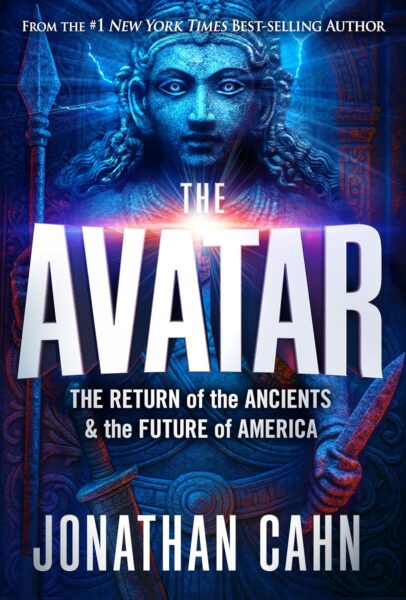
Order Jonathan Cahn’s Newest Book, “The Avatar” on Amazon.com!

Charles, however, favors keeping the tradition intact. “For the king, it’s important to interact with the public who give up part of their Christmas Day to meet the royals,” Sean added. The divide reportedly extends to William’s wife, Catherine, who, according to Sean, “shares the same mindset as her father-in-law” on the importance of the public walk.

Royal expert Hilary Fordwich told Fox News Digital that William’s views are consistent with his broader discomfort with hierarchy. “He rejects this sort of pecking order,” she said, referring to the gift-giving tradition. “He isn’t comfortable with rigid class distinctions in general.”

While the disagreement reflects a familiar generational divide between tradition and modernization, it also presents a larger opportunity. As Charles serves as Supreme Governor of the Church of England, and William is expected to inherit that role one day, both men hold platforms that reach far beyond palace walls.

Christmas, after all, is not merely a cultural event or a ceremonial tradition, but a celebration rooted in the birth of Jesus Christ.

Tradition has its place and should not be dismissed lightly, particularly within an institution built on continuity and history. Yet the season itself points to something far greater than pageantry or protocol. With global attention fixed on the royal family each December, Charles and William are uniquely positioned to emphasize the true reason for the season: the birth of the Lord and Savior of the world.

In a moment marked by internal disagreement, the focus could shift from how Christmas is celebrated to why it is celebrated at all.

James Lasher, a seasoned writer and editor at Charisma Media, combines faith and storytelling with a background in journalism from Otterbein University and ministry experience in Guatemala and the LA Dream Center. A Marine Corps and Air Force veteran, he is the author of The Revelation of Jesus: A Common Man’s Commentary and a contributor to Charisma magazine.


John Bevere Exposes the Rapture Trap Keeping Christians Unprepared

For many Christians, the rapture has become the centerpiece of end-times discussion. Charts are studied, dates are debated, and signs are endlessly scrutinized. But reducing the return of Christ to a single moment of escape distorts the purpose of biblical prophecy. Scripture does not present the rapture as a loophole out of responsibility but as a call to readiness, holiness, and urgency. When the focus narrows to an event, the preparation God intends is often lost.

That warning is at the heart of a recent Charisma Media interview with John Bevere, a bestselling author and longtime ministry leader.

Bevere, known for teaching on holiness, obedience, and spiritual maturity, said he spent decades avoiding eschatology altogether. That changed after what he describes as a clear prompting from the Holy Spirit around 2021. “I went 40 years and didn’t talk about eschatology,” Bevere said. “I realized I’ve never preached a full message until this year on eschatology.”

Bevere said his reluctance stemmed from how end-times teaching is often handled. “When I first looked at eschatology, I got turned off to it because people argued that I’m pre-trib, post-trib, mid-trib,” he said. “You’re just like, I don’t want anything to do with this.” But as he studied Scripture more closely, he said, ignoring the subject was no longer an option. “It’s the second most talked about subject in the New Testament other than salvation,” Bevere said. “One out of every 30 verses in the New Testament talks about the second coming of Jesus.”

Rather than creating passivity, Bevere said proper teaching on the return of Christ is meant to create urgency. He compared it to a football team late in a game. “They’re down 14 points with six minutes left. There’s no huddles. There’s an urgency,” he said. “If eschatology is presented in the correct way, it creates an urgency because Jesus said, ‘Do business till I come.’”


That urgency, Bevere said, is intentional. Scripture repeatedly emphasizes the nearness of Christ’s return to keep believers spiritually alert. “Could it be that in the wisdom of God, He kept an urgency on every single generation of His imminent return for our protection?” he said. Bevere warned that when believers assume Christ is delayed, compromise follows. “The servant who says, ‘My master delays his coming,’ is the one who begins to be more worldly and starts partying,” he said.

Bevere said expectation of Christ’s return produces holiness, not fear. “The Bible says that everyone who has this hope, this eager expectation of His imminent return, purifies himself even as He is pure,” he said. He added that previous generations did not have what modern believers have. “Now, of course, in all the other generations you didn’t have Israel,” Bevere said. “That’s the big super sign of the second coming. We really are in the generation.”

He also challenged the idea that the rapture should be viewed primarily as an event. “When you dwindle it down to just an event, a rapture, you miss the big picture,” Bevere said. “The big picture is this is a lovesick groom coming back for his bride.” He pointed to ancient Jewish wedding customs to explain Jesus’ language about preparing a place and returning. “All these disciples, they know exactly what Jesus is talking about,” he said.

That imagery, Bevere explained, carries responsibility. Believers are not casually waiting; they are already betrothed. “We’re married to Him now,” he said. “That’s why if we sleep with the world, we’re called adulterers.” He emphasized a passage often overlooked in Revelation. “The bride has made herself ready,” Bevere said. “It doesn’t say God made her ready.”

Preparation, he said, is where many believers fall short. “When it comes to eschatology, we spend the majority of the time talking about the five- or 10-minute aspect, or we don’t talk about it at all,” Bevere said. “But we don’t major on the preparing.” Scripture, he added, makes clear there will be accountability. Quoting 1 John, Bevere said, “There’s going to be two responses by believers when Jesus returns. One is confidence, one is being ashamed.”

Bevere strongly rejected date-setting, calling it unbiblical and misguided. “I could tell you the day He’s probably not coming,” he said. “Because I don’t believe any of us will know the day He comes.” He compared it again to the Jewish wedding tradition. “The groom didn’t even know when he was coming. It wasn’t until the father said, ‘Go get her,’ that he was to go.”

Leaving the audience with encouragement and wisdom, Bevere tied readiness to forgiveness and freedom from offense. “Some of you, you’re just oppressed. You’re tormented. You don’t know why,” he said. “It’s because you’re harboring an offense.” He reminded listeners that forgiveness is not optional. “The way you forgive is the way you’re going to be forgiven,” Bevere said. “That very same love that forgave you from the cross is the very same love you have in your heart.”

The rapture, Bevere made clear, is not meant to distract believers from faithfulness or fuel endless speculation. It is meant to sharpen focus, deepen holiness, and stir action. Christ’s return is not an escape plan but a reunion. Until then, the call is not to watch the clock, but to prepare the bride.

James Lasher, a seasoned writer and editor at Charisma Media, combines faith and storytelling with a background in journalism from Otterbein University and ministry experience in Guatemala and the LA Dream Center. A Marine Corps and Air Force veteran, he is the author of The Revelation of Jesus: A Common Man’s Commentary and a contributor to Charisma magazine.


Epstein Files Spark Online Firestorm After Redacted Text Appears in Released Records

Online detectives say they have uncovered a way to bypass redactions in recently released Jeffrey Epstein files, raising fresh concerns about how the Department of Justice handled the disclosure of sensitive records tied to the late financier.

According to the New York Post, portions of the documents that federal officials blacked out became visible when copied and pasted into common software programs. “Some portions of the documents, initially blacked out in Adobe Acrobat by the federal agency, pop up when copied and pasted into Google Docs or Microsoft programs like Word,” the Post reported, noting it confirmed the issue during testing. The outlet added that it “cannot confirm the veracity of the redactions.”

The discovery gained traction online after a video demonstration circulated on social media. “Anyone can read redactions of the Epstein Files by just copying and pasting them into a Word doc,” influencer Jake Broe wrote on X. He added, “The people at Trump’s Justice Department are so stupid they used Adobe Acrobat to black out the documents.”

The release of the records follows a bipartisan law signed by President Donald Trump requiring the DOJ to turn over all unclassified materials related to Epstein. Since Friday, the department has released hundreds of thousands of documents connected to the convicted sex offender.

Order Jonathan Cahn’s Newest Book, “The Avatar” on Amazon.com!

The document trove includes previously unseen photographs showing Epstein with high-profile figures, including Andrew Mountbatten-Windsor, Mick Jagger, and Michael Jackson. Additional images show Bill Clinton alongside Epstein and his associate Ghislaine Maxwell, including photos taken during international travel and private gatherings.

The Post reported that photos show Clinton “lounging with an unidentified woman in a jacuzzi” and swimming with Maxwell, as well as traveling with Epstein to destinations including the United Kingdom, Brunei and Thailand. Clinton has repeatedly denied any wrongdoing related to Epstein.

In a statement responding to the release, Clinton spokesperson Angel Ureña criticized the DOJ’s handling of the files. “What the Department of Justice has released so far, and the manner in which it did so, makes one thing clear: someone or something is being protected,” Ureña said. “We do not know whom, what or why. But we do know this: We need no such protection.”

The document release also includes thousands of photographs of Maxwell and images showing Trump, some previously released and others newly disclosed. Despite a congressional deadline to make the full Epstein file public, the DOJ said remaining records will be released on a rolling basis.

James Lasher, a seasoned writer and editor at Charisma Media, combines faith and storytelling with a background in journalism from Otterbein University and ministry experience in Guatemala and the LA Dream Center. A Marine Corps and Air Force veteran, he is the author of The Revelation of Jesus: A Common Man’s Commentary and a contributor to Charisma magazine.


2026 Prophetic Warning: Amanda Grace Declares Foundations Will Be Tested

The year 2026 will not be a neutral transition point. It will be a year that exposes foundations. What has been built in compromise will not hold. What has been ignored will surface. What has been delayed will collapse under pressure. This is not speculation. It is a biblical pattern. Storms never create weakness. They reveal it. And the coming season will make clear who built on rock and who settled for sand.

That warning was laid out plainly by Amanda Grace of Ark of Grace Ministries during a recent interview with Charisma Media. Speaking with urgency and clarity, Grace framed 2026 as a decisive year for the church and the nation, one that demands repentance, discernment and disciplined action. Her message was direct: the window to build correctly is now, because what is coming next will test everything.

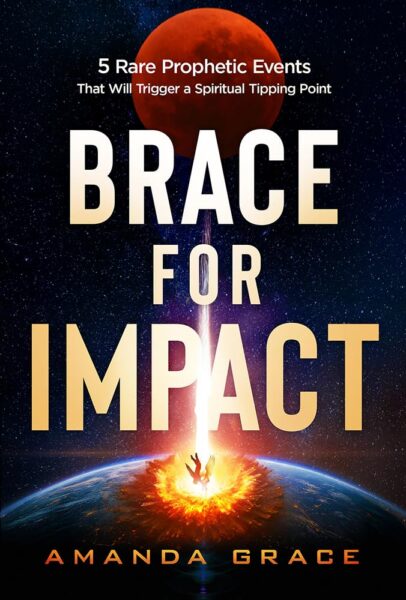
Pre-Order Amanda Grace’s New Book, “Brace for Impact” on Amazon.com!

Below are the central prophetic themes Grace addressed and why they matter as 2026 approaches:

  • Foundations will determine survival, not intentions.
    Grace anchors her warning in Matthew 7, where Jesus contrasts foundations built on rock with those built on sand. In 2026, storms intensify and outcomes separate builders. Compromise acts as sand. It weakens structures from within and guarantees failure under pressure. This applies spiritually to believers, institutionally to the church and nationally to leadership. Anything built on convenience, moral shortcuts or divided loyalty will not stand. The exposure will be unmistakable and irreversible.
  • The 2026 midterms will expose what the nation is built on.
    The coming midterm elections are not a routine political cycle. They are a test of foundations. Grace makes clear that political positioning without moral correction leads to collapse. Leadership that tolerates compromise cannot preserve stability. The battle is not over party labels but over structural integrity. What is left unfixed now will fail later, and the consequences will shape the years that follow. 2026 sets the trajectory toward 2028, and there is no way to bypass this test.
  • 2026 is a national and spiritual wake-up call.
    Grace identifies 2026 as a year saturated with warning signals that demand attention, not apathy. The convergence of critical moments ahead of national turning points signals urgency from heaven. Just so you know, wake-up calls are not invitations to observe. They are commands to respond. Repentance, realignment and vigilance are required. Complacency is not an option. Those who sleep through alarms do not escape the consequences that follow.
  • The Esther pattern is repeating, and silence is not a survival strategy.
    Grace draws directly from the book of Esther, where destruction advances through legal decrees and public authority until courage intervenes. The lesson is explicit: silence does not preserve safety. Refusing to act invites disaster. Divine reversals follow obedience, not avoidance. The church faces the same choice Esther faced. Act with courage or allow destructive agendas to proceed unchecked. Neutrality is not righteousness. Silence is not protection.
  • The church must build and defend with discipline, not drift.
    Grace identifies complacency as the church’s greatest vulnerability. Gaining ground is meaningless if it is not defended. Victory requires vigilance. She rejects superficial faith that refuses depth, precision and awareness. Spiritual warfare is strategic, not casual. Believers are called to build deliberately, pray precisely and remain watchful. The church must function as watchmen, not spectators. Anything less invites erosion from within.

Grace’s message leaves no room for delay or denial. The season ahead will not reward passivity. It will expose it. What is being built now determines what survives later. The window is open, and the cost of ignoring it is severe.

To hear Amanda Grace’s full warning on 2026 and beyond, watch the video above.

James Lasher, a seasoned writer and editor at Charisma Media, combines faith and storytelling with a background in journalism from Otterbein University and ministry experience in Guatemala and the LA Dream Center. A Marine Corps and Air Force veteran, he is the author of The Revelation of Jesus: A Common Man’s Commentary and a contributor to Charisma magazine.


Tucker Carlson Named Antisemite of the Year 2025 Amid Israel Backlash

Tucker Carlson’s influence has never rested on spectacle for its own sake. For years, his appeal came from a willingness to question narratives and challenge consensus. That is precisely why his recent trajectory has left so many former allies unsettled.

This week, Carlson was named the 2025 “Antisemite of the Year” by StopAntisemitism, a designation the group reserves for what it calls “the most bigoted and hateful individual” based on public influence and conduct. The decision marks a stunning turn for a figure once widely regarded as a serious critic of institutional power rather than a participant in ideological extremism.

According to the watchdog group, Tucker Carlson “uses his platform of millions to normalize [antisemitism],” citing his repeated decision to elevate figures known for hostility toward Jews and the state of Israel. Chief among them is Nick Fuentes, a far-right provocateur infamous for praising Adolf Hitler and spreading antisemitic rhetoric. “Carlson has built a reputation for giving a platform to dangerous ideas, allowing guests to spread falsehoods and [antisemitic] narratives,” the group stated.

What has drawn the sharpest rebuke, however, is not merely the criticism from watchdog organizations, but the growing alarm from Christian and Jewish leaders who say Carlson’s words now run directly against biblical teaching.


During his interview with Fuentes, Carlson said he disliked Christian Zionists “more than anyone,” dismissing their beliefs as “Christian heresy.” After backlash, Carlson issued a partial apology for the phrasing, but he did not retract his core criticism. He continued to argue that Christian Zionism is a “Christian heresy” and described it as a “brain virus.”

That statement struck many believers as irreconcilable with Scripture, which affirms God’s covenant with Israel and warns against turning against the Jewish people.

Christian leaders such as Jack Hibbs have repeatedly warned that antisemitism, whether political or cultural, is incompatible with Christianity. Messianic Jewish voices like Jonathan Cahn have likewise cautioned that hostility toward Israel is not merely a geopolitical trend, but a prophetic sign Scripture says will intensify as the world hardens itself against God’s purposes.

This growing concern was echoed by Daily Wire host Ben Shapiro, who condemned Carlson’s decision to platform extremist figures, saying media hosts are responsible for the voices they elevate. “He knew that Nick Fuentes is an evil troll,” Shapiro said at Turning Point USA’s AmericaFest conference. “And that is precisely what Tucker Carlson did.”

The issue is not disagreement over Israeli policy. Christians have long debated politics without abandoning Scripture. The concern is that Carlson now appears to be aligning himself with voices that reject God’s covenant with Israel altogether, while expressing open disdain for Christians who stand by it.

The Bible warned that a day would come when nations and influential voices would turn against Israel. Watching that pattern emerge is sobering enough. Seeing it echoed by someone who claims Christian conviction is something else entirely.

That is why the backlash Carlson is facing is not merely political. It is spiritual. And it is deeply troubling.

James Lasher, a seasoned writer and editor at Charisma Media, combines faith and storytelling with a background in journalism from Otterbein University and ministry experience in Guatemala and the LA Dream Center. A Marine Corps and Air Force veteran, he is the author of The Revelation of Jesus: A Common Man’s Commentary and a contributor to Charisma magazine.


Is Home Alone a Christian Movie?

What started as a tongue-in-cheek observation turned into an internet rabbit trail no one saw coming.

After a podcast clip featuring Josh Howerton, senior pastor of Lakepointe Church, went mega-viral for suggesting that Home Alone can be read as a Christian movie, listeners wanted more. The response was so strong that Howerton and his co-hosts revisited the topic in a follow-up episode, this time armed with behind-the-scenes details and original script material that only added fuel to the festive debate.

Taken together, the two discussions lay out a surprisingly thorough case, delivered with humor and curiosity rather than sermonizing.

Here are the main reasons Howerton argues that Home Alone carries an unmistakably Christian framework:

• The church scene is framed as a place of refuge, not fear
Kevin’s walk into the church is not accidental or merely atmospheric. Howerton points out that the scene draws Kevin toward warmth, beauty and stillness at a moment when he is lonely and overwhelmed. The church is presented as a safe place for reflection rather than a background prop, setting the tone for what follows.

• The music underscores spiritual meaning
As Kevin enters the sanctuary, the choir sings “O Holy Night.” Howerton highlights how specific lyrics align with the moment, particularly lines about kneeling and angelic voices. The song is not incidental. It cues the audience that something deeper than a casual visit is happening.

• Visual cues suggest Christ’s presence
Howerton notes a candle passing across the frame as Kevin enters, which he interprets as symbolic of Christ’s presence in the church. The cinematography subtly reinforces the sacred setting without calling attention to itself.

• Old Man Marley functions as a Christ-figure guide
Rather than portraying Marley as a random conversation partner, Howerton frames him as a redemptive figure. Marley meets Kevin in the church, listens without judgment and offers wisdom. Their interaction resembles pastoral counsel more than small talk.

Order Jonathan Cahn’s Newest Book, “The Avatar” on Amazon.com!

• Biblical symbolism appears earlier than the church scene
When Marley is first introduced in the film, he is shown salting the sidewalk. Howerton connects this to biblical language about being the “salt of the earth,” suggesting the film seeds this symbolism long before the church encounter.

• Kevin makes a confession
Kevin opens up to Marley about his family conflict and his fear that his wishes caused the separation. Howerton likens this moment to confession, a child admitting fault and vulnerability in a sacred space.

• The wounded hand mirrors crucifixion imagery
Howerton draws attention to Marley’s injured hand, which is bandaged in the church scene and later shown to be pierced all the way through. The film never explains the injury, but the visual parallels to crucifixion wounds are difficult to miss once pointed out.

• Kevin cannot save himself
At the climax, Kevin is cornered by the burglars and completely helpless. Howerton emphasizes that this is the turning point where self-reliance fails.

• Rescue comes through grace
Marley appears at the last possible moment and rescues Kevin without condition. The rescue is unearned and unexpected, reinforcing the idea of grace rather than heroics.

• The original script made the faith themes explicit
In the follow-up episode, Howerton reveals details from the original script that never made it to screen. Marley explicitly talks about being baptized, married and burying his wife in the same church. He speaks openly about believing in reunion with her in God’s kingdom.

• Kevin is guided into prayer
In the original script, Marley encourages Kevin to kneel and pray, telling him to ask God to fix things with his family and to say thank you. The scene leaves no ambiguity about who Marley is pointing Kevin toward.

• God is portrayed as accessible
Marley reassures Kevin that God is always available, not just on holidays. Howerton highlights how this line frames faith as relational rather than distant or formal.

• Redemption is visually completed at the end
Howerton notes that in the final scene, after Marley saves Kevin and reconciles with his estranged son, his once-pierced hand appears healed. He interprets this as a visual bookend symbolizing the completion of redemption and restoration.

The result is not an argument that Home Alone was meant to be a sermon, but a reminder that Christmas movies often carry more meaning than we notice on first viewing. Whether intentional symbolism or happy coincidence, Howerton’s playful breakdown has given fans a new excuse to watch the holiday classic with fresh eyes and maybe listen a little more closely the next time the choir starts singing.

James Lasher, a seasoned writer and editor at Charisma Media, combines faith and storytelling with a background in journalism from Otterbein University and ministry experience in Guatemala and the LA Dream Center. A Marine Corps and Air Force veteran, he is the author of The Revelation of Jesus: A Common Man’s Commentary and a contributor to Charisma magazine.


New Classification Raises Fresh Questions About 3I/ATLAS Amid Cyanide Reports

The unusual interstellar object known as 3I/ATLAS continues to spark global attention as new data, media headlines and scientific analysis converge around its behavior, composition and trajectory.

The object, which passed Earth at a distance of roughly 170 million miles on Dec. 19, has been at the center of speculation ranging from natural comet activity to far more exotic possibilities. At the center of that discussion is Avi Loeb, the Harvard astrophysicist who developed the Loeb Classification Scale to assess the likelihood that interstellar objects are of technological origin.

While Loeb has consistently stated that 3I/ATLAS is most likely natural, he has also stressed that a growing list of anomalies warrants continued scrutiny.

What the Loeb Scale Says About 3I/ATLAS

The Loeb Classification Scale ranks interstellar objects from 0(a natural icy body such as a comet or asteroid) to 10 (confirmed extraterrestrial technology that could pose a threat to humanity).

Shortly after 3I/ATLAS was discovered in July 2025, Loeb assigned it a rank of 4, a designation that places it firmly in the likely natural category while acknowledging unresolved anomalies.

3I/ATLAS is most likely a comet of natural origin, but there are eight anomalies that endow it with a rank of 4 on the Loeb scale,” Loeb previously said in response to a reporter’s question.

Since then, Loeb has noted that the number of anomalies has increased from eight to 15, reinforcing his argument that the object deserves careful observation rather than dismissal.

Media Headlines vs. Scientific Consistency

Recent headlines following a NewsNation interview suggested Loeb had walked back earlier speculation. He rejected that framing, saying his position has remained unchanged since the object’s discovery.

“I repeated what I said before, that 3I/ATLAS is most likely a natural object,” Loeb explained, emphasizing that this conclusion appeared in peer-reviewed research and essays as early as July 2025.

“The real update will come as a result of the analysis of new data in the coming months,” he wrote, adding, “Science is done in a more reliable fashion than the quality of news reports.”


Cyanide, Green Glow and Toxic Fears

Public concern intensified after reports that 3I/ATLAS emitted a green glow as it approached the Sun, a feature associated with cyanide compounds in cometary gas plumes.

“Will any of the material shed by 3I/ATLAS arrive on Earth?” Loeb asked in a Medium post cited by the New York Post.

He acknowledged that the plume was known to “contain cyanide and hydrogen cyanide,” noting that “hydrogen cyanide at large concentrations is a poison,” a gas historically used as a chemical weapon during World War I.

Observations with the Atacama Large Millimeter/submillimeter Array (ALMA) confirmed the presence of methanol and hydrogen cyanide in the object’s emission.

Why Earth Is Not in Danger

Despite the dramatic framing, Loeb concluded that Earth faces no threat from toxic fallout.

“Given the mass loss rate measured by the Webb Space Telescope, the gas around 3I/ATLAS would be swept up by the solar wind at a distance of just a few million kilometers,” he wrote.

Data from the James Webb Space Telescope showed that solar wind pressure would disperse any potentially hazardous gas long before it could reach Earth.

Loeb added that microscopic dust particles would be driven away by solar radiation, whereas larger fragments would burn up in the atmosphere if they were less than 3 feet in size.

“Given the mass loss rate of 3I/ATLAS, there are less than a million of these large objects released in recent months,” he wrote, adding that “the closest among them will never get closer than ten times the Earth’s radius.”

The Technological Caveat

Even so, Loeb has deliberately left one door open.

“The outcome could be different if said projectiles can maneuver by technological propulsion,” he noted, stressing that this remains a hypothetical scenario rather than a claim.

Loeb has previously pointed to 3I/ATLAS’ unusual trajectory as a reason not to rule out non-natural explanations entirely. He has speculated that the object could be dispatching probes toward Jupiter, which it will approach on March 16, 2026, possibly to collect data.

What Comes Next

Loeb says the most revealing evidence may come from analyzing the object’s anti-tail jet, which stretches more than a million kilometers toward the Sun.

Measuring the jet’s speed and composition could distinguish between natural ice sublimation and a technological exhaust system. Natural jets would contain CO₂, CO and H₂O moving at hundreds of meters per second. A technological origin, he said, could produce exhaust speeds that are orders of magnitude higher.

Until that data is fully analyzed, Loeb says his position remains steady.

“Nothing has fundamentally changed about my standpoint as of yet,” he wrote. “Stay tuned.”

James Lasher, a seasoned writer and editor at Charisma Media, combines faith and storytelling with a background in journalism from Otterbein University and ministry experience in Guatemala and the LA Dream Center. A Marine Corps and Air Force veteran, he is the author of The Revelation of Jesus: A Common Man’s Commentary and a contributor to Charisma magazine.


Lesbian Archbishop of Wales ‘Hurt’ People Are Leaving the Church

Let’s drop the pretense and say out loud what everyone already knows.

People are leaving the Church in Wales because it is now led by an openly lesbian archbishop who openly lives in a way Scripture calls sin, and somehow we are supposed to act shocked by that.

According to a BBC article, Cherry Vann became the first openly gay archbishop in the world this summer. She later acknowledged that her sexuality has driven people out of the church. “Some, sadly, have felt the need to leave, and I take that very seriously,” she told BBC Wales.

What did she think was going to happen?

Christianity has never been vague about sexual morality. Not once. Sexual intimacy outside of God’s design for marriage is consistently identified in Scripture as sin. That includes homosexuality, just as it includes adultery, fornication, and every other sexual expression outside biblical marriage. And the problem is unrepentant behavior, especially in church leadership.

Yet the BBC frames this as a story about intolerance rather than truth.

Vann said the Church in Wales is “working hard to welcome LGBT+ people,” while also admitting that some believers “find that really difficult.” That framing misses the point entirely. Christianity welcomes sinners. It always has. What it does not do, or is not supposed to do, is place unrepentant sin on a pedestal and call it spiritual authority.

Vann described criticism of her lifestyle as personal attacks. “It can be very hurtful,” she said. “It feels like an attack on who I am and who God has made me to be.”

But Christianity does not begin with self-definition. It starts with repentance. The gospel does not affirm who we are in our sin. It calls us out of it. That is not cruelty. That is mercy.

Order Jonathan Cahn’s Newest Book, “The Avatar” on Amazon.com!

The Global Fellowship of Confessing Anglicans said the quiet part out loud, describing Vann’s appointment as “another painful nail in the coffin of Anglican orthodoxy.” That statement was not hateful. It was accurate. When biblical authority is abandoned, orthodoxy dies.

The broader context makes this even more challenging to ignore. Vann took leadership of the Church in Wales after her predecessor resigned amid safeguarding failures, excessive drinking and sexual misconduct. She herself admitted, “I think there is a big cultural issue in the Church.”

She is right. But culture problems do not start with scandals. They start when sin is normalized and repentance is removed from the equation.

And none of this should surprise anyone who has actually read the Bible.

Scripture warned plainly that this would happen. The apostle Paul wrote that before Jesus’ return, there would be a rebellion, the great falling away, where many would abandon sound doctrine (2 Thess. 2:3). That warning was not abstract. It was predictive.

What makes this moment especially absurd is watching it be sold as Christianity itself, with help from institutions like the BBC, which has turned what should be a theological crisis into a sympathetic puff piece.

This is not a call to hate Cherry Vann. Scripture does not call for that. We are commanded to pray for her. Pray for repentance, restoration and truth. The hope should be that she turns away from a path that contradicts God’s Word and returns to the narrow road that leads to life.

But let’s stop acting confused.

When a church blesses what God forbids, faithful believers will walk away. That is not cruelty. That is Holy Spirit conviction.

And no amount of media praise can turn apostasy into Christianity.

James Lasher, a seasoned writer and editor at Charisma Media, combines faith and storytelling with a background in journalism from Otterbein University and ministry experience in Guatemala and the LA Dream Center. A Marine Corps and Air Force veteran, he is the author of The Revelation of Jesus: A Common Man’s Commentary and a contributor to Charisma magazine.


The Mystery of Bethlehem Revealed, and Why It Still Matters Today

Bethlehem is not a sentimental backdrop or a symbolic setting. It is a real town with a deliberate purpose in God’s redemptive plan. Messianic Rabbi Jonathan Cahn says the town where Jesus was born reveals who Messiah is and why His birth continues to matter.

“Hidden behind all the nativity scenes, every Christmas play, behind the greeting cards, hidden inside the town of Bethlehem is a mystery, more than one,” Cahn said in a recent sermon. “Why Bethlehem? Why Bethlehem?”

The answer points directly to kingship, redemption and hope.

Bethlehem Is the City of a King

Bethlehem is inseparable from King David, and the Messiah must come from David’s royal line.

“The Messiah has to be linked to King David. Has to,” Cahn said. “He’s got to be born of the royal line of David.”

David, the first king of Israel, was born in Bethlehem, and Scripture declares that the Messiah would reign forever on David’s throne.

“The first king is David. The last king is Messiah,” Cahn said. “Messiah is going to reign on the throne of David.”

Bethlehem’s humility does not diminish its meaning. “It’s not about a nice little thing,” Cahn said. “The one who’s being born is the king of kings.”

A Real Jewish Town With a Real Purpose

Bethlehem was never meant to be filtered through fantasy or religious ornamentation.

“The Bethlehem of 2,000 years ago had no religious architecture, cathedrals, no religiousness,” Cahn said. “It was a Jewish town. Simple. Humble.”

That setting strips away spectacle and focuses attention on the meaning of the birth itself.

The House of Bread

Bethlehem’s Hebrew name, Beit Lechem, means “house of bread,” a detail Cahn says is central to the Christmas story.

“Messiah is called the bread of life,” he said. “Bethlehem is the house of bread. It’s the place where the bread of life comes down from heaven into the world.”

Jesus’ birth in a manger reinforces the message.

“Here’s the bread of life in a place of food,” Cahn said. “The world cannot satisfy your hunger. He’s the only thing that can truly satisfy your soul.”

Order Jonathan Cahn’s Newest Book, “The Avatar” on Amazon.com!

Shepherds and the Lamb

Bethlehem has always been a land of shepherds and sheep, which explains who God chose to witness Messiah’s birth.

“Not insurance agents, not politicians, not stockbrokers, but shepherds,” Cahn said. “Why? He was born to be the shepherd of our lives.”

Bethlehem was also known for lambs raised for sacrifice near Jerusalem.

“Messiah is not only the lamb. He’s the sacrificed lamb,” Cahn said. “How perfect that the Lamb of God is born in the city of lambs.”

Sorrow Turned to Victory

Bethlehem is tied to sorrow and restoration through Rachel, who was buried near the town.

“She called the name of her son Ben-Oni, ‘son of my sorrow,’” Cahn said. “But his father changed his name to Benjamin, ‘son of my right hand.’”

That pattern foreshadows Messiah. “Messiah comes as a man of sorrows,” Cahn said, “but then He becomes the son of the right hand, the victorious Messiah.”

The Place of Redemption

Bethlehem stands at the center of the biblical story of redemption through Ruth and Boaz.

“One day God Himself is going to become the goel,” Cahn said. “He’s going to redeem a barren world that cannot bear fruit.”

That redemption began in Bethlehem and was ultimately fulfilled in Messiah.

Why Bethlehem Still Matters

Bethlehem reveals the identity and mission of Jesus.

“It’s the place of David,” Cahn said. “He is gentle, but He is mighty. He is your king.”

“It was a place of shepherds to tell you the one who was born there is born to lead you and guide you and take care of you,” he said. “Don’t fear. Trust Him. Walk with Him.”

Bethlehem points beyond a manger to a King who reigns, a Shepherd who leads, a Lamb who redeems and the Bread of Life who satisfies the soul. That is why the mystery of Bethlehem still matters, and why Christmas remains a message of lasting hope.

James Lasher, a seasoned writer and editor at Charisma Media, combines faith and storytelling with a background in journalism from Otterbein University and ministry experience in Guatemala and the LA Dream Center. A Marine Corps and Air Force veteran, he is the author of The Revelation of Jesus: A Common Man’s Commentary and a contributor to Charisma magazine.