Is ‘Disclosure Day’ Preparing the World for a Massive UFO Deception?
UFO disclosure is no longer a fringe topic, and it is not going away. According to longtime researcher and filmmaker L.A. Marzulli, the conversation has reached a tipping point. “It’s here. It’s happening. And it’s now,” Marzulli said in a recent reaction video, warning that the global push toward disclosure is unfolding “in real time,” not in the distant future.
Marzulli’s recent reaction video centers on the new film Disclosure Day, which he believes is less entertainment and more ideological groundwork.
The movie repeatedly frames “full disclosure” as a moral necessity, suggesting the world has a right to know the truth all at once. That framing, Marzulli argues, is intentional. “People have a right to know the truth,” the film declares. Marzulli’s response is pointed: “But what truth are we going to hear? Whose truth will we hear?”
Throughout his breakdown of the movie’s trailer, Marzulli highlights imagery he believes is doing heavy theological lifting. Scenes of altered consciousness, possession-like behavior and religious symbolism are not incidental.
“There’s no way around that,” he said of one scene depicting a woman losing control of her faculties. “That’s possession. She no longer is in possession of her faculties.” He also noted the film’s use of Catholic imagery, saying it subtly suggests that faith can be reinterpreted to accommodate non-human entities. “They’re already spinning this thing within a certain theological framework,” he said.
More broadly, Marzulli rejects the film’s assumption that alleged non-human intelligences are benevolent extraterrestrials. “They’re not from Zeta Reticuli,” he said. “They’re gods with little g’s. They are the fallen angels with a very nefarious agenda.”
He ties this directly to biblical prophecy, warning that such revelations could trigger what Scripture calls a great falling away. “When they reveal themselves, that’s the game changer,” Marzulli said. “And we are being set up for it.”
The push for disclosure is shaping how people think, believe and interpret reality. As governments, media and entertainment move in lockstep, discernment matters more than ever. Pay attention to the world around you. Deception rarely announces itself. It hides in plain sight, often where we are told to look for truth.
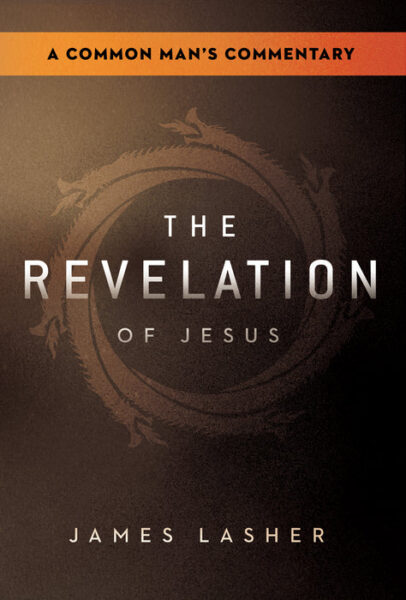
James Lasher, a seasoned writer and editor at Charisma Media, combines faith and storytelling with a background in journalism from Otterbein University and ministry experience in Guatemala and the LA Dream Center. A Marine Corps and Air Force veteran, he is the author of The Revelation of Jesus: A Common Man’s Commentary and a contributor to Charisma magazine.
Is the Final Jubilee of the Age of Grace Beginning in March 2026?
A renewed debate in Bible prophecy circles is drawing attention to March 2026, not as a date for the rapture, but as a possible turning point in biblical history. The discussion centers on an ancient solar calendar preserved in the Dead Sea Scrolls and whether it signals the beginning of what some interpret as the final Jubilee, or final generation, of the Age of Grace.
That argument was recently outlined in a discussion between Josh Peck and Dr. Ken Johnson, who has spent decades studying the Dead Sea Scrolls and their calendar system. Johnson argues the scrolls preserve what he calls the original biblical calendar, distinct from the modern Gregorian system. “According to the Dead Sea Scrolls, it was the original calendar given by God,” Johnson said, adding that it stretches “from creation…through the millennial reign to the end of time.”
What makes this calendar different
Unlike the Gregorian calendar, which relies on lunar adjustments and shifting weekdays, Johnson says the Dead Sea Scrolls calendar is a 364-day solar system designed to keep weeks and feast days fixed. “On a 364-day calendar, everything is the same,” he said. “The Passover is the 14th of Nissan. It’s always Tuesday. The new year always starts on Wednesday.”
The year is structured around 12 months of 30 days, plus four additional marker days tied to the equinoxes and solstices. Rather than adding leap days, Johnson says the system stays aligned by using leap weeks every few years, keeping it closely synced with the seasons while preserving consistent weekly cycles.
The calendar framework leads to the central claim that March 18, 2026, marks the start of a final 50-year Jubilee period, which Johnson equates with a generation. “The Dead Sea Scrolls seem to indicate the last Jubilee is the last generation,” he said. That places the proposed prophetic window between 2026 and 2076.
Johnson is careful to stress that this is not date-setting. “We’re not supposed to set dates,” he said. “The calendar is a calendar system.” Still, he argues that major biblical events historically cluster within these Jubilee periods, especially toward the end of an age.
He points to the time of Jesus as an example, noting that “most of the prophecies are about His ministry, His death, the creation of the church,” which he places within the final Jubilee of the previous age. “He dies in 32, but it’s still in that 50-year period,” Johnson said.
Patterns, not predictions
Rather than claiming certainty, Johnson frames the model as a means of observing patterns. He argues that the scrolls suggest that the end of an age is marked by turmoil, whereas the beginning of the final generation may initially be marked by spiritual activity. “They also seem to indicate the beginning of the last generation is usually blessed with revival, miracles, things like that,” he said.
He also identifies developments to monitor, including the end of ongoing wars, Israel’s territorial expansion, and potential archaeological discoveries. Johnson claims that some scroll texts indicate that regional conflict ended around 2026 or 2027, though he emphasizes this as interpretive rather than definitive.
A call for discernment
Both men repeatedly caution against obsession or fear. Johnson’s closing message is deliberate. “Don’t read too much into it. Don’t try to set dates.” Instead, he urges believers to take prophecy seriously without being driven by speculation.
Whether or not their interpretation proves accurate, the discussion highlights a broader point. Scripture calls believers to remain watchful, informed and discerning. As global instability grows and prophetic themes increasingly intersect with current events, the challenge is not to predict the timeline. The challenge is to stay anchored in truth, alert to deception and grounded as the last days continue to unfold.
James Lasher, a seasoned writer and editor at Charisma Media, combines faith and storytelling with a background in journalism from Otterbein University and ministry experience in Guatemala and the LA Dream Center. A Marine Corps and Air Force veteran, he is the author of The Revelation of Jesus: A Common Man’s Commentary and a contributor to Charisma magazine.
Trump Confirms US Christmas Eve Strike in Venezuela, Targeting Narco-Trafficking Hub
President Donald Trump confirmed Monday that the United States carried out a precision strike in Venezuela on Christmas Eve, targeting what he described as a “dock area” used to load drug-trafficking boats. The strike reportedly resulted in a major explosion and marks the first known U.S. land-based action against Venezuela since the Trump administration intensified counter-narcotics operations in the Caribbean.
Trump made the remarks while welcoming Israeli Prime Minister Benjamin Netanyahu to his Mar-a-Lago estate in Florida. “It was an implementation area,” Trump said of the strike zone. “It’s no longer around.”
Though the president did not specify which branch of government executed the strike, he declined to confirm whether it was conducted by the CIA or the U.S. military. “I know who it was,” he told reporters, “but I’m not saying.”
The operation reflects a broader escalation in U.S. efforts to disrupt international drug networks operating out of South America. Trump’s administration recently deployed the USS Gerald R. Ford carrier strike group to the region, significantly boosting military presence in Caribbean waters. Numerous boats believed to be involved in drug smuggling have already been intercepted and destroyed off Venezuela’s coast.
The strike came within 24 hours of another U.S. military operation—an airstrike on Islamic State targets in Nigeria on Christmas Day. The Venezuelan strike underscores a new level of engagement in hemispheric security during the holiday season.
President Trump also revealed he had spoken with Venezuelan dictator Nicolás Maduro in recent days, but said the conversation yielded little progress. “Not much came out of it,” he remarked.
The target of the Venezuelan strike, described by officials as a narco-trafficking hub, highlights ongoing concerns over Maduro’s regime allegedly providing cover for criminal cartels. The administration’s hardline stance is consistent with Trump’s broader foreign policy approach: confronting hostile regimes, securing American borders, and dismantling transnational criminal networks.
This article originally appeared on American Faith and is reposted with permission.
An Islamic Country’s Christmas Miracle Offers Hope to Persecuted Christians
Christmas arrived this year in Pakistan with something few expected and many welcomed: open doors, public celebration, and state-backed affirmation. In a nation long scarred by religious extremism, the government’s decision to sponsor Christmas celebrations nationwide felt less like pageantry and more like a providential pause, a Christmas miracle wrapped in policy.
For the first time since independence, Christmas moved beyond church walls and into public squares, government halls and official statements.
According to reporting by Christian Daily International, celebrations stretched from Islamabad to Lahore, carrying the unmistakable stamp of state support. What once required quiet vigilance unfolded in the open, under lights and banners, with choirs singing and communities gathering.
Prime Minister Shehbaz Sharif framed the moment not as a concession but as a shared national celebration. “Christmas is a message for humanity that connects us with feelings of love and goodwill,” Sharif wrote, praising Jesus Christ’s message of peace and brotherhood and describing Christians as an “active, positive and peaceful segment of society.” He credited the Christian community for its contributions to education, health care, social welfare and the fight against terrorism, words rarely spoken so plainly and so publicly.
President Asif Ali Zardari anchored the celebrations in Pakistan’s founding vision. “Christmas brings hope, peace and compassion, reminding us of the bonds that unite all human beings,” he said, reaffirming constitutional guarantees of equal rights and freedom of worship. The message echoed Muhammad Ali Jinnah’s insistence that faith should never determine citizenship.
Then came the moment that stopped even seasoned observers. Pakistan’s army chief, Syed Asim Munir, attended Christmas services at Christ Church in Rawalpindi. In a country where the military’s presence carries enormous weight, the symbolism landed with clarity.
According to the military’s media wing, Munir called Christmas a reflection of shared values and reiterated the armed forces’ commitment to protecting the dignity and equal rights of all citizens. Christian leaders called the visit unprecedented. They were right.
Punjab carried the celebration with particular confidence. Chief Minister Maryam Nawaz attended a government-sponsored Christmas ceremony in Lahore and pledged to stand “like a wall” against injustice faced by minorities. “We are not Muslims, Sikhs, Christians or Hindus first. We are Pakistanis,” she declared.
Minority welfare funding increased. Churches were cleaned by government workers ahead of Christmas. Minority cards and grants were distributed in public view. Diplomats watched as the Bible was read aloud.
Progressive Muslim commentators applauded the shift. One noted the installation of a towering Christmas tree in the heart of Lahore as a symbol of plurality and inclusion. Minority advocates welcomed the moment while pressing for deeper reforms.
Still, Christmas is built on unlikely hope. It begins with the light of Jesus breaking into darkness and ends with joy shared aloud. For Pakistan’s Christians, this year’s Christmas was precisely that: loud, visible and officially endorsed. In a country where minorities have often been told to keep their faith quiet, the state spoke clearly.
Sometimes miracles do not arrive with thunder. Sometimes they come with choirs, Christmas lights, and a government willing, at last, to say, you belong.
James Lasher, a seasoned writer and editor at Charisma Media, combines faith and storytelling with a background in journalism from Otterbein University and ministry experience in Guatemala and the LA Dream Center. A Marine Corps and Air Force veteran, he is the author of The Revelation of Jesus: A Common Man’s Commentary and a contributor to Charisma magazine.
Will We See a Renewed Babylon in the End Times?
Could one of the most infamous cities in human history rise again as a global center of power, wealth and influence? It is a question many dismiss outright, yet it is one that refuses to disappear as modern headlines increasingly echo ancient warnings.
According to Bible prophecy and current developments in Iraq, the idea of a renewed Babylon is no longer confined to theology classrooms or end-times fiction. It is being debated in real time.
In a recent report, Joel Rosenberg argues that the rebuilding of ancient Babylon is no longer theoretical. “The ancient city of Babylon is being rebuilt right now as we speak before our very eyes,” Rosenberg says, adding that Babylon was once “the capital of the most wicked, most powerful empire on the entire planet,” and is described in Scripture as playing a similar role in the final chapter of human history.
Rosenberg points directly to the book of Revelation, where Babylon is portrayed as the epicenter of global commerce and corruption in the end times. He describes it as “the very home and center of wealth and power of the antichrist,” noting that the Bible’s prophetic language is not vague symbolism but geographically specific.
“The prophecies are very specific in the Old Testament and the New and give a lot of detail about the archaeology and the rivers that are near Babylon,” he says. “They’re talking about literal ancient Babylon from Iraq rising again after thousands of years.”
That claim has long drawn ridicule from skeptics who insist Babylon is merely a metaphor for modern cities such as Rome, New York or London. Rosenberg acknowledges the argument but rejects it.
“Certainly, Babylon is a type,” he says, “but the prophecies are very specific.” He argues that dismissing Babylon as symbolic alone fails to account for the repeated biblical emphasis on its physical location and future prominence.
What gives Rosenberg’s report weight is not speculation but documentation. He traces the modern rebuilding of Babylon back to Saddam Hussein, who saw himself as a successor to King Nebuchadnezzar and ordered large-scale excavation and reconstruction in the late 20th century. While those efforts stalled during war, they did not end. Since 2003, restoration has accelerated.
Rosenberg cites mainstream reporting to support the claim. A 2006 front-page article in The New York Times reported that Iraqi leaders and United Nations officials were “working assiduously to restore Babylon” and transform it into a cultural center.
UNESCO has since invested millions into preserving the site, and Babylon was officially designated a UNESCO World Heritage Site in 2019. “UNESCO has even printed up a brochure with Babylon listed as the premier destination,” Rosenberg noted, quoting U.N. officials who said cultural tourism could become Iraq’s second-largest industry after oil.
U.S. involvement has also played a role. Rosenberg reported that the State Department under the Obama administration contributed funding toward the “Future of Babylon” project. “The Obama administration was contributing $700,000 towards the Future of Babylon project,” he said, calling it “astonishing,” given that the funding had nothing to do with promoting Bible prophecy.
The momentum has continued. In 2025, Iraq hosted the first International Day of Babylonian Civilization inside the ruins themselves. Iraqi officials said the event aimed to “revive Babylonian heritage” and boost international tourism. Rosenberg views this as further confirmation that Babylon is being positioned once again as a global destination.
For Rosenberg, the implications go far beyond archaeology or tourism. Revelation 18 describes Babylon as “the world’s great commercial hub,” a place where merchants trade gold, silver, jewels and luxury goods, drawing the kings of the earth.
He argues that the rebuilding now underway lays the groundwork for precisely that scenario.
“How could a once great city that hasn’t existed for much of the past 2,000 years once again become a city at all, much less eventually the wealthiest, most powerful and most evil city on the planet?” Rosenberg asks. His answer is direct. “There’s only one way that could happen. If the God of the Bible decrees that it will happen, then it will happen.”
The renewed question of Babylon is not merely academic. Rosenberg frames it as a test of discernment. Governments, global institutions and secular media outlets involved in Babylon’s restoration do not see themselves as fulfilling prophecy.
Yet he argues that prophecy has often advanced through actors who were unaware of its significance. “They’re not doing it because they’re interested in Bible prophecy,” he says. “They’re trying to rebuild their ancient city and bring money and power.”
Whether Babylon ultimately becomes the end-times power center described in Scripture remains to be seen. But the convergence of prophecy, geopolitics, archaeology and global investment is difficult to ignore. The rise of Babylon, even in its early stages, challenges believers to remain watchful without sensationalism and grounded without complacency.
The call, Rosenberg suggests, is not panic but preparedness. Discernment requires recognizing developments as they unfold while remaining anchored in Scripture rather than headlines alone. If Babylon’s revival is part of the prophetic arc, it will not announce itself with fanfare. It will emerge gradually, shaped by human ambition and divine sovereignty alike.
James Lasher, a seasoned writer and editor at Charisma Media, combines faith and storytelling with a background in journalism from Otterbein University and ministry experience in Guatemala and the LA Dream Center. A Marine Corps and Air Force veteran, he is the author of The Revelation of Jesus: A Common Man’s Commentary and a contributor to Charisma magazine.
When Miracles Replace the Gospel, Deception Follows
The church does not have a miracle problem. It has a priority problem.
Pastor Jack Hibbs made that clear while teaching from Mark 16, where Jesus commissions His disciples to preach the gospel to the ends of the earth. The command is unmistakable. Proclaim the message first. The signs follow later.
“The issue is not the miracles,” Hibbs said. “The issue is the message.”
That distinction matters because Scripture never elevates supernatural experiences above biblical truth. Miracles are not the mission. They are meant to confirm it. “The word of God trumps all signs and wonders,” Hibbs said.
Hibbs rejected the idea that God has stopped performing miracles. “Does God do miracles? Yes. Is He doing them still? Yes.” But he drew a hard line between God’s sovereign work and human demands for spectacle. “If that’s your motive to pull the puppet string on God and have Him perform for you, it ain’t gonna happen.”
The Bible, Hibbs noted, also warns that supernatural power does not automatically mean divine approval. “Oh yes, there’s false miracles,” he said, pointing to Pharaoh’s magicians who replicated Moses’ signs. The difference was not power, but authority. “Does the miracle that was performed glorify the Lord Jesus Christ and his mission, the gospel?” Hibbs asked. “If it does not exalt Jesus as Lord and Savior, Christ the King, then it’s not biblically honoring and it’s a false miracle.”
That warning carries weight in an age obsessed with experience. Hibbs cautioned that believers who chase signs while loosening their grip on doctrine are setting themselves up for deception. “If you are pursuing signs and wonders, I promise you this: you will be deceived by the deception that’s coming.”
The safeguard is not emotional discernment or spiritual intuition. It is Scripture. “Read your Bible,” Hibbs said. “Read your Bible more than anything else you do.”
Hibbs also challenged the assumption that miracles should be constant or visible on demand. Jesus Himself performed few miracles in places marked by unbelief. Power was not lacking. Receptivity was.
The most pointed moment of Hibbs’ teaching came when he reframed what believers should value most. Physical healing, he said, is never the ultimate goal. Eternal salvation is. “It’s more important for somebody to wind up in heaven than for somebody to have their eyesight healed and they wind up going to hell.”
Miracles still happen. God still heals. But the gospel remains supreme. As Hibbs put it plainly, “Miracles come and go, but the message is what matters.”
James Lasher, a seasoned writer and editor at Charisma Media, combines faith and storytelling with a background in journalism from Otterbein University and ministry experience in Guatemala and the LA Dream Center. A Marine Corps and Air Force veteran, he is the author of The Revelation of Jesus: A Common Man’s Commentary and a contributor to Charisma magazine.
7 Reasons Why Every Christian Needs to Understand Bible Prophecy Before It’s Too Late
America has plenty of churches willing to talk about “practical” Christianity, but far fewer willing to preach the parts of Scripture that make people nervous. End-times prophecy sits near the top of that list.
In a recently re-published video that is apt for the times we live in, Prophecy Watchers contributor, author and researcher Mondo Gonzales put his finger on the problem: many pastors avoid prophecy because they assume it is too divisive, too complicated, or too risky. He argues that avoidance is not neutral. It leaves believers less prepared, less grounded in Scripture, and less equipped to answer a culture that is already asking what is happening to the world.
“It was sad to me that he felt that it was unable to be understood,” he said, recalling a pastor who mocked Daniel’s prophecies with a tinfoil hat. Gonzales acknowledges that Revelation has difficult sections, but insists God gave believers an outline and expects them to pay attention.
Here are the seven reasons Gonzales says Christians should not ignore prophecy.
1. Prophecy centers on Jesus Christ, not speculation
Gonzales starts where prophecy is supposed to start: with Jesus. He points to Christ’s own rebuke in John 5 and then lands it on Revelation’s opening line. “Jesus is talking to the Pharisees there and he simply says, ‘Hey, you guys are looking at the scriptures, but what I’m telling you is they’re all about him,’” Gonzales said. Then he adds the interpretive key: “When we think about the book of Revelation specifically, the first verse in the book of Revelation says the revelation of Jesus Christ.”
He stresses that “apocalypse” does not mean chaos for its own sake. “The word means unveiling. It’s the revealing,” he said. In other words, the point of prophecy is not to feed conspiracy culture. It is to unveil Christ’s majesty, His return and His rightful claim to what He purchased. Gonzales’ bottom line is simple: if a church claims to be Christ-centered while sidelining the book that opens by calling itself the unveiling of Jesus Christ, something is off.
2. Prophecy accuracy builds deeper faith because God’s Word proves itself
Gonzales argues prophecy is not a distraction from faith. It is fuel for faith because it demonstrates that God does what He says. He quotes Isaiah 55’s principle that God’s Word “will accomplish what I desire,” then applies it directly to Revelation. “God gave the book of Revelation not to be ignored but to be studied, to be obeyed,” he said, pointing to Revelation 1:3: “Blessed are all those who hear the words of the prophecy of this book and keep the words, obey them.”
He goes further and ties prophecy to personal endurance, especially when emotions crash. “Emotion doesn’t save you. Emotion will destroy you,” Gonzales said. Prophecy, in his telling, anchors believers to what is solid when feelings are not. “Your book, which is shown to be true by prophecy, unique above all, tells me you won’t,” he said, referring to God’s promise to never leave or forsake His people. The point is not academic. It is survival-level confidence in a God who keeps His Word.
3. Prophecy is God’s built-in challenge to every rival “holy book”
Gonzales calls biblical prophecy a straight-up authenticity test. He points to Isaiah 46 and Isaiah 41 where God issues a challenge to the nations. “He is challenging all religions of the world,” Gonzales said. “Let’s see who it is out there that can predict the future and speak about things to come.”
He frames it as a question Christians should not be shy to ask: “What makes the Bible distinct and unique?” His answer is prophecy with a standard of total accuracy. “In Deuteronomy 18, he puts the standard at 100%,” Gonzales said.
Then he contrasts that with other religious movements that attach timestamps to predictions. He cites a specific example from Mormon history to make the point that failed prophecy is not a small mistake. “As soon as he put a time on there, all we had to do is wait,” Gonzales said, describing a prediction he says never materialized. He adds the theological punchline: “Does God do that?” meaning, does God walk back His own prophecies. “No,” Gonzales answered.
His critique is not aimed at winning arguments. It is aimed at waking up Christians who treat prophecy as an embarrassment. Gonzales flips it. Prophecy is one of Scripture’s strongest public claims. If Christians hide it, they are hiding one of the clearest pieces of evidence the Bible offers about itself.
4. A large portion of the Bible is prophetic, so ignoring prophecy means ignoring Scripture
Gonzales challenges pastors who treat prophecy as a fringe topic by pointing to the scale of it. He says many churches avoid teaching prophecy even though, as he put it, “it’s a third of the Bible.” He ties this to Jesus’ rebuke of religious leaders who could read the sky but not the moment. “Jesus tries, he scolds the Pharisees and says, ‘You guys know how to discern the weather, but you aren’t discerning the signs,’” Gonzales said.
He references Daniel as an example of prophetic specificity and says the religious leaders of Jesus’ day had no excuse for missing it. “Jesus was very, very gracious and compassionate to the lay person,” Gonzales said. “But to the scribes, the professional religious leaders, he was hard on them because they should know better.”
His message to today’s church is obvious without needing to be stated. If leaders can build entire sermon calendars around “felt needs” but treat prophecy as too controversial to touch, they are repeating the same failure Jesus confronted: refusing to handle the parts of Scripture that demand discernment.
5. Prophecy opens doors for evangelism because believers can explain what is happening
Gonzales says prophecy has street-level value: it gives Christians a way to speak clearly into fear, confusion and cultural chaos. He quotes 1 Peter 3:15 and stresses the posture: “We are to have an answer,” he said, but “with gentleness and respect.”
In the discussion, practical examples pour out. The group points to “lawlessness” and fear as themes Jesus named in Matthew 24, and they describe how people’s anxiety becomes an opening for gospel conversations. Gonzales gives a direct, modern illustration from the pandemic era. “None of my immediate family are Christians,” he said, then described relatives reaching out with end-times questions: “They’re reaching out to us looking for some sort of clarification because for them there’s a little bit of fear there, man. Evangelistic opportunity.”
He is direct about what prophecy can do in those moments. “To say what it is and to provide clarity. No, this isn’t the mark of the beast,” Gonzales said. But he also warns that conditions can be set. “This is setting the conditions of society to embrace something because of fear of being alienated or being ostracized or not being able to travel,” he said.
He also points to Israel as a headline-level apologetic. “Did you know that the prophetic age began with the establishment of Israel?” Gonzales said. He describes Israel’s national rebirth as a conversation starter that forces skeptics to deal with the Bible’s long-range claims.
6. Prophecy comes with a promised blessing and a reward for those who long for Christ’s return
Gonzales insists prophecy is not just permitted. It is blessed. He quotes Revelation 1:3: “Blessed is the one who reads out loud the words of this prophecy … and take it to heart what is written in it because the time is near.” He also ties prophecy to the Christian’s forward-facing posture, citing 2 Timothy 4:8 and emphasizing the phrase: “all who have longed for his appearing.”
For Gonzales, longing is not passive. It shapes stewardship and accountability. He says believers will stand before Christ and face questions about faithfulness. “What did you do with the Christian life I gave you?” he said. “Time, gifts, and your resources. Stewardship.”
That emphasis cuts against the way prophecy is often caricatured. Gonzales does not use prophecy as an excuse to disengage. He uses it as an argument to live with urgency and responsibility because Christ’s return is not a theory.
7. Prophecy produces holiness and an expectant life that stays ready
Gonzales ends where many prophecy teachers should end: personal purity. He quotes 1 John 3: “All who have this hope in him purify themselves just as he is pure.” His conclusion is blunt. Expectation changes behavior. A believer who actually believes Christ can return is not drifting through life numb and distracted.
He also emphasizes Jesus’ repeated commands to watch. “This is a command,” Gonzales said, quoting Mark 13: “What I say to you, I say to everyone. Watch.” He then presses how constant it is supposed to be: “Your job is to be staying awake,” and from Luke 21 he quotes, “Be always on the watch.”
Gonzales ties that watchfulness to readiness and to endurance. “To me, I’m going to watch because that’s going to cause me to be ready,” he said. He refuses the fake bravado some Christians wear and admits why watchfulness matters: “I want to escape all these things that are going to be coming.”
The honesty is part of the point. Prophecy is not a party trick. It is a wake-up call that forces believers to take discipleship seriously, to repent quickly, to live clean and to keep their eyes on Christ rather than on comfort.
Gonzales’ argument ends up being an indictment and an invitation. The indictment is for churches that treat prophecy as an optional elective because some people might argue about it. The invitation is to read Revelation and the prophetic Scriptures the way Jesus intended: as friends who are not kept in the dark.
The modern church does not need less prophecy. It needs less fear of it, less laziness about it, and far more of the watchful, Christ-centered obedience Gonzales says Revelation was given to produce.
James Lasher, a seasoned writer and editor at Charisma Media, combines faith and storytelling with a background in journalism from Otterbein University and ministry experience in Guatemala and the LA Dream Center. A Marine Corps and Air Force veteran, he is the author of The Revelation of Jesus: A Common Man’s Commentary and a contributor to Charisma magazine.
Report: America’s Church Decline Fueled a Surge in ‘Deaths of Despair’
A growing body of research suggests that America’s decline in religious participation has had consequences far beyond cultural change. A new study reported by StudyFinds links falling church attendance in the late 20th century to a measurable rise in what economists call “deaths of despair,” including suicide, drug poisoning and liver disease. The analysis focuses on an overlooked policy shift that reshaped American life: the repeal of Sunday “blue laws” that once restricted commercial activity.
Researchers examined how the erosion of Sunday observance altered community behavior and public health outcomes, finding that religious participation provided protective social benefits that were not replaced when attendance declined.
Key findings from the study
Repealing Sunday blue laws coincided with a sharp drop in church attendance When states eliminated restrictions on Sunday commerce in the 1980s and early 1990s, “religious attendance dropped 5–10 percentage points” among middle-aged Americans. Researchers found that making Sunday shopping legal made it easier to skip church, accelerating disengagement from organized religion.
Deaths of despair increased in states that repealed blue laws The study found that “death rates from suicide, drug poisoning, and liver disease increased by about 2 per 100,000 people” in states that lifted the restrictions. Suicide showed the strongest response, with deaths “jumping by 1.2 per 100,000.”
Religious decline may explain a large share of rising mortality According to the researchers, “religious decline could account for roughly 40% of the mortality increase observed by 1996,” a rise that occurred before the introduction of OxyContin. By that year, death rates among white Americans ages 45 to 64 were about 17% higher than expected based on earlier trends.
The effects appeared before the opioid crisis escalated The researchers note that blue law repeals occurred “in the 1980s and early 1990s, before the current opioid crisis exploded.” The study period ends in 2000, well before fentanyl became widespread, suggesting that social vulnerability was already present.
Middle-aged Americans without college degrees were hit hardest The decline in church attendance was “driven precisely by” middle-aged white Americans without college degrees. Weekly church attendance among this group “dropped by 32% from its peak by the end of the decade,” while deaths of despair rose sharply.
Other causes of death did not follow the same pattern The study found that “other common causes of death like heart disease, diabetes and most cancers showed no consistent pattern,” strengthening the case that the mortality increase was specific to despair-related deaths.
Church attendance was not replaced by other social activities Researchers tested whether people substituted church with civic engagement or socializing and found “little evidence” they did. “Whatever benefits religious communities provided couldn’t easily be replicated elsewhere,” the study concluded.
Behavioral and belief changes followed religious decline After blue law repeals, middle-aged adults became “much more likely to report sometimes drinking too much,” an increase of 8.5 percentage points. The study also found evidence of “decreased belief in the afterlife,” suggesting changes in both behavior and worldview.
State-level patterns reinforced the findings States with higher church attendance in the late 1980s generally had lower deaths of despair. States that experienced the largest declines in attendance between 1986 and 2000 “saw the largest increases in these deaths.”
The research was conducted by scholars from Wellesley College, University of Notre Dame, and The Ohio State University and published in The Journal of the European Economic Association.
While the authors acknowledge limitations inherent in observational research, they argue the findings highlight how policies unrelated to health can reshape social behavior in ways that carry long-term consequences. The study suggests that the erosion of religious participation removed a stabilizing force from many American communities, leaving them more exposed when later crises emerged.
James Lasher, a seasoned writer and editor at Charisma Media, combines faith and storytelling with a background in journalism from Otterbein University and ministry experience in Guatemala and the LA Dream Center. A Marine Corps and Air Force veteran, he is the author of The Revelation of Jesus: A Common Man’s Commentary and a contributor to Charisma magazine.
5 Steps to Uproot the Silent Sin Plaguing the Church
Offense quietly corrodes the life of the church. It fractures relationships, distorts discernment and opens the door to deception, all while convincing believers they are justified in holding on to their pain. Scripture warns that offense increases as the return of Christ draws nearer, and that warning functions as a present, living reality. It is not merely predictive. It describes what is happening now, in real time, among believers who allow wounds to harden into unforgiveness.
In a recent episode of The John Bevere Podcast, John Bevere and his son, Arden Bevere, confront this issue directly. Drawing from Scripture, personal experience and Jesus’ teachings, they argue that offense is not a personality issue or an emotional weakness but a serious spiritual matter. Their conversation centers on how unforgiveness blinds believers to their own sin, fuels division within the church and ultimately blocks God’s purposes from unfolding freely in a person’s life.
The Beveres frame offense as one of the enemy’s most effective tools against Christians. When believers justify unforgiveness based on how deeply they were hurt, they lose sight of the cross and minimize what Christ forgave. They repeatedly point to Jesus’ warning that many will be offended and that deception will follow. An offended heart, they explain, becomes fertile ground for false conclusions, broken relationships and spiritual stagnation. With that foundation established, the episode moves toward practical instruction on how believers actually break free.
Five practical steps for dealing with offense
Call offense what it is: sin. The first step the Beveres stress is refusing to rebrand offense as caution, discernment or emotional self-protection. Offense is treated in Scripture as a moral issue, not a therapeutic one. When believers excuse unforgiveness by pointing to how badly they were treated, they create room for self-deception. Naming offense as sin removes its power to hide. It brings the issue into the light, where repentance and healing can begin.
Go directly to the person, not around them. One of the clearest dangers discussed is the habit of talking sideways instead of face to face. Calling friends, venting to coworkers or airing grievances indirectly may feel relieving, but it steadily turns hurt into gossip. The Beveres point to Jesus’ instruction in Matthew 18 as a safeguard: go to the person first. When believers bypass direct conversation, offense deepens and unity erodes. What starts as sharing pain quickly becomes sowing discord.
Seek godly counsel that speaks truth, not sympathy alone. The episode distinguishes between counsel that validates offense and counsel that uproots it. Godly counsel uses Scripture to expose lies rather than reinforce narratives of victimhood. The Beveres emphasize that wise counsel does not excuse unforgiveness or anchor identity to past wounds. Instead, it redirects the believer to truth, obedience and freedom. Counsel that only affirms feelings without addressing sin leaves offense intact.
Pray a blessing over the one who caused the hurt. This step is presented as both challenging and transformative. Praying for someone who caused deep pain confronts the heart directly. The Beveres describe how praying for another person’s blessing breaks torment and heals internal wounds. This practice aligns with Jesus’ command to love enemies and do good to those who mistreat us. It shifts the believer from rehearsing injustice to participating in Christlike forgiveness.
Anchor your life in God’s truth, not your pain story. Using Joseph’s story as a central example, the Beveres argue that people do not control a believer’s destiny. Offense does. Joseph’s brothers intended harm, yet God used their actions to fulfill His promise. The danger lies in believing that betrayal, rejection or injustice determines the future. When believers anchor themselves in God’s faithfulness rather than their wounds, offense loses its leverage. Truth, not memory of injury, governs their direction.
The conversation returns repeatedly to the parable of the unforgiving servant in Matthew 18, where Jesus warns that refusing to forgive results in being handed over to torment. The Beveres connect this torment to the internal unrest many believers experience today, including anger, obsession, division and constant conflict. Unforgiveness does not punish the offender. It imprisons the one who holds it.
Offense thrives when left unchallenged, especially within the church. It disguises itself as righteousness while eroding love, unity and witness. The warning remains active and urgent: forgiveness is not optional for believers who follow Christ. Jesus’ words from the cross, “Father, forgive them,” continue to define the standard. Freedom follows those who release offense, walk in truth and refuse to let bitterness dictate their future.
James Lasher, a seasoned writer and editor at Charisma Media, combines faith and storytelling with a background in journalism from Otterbein University and ministry experience in Guatemala and the LA Dream Center. A Marine Corps and Air Force veteran, he is the author of The Revelation of Jesus: A Common Man’s Commentary and a contributor to Charisma magazine.
John Kilpatrick Warns of a Global Shift Few Are Prepared For
Pastor John Kilpatrick recently delivered a message unlike his usual ministry tone, telling his congregation the Holy Spirit pressed a warning on him about global changes already underway. “This message is not a normal encouraging message,” he said. “It’s more or less a concern that the Lord has placed on my heart about some things that I see are right at the door.”
Kilpatrick said believers will be affected even if God sustains them through the shaking. “The things that I’m seeing is going to affect everybody, the nation and the nations,” he warned. “God’s going to take care of you, but it’s going to affect you.”
His primary concern is the collapse of the U.S. dollar and the transition to digital control systems. “The currency of the United States, which is the dollar, has been in intensive care for a long time,” he said. Efforts by both political parties have failed to fix their decline. “The time has come for seismic changes in the currencies of the world, and it will touch every individual.”
Kilpatrick believes this collapse opens the door to the next phase: enforced digital finance.
“Everything is going to shift into digital money. It’s coming. It’s right at the door,” he said. The transition, he added, won’t be optional. “Cash is on the way out,” and once digital currency is centralized, “everything that people spend money on will be tracked and can be controlled.”
He sees this movement as the infrastructure for Revelation’s prophetic warnings. Quoting Scripture, he emphasized that the Antichrist system “causes all … to receive a mark … that no one will be able to buy or sell” without allegiance. Kilpatrick said, “I’m not telling you that we’re there right now, but … it’s creeping that way.”
To illustrate the danger, he pointed to China’s social credit model, where behavior determines access to banking, travel and schooling. “They have developed social credit scores … based on a person’s behavior,” he said. Losing points can mean losing fundamental freedoms. Kilpatrick believes this mindset is spreading to Western nations, citing the United Kingdom’s move toward requiring digital ID for employment: “You will not be able to work in the United Kingdom if you do not have digital ID.”
Kilpatrick also warned about how technology conditions society to accept these systems. He asked, “Has this generation already been programmed to accept the beast system?” noting that younger people have “already had the reset” and that digital dependency has normalized surveillance and control. “If you take the phones away from kids or young people, it drives them crazy,” he said.
Even the elimination of the penny and the weakening of money’s purchasing power carry prophetic meaning for him. “The death of the penny is a classic textbook case of currency debasement,” he said, adding that when the smallest unit collapses, everyone should pay attention to the health of the dollar.
Still, Kilpatrick does not end in fear. He insists God is preparing His church for the days ahead. “We have got to have a divine reset,” he declared. Quoting Jesus, he affirmed, “‘I will build My church … and the gates of hell will not prevail against what I’m going to build.’”
His closing question is simple but pointed: “Are you ready for what’s coming?” Readiness is not political or financial but spiritual. “The only thing that you can do to be ready is to yield yourself totally into the hands of God.”
James Lasher, a seasoned writer and editor at Charisma Media, combines faith and storytelling with a background in journalism from Otterbein University and ministry experience in Guatemala and the LA Dream Center. A Marine Corps and Air Force veteran, he is the author of The Revelation of Jesus: A Common Man’s Commentary and a contributor to Charisma magazine.