CNN Spotlights the Power of the Pulpit as Atlanta Pastor Draws Thousands Seeking Revival

A growing hunger for spiritual clarity, biblical preaching and authentic worship is drawing thousands to a south Atlanta church each week, according to a recent segment on Erin Burnett OutFront. The report highlights the rapid rise of 2819 Church, led by Pastor Philip Anthony Mitchell, whose sermons are prompting people to travel across state lines and line up before dawn just to attend Sunday services.

The CNN report opens inside the sanctuary, where Mitchell’s preaching centers on perseverance, faith and gratitude in the face of hardship.

“Doctor’s report? Still standing. Betrayal? Still standing. Lost a job? Still standing. Is anybody happy that you’re still standing? Give God praise,” Mitchell declared from the pulpit.

The segment, reported by Ryan Young, documents worshipers arriving hours early, some driving through the night from states like Ohio and North Carolina. Many told CNN they wait in line not out of hype, but because they believe something spiritually significant is taking place.

Mitchell acknowledged modern culture’s distractions while reframing the purpose of prayer and faith.

“Since we’re in America and I know we’re mad, materialistic, wanting to hear Pastor Philip Anthony Mitchell. The greatest reward you’ll get in prayer is not something you can touch,” he said.

The church’s name is rooted directly in Scripture. Mitchell told the network, “2819 was taken from a scripture, Matthew 2819 and that scripture Matthew records what’s called the great commission.”

That biblical foundation is fueling something far bigger than a local church movement.

“I think it’s a revival that’s happening in America through 2819 and around the world. People are coming in here, and they’re finding a message of hope. They’re being encouraged,” he said.
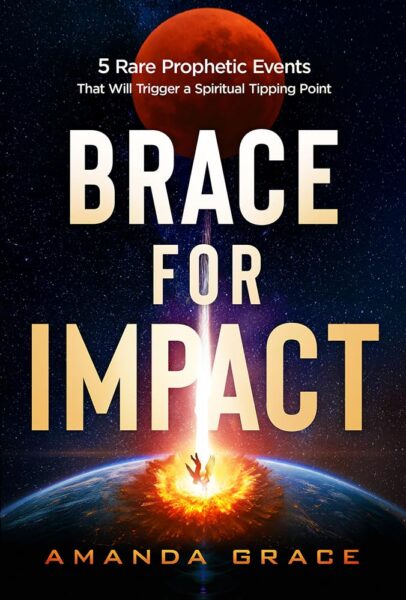
Order Amanda Grace’s New Book, “Brace For Impact” on Amazon.com!

Mitchell also referenced personal and spiritual trials the church has endured.

“The devil took his best shot last year, but [we’re] still standing, though,” he said.

Rather than cultivating exclusivity, Mitchell said the goal is accessibility.

“We want to create an atmosphere that’s not so stuffy that anybody can come from any walk of life and feel comfortable,” he said.

Throughout the service, Mitchell repeatedly invited congregants to respond publicly to what God has done in their lives.

“Does anybody got that kind of testimony? All right. You give Him praise in this house,” he said.

CNN’s report also highlights Mitchell’s emphasis on spiritual urgency, including moments he described outside the pulpit.

“Three a.m., 3:00 a.m. there, I am weeping on the floor as I’m hearing this warning of God that time is coming to an end,” Mitchell said.

Rejecting shallow motivational preaching, Mitchell told the crowd, “This ain’t no pep talk, this real life. Come on, put your hands together and give Him praise.”

As attendance has swelled from roughly 200 people to about 6,000 each Sunday, Mitchell acknowledged the visible crowds are only part of the story.

“Yes, people do stand in line for hours to get into these gatherings, but something is happening on the inside that’s making them… want to be out there. I do feel overwhelmed at the amount of people,” he said.

He added, “But all of the things that we are busying ourselves with –”

The CNN segment also explored Mitchell’s personal testimony, including his conversion after a life-altering moment in 2003.

“I knew I was different; my heart was different. Something changed in my heart, and for the first time, I felt bad about the wrong that I was doing. So, God literally met me in that bathroom, Nov. 2003. And that day changed the whole trajectory of my life,” Mitchell said.

Mitchell also addressed the church’s rapidly expanding digital audience.

“To all of our digital disciples watching live right now across America and around the world, you are our family,” he said.

With more than 72 million YouTube views across over 50 countries, the message of 2819 Church is now reaching far beyond Atlanta. Mitchell said the response reflects a deeper reality in the world today.

“Whether we’re young or old, black, white, brown, we all can agree that we live in a world that is broken when we see violent weather patterns, we see wars, we see crime, murders, lawlessness,” he said.

For Mitchell, the guiding principle behind the church’s growth remains simple and unwavering.

“I want to be faithful to whatever the Bible says,” he said.

James Lasher, a seasoned writer and editor at Charisma Media, combines faith and storytelling with a background in journalism from Otterbein University and ministry experience in Guatemala and the LA Dream Center. A Marine Corps and Air Force veteran, he is the author of The Revelation of Jesus: A Common Man’s Commentary and a contributor to Charisma magazine.


Pastor Warns Acclaimed Film ‘Sinners’ Carries Spiritual Danger Despite Golden Globes Success

As Hollywood continues to celebrate the film Sinners, a number of Christian leaders are urging believers to exercise spiritual discernment, warning that cultural acclaim does not neutralize spiritual danger.

The Ryan Coogler-directed film received two awards at Sunday night’s Golden Globe Awards after earning seven nominations, the third most among films this year. Sinners won the Cinematic and Box Office Achievement award, a category introduced in 2024 to recognize commercially successful films often overlooked by award shows. The movie grossed nearly $280 million domestically and finished as the No. 7 film of the year in the United States, while earning a rare 97% score on Rotten Tomatoes.

But while the industry applauds the film’s success, Dr. Kynan Bridges, bestselling author, apostolic leader and senior pastor of Grace & Peace Global Fellowship, says Christians should be deeply troubled by what the film celebrates beneath the surface.

“I want to tell you the shocking truth about the recent Ryan Coogler film called Sinners,” Bridges said in a video message recorded while traveling. “The truth of the matter is the film is disturbing.”

Bridges acknowledged the film’s artistic achievements and box office dominance, noting its critical acclaim and massive popularity. However, he warned that the danger lies not in the craftsmanship but in the spiritual worldview being promoted.

“What’s more disturbing about this film is people’s response to it,” he said. “The blind buy-in, especially from the African-American community, is what concerns me.”

The film, which follows twin brothers returning to their hometown to open a juke joint amid threats from the Ku Klux Klan and vampires, is layered with symbolism Bridges says should not be ignored.

“The elements in the film and the symbolism in the film represent a departure from Christianity and Judeo-Christian ethics into African spiritism, voodoo, hoodoo, witchcraft,” Bridges said. “These things were deified and glamorized. They were glorified in this film.”

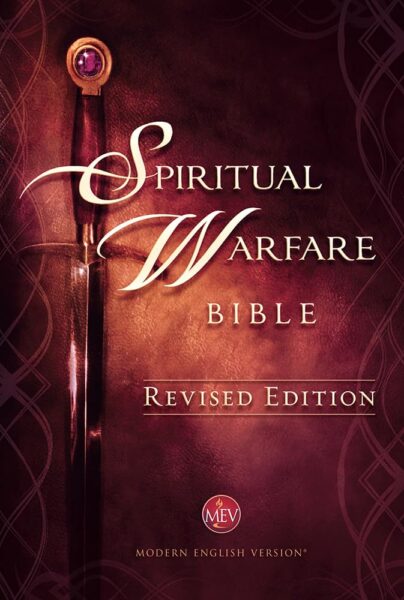
Order Your Copy of the Spiritual Warfare Bible on Amazon.com!

According to Bridges, Sinners goes far beyond fictional horror tropes and instead presents practices Scripture clearly condemns.

“There’s a scene in the film where the main character is singing a blues song, but the song opens up a spiritual portal,” he said. “All these ancient ancestral performers manifest themselves. That’s not harmless symbolism. That’s necromancy. That’s divination.”

Bridges pointed specifically to the portrayal of music as a spiritual conduit, referencing interviews in which Coogler described feeling the presence of deceased relatives through jazz music.

“This is necromancing, y’all,” Bridges said. “It’s divination.”

The pastor also criticized what he described as ethnocentrism disguised as empowerment.

“We’re being sold the spirit of ancestral worship under the guise of black identity, under the guise of black empowerment,” he said. “No matter what is done, as long as it’s called empowerment, people think it’s good. That is dangerous.”

While acknowledging Coogler’s talent and the film’s technical excellence, Bridges emphasized that artistic skill does not sanctify spiritual content.

“Skill is skill,” he said. “I’m not taking away from the cinematography or the angles. But what I’m concerned about is the idolatry of demonic belief systems and the promotion of sensuality and perversion.”

At its core, Bridges said, the film’s message is a rejection of Christ.

“The essence of the movie Sinners is the rejection of Christ,” he said. “The main character is a preacher’s son who rejects the call of God, rejects ministry, rejects Christ, and chooses the world.”

Although Sinners fell short in categories such as best drama, best actor, best screenplay and best director, Bridges said the film’s cultural influence remains significant and spiritually troubling.

“This film is an ode to the old adage that art imitates life,” he said. “This is where we are now.”

Bridges warned that Christians cannot afford to passively consume culture without discernment.

“The demonic is not something we play with,” he said. “It’s something we warfare against in the spiritual realm.”

He concluded with a sobering assessment of the broader cultural moment.

“There is a rejection of Christianity. There is a rejection of God,” Bridges said. “And I believe this is the problem we are facing right now.”

James Lasher, a seasoned writer and editor at Charisma Media, combines faith and storytelling with a background in journalism from Otterbein University and ministry experience in Guatemala and the LA Dream Center. A Marine Corps and Air Force veteran, he is the author of The Revelation of Jesus: A Common Man’s Commentary and a contributor to Charisma magazine.


Christians Were Never Meant to Be Passive: Pick Up Your Sword and Fight

A subtle but devastating lie has crept into much of modern Christianity, the idea that believers are meant to survive spiritual opposition rather than confront it. That lie produces timid prayers, defensive faith, and Christians who live as though spiritual resistance is something to endure rather than something to defeat.

In a recent clip from The Deep End w/Taylor Welch, Taylor Welch dismantles that mindset entirely, calling believers back to a biblical understanding of authority, dominion and offensive spiritual warfare.

“What happens when a believer gets convinced of their authority in what God is wanting to do?” Welch asks. “They begin to understand that it is actually offensive that the kingdom of darkness thought that they could do something to violate God’s supreme plan.”

That framing changes everything. Spiritual resistance is no longer something that causes fear or retreat. It is an act of defiance against God Himself, and it demands a response.

Saved to Be Used, Not to Hide

Welch confronts a version of Christianity that stops at personal salvation but never advances into purpose.

“It’s no longer I’m just like, ‘Dude, woe is me, like saved by the blood of Jesus,’” he says. “The Lord saved me so that He could use me.”

That distinction is critical. Salvation is not an endpoint. It is an authorization. Scripture is clear that believers are seated with Christ and empowered by Him, yet many live as though redemption merely grants them shelter rather than assignment.

Welch challenges that passivity head-on.

“I’m beginning to send the blood of Jesus into situations where they cannot survive contact.”

That is not poetic language. It is a declaration of warfare.

Order Your Copy of the Spiritual Warfare Bible on Amazon.com!

Offensive Warfare, Not Spiritual Self-Defense

One of the most striking aspects of Welch’s message is his rejection of defensive Christianity.

“Offensive warfare, not defensive,” he says plainly. “The Christian has got to stop trying to defend themselves from every little fly that’s floating around.”

Too often, Christians are consumed with protection prayers, constantly reacting to pressure instead of advancing God’s will. Welch argues that this posture misunderstands both authority and responsibility.

“If there is something that God is asking me to do and there’s an obstruction,” he says, “Lord, please send the blood of Jesus into that situation so that any spiritual villain, enemy or thief would begin to die.”

This is not fear-driven prayer. It is dominion-driven prayer.

No Mercy for What Defies God

Welch’s language becomes even more direct when addressing spiritual opposition.

“Rip their plans apart,” he declares. “Do not let them breathe anymore because they thought that they were bold enough and haughty enough to mock the Lord of Hosts.”

That statement alone shatters the modern tendency to soften spiritual warfare into vague encouragement. The Bible does not portray evil as something to negotiate with. It portrays it as something to be cast down, driven out and destroyed.

Welch continues, “Don’t let them function. Don’t let them survive this. Close the doors and lock them so that they must see how they have messed up.”

This is not cruelty. It is alignment with God’s justice and sovereignty.

David Didn’t Ask. He Acted.

Welch turns to David as a biblical example, rejecting the idea that faith is passive trust without confrontation.

“David is not like, ‘The Lord is my shepherd and so whatever He wants to have happen happens,’” Welch says. “No, he goes, ‘No, this is the Lord’s. You’ve made a mistake. You’ve crossed the line.’”

David did not plead. He declared.

“You have defied the plans of God,” Welch continues, paraphrasing David’s posture. “Therefore, I will cut your head off.”

That is biblical faith in action, bold, decisive and unafraid of confrontation.

Stop Begging. Start Warring.

Welch’s final challenge leaves no room for ambiguity.

“Stop begging God to save you,” he says. “Learn how to memorize Scripture. Learn how to come into your place as a chosen son or daughter and begin to do warfare.”

This is the conclusion every believer must face. Either Christianity is a powerless belief system meant to comfort us until heaven, or it is a kingdom mandate that authorizes believers to confront darkness here and now.

Welch makes his position clear. Believers do have authority over the devil and his minions, and the time for timid faith is over.

The enemy is not confused about his role. The only question left is whether the church will finally understand hers.

James Lasher, a seasoned writer and editor at Charisma Media, combines faith and storytelling with a background in journalism from Otterbein University and ministry experience in Guatemala and the LA Dream Center. A Marine Corps and Air Force veteran, he is the author of The Revelation of Jesus: A Common Man’s Commentary and a contributor to Charisma magazine.


Tim Tebow Reveals How God Radically Changed His Life’s Mission

Former NFL quarterback Tim Tebow recently brought a message of biblical hope and purpose into mainstream culture during an appearance on Andrew Schulz’s ‘Flagrant with Akaash Singh’ in Nov. 2025.

Tebow recently posted a clip of speaking with comedian Schulz and co-host Akaash Singh, in which he addressed some of life’s most pressing questions, including suffering, meaning and the role faith plays in a fractured world. His answers consistently pointed back to Scripture as the ultimate source of truth and direction.

View this post on Instagram

A post shared by Tim Tebow (@timtebow)

“There’s so much suffering in the world. How can a good God let so much suffering happen?” Tebow said. “The first thing that I would say is our God is not far from the suffering. Our God makes it very clear that He is near to the brokenhearted.”

Tebow grounded his perspective in the Bible, citing Isaiah 61 and Matthew 25:40 as foundational to how believers are called to live. One verse, in particular, continues to shape his outlook and actions.

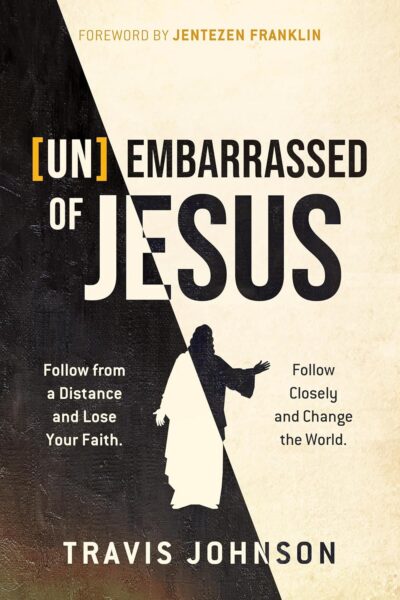
Order Travis Johnson’s New Book, “[Un]Embarrassed” on Amazon.com!

“Whatever you’ve done to these least of these brothers and sisters of mine you have done unto me,” Tebow said, explaining that Scripture commands Christians to care for those who have been “treated as less than, insignificant, dehumanized.”

He also emphasized that God did not merely observe human suffering from a distance but entered into it fully through Jesus Christ.

“Our God isn’t just near to it in that sense,” Tebow said. “He’s near to it in that He took on flesh and lived a perfect life but chose to die a death that we deserve to die and He took on the sin of all humanity upon Himself so that He would be the ransom for many.”

That biblical truth has deeply convicted Tebow and shaped his life’s mission.

“It’s been one of the most convicting things to me — if He’s near to the brokenhearted, then I should be too,” he said.

That conviction fuels Tebow’s work through his foundation, including restoring dignity to people with disabilities through Night to Shine events and helping rescue victims of human trafficking through coordinated operations worldwide. He also uses social media to encourage millions with reminders rooted in Scripture rather than culture.

“I want to be able to help bring people to God’s word so that they can see scripture answering these questions,” Tebow has said. “Yes, you have a purpose. Your life is important. Your life is valuable. Your life has meaning, and there are good works for you to do.”

In a podcast space not typically associated with faith-based conversations, Tebow’s appearance stood out. His message was clear and consistent: the Bible remains a living source of purpose, power, redemption and life, offering answers that culture continues to search for but cannot provide on its own.

James Lasher, a seasoned writer and editor at Charisma Media, combines faith and storytelling with a background in journalism from Otterbein University and ministry experience in Guatemala and the LA Dream Center. A Marine Corps and Air Force veteran, he is the author of The Revelation of Jesus: A Common Man’s Commentary and a contributor to Charisma magazine.


New Report Reveals Planned Parenthood Links at Christian Colleges Nationwide

A new report warns that a significant number of Christian colleges are maintaining ties to the abortion industry despite publicly affirming Christ-centered missions.

According to a report by The Daily Wire, the study found that “more than 1 in 7 Christian colleges directly violated their professed faith in the 2024–2025 school year by maintaining a relationship with Planned Parenthood or the abortion industry,” calling the trend a rejection of “the most basic Christian value: the dignity of life.”

The study was conducted by Students for Life of America’s Demetree Institute for Pro-Life Advancement and examined only schools “directly affiliated with a Christ-centered denomination — schools that publicly affirmed faith in their mission statement.” The report found that the violations were not minor, noting that “more than one-fourth of the offending schools were Christian schools that referred students to Planned Parenthood as a ‘health resource.’”

Order Amanda Grace’s New Book, “Brace For Impact” on Amazon.com!

The findings raise concerns beyond ideology, as referrals to Planned Parenthood were described as harmful to both student health and spiritual integrity. “For Christian schools, such referrals don’t just pose a threat to student health; they’re a direct betrayal of the faith they proclaim,” the report stated.

The study also documented a sharp rise in abortion support among Christian colleges, reporting a 19.82% overall increase since the 2022 reversal of Roe v. Wade and a 38.63% increase since 2024. Researchers said the problem spans denominations, finding that even after excluding denominations that openly affirm abortion, “over half the remaining denominations … had at least one school with ties to abortion.”

Despite the findings, the report highlighted measurable progress.

During the 2024–2025 school year, “a full 50 ties between Christian schools and Planned Parenthood were severed,” and following outreach in July 2025, “four schools cut all ties to the abortion industry, and another four removed some.”

The report concluded that pressure from students, parents, alumni and donors can force institutions to “cut ties with the abortion industry or to stop falsely claiming the name of Christ.”

James Lasher, a seasoned writer and editor at Charisma Media, combines faith and storytelling with a background in journalism from Otterbein University and ministry experience in Guatemala and the LA Dream Center. A Marine Corps and Air Force veteran, he is the author of The Revelation of Jesus: A Common Man’s Commentary and a contributor to Charisma magazine.



Former In-Law Responds to Renee Nicole Good ICE Shooting With Scripture and Forgiveness on CNN

Timmy Macklin, the former father-in-law of Renee Nicole Good, spoke publicly this week about faith, forgiveness and personal responsibility following Good’s death during a federal law enforcement operation in Minneapolis.

Macklin appeared Tuesday night on CNN’s Erin Burnett OutFront, just days after Good was shot and killed by an ICE agent after striking him with a vehicle. During the interview, Macklin declined to place blame on any individual involved and instead framed the tragedy through a biblical lens.

“It’s a hard situation all the way around. It’s hard for everybody involved. The ICE agent, you know, at first, I didn’t see the footage where he was actually [hit]. … In a flash like that it’s hard to say how you would react,” Macklin said. “From my understanding, he had been through that before, maybe dragged or something. And so, like I said, it’s just a hard situation for everybody.”

Order Amanda Grace’s New Book, “Brace For Impact” on Amazon.com!

Rather than responding with anger or condemnation, Macklin emphasized a scriptural call to love, even amid loss.

“I don’t have any enemies. I love everybody. That’s what the Bible tells us: love our neighbors as we love ourselves,” he said. “But, you know, I think there’s some bad choices. And the Word says for the wrath of God will come upon the children of disobedience.”

Macklin said he does not fault law enforcement, nor does he blame Good or her partner, Rebecca Good, for the events that unfolded.

“I don’t blame ICE. I don’t blame Rebecca. I don’t blame Renee,” he said. “I just wish that, you know, if we were walking in the spirit of God, I don’t think she would have been there. That’s the way I look at it.”


Good is survived by a 6-year-old son, Macklin’s grandson.

James Lasher, a seasoned writer and editor at Charisma Media, combines faith and storytelling with a background in journalism from Otterbein University and ministry experience in Guatemala and the LA Dream Center. A Marine Corps and Air Force veteran, he is the author of The Revelation of Jesus: A Common Man’s Commentary and a contributor to Charisma magazine.


Elon Musk Says Humans Are ‘Pre-Programmed to Die’—Why His Vision of Immortality Alarms Christians

When Elon Musk says humans are “pre-programmed to die,” he is not making a casual observation about biology. He is declaring death to be a design flaw rather than a divine judgment.

“You’re pre-programmed to die. And so if you change the program, you will live longer,” Musk said during a recent interview, as reported by Fortune.

That statement strikes at the heart of the biblical understanding of life, death and the fall of man. Death is not presented in Scripture as a glitch in creation, but as the direct result of sin entering the world. By framing mortality as software that can be edited, Musk seemingly rejects the premise that death exists because humanity rebelled against God.

Longevity, in this view, is not something to be redeemed. It is something to be engineered.

Undoing the Curse Without Redemption

Musk insists the solution to aging is not especially complex.

Longevity, he said, is a problem that is not “particularly hard” to solve.

That confidence assumes death is a technical obstacle rather than a spiritual consequence. Scripture teaches that the curse placed on creation was not accidental and cannot be undone through human innovation. The curse was imposed by God Himself and is only lifted through redemption found in Jesus Christ, not redesign.

By treating death as an engineering challenge, Musk’s vision offers life extension without repentance, healing without reconciliation and renewal without submission to our Creator.

Synchronization as Proof the Clock Can Be Hacked

Musk argues that the body’s synchronized aging reveals an obvious biological clock that can be altered.

“When you consider the fact that your body is extremely synchronized in its age, the clock must be incredibly obvious,” he said. “Nobody has an old left arm and a young right arm. Why is that? What’s keeping them all in sync?”

This reasoning assumes that because aging is orderly, it is therefore editable. Scripture teaches the opposite. Order in creation reflects God’s design, not humanity’s authority over it. The exact synchronization Musk points to as evidence of hackable biology also testifies to a Creator who set boundaries that mankind was never meant to cross.

Order Amanda Grace’s New Book, “Brace For Impact” on Amazon.com!

A False Promise of Salvation Through Technology

Musk’s vision of the future of medicine goes far beyond treating disease. He predicts a complete transfer of trust from human skill to machines.

“I wouldn’t want the best ophthalmologist with the steadiest hand out there with a hand laser on my eyeball,” Musk said. “It’s going to be like that.”

He claims robotic surgeons will outperform humans and eliminate error, declaring, “Everyone will have access to medical care that is better than what the president receives right now.”

This is not simply optimism about medical advancement. It is a promise of universal deliverance through technology. In Scripture, salvation is never universal, never automatic and never distributed by systems. It is personal, costly and rooted in submission to God.

Immortality Without God Produces Permanent Power

Musk himself acknowledges the danger of extended life, even as he promotes the technology that would make it possible.

“If we live for too long, I think it ossifies society—there’s no changing of the leadership because leadership never dies,” he said.

That warning reveals the actual consequence of engineered longevity: power that never relinquishes control. According to Scripture, death restrains evil by limiting human dominion. Remove it, and corruption becomes permanent (Eccl. 8:8; Job 14:1-5).

The Bible consistently warns against systems that promise life while consolidating authority. A world where leaders do not die is a world where accountability disappears.

The Old Lie, Repackaged for a Digital Age

Musk has previously said he would “prefer to be dead” than live to 100 with dementia or as a burden to society, exposing the contradiction at the center of the longevity movement. The same worldview that seeks to defeat death also recoils at the reality of prolonged life without purpose.

The pursuit of immortality without God is not new. It is the oldest lie in Scripture, now framed in the language of AI, robotics and biology. Where the serpent once said, “You will not surely die,” modern technologists say death is merely a program waiting to be rewritten.

The problem is not aging. The problem is sin. And no amount of reprogramming can erase the curse humanity brought upon itself.

James Lasher, a seasoned writer and editor at Charisma Media, combines faith and storytelling with a background in journalism from Otterbein University and ministry experience in Guatemala and the LA Dream Center. A Marine Corps and Air Force veteran, he is the author of The Revelation of Jesus: A Common Man’s Commentary and a contributor to Charisma magazine.


Rusty Yates Says He Forgives Andrea Yates, Even After the Unthinkable

Nearly 25 years after the deaths of his five children, Rusty Yates continues to wrestle with grief, faith and forgiveness, not as abstract ideas, but as lived realities forged in unspeakable loss.

In an interview reported by the Daily Mail, Yates said he has forgiven his former wife, Andrea Yates, who drowned their children during a psychotic break in 2001. His words are not an attempt to rewrite history or soften the horror of what happened. Instead, they reflect an acknowledgment of mental illness and a faith that refuses to give way to hatred.

“It’s just that we shared a special time in life and we’re the only ones remaining who can reminisce about those good times that we had,” Yates told the Daily Mail. “That’s really all it is. I cherish that time; she cherishes that time. The tragedy obviously has been really hard on both of us.”

Yates said he still speaks with Andrea monthly and visits her once a year at Kerrville State Hospital, where she has lived since 2007 after being found not guilty by reason of insanity. His continued contact, he said, is not denial, but recognition of a shared loss no one else can fully understand.

“I think in most respects, it’s been harder on her than me because we both dealt with a serious mental illness, but she was the one who was mentally ill,” he said. “We both lost our children, but it was by her hands. We both dealt with a cruel state prosecuting her for this, but she was the one on trial.”

The Yates family tragedy has been revisited in a new HBO Max documentary, The Cult Behind the Killer: The Andrea Yates Story, which suggests apocalyptic preacher Michael Woroniecki influenced Andrea Yates’ actions.

Rusty Yates rejected that claim, placing responsibility squarely on untreated mental illness.

Order Don Dickerman’s New Book, “Death Row Redemption” on Amazon.com!

“I can definitely say that without the [mental] illness, it wouldn’t have happened,” he said. “I can definitely say that if she’d gotten better care, it wouldn’t have happened.”

Both Rusty and Andrea Yates were devout Christians who wanted a large family. However, Andrea’s history of depression, suicide attempts and postpartum psychosis was well documented, and doctors had warned against further pregnancies. She later stopped taking medication while pregnant, a decision Rusty said he did not fully understand at the time.

“I didn’t know she was psychotic,” he said. “I thought she was depressed. There’s a big difference.”

Yates later remarried, divorced and raised another son, but he said he informed Andrea before participating in the documentary, even though she preferred privacy. “I told her I had to balance that with defending our family and really, to try to do what I can to prevent something like this from happening to any other families,” he said.

Andrea Yates remains institutionalized and could theoretically apply for release, though Rusty doubts that will ever occur. “No judge would ever want to be the one to sign off on an order releasing the infamous Andrea Yates,” he said. “But I don’t think she would ever want to be released either.”

For believers, Yates’ words land in difficult territory. Forgiveness does not erase consequences, and compassion does not excuse sin. Still, mercy matters. His testimony is restrained, measured and deeply Christian, acknowledging evil, recognizing brokenness and choosing grace anyway.

James Lasher, a seasoned writer and editor at Charisma Media, combines faith and storytelling with a background in journalism from Otterbein University and ministry experience in Guatemala and the LA Dream Center. A Marine Corps and Air Force veteran, he is the author of The Revelation of Jesus: A Common Man’s Commentary and a contributor to Charisma magazine.


5 Reasons the Bible Can Feel Like Homework Instead of Daily Bread

Many Christians know the routine well. You open the Bible, read the assigned passage, close the cover and move on with your day. Yet by the time you’re finished, little to nothing stands out. The words were read, but they didn’t linger. For countless believers, Scripture can begin to feel more like a spiritual obligation than a living source of nourishment.

That tension is the focus of a recent teaching by Vlad Savchuk, pastor of HungryGen Ministries.

In his message, Savchuk argues the problem is not the Bible itself or even a lack of discipline, but the way many believers approach God’s Word. His solution centers on five practical shifts that move Scripture from something we skim into something that actually feeds the soul.

Order Vlad Savchuk’s New Book, “Make the Devil Homeless” on Amazon.com!

Five reasons you read the Bible and remember nothing

  1. Start with hunger, not habit
    Savchuk teaches that Bible reading begins in the heart, not with tools or techniques. He emphasizes that Scripture is described as spiritual food, not a task to complete. Reading without hunger is like sitting down to a meal without an appetite. Before opening the Bible, he encourages believers to pause and invite the Holy Spirit, praying simply, “Holy Spirit, I am here. I am hungry. Open my eyes to see what you are saying.”
  2. Build a simple, sustainable routine
    According to Savchuk, most people don’t struggle to understand Scripture as much as they struggle to show up consistently. He urges believers to remove friction by choosing a specific time, a regular place and basic tools. Treating Bible reading as a non-negotiable appointment helps establish a rhythm in which Scripture becomes part of daily life rather than something squeezed in when convenient.
  3. Slow down with the SOAP method
    Savchuk points to the SOAP method as a practical way to move from reading to remembering. SOAP stands for Scripture, Observation, Application and Prayer. Instead of rushing through large portions, he encourages focusing on short passages, writing them out, noting what stands out, applying the truth personally and then responding to God in prayer. He stresses that transformation happens not by gathering information but by applying what is read to everyday life.
  4. Read in context and let Scripture interpret Scripture
    One reason people misunderstand or misuse the Bible, Savchuk explains, is that verses are often pulled out of context. He warns against imposing personal ideas on the text and instead encourages reading passages within their broader biblical context. Letting Scripture explain Scripture through cross-references and related passages protects believers from error and deepens understanding.
  5. Grow in community and obey what you already know
    Savchuk emphasizes that spiritual growth was never designed to happen in isolation. While personal Bible study is essential, believers are also called to learn with others in the church. He adds that the greatest obstacle is not a lack of knowledge but a lack of obedience. Scripture shapes lives only when it is lived out, not merely studied.

Savchuk’s message echoes a consistent theme found throughout Scripture. God’s Word is repeatedly described as bread, light and life, not as information to be collected but as truth meant to be embodied.

When we approach the Bible with hunger, humility and obedience, it becomes more than words on a page. It becomes our daily bread, shaping hearts, renewing minds and drawing us into deeper fellowship with God, just as Scripture was always intended to do.

James Lasher, a seasoned writer and editor at Charisma Media, combines faith and storytelling with a background in journalism from Otterbein University and ministry experience in Guatemala and the LA Dream Center. A Marine Corps and Air Force veteran, he is the author of The Revelation of Jesus: A Common Man’s Commentary and a contributor to Charisma magazine.


Revealing ‘the Persian Mystery’: Has an Ancient War Awakened in the Middle East?

As missiles streaked across Middle Eastern skies and the world braced for wider war, Rabbi Jonathan Cahn says something far older than modern geopolitics was stirring beneath the surface.

On a recent episode of The Jonathan Cahn Podcast, Cahn described Iran’s direct missile attack on Israel as the visible eruption of a mystery embedded in biblical prophecy for millennia.

“It was the first time ever that Iran directly launched an attack on the nation of Israel,” Cahn said, calling the moment unprecedented and deeply significant.

Cahn framed the sudden global fixation on Israel as a signal long anticipated by Scripture.

“The Bible says that at the end of the age, the world will be focused on Israel,” he said. “Israel will be the center of controversy. It’s going to be attacked.”

According to Cahn, the events unfolding today align with a prophecy recorded in Ezekiel 38 and 39, describing a future invasion of Israel by a coalition of nations in the “latter years,” after the Jewish people are regathered to their land. One of those nations, he emphasized, is named outright. “Verse 5 says, ‘Paras, Cush and Put are with them,’” Cahn said. “Paras is Persia.”

Persia, Cahn explained, is modern-day Iran, a connection that transforms current headlines into prophetic markers. “When Ezekiel wrote this, Persia had not even come into its world empire,” he said. “Yet it names it.”

That alone, Cahn suggested, should give pause. But the mystery deepens.

Iran was not always Israel’s enemy. In fact, Cahn noted, Iran once maintained close ties with the Jewish state and became the second Muslim nation to recognize Israel. “Israel saw Iran as a natural ally,” he said. But Scripture, Cahn argued, indicated that the relationship could not endure. “According to Ezekiel, Iran could not remain an ally of Israel.”

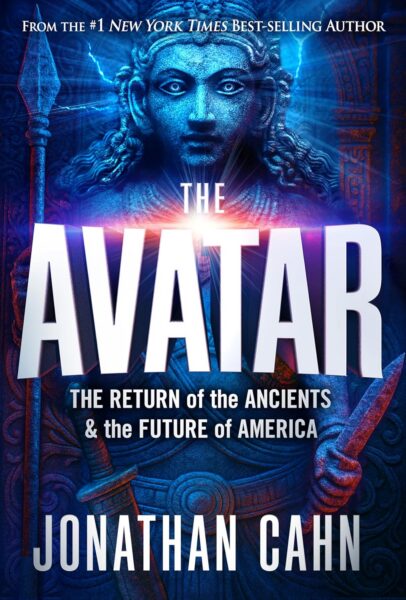
Order Jonathan Cahn’s Newest Book, “The Avatar” on Amazon.com!

The turning point came in 1979, when the Iranian Revolution overthrew the shah and installed a radical Islamic regime. “That’s when everything changed,” Cahn said.

Since then, Cahn said Iran has waged a covert war against Israel through a web of proxies, including Hezbollah, Hamas, Islamic Jihad, militias in Iraq and Syria, and the Houthis in Yemen. He tied the Oct. 7 Hamas massacre directly to Tehran. “Iran funded Hamas. Iran trained Hamas. Iran encouraged Hamas,” he said.

Yet Cahn warned that focusing solely on politics misses the deeper reality. To understand what is happening now, he turned to the book of Daniel.

In Daniel 10, an angel sent to deliver a revelation is mysteriously delayed. “The angel says he was stopped,” Cahn explained. “The angel calls the entity the Sar Malchut Paras.” Translated, he said, it means “the prince of Persia.”

Cahn described this figure not as a human ruler but as a demonic power assigned to Persia, now Iran. “Spirits do not die,” he said. “So the prince of Persia did not perish in ancient times but still exists.”

According to Cahn, that entity’s mission is singular: to oppose God’s purposes for Israel in the end times. “This demonic entity is particularly focused on the Jewish people, on Israel,” he said.

Standing in opposition, Cahn said, is Michael the archangel. “Behind the nation of Persia or Iran is the Sar Paras,” he said. “And behind the nation of Israel is Michael, the prince of your people.”

The result, Cahn argued, is that an ancient spiritual war is now manifesting in the physical world. “It’s the spiritual realm that determines the physical realm,” he said. “And it’s all here in the Word of God.”

Cahn linked Daniel’s vision to the book of Revelation, where Michael again appears in battle. “In Daniel, Michael wars against the prince of Persia,” he said. “In Revelation, he wars against the dragon.”

For Cahn, the implications are staggering. “What does this tell you?” he asked. “God is real. His Word is true. What He foretold thousands of years ago is coming true in our own day before our very eyes.”

While the revelations point to escalating conflict, Cahn ended on a reassuring note rather than a fearful one. “Do not fear the darkness,” he said. “Much, much greater is He who is in you.”

And as the mystery continues to unfold on the world stage, Cahn offered a final reminder. “For He who keeps Israel,” he said, “will keep you.”

James Lasher, a seasoned writer and editor at Charisma Media, combines faith and storytelling with a background in journalism from Otterbein University and ministry experience in Guatemala and the LA Dream Center. A Marine Corps and Air Force veteran, he is the author of The Revelation of Jesus: A Common Man’s Commentary and a contributor to Charisma magazine.