3 Lessons From Noah That Matter More Than Ever in Today’s World

Veteran Bible teacher and evangelist Perry Stone recently pointed back to the days of Noah, teaching that the ancient account offers urgent and practical instruction for believers living near the return of Christ.

Citing Jesus’ words in Luke 17 that conditions before His return would mirror the days of Noah, Stone outlined three spiritual lessons he believes the Holy Spirit impressed upon him. Each lesson centers on preparation, obedience and faith in the midst of uncertainty.

Lesson 1: God Gives Clear Warnings Before Judgment

Stone emphasized that Noah did not act on fear or speculation but on a clear warning from God. Quoting Hebrews 11:7, Stone reminded listeners that Noah was “divinely warned of things not yet seen” and responded with reverent obedience. Though the idea of a worldwide flood made no natural sense at the time, Noah trusted what God revealed.

Stone stressed that God still gives believers spiritual warnings today, often as an inner burden or check in the spirit. “Don’t ignore that,” he cautioned, explaining that Noah’s obedience began with recognizing that something was not right and responding before it was too late.

Lesson 2: God Provides a Plan to Act on the Warning

The second lesson Stone highlighted is that God never issues a warning without also providing a plan. Noah was instructed to build the ark decades before judgment came, working faithfully over a long period of time.
Order Amanda Grace’s New Book, “Brace For Impact” on Amazon.com!

Stone explained that while modern believers may not have 100 years to prepare, God still gives plans with specific timing. “God will give you a plan in which you will have weeks or months or maybe a few years to work that plan,” he said. The purpose of Noah’s plan was simple but profound: save his household from what was coming.

Stone compared this to Lot being warned to leave Sodom and flee to safety, noting that divine instruction is always connected to protection and positioning.

Lesson 3: God Gives Signs to Confirm What He Has Spoken

Stone’s third lesson focused on Methuselah, whom he described as a living sign for Noah. According to Stone, Methuselah’s name indicates that his death would signal the coming flood. When Methuselah died, judgment followed shortly afterward.

“Methuselah was a sign for 969 years that when he died, it was going to happen,” Stone said. The presence of that sign reminded Noah daily that God’s word would be fulfilled exactly as spoken.

Stone explained that God continues to give signs to both the church and the world as reminders that His prophetic timeline is advancing and that preparation matters.

A Call to Hopeful Readiness

Stone closed by encouraging believers not to view Noah’s story through fear, but through faith and confidence in God’s faithfulness. Judgment did not come until the ark was finished, just as end-times events will not unfold until God’s redemptive purposes are complete.

The lesson, Stone said, is not panic but preparation. God warns because He loves. He plans because He protects. And He gives signs so His people can walk in peace, confidence and readiness, knowing that obedience today positions them for deliverance tomorrow.

James Lasher, a seasoned writer and editor at Charisma Media, combines faith and storytelling with a background in journalism from Otterbein University and ministry experience in Guatemala and the LA Dream Center. A Marine Corps and Air Force veteran, he is the author of The Revelation of Jesus: A Common Man’s Commentary and a contributor to Charisma magazine.


Is Iran’s Call for Jihad a Precursor to the Ezekiel 38 War?

Across the Middle East, the convergence of violent repression, escalating rhetoric and openly religious warfare language has many Bible-focused observers asking a familiar question. Are we watching the groundwork being laid for end-times events described in Scripture? While caution is always warranted, the alignment of geopolitical and ideological forces has renewed interest in biblical calls to watch, discern and understand the times in which we live.

That sense of prophetic urgency is central to recent reporting by Erick Stakelbeck on The Watchman Newscast, where he has been closely tracking developments inside Iran and the rising threat of broader conflict.

Iran’s Crackdown and the Threat of Holy War

Stakelbeck describes the situation inside Iran as historic brutality. “What we are witnessing right now in the streets of Iran is one of the greatest mass slaughters from a government upon its own people since the days of Mao in China and Stalin in the Soviet Union,” he said.

According to reports, more than 16,000 Iranians have been killed in a matter of weeks, with many more wounded or arrested.

While much of the global media has shifted focus elsewhere, Stakelbeck warned the crisis is far from over. “This butchery, this genocide of the Iranian people, courtesy of the ayatollahs, is happening in real time,” he said, adding that “the silence in much of the world is deafening.”


The stakes escalated further after Iranian officials issued stark warnings toward Washington. Stakelbeck highlighted a statement from Iran’s parliament declaring that any attack on Supreme Leader Ayatollah Ali Khamenei would amount to “a declaration of war with the entire Islamic world.” Stakelbeck summarized the message plainly. “They are declaring an Islamic jihad against the United States, a global Islamic holy war.”

He also warned that any U.S. strike would likely provoke missile attacks against American assets and Israel. He described the scenario as a nightmare but stressed that “it’s all on the table right now.”

Ezekiel’s Prophecy and the Alignment of Nations

For students of biblical prophecy, Iran’s posture carries added significance. In Ezekiel chapters 38 and 39, Persia, the ancient name for modern Iran, is listed among the nations that come against Israel in a future conflict often referred to as the Ezekiel War.

Scripture does not present that war as a sudden event without context. It assumes established alliances, hardened ideologies and a shared hostility toward Israel. While the full scope of Ezekiel’s prophecy includes unmistakable divine intervention that has not yet occurred, many observers see current developments as potential precursor conditions, with pieces moving into position long before the final conflict.

Watching With Wisdom, Not Speculation

The Bible consistently calls God’s people to discernment rather than sensationalism. In 1 Chronicles, the Sons of Issachar are praised as men “who had understanding of the times, to know what Israel ought to do.”

Jesus echoed that expectation in the New Testament when He rebuked those who could interpret the weather but failed to recognize the spiritual signs unfolding before them.

Taken together, Stakelbeck’s reporting and the biblical framework point to a prophetic reality. While this moment does not fulfill Ezekiel 38 outright, the convergence of Iran’s aggression, religious war rhetoric and regional instability underscores the need for wisdom, prayer and spiritual alertness.

James Lasher, a seasoned writer and editor at Charisma Media, combines faith and storytelling with a background in journalism from Otterbein University and ministry experience in Guatemala and the LA Dream Center. A Marine Corps and Air Force veteran, he is the author of The Revelation of Jesus: A Common Man’s Commentary and a contributor to Charisma magazine.


Jesus’ Mysterious Words About John the Apostle Still Puzzle Christians Today

What if one of the most overlooked details in the New Testament completely changes how you see the apostle John?

In this video, Joe Kirby takes viewers on a fast-moving, eye-opening walk through John’s life that raises a question most people have never seriously considered — and explains why Jesus’ own words about John still spark debate nearly 2,000 years later. This isn’t speculation for shock value. It’s a carefully connected timeline that blends Scripture, early church history and archaeology to show why John’s story stands apart from every other apostle.

Kirby breaks down how John went from a young, impulsive fisherman to the last surviving eyewitness of Jesus’ ministry, resurrection and glory. He explores why John seemed uniquely close to Jesus, why Jesus entrusted him with Mary at the cross and how a single statement from Christ ignited centuries of confusion over whether John would ever die.

Order James Lasher’s New Book, “The Revelation of Jesus” on Amazon.com!

Along the way, the video clears up myths, confronts modern internet rumors head-on and shows why the Bible itself already answers the question — if you’re willing to slow down and read it carefully.

If you care about Scripture making sense, about separating truth from tradition and about strengthening your confidence in what the Bible actually teaches, this is worth your time. The video doesn’t just explain John’s timeline — it reinforces why the resurrection matters, why church history matters, and why eternal life isn’t about legends, but about trusting the same Jesus John followed to the end.

Here’s what the video digs into:

  • Why John may have been closer to Jesus than most people realize
  • How archaeology supports the Gospel timeline instead of undermining it
  • John’s early mistakes — and why they matter for believers today
  • The statement Jesus made that sparked rumors John would never die
  • What early church history actually says about John’s final years
  • Why modern claims that John is still alive collapse under biblical scrutiny
  • How John’s life ultimately points to the promise of resurrection for all who believe

The video from Off the Kirb Ministries is a strong reminder that the Bible doesn’t fall apart under hard questions — it holds together. If you’ve ever wanted a clearer, more grounded understanding of John’s life and legacy, this is one you’ll want to watch all the way through.

James Lasher, a seasoned writer and editor at Charisma Media, combines faith and storytelling with a background in journalism from Otterbein University and ministry experience in Guatemala and the LA Dream Center. A Marine Corps and Air Force veteran, he is the author of The Revelation of Jesus: A Common Man’s Commentary and a contributor to Charisma magazine.


Kingdom Order, Not Wealth Chasing, Is the Key to Biblical Prosperity

For many Christians, money remains one of the most emotionally charged topics in faith conversations.

In church culture, prosperity is often viewed with suspicion, while the broader culture openly glorifies wealth, status and success as markers of personal value. The result is tension, confusion, and in some cases guilt, even for those sincerely seeking to honor God.

In a recent podcast, Pastor Kap Chatfield and Luke Reelfs explored this tension through a Kingdom lens, arguing that the issue is not prosperity itself but a misunderstanding of order, identity and purpose.

Rather than framing money as either dangerous or divine, the discussion pointed toward a biblical middle ground where provision flows from alignment with God’s design.

The Problem With the Extremes

Scripture does not present poverty as a virtue or wealth as a vice, yet both ideas have taken root in different spaces. In secular culture, money is often elevated to a measure of worth, pushing people to sacrifice integrity, family and peace in pursuit of financial success.

In contrast, church culture can swing toward the opposite extreme, treating prosperity as spiritually suspect or inherently corrupting.

Both approaches miss the heart of God.

When money becomes an identity, it enslaves. When money becomes taboo, it produces fear and passivity. Neither reflects the Kingdom pattern found in Scripture.

Order Kap Chatfield’s New Book, “The Power to Prosper” on Amazon.com!

Identity Comes Before Increase

A central theme of the conversation was that fulfillment begins with identity, not provision. Scripture consistently points to sonship and relationship with God as the foundation of contentment. When identity is secure, money loses its power to define or dominate.

The discussion revisited the Genesis account, noting that humanity’s first temptation was rooted in perceived lack. Eve was drawn toward what she believed she did not have, despite living in abundance. That same scarcity mindset, when left unchallenged, still distorts how people relate to God, work and provision today.

Kingdom prosperity does not begin with acquiring more but with recognizing what God has already supplied and trusting Him as the source.

Becoming Comes Before Having

Rather than promoting material ambition, the conversation emphasized growth in character, responsibility and stewardship. God’s concern, they suggested, is not primarily what people possess but who they are becoming.

Increase requires capacity. Leadership, generosity, and influence must be developed before they can be sustained. From this perspective, the desire for more is not sinful when it is tied to service, maturity and love for others.

Business and income, then, are not competing with faith but functioning as tools. Money becomes the byproduct of value creation, not the pursuit itself.

Seeking the Kingdom First

True prosperity was defined not as excess but as having more than enough to fulfill God-given assignments and bless others. When believers prioritize God’s Kingdom, provision follows naturally, not as a reward for striving but as the fruit of alignment.

Rather than chasing wealth or rejecting it outright, Kingdom order invites believers to seek God first, trust His design and steward what He provides with wisdom and humility.

In that order, prosperity no longer produces guilt or pride. It becomes a quiet testimony of God’s faithfulness at work through obedient lives.

James Lasher, a seasoned writer and editor at Charisma Media, combines faith and storytelling with a background in journalism from Otterbein University and ministry experience in Guatemala and the LA Dream Center. A Marine Corps and Air Force veteran, he is the author of The Revelation of Jesus: A Common Man’s Commentary and a contributor to Charisma magazine.


Jared Kushner, the Board of Peace and Growing End-Times Questions

The recent announcement of a new international “Board of Peace” has reignited debate among Bible prophecy watchers, particularly after reports that Jared Kushner has been appointed to the body. While the board is being framed as a diplomatic effort aimed at stabilizing the Middle East, some Christian analysts argue the structure and timing raise serious prophetic concerns.

Those questions were recently explored in a video by the AoC Network, which examined Kushner’s expanding influence and how it intersects with long-standing biblical warnings about false peace and centralized power.

What Is the Board of Peace?

Public details about the Board of Peace remain limited, but it has been described as a platform designed to facilitate negotiations and long-term cooperation in the Middle East. President Donald Trump previously indicated that its members would be revealed at a later date. Kushner, who played a significant role in Middle East diplomacy during Trump’s first term, has since been reported as one of its appointees.

Observers note that the formation of a peace body led by unelected figures mirrors a recurring biblical theme in which authority is exercised without traditional political titles.

Kushner’s Expanding Role in the Middle East

Kushner has remained deeply involved in Israel-related initiatives despite holding no formal government position. During Trump’s first administration, he was instrumental in negotiating the Abraham Accords, which normalized relations between Israel and several Arab nations.

He also advised on the relocation of the U.S. Embassy to Jerusalem and has continued to participate in discussions surrounding Gaza’s future. Analysts argue that his continued presence at the center of regional planning places him in a uniquely influential position as developments accelerate.

Order James Lasher’s New Book, “The Revelation of Jesus” on Amazon.com!

Peace, Power and Biblical Warnings

Scripture repeatedly warns of a period marked by declarations of peace and security that precede sudden disruption. The books of Daniel and Revelation describe a future system in which power is distributed among influential leaders whose authority shapes global outcomes without the trappings of monarchy.

The concern raised is not about identifying a single prophetic figure but recognizing the emergence of a framework consistent with biblical descriptions of a deceptive global order.

Technology and Control Infrastructure

Particular attention has been given to redevelopment concepts for Gaza that emphasize advanced technology, artificial intelligence and digital infrastructure. While such proposals are often presented as economic solutions, critics argue that centralized digital systems closely resemble the economic controls described in Revelation 13.

Biblical prophecy, they argue, suggests such systems develop gradually through interconnected networks that regulate participation in commerce and society rather than appearing overnight.

Rejecting Premature Conclusions

Despite heightened concern, the video stresses the importance of restraint. Scripture describes unmistakable signs accompanying the arrival of the Antichrist, including global worship, overt supernatural deception and the abomination of desolation. None of those conditions are currently present.

Current developments, therefore, are framed as preparatory rather than definitive.

A Call for Discernment

The message ultimately points toward vigilance rather than fear. While global systems may be aligning in ways that echo biblical warnings, believers are urged to remain grounded in Scripture and sober in interpretation.

Rather than rushing to label individuals, the emphasis is on understanding the spiritual trajectory of the world and recognizing that, despite rapid change, God’s sovereignty remains unshaken.

James Lasher, a seasoned writer and editor at Charisma Media, combines faith and storytelling with a background in journalism from Otterbein University and ministry experience in Guatemala and the LA Dream Center. A Marine Corps and Air Force veteran, he is the author of The Revelation of Jesus: A Common Man’s Commentary and a contributor to Charisma magazine.


Revelation 13’s Most Ignored Character May Explain Global Control

Revelation 13 introduces two figures who dominate the final chapter of human history: the Antichrist and the False Prophet. While the Antichrist often receives the most attention, a recent discussion on Prophecy Watchers argues the lesser-known figure may be just as critical, if not more so, to how end-times control is enforced.

“The Antichrist doesn’t rule alone,” J.B. Hixson said to host Mondo Gonzales. “He has this other figure with him, this false prophet.” Scripture later confirms their joint fate, describing both being cast into the lake of fire, underscoring their shared authority and responsibility.

Hixson described the False Prophet as the operational force behind the Antichrist’s reign. While the Antichrist claims worship and political authority, the False Prophet ensures compliance. “The Bible doesn’t say they create the system,” he said. “They just take the helm of it.” That distinction, he argued, explains why global infrastructure must already exist before the Antichrist fully rises to power.

The Rise of Technocracy

Central to that infrastructure is technocracy, defined as governance through technology. The discussion emphasized that Revelation’s global system does not emerge overnight. Instead, it develops gradually through advances in surveillance, automation and data-driven control.

“Rule using technology,” Hixson said, “is exactly what the False Prophet is going to orchestrate.”

Artificial intelligence plays a major role in that framework, though both Hixson and Gonzales were careful to note AI itself is not inherently evil. “It’s not the boogeyman,” Gonzales said. “It’s a technology.” Like money or the internet, its moral value depends on how it is used.

Still, Hixson warned that AI gives those seeking power an unprecedented tool. “It plays right into the hands of the Luciferians who want to feign being God,” he said, citing its ability to mimic omniscience and omnipresence through surveillance and data aggregation.

Order James Lasher’s New Book, “The Revelation of Jesus” on Amazon.com!

Economic Enforcement and Digital Currency

Revelation 13’s warning that no one can “buy or sell” without compliance has long puzzled readers. Hixson and Gonzales argued modern digital currency systems now make that scenario plausible.

For centuries, Hixson said, believers wondered how such control could function globally. “How in the world can the Antichrist actually stop you from making a transaction on the other side of the world?” he asked. “Well, enter global digital ID, global digital currency.”

He likened today’s fragmented systems to Christmas lights waiting to be plugged into a single outlet. While digital currencies exist in different regions, he believes a global crisis will unify them. “Eventually, it’s all going to come under the head of one global currency,” he said.

Miracles and Religious Deception

The False Prophet’s power is not merely economic. Revelation says he performs signs and wonders, and Hixson believes those miracles may be genuinely supernatural. “They could be supernatural,” he said, pointing to biblical precedents in Exodus.

More troubling, Hixson and Gonzales warned of growing religious deception driven by technology. Hixson referenced the rise of “AI Jesus” tools that offer spiritual guidance without repentance or correction. “He’s saying things diabolically opposed to what Jesus Himself said,” he said. “But people think he’s the real Jesus.”

Discernment in the Last Days

The conversation repeatedly returned to one conclusion: the system described in Revelation appears increasingly feasible. “We’re not going from a Mayberry-type existence overnight,” Gonzales said. “The system is being put in place.”

Jesus warned His followers to read the signs of the times. “If the stage is being set for events that take place after the rapture,” Hixson said, “that can only mean one thing. The rapture is closer than ever.”

The rise of the False Prophet, they argued, is not a reason to panic, but a reminder that the return of Christ is drawing near.

James Lasher, a seasoned writer and editor at Charisma Media, combines faith and storytelling with a background in journalism from Otterbein University and ministry experience in Guatemala and the LA Dream Center. A Marine Corps and Air Force veteran, he is the author of The Revelation of Jesus: A Common Man’s Commentary and a contributor to Charisma magazine.


A Historic and Prophetic Shift Is Unfolding on the Temple Mount

A historic change has taken place on the Temple Mount, marking the most significant shift in Jewish worship access at the site since Israel regained control of Jerusalem’s Old City in 1967.

Israeli police have allowed Jewish worshipers to ascend the Temple Mount carrying printed prayer sheets, a move that breaks with decades of enforcement tied to the long-standing status quo. The development was first reported by The Times of Israel and represents a major change in how worship restrictions are applied at Judaism’s holiest site.

For years, Jewish visitors were permitted to enter the Temple Mount under strict supervision but were barred from bringing any religious texts or prayer materials. Even silent prayer could result in removal or detention.

That line has now been crossed.

What Changed on the Mount

According to reporting by The Times of Israel, the change followed a request from the Temple Mount Yeshiva, which advocates for Jewish prayer at the site. Printed prayer sheets were distributed to Jewish visitors prior to ascent and allowed onto the Mount under police supervision.

The material included guidance for visiting the site, prayers recited before ascending and the Amidah prayer which is central to daily Jewish worship.

Police confirmed the decision was deliberate and regulated.

“In order to maintain the existing order, it was determined that the use of these sheets would be limited solely to specific areas defined by the police,” officers said.

While restrictions remain in place regarding where prayer may occur, the approval of printed liturgy represents a step that had previously been off-limits.


A Clear Departure From Past Enforcement

The Temple Mount is the location of the First and Second Jewish Temples and has been under Israeli security control since 1967. Administrative oversight was transferred to the Jordanian-backed Islamic Waqf following Israel’s victory in the Six-Day War under agreements that sharply limited non-Muslim worship.

As The Times of Israel reported, non-Muslim prayer was effectively forbidden under those arrangements, with police routinely ejecting or detaining Jewish visitors caught praying.

That enforcement has steadily eroded in recent years. Jewish prayer on the Mount has increasingly been tolerated, including audible prayer and physical acts of worship such as bowing and prostration in designated areas. However, prayer items such as tefillin prayer shawls and printed texts remained prohibited until now.

The allowance of printed prayer sheets marks a decisive shift from tolerance to structured permission.

Prophetic Significance: Conditions Are Being Set

Biblical prophecy places the Temple in Jerusalem at the center of end-times events. The Temple is not symbolic. It is physical. Its location is fixed. Its restoration requires conditions on the ground that make worship possible.

Those conditions are now being established.

The progression is unmistakable. Jewish prayer once banned is now permitted. Prayer once forced into silence is now audible. Worship once hidden is now visible. And prayer once stripped of liturgy is now accompanied by printed texts approved by the state.

This is preparation.

Prophecy does not require the Temple to be rebuilt in a single moment. It requires access authority and normalization of worship on the site itself. Each restriction removed brings the ground closer to readiness.

What was once enforced by arrest is now managed by policy. What was once politically untouchable is now administered by police guidelines. The shift is structural and irreversible.

The Temple Mount has always functioned as a prophetic barometer. When worship advances there history moves with it. The Temple has not yet been rebuilt but the obstacles that once made its restoration impossible are being dismantled in real time.

Jerusalem remains the focal point of God’s redemptive timeline. And on the Temple Mount, what was once forbidden is now permitted — step by deliberate step.

James Lasher, a seasoned writer and editor at Charisma Media, combines faith and storytelling with a background in journalism from Otterbein University and ministry experience in Guatemala and the LA Dream Center. A Marine Corps and Air Force veteran, he is the author of The Revelation of Jesus: A Common Man’s Commentary and a contributor to Charisma magazine.


‘Sinners’ Gets Record 16 Oscar Nominations Amid Pastor’s Spiritual Warning

As Hollywood intensifies its praise of the film Sinners, Christian leaders are renewing calls for spiritual discernment, warning that unprecedented awards recognition does not neutralize what they describe as deeply troubling spiritual themes.

The nominees for the 2026 Academy Awards were announced Thursday morning, and Sinners emerged as the most-nominated film in Oscars history, earning a record 16 nominations, including Best Picture. The milestone surpasses the previous 14-nomination record held by All About Eve, Titanic and La La Land.

Directed by Ryan Coogler, the supernatural thriller stars Michael B. Jordan and Wunmi Mosaku, all three of whom received individual nominations in directing, writing and acting categories. The film’s awards momentum follows its earlier success at the Golden Globes, where it won two trophies after receiving seven nominations.

But while the entertainment industry celebrates Sinners as a landmark achievement, Dr. Kynan Bridges, senior pastor of Grace & Peace Global Fellowship, says Christians should be alarmed by what the film promotes beneath its cinematic polish.

“I want to tell you the shocking truth about the recent Ryan Coogler film called Sinners,” Bridges said in a video message recorded when the film was in theaters. “The truth of the matter is the film is disturbing.”

Artistic Praise, Spiritual Concerns

Bridges acknowledged the film’s technical excellence and commercial success, noting its massive popularity and critical acclaim. However, he warned that craftsmanship does not sanctify worldview.

“Skill is skill,” Bridges said. “I’m not taking away from the cinematography or the angles. But what I’m concerned about is the idolatry of demonic belief systems and the promotion of sensuality and perversion.”

The film follows twin brothers returning to their hometown to open a juke joint while facing threats from the Ku Klux Klan and supernatural forces, including vampires. Bridges said the story is layered with symbolism that should not be dismissed as mere fiction.

“The elements in the film and the symbolism in the film represent a departure from Christianity and Judeo-Christian ethics into African spiritism, voodoo, hoodoo, witchcraft,” he said. “These things were deified and glamorized. They were glorified in this film.”

Order Jenny Weaver’s New Book, “The Wicked World of Witchcraft” on Amazon.com!

Music, Ancestral Worship and Spiritual Portals

One scene in particular raised concern for Bridges, involving music portrayed as a gateway to the spiritual realm.

“There’s a scene in the film where the main character is singing a blues song, but the song opens up a spiritual portal,” he said. “All these ancient ancestral performers manifest themselves. That’s not harmless symbolism. That’s necromancy. That’s divination.”

Bridges also pointed to comments from Coogler in which the director discussed feeling the presence of deceased relatives through jazz music.

“This is necromancing, y’all,” Bridges said. “It’s divination.”

He warned that ancestral worship is being repackaged as empowerment, discouraging discernment.

“We’re being sold the spirit of ancestral worship under the guise of black identity, under the guise of black empowerment,” Bridges said. “No matter what is done, as long as it’s called empowerment, people think it’s good. That is dangerous.”

A Rejection of Christ

At its core, Bridges said, Sinners communicates a message that directly opposes the gospel.

“The essence of the movie Sinners is the rejection of Christ,” he said. “The main character is a preacher’s son who rejects the call of God, rejects ministry, rejects Christ, and chooses the world.”

While the film fell short in categories such as best screenplay and best director at earlier awards shows, Bridges said its growing cultural influence only heightens the need for vigilance.

“This film is an ode to the old adage that art imitates life,” he said. “This is where we are now.”

He concluded with a warning that Christians cannot afford to passively consume culture simply because it is celebrated.

“The demonic is not something we play with,” Bridges said. “It’s something we warfare against in the spiritual realm.”

“There is a rejection of Christianity. There is a rejection of God,” he added. “And I believe this is the problem we are facing right now.”

James Lasher, a seasoned writer and editor at Charisma Media, combines faith and storytelling with a background in journalism from Otterbein University and ministry experience in Guatemala and the LA Dream Center. A Marine Corps and Air Force veteran, he is the author of The Revelation of Jesus: A Common Man’s Commentary and a contributor to Charisma magazine.


Pastor Troy Brewer Says 2026 Is the ‘Year of the 6,’ and God Wants Into Your Mess

Pastor Troy Brewer says 2026 carries a prophetic emphasis many believers are missing, not because God is not speaking, but because too many voices are competing for attention.

“It’s a wonderful time to be alive,” Brewer said. “A lot of people don’t know that because they got caught up in a stream that has the wrong spirit in it.”

Brewer framed the year as “26,” with special focus on the number six, which he said consistently represents mankind in Scripture. He described it as human weakness, flesh and the exposed places of life where God often chooses to intervene.

A call to re-tune your hearing

Brewer warned that constant media consumption can distort spiritual discernment.

“No matter where you get your news from, you do not have to be deceived in the year 2026,” he said. “You’ve got to get in and get out, because it’s a septic tank.”

He urged believers to intentionally refocus on hearing God’s voice, especially at the beginning of the year.

“Everybody wants to hear God speak, but not everybody wants to be consecrated,” Brewer said. “Your mind and your heart are not for rent or for sale to anything other than the Lord Jesus Christ.”

Consecration over fascination

Drawing from his work with child rescue efforts, Brewer said believers must guard their thought life and refuse to dwell on darkness.

“I will not be fascinated or impressed with any level of evil,” he said. “I’m impressed with Jesus.”

Quoting David, Brewer emphasized the importance of keeping God central in every situation.

“I have set the Lord continually before me,” Brewer said. “No matter how ugly it is, I will set the Lord continuously before me.”

Order Amanda Grace’s New Book, “Brace For Impact” on Amazon.com!

Understanding the meaning of six

Brewer taught that the number six appears throughout Scripture as God’s “watermark” on themes related to humanity.

“Six is the number for mankind,” he said. “It’s the flesh, the mess of humanity.”

He argued that the greatest enemy believers face is not the devil or the world, but the flesh.

“If you put your flesh on automatic pilot, it drives you straight away from Jesus,” Brewer said. “It is selfish, and selfishness is the opposite of the kingdom.”

God shows up in ordinary messes

To illustrate his point, Brewer focused on Jesus’ first recorded miracle in John 2, when Christ turned water into wine at a wedding in Cana.

“This is not a miracle at the temple,” Brewer said. “This is a common event in common people’s lives.”

He noted that six stone water pots were used in the miracle, reinforcing his theme that God enters human mess rather than avoiding it.

“The key,” Brewer said, “is doing whatever He tells you to do.”

Brewer said many believers fail to invite God into areas they assume are too mundane or too broken.

“Just say, ‘I don’t have any wine in this part of my life,’” he said. “Invite the Lord into your mess.”

A year of the best wine

Brewer concluded by declaring 2026 a year of unexpected joy and breakthrough.

“This is the year of the best wine,” he said. “It’s the best in your worst. God’s extraordinary in your everyday common.”

He added that God’s greatest miracles often come in places people never thought He would show up.

“God will do a miracle in your six,” Brewer said, “and He will turn common well water into the very best and finest of wine.”

James Lasher, a seasoned writer and editor at Charisma Media, combines faith and storytelling with a background in journalism from Otterbein University and ministry experience in Guatemala and the LA Dream Center. A Marine Corps and Air Force veteran, he is the author of The Revelation of Jesus: A Common Man’s Commentary and a contributor to Charisma magazine.


Glenn Beck: Trump Just Put the World on Notice in Historic Davos Speech

World leaders gathered at the World Economic Forum in Davos were not met with applause, laughter or the usual diplomatic pleasantries when President Donald Trump took the stage. Instead, they were met with something Glenn Beck says he has never witnessed from a U.S. president.

“This is the strongest language I have ever seen a President of the United States give,” said Glenn Beck during his reaction to Trump’s speech. “He’s putting the entire world on notice.”

No Laugh Lines, No Applause

Beck emphasized the unusual atmosphere in the room, noting that even when Trump made remarks that would normally be treated as jokes, the response was silence.

“There has been no laugh line here,” Beck said. “He has said things that he means as a joke a couple of times, but you’ve noticed there hasn’t been any laugh.”

Beck described world leaders as listening intently, calling the moment “the most consequential speech I have heard a president give since possibly the Berlin Wall speech or the ‘Evil Empire’ speech.”

“But this is much, much deeper,” he added.

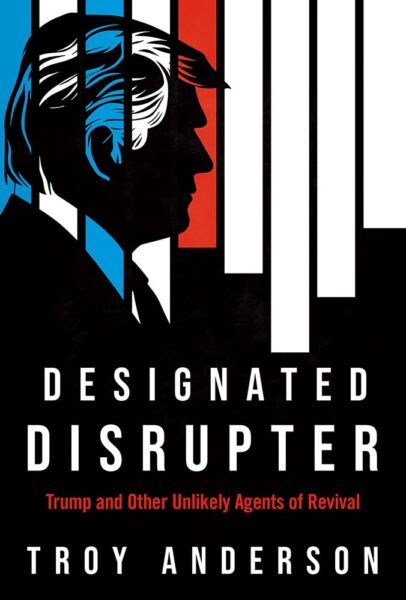
Order Troy Anderson’s New Book, “Designated Disrupter” on Amazon.com!

America’s Strength Versus Globalist Failure

According to Beck, Trump spent the early portion of the speech highlighting U.S. economic strength, energy production and industrial expansion, contrasting it sharply with Europe’s stagnation.

“He spent the first part talking about our economic growth,” Beck said, citing Trump’s claim of 5.6% GDP growth. “That’s way beyond what the IMF said that we would be growing at.”

Beck said Trump framed globalism as a failed system that hollowed out the middle class and empowered unelected bureaucracies.

“He is breaking up the United Nations. He is breaking up the bureaucracy of the WEF,” Beck said, referring to the World Economic Forum. “He is declaring an end to this globalist kind of thing that the world has been building.”

Greenland and ‘Tough Love’

One of the most striking moments, Beck said, came when Trump addressed Greenland directly.

“You can say yes to giving us Greenland,” Beck quoted Trump as saying. “You can come to the table, we’ll make a deal, or you can say no. But we will remember.”

Trump also emphasized restraint, stating, “I don’t want to attack and I won’t attack,” while still underscoring U.S. leverage.

Beck described the approach as “tough love,” comparing it to a father refusing to coddle a failing child.

“He’s saying, ‘Get your butt into the gym. Work out. Practice your jump shot,’” Beck said.

Allies Put on Notice

Trump’s remarks toward Canada stunned Beck, particularly his response to Canadian Prime Minister Mark Carney.

“Canada lives because of the U.S.,” Beck quoted Trump as saying. “Remember that, Mark, the next time you make your statements.”

Beck said Trump made it clear that decades of U.S. military protection for allies would no longer be unconditional.

“You have all benefited from the shield of the United States military,” Beck said. “We have not asked you for anything since 1945.”

A World Order Ending in Real Time

Beck said Trump’s message aligned with Carney’s own admission that “the old order is not coming back,” but with a fundamentally different conclusion.

“Trump is saying that hasn’t worked,” Beck said. “More bureaucracy will not fix it. More globalization will not fix it.”

While the tone made Beck uneasy at times, he said the clarity was necessary.

“He knows he is carrying a very, very large stick,” Beck said. “And he knows it.”

Beck concluded the moment marked a turning point.

“We’re seeing a eulogy in a funeral right now at the WEF,” he said. “The world is changing.”

James Lasher, a seasoned writer and editor at Charisma Media, combines faith and storytelling with a background in journalism from Otterbein University and ministry experience in Guatemala and the LA Dream Center. A Marine Corps and Air Force veteran, he is the author of The Revelation of Jesus: A Common Man’s Commentary and a contributor to Charisma magazine.