Church Disruptor, Former CNN Host Don Lemon Arrested by Federal Agents

Former CNN anchor Don Lemon was arrested by federal agents following his involvement in a coordinated disruption of a Sunday morning worship service at Cities Church, an incident that has since drawn national scrutiny and a federal investigation, USA Today reports.

Lemon’s arrest stems from his presence and participation in a protest that forced its way into the church during worship on Jan. 18. While Lemon has attempted to frame his actions as journalism or protected protest, video evidence and witness accounts show he accompanied protesters into the sanctuary as they intentionally disrupted a religious service on private property.


In livestream footage from Lemon’s own YouTube channel, roughly 30 protesters entered the church chanting slogans while congregants were gathered to worship. The demonstrators targeted pastor David Easterwood, accusing him of hypocrisy because of his alleged work with Immigration and Customs Enforcement.

Lead pastor Jonathan Parnell repeatedly asked the group to leave. “This is unacceptable. This is shameful. It is shameful to interrupt a public gathering of Christians in worship,” Parnell told Lemon during the disruption.

Lemon responded by invoking the First Amendment. “There is a Constitution. There is a First Amendment of freedom of speech and freedom to assemble and protest,” he said. Parnell answered plainly, “We are here to worship Jesus. That is the hope of the world.”

Pastor Jack Hibbs later addressed the incident, warning that it should concern Christians far beyond Minnesota. Hibbs said the disruption was deliberate, premeditated and unlawful, stressing that the service was held on private property. “This was a church service on a Sunday morning on private property,” Hibbs said. “Outsiders came in to private property to disrupt a religious church service, which is against the law.”

Hibbs rejected claims that the First Amendment justified the invasion, arguing that the Constitution protects worship, not its interruption. “You cannot hinder or restrict the expression of religious freedom in the United States of America,” he said. “It’s a felony.” He warned the incident was a test of Christian resolve. “This is a testing of the water to see what Christians will do,” Hibbs said. “If there’s no pushback, it will continue.”

Order Troy Anderson’s New Book, “Designated Disrupter” on Amazon.com!

Federal authorities confirmed the seriousness of the incident. The Department of Justice said it is investigating potential civil rights violations, including possible violations of the FACE Act.

Harmeet Dhillon underscored the legal boundaries, stating that a house of worship “is not a public forum for your protest” and is protected by federal law.

A White House statement issued by Karoline Leavitt said President Trump “will not tolerate intimidation or harassment of Christians in their sacred place of worship.”

Lemon later attempted to justify the disruption by comparing it to Jesus cleansing the temple, a claim widely criticized as a misuse of Scripture.

This was not journalism or peaceful protest. It was an intentional disruption of worship. Lemon entered the sanctuary with the protesters and remained as congregants were harassed. His arrest reflects a necessary line being drawn.

James Lasher, a seasoned writer and editor at Charisma Media, combines faith and storytelling with a background in journalism from Otterbein University and ministry experience in Guatemala and the LA Dream Center. A Marine Corps and Air Force veteran, he is the author of The Revelation of Jesus: A Common Man’s Commentary and a contributor to Charisma magazine.


Davos, Transhumanism and the Quiet Redefining of Humanity

When global leaders gather in Davos, the conversations rarely stay theoretical. Ideas discussed behind closed doors often become policies, systems and expectations that quietly shape everyday life. That is why recent discussions surrounding post-smartphone technology and human integration should not be dismissed as speculative futurism. As highlighted by the Lion of Judah Motivation group, what is being proposed represents a fundamental shift in how humanity understands itself.

At the World Economic Forum, executives and innovators have openly discussed a future where smartphones are no longer carried but replaced by technology embedded within the human body. The idea is presented as efficiency and progress. Beneath the language of innovation lies a deeper question we cannot ignore. Who holds authority when technology moves from something we use to something we become?

From Tools to Integration

A phone can be turned off. A device can be set aside. Even a wearable can be removed. Implanted technology changes the equation entirely. Once systems are integrated into the body itself, control no longer rests solely with the individual.

Updates, access and functionality are governed by whoever owns the software and the data. In that scenario, consent becomes less about choice and more about compliance. As Christians, we understand that authority over the body is not a small matter. Scripture is clear that our bodies are not our own in the way the world defines ownership.

History offers a sobering pattern. What begins as optional convenience often becomes essential infrastructure. Digital systems once marketed as helpful tools now determine access to banking, communication and travel. The concern raised by the video is not paranoia. It is precedent.

The Vanishing Boundary of Privacy

Privacy is another casualty in this progression. Modern technology already tracks behavior, location and spending. Implantable systems could monitor far more, including biological signals, emotional responses and neural activity.

Privacy requires distance. It requires a boundary between the individual and the system. When that boundary disappears, privacy ceases to exist in any meaningful sense. As believers, we should be asking hard questions now rather than after such systems become normalized.

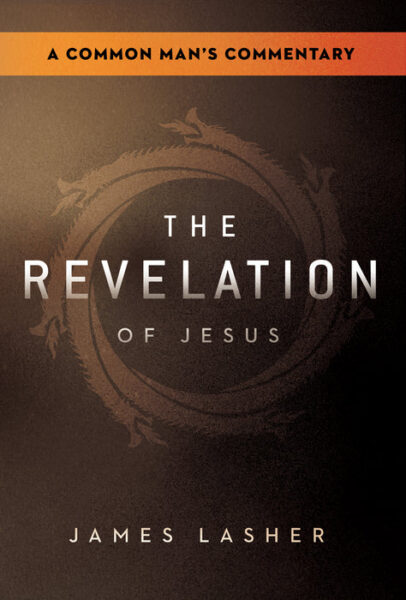
Order James Lasher’s New Book, “The Revelation of Jesus” on Amazon.com!

The Ideology Driving the Technology

Underlying these developments is an ideology identified in the video as transhumanism. This philosophy does not simply aim to heal what is broken but to enhance what already exists. It treats the human body as an unfinished project rather than a deliberate creation.

Intelligence must be augmented. Biology must be optimized. Mortality must be delayed or eliminated altogether. From a biblical worldview, this represents a serious departure. We believe humanity was created intentionally, not provisionally.

A Biblical Warning Revisited

Scripture teaches that humanity’s problem is not physical limitation but spiritual separation. Sin, not biology, is what fractured creation. Technology may repair the body but it cannot restore the soul. That is something we as Christians must remain clear-eyed about.

The video draws a parallel to the Tower of Babel, when humanity sought unity, permanence and power apart from God. That ancient ambition echoes in modern discussions about global systems, digital identity and the merging of man and machine.

The goal may be framed as progress but the impulse is familiar. Make a name for ourselves. Secure the future on our own terms. Remove the need for dependence on God.

Artificial Immortality Versus Eternal Life

At its core, the pursuit of technological immortality reveals an unspoken truth. Humanity knows death is not natural. The desire to live forever is woven into the human heart because eternity was always part of God’s design.

The tragedy is not that people want eternal life. It is that many are now searching for it in circuits and code rather than in Christ. As believers, we know that no machine can overcome what only the cross has conquered.

Why This Moment Matters

The Lion of Judah Motivation group argues that this moment demands discernment. Davos is not merely discussing technology. It is shaping a worldview where control replaces stewardship and innovation challenges creation itself.

The issue is not rejecting technology outright. It is recognizing when progress begins to demand allegiance. We are called to test the spirits, to measure every claim against Scripture and to remember who ultimately holds authority over life and death.

As systems advance and boundaries blur, we are reminded that eternal life has never been something humanity could build. It was something God gave. The world may be racing toward artificial solutions for mortality, but the promise of resurrection remains unchanged.

James Lasher, a seasoned writer and editor at Charisma Media, combines faith and storytelling with a background in journalism from Otterbein University and ministry experience in Guatemala and the LA Dream Center. A Marine Corps and Air Force veteran, he is the author of The Revelation of Jesus: A Common Man’s Commentary and a contributor to Charisma magazine.


Bible Podcast Surges Into Apple’s Top 10 as Scripture Engagement Rises

A daily Bible podcast is continuing its strong performance on Apple Podcasts, underscoring what appears to be a sustained resurgence of interest in Scripture-based content.

The podcast, The Bible Recap, recently climbed into Apple’s top 10 Religion and Spirituality podcast rankings for the third consecutive year, as reported by Fox News. The program is created and hosted by Tara-Leigh Cobble, a Bible teacher and author who launched the project to help listeners better understand Scripture through brief, daily explanations.

According to the report, the podcast is structured around a chronological Bible reading plan and is designed to complement daily Scripture reading with episodes that typically run about 10 minutes. The goal is to provide clarity and context for readers who may struggle to understand what they have just read, rather than offering in-depth theological analysis.

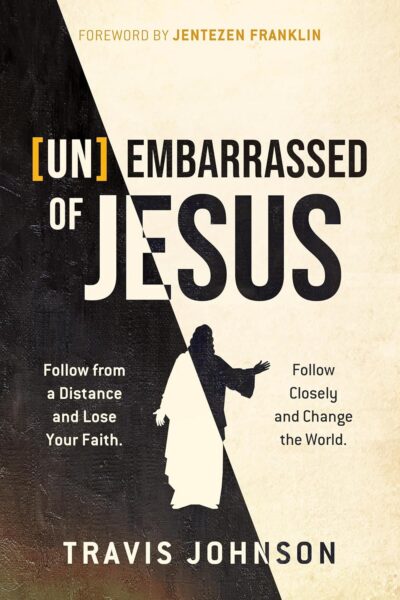
Order Travis Johnson’s New Book, “[Un]Embarrassed” on Amazon.com!

Cobble’s platform extends beyond the podcast and includes a companion book and a YouTube channel, allowing audiences to engage with the material through multiple formats. The program follows the overarching storyline of the Bible and emphasizes understanding the character of God as revealed in each day’s reading.

Fox News reported that the podcast often experiences a surge in listenership at the beginning of the year, driven in part by New Year’s resolutions to read through the Bible. While participation naturally declines as the year progresses, many listeners continue through the reading plan at their own pace. The program allows flexibility, encouraging completion over time rather than adherence to a strict schedule.

The continued chart performance suggests that interest in daily Bible engagement is not limited to seasonal trends but reflects an ongoing demand for accessible faith-based content.

James Lasher, a seasoned writer and editor at Charisma Media, combines faith and storytelling with a background in journalism from Otterbein University and ministry experience in Guatemala and the LA Dream Center. A Marine Corps and Air Force veteran, he is the author of The Revelation of Jesus: A Common Man’s Commentary and a contributor to Charisma magazine.


‘Greater Than’ Campaign Seeks Supreme Court Reversal of Obergefell

A coalition of Christian leaders, legal thinkers and media figures has launched a public campaign urging the U.S. Supreme Court to overturn its 2015 ruling in Obergefell v. Hodges, arguing the decision undermines children’s rights and the institution of marriage.

The effort, known as the Greater Than Campaign, debuted with a promotional video featuring prominent voices from evangelical institutions, conservative media and policy organizations. The campaign frames its mission around what it describes as a child-centered approach to marriage, law and culture.

According to the coalition, children are increasingly treated as secondary in public policy debates, with adult preferences prioritized over what it calls children’s inherent rights. The group contends that marriage between a mother and father has historically served as the most effective social structure for protecting those rights and providing stability for children.

Order Travis Johnson’s New Book, “[Un]Embarrassed” on Amazon.com!

“Greater Than exists to defend the rights of children in law, policy, and culture,” the organization states on its website, emphasizing that children, not adults, should be considered the most vulnerable population in debates over family structure.

The campaign outlines a three-part strategy aimed at restoring marriage as a child-protective institution: pursuing judicial and policy changes that center children’s needs, reshaping public opinion on the link between marriage and child welfare and mobilizing churches into what the group describes as a child-centered force.

The video promoting the campaign features a broad range of figures, including Dr. Albert Mohler, president of Southern Baptist Theological Seminary; Lila Rose of Live Action; and Katy Faust, founder of Them Before Us.


Other participants include conservative commentator Allie Beth Stuckey; John Stonestreet of the Colson Center; Michael Knowles of The Daily Wire; and Jim Daly of Focus on the Family.

Policy and legal perspectives are represented by Delano Squires of The Heritage Foundation; Tony Perkins of the Family Research Council; and Josh Hammer, host of The Josh Hammer Show.

Supporters describe the campaign as a unified response to what they see as decades of cultural and legal shifts away from traditional marriage. While acknowledging differences among its participants, the coalition presents itself as a coordinated effort focused on one shared goal: re-centering children in national conversations about marriage and family policy.

James Lasher, a seasoned writer and editor at Charisma Media, combines faith and storytelling with a background in journalism from Otterbein University and ministry experience in Guatemala and the LA Dream Center. A Marine Corps and Air Force veteran, he is the author of The Revelation of Jesus: A Common Man’s Commentary and a contributor to Charisma magazine.


Megachurch Pastor Josh Howerton Challenges Deconstructionist Claims About Christians and Political Power

Pastor Josh Howerton isn’t mincing words when it comes to the growing number of online personalities who once identified as Christians and now argue that believers should step away from politics.

In a recent Live Free reaction episode, Howerton responded to viral comments from former Christian and YouTuber Rhett McLaughlin, who claimed that Jesus’ teachings forbid Christians from pursuing political influence. Howerton said that the argument rests on selective Bible reading, bad theology and what he described as intentional misdirection.

“This isn’t someone working through honest doubt,” Howerton said. “This is someone standing in unbelief and trying to pull other people there with him.”

Doubt Is Not the Same as Leading Others Astray

Howerton repeatedly emphasized that Christianity allows questions but not the public promotion of unbelief disguised as biblical wisdom. Drawing from the book of Jude, he explained that Scripture calls for mercy toward those wrestling with faith, while sharply confronting those who actively undermine it.

“There’s a massive difference between people who stumble into church saying, ‘I don’t want the world anymore,’ and people who are out there evangelizing unbelief,” Howerton said.

Enforcing a Bible You Reject

One of Howerton’s sharpest critiques was aimed at what he sees as a common pattern among deconstructed influencers: rejecting the authority of Scripture while insisting Christians submit to carefully chosen verses.

“He doesn’t believe the Bible,” Howerton said of McLaughlin, “but he’s going to make sure you obey his interpretation of it.”

Howerton argued this approach allows secular voices to police Christian behavior while avoiding the Bible’s broader claims about authority, morality and truth.

Order Travis Johnson’s New Book, “[Un]Embarrassed” on Amazon.com!

The Temptation Narrative Is Being Misread

At the center of McLaughlin’s argument is Jesus’ rejection of Satan’s offer of the world’s kingdoms. Howerton said that passage is routinely misunderstood.

“The temptation wasn’t authority,” he said. “It was getting the right thing the wrong way.”

Howerton pointed out that Scripture consistently affirms God’s people exercising influence, from Joseph and Daniel to Esther and Nehemiah. Jesus rejecting Satan’s offer, he said, was a refusal to receive dominion through demonic compromise, not a rejection of leadership itself.

When God Is Gone, the State Takes His Place

Howerton also addressed what he believes is the underlying worldview driving McLaughlin’s position. When God is removed from the picture, he argued, the government naturally fills the vacuum.

“If there’s no God over the government, then the government becomes god,” Howerton said, describing how politics takes on religious meaning in secular cultures.

That shift, he argued, explains the urgency to push Christians out of public life. Competing moral authorities become problematic when politics is treated as the ultimate.

Voting Is Not a Moral Purity Test

Howerton rejected the idea that Christians must abstain from voting unless candidates meet an impossible standard of personal righteousness.

“A selection is not a sacrament,” he said. Voting, he explained, is about choosing between available options, not endorsing every aspect of a candidate’s character.

Using biblical examples, Howerton described righteous, wicked and flawed leaders who nevertheless restrained evil. Christians, he argued, are often choosing between paths, not perfection.

Why Christians Can’t Afford to Sit This Out

Howerton closed by challenging the claim that the church became “too political.” In his view, the government moved into explicitly moral and theological territory first, redefining life, marriage and truth.

“The church didn’t suddenly change,” he said. “Politics did.”

For Howerton, disengagement isn’t faithfulness. It’s surrender. And he made clear that Christians withdrawing from public life doesn’t create neutrality—it simply leaves the field to voices eager to shape the culture without them.

James Lasher, a seasoned writer and editor at Charisma Media, combines faith and storytelling with a background in journalism from Otterbein University and ministry experience in Guatemala and the LA Dream Center. A Marine Corps and Air Force veteran, he is the author of The Revelation of Jesus: A Common Man’s Commentary and a contributor to Charisma magazine.


Exposed: The Demonic Mystery Unfolding in Minnesota That the Media Refuses to Address

What is happening in Minnesota is being explained almost exclusively through political commentary, legal analysis and media framing. That may be convenient, but it is also incomplete. Scripture has long warned that when a society rejects God’s authority and elevates false spiritual claims in places of influence, the consequences do not stay theoretical. They surface in real time through confusion, disorder and rebellion.

Minnesota has seen escalating unrest following fatal federal agent-involved shootings, with protests that have blocked streets, confronted federal agents and resisted repeated attempts to restore order. These events are usually described as reactions to policy or policing. The Bible describes something deeper. When restraint collapses among a people, it is often a sign that the spiritual foundation beneath that society has already begun to erode.

The Old Testament provides a clear framework for understanding this. Scripture repeatedly addresses what it calls “high places,” elevated locations where false gods were openly worshiped. These were not treated as neutral cultural expressions. God commanded their removal because they had shaped the land’s spiritual condition. Israel’s leaders learned through repeated failure that allowing false worship to stand always produced disorder among the people.

Gideon was instructed to tear down his own father’s altar to Baal before Israel could be delivered from oppression. King Hezekiah removed high places and objects of idolatry, and spiritual renewal followed. King Josiah went further, eliminating centers of false worship throughout Judah and restoring covenant faithfulness. The lesson was consistent. Spiritual authority comes before social stability.

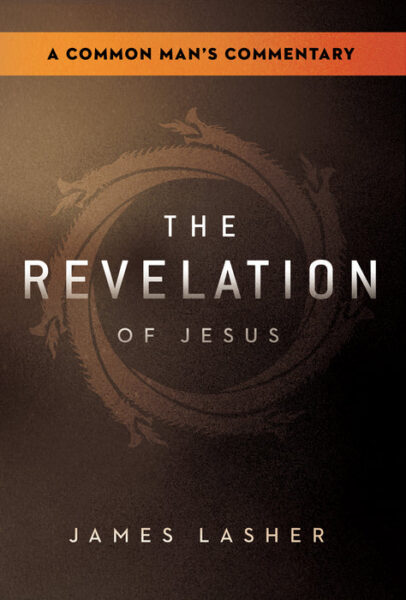
Order James Lasher’s New Book, “The Revelation of Jesus” on Amazon.com!

The New Testament reinforces this principle. Scripture teaches that the real struggle within societies is not against people or political leaders but against spiritual forces that operate through deception and rebellion. These forces are described as principalities that seek to influence regions, cultures and systems that reject God’s authority.

This framework makes recent events at the Minnesota State Capitol impossible to dismiss as symbolic or trivial. During the Christmas season of 2024, a satanic display was permitted inside the Capitol. In April 2025, a second display was approved that explicitly thanked Governor Tim Walz for allowing Satanism to be displayed in the building. The message openly rejected God’s sovereignty and affirmed allegiance to Satan within the seat of state authority.

From a biblical perspective, personal intent is beside the point. Scripture evaluates authority by what is permitted to stand in places of influence. Allowing false worship in a governing space grants spiritual access, whether or not that access is acknowledged. The Bible repeatedly warns that when false gods are elevated, disorder follows. People become unrestrained. Confusion replaces clarity. Obedience to authority begins to break down.

Seen through this lens, Minnesota’s unrest is not random. It is not spontaneous. It is the visible result of spiritual misalignment that has taken root at the highest levels of public authority.

Other states have responded differently to similar challenges. In Iowa, a Navy veteran dismantled a satanic display at the state Capitol in 2023 and described the act as Christian civil disobedience.

Minnesota now stands at a crossroads. Scripture is clear that when high places are left standing, disorder follows. When they are confronted, restoration begins. This is not partisan rhetoric. It is not political messaging. It is a biblical warning that history has proven accurate time and again.

What is unfolding in Minnesota is not just a political story. It is a spiritual one. Ignoring that reality does not make it go away. It only allows the consequences to grow louder.

James Lasher, a seasoned writer and editor at Charisma Media, combines faith and storytelling with a background in journalism from Otterbein University and ministry experience in Guatemala and the LA Dream Center. A Marine Corps and Air Force veteran, he is the author of The Revelation of Jesus: A Common Man’s Commentary and a contributor to Charisma magazine.


Mob Destroys Homes of Christian Families After They Refuse to Renounce Faith

A mob of Hindu nationalists demolished the homes of four Christian families in a remote village in India’s Maharashtra state after the families refused to abandon their Christian faith, highlighting the growing reality of persecution faced by believers around the world.

The attack occurred in Midapalli village in Gadchiroli District, as reported by The Christian Post, following repeated threats demanding the families renounce Christianity. According to Christian Solidarity Worldwide, about 20 people confronted six Christian families, totaling roughly 25 individuals, and issued an ultimatum to convert or face consequences.

Homes Destroyed and Authorities Accused of Intimidation

The mob returned the following day, Jan. 12, and destroyed the homes of four families after they again refused to renounce their faith. When the displaced families later attempted to file a complaint at the Kavande Police Station, police reportedly threatened them instead of offering protection.

Officers allegedly questioned the legitimacy of their conversion as members of a tribal community and warned that their identification documents and government ration supplies could be revoked. On Jan. 14, police summoned the local pastor, dismissed his ministry as “superstition” and barred him from visiting Christian families in the village.

As of late January, the affected families remained without shelter in harsh winter conditions. Christian Solidarity Worldwide said the village’s remote location has made outside assistance difficult. The families have said they plan to petition the District Collector for intervention.

CSW President Mervyn Thomas accused local authorities of failing to protect the families and called for immediate action to ensure their safety, compensate them for their losses and hold the perpetrators accountable.

Order Travis Johnson’s New Book, “[Un]Embarrassed] on Amazon.com!

How We Respond as Christians

This assault is part of a broader surge in violence against Christians in India. The United Christian Forum recorded 834 attacks in 2024, following 734 in 2023 and 601 in 2022. More than 900 attacks were reported between January and May 2025 alone.

As Christians, we are not surprised by persecution, even as it deeply grieves us. Jesus warned us that following Him would bring opposition, saying, “If they persecuted Me, they will also persecute you” (John 15:20). He also reminded us to take courage, assuring us that we are not forgotten or abandoned (Matthew 5:10–12).

Scripture teaches us that persecution for our faith is not a sign of God’s absence, but often a mark of faithfulness (2 Tim. 3:12). We are encouraged to endure trials with perseverance, trusting that God is at work even in suffering (James 1:2–4), and that He is close to the brokenhearted (Psalm 34:19).

When we read stories like this, we are called to respond as the body of Christ. We pray for our brothers and sisters who have lost their homes (Heb. 13:3). We intercede for their protection and provision. We resist fear, remembering that God has not given us a spirit of fear, but of power, love and sound judgment (2 Tim. 1:7).

Christian leaders in India have warned that fear of retaliation keeps many victims from reporting attacks, yet we are reminded that the Church has always grown strongest under pressure (Acts 8:1–4). Persecution does not defeat the Church; it refines it (1 Peter 4:12–14).

As we reflect on the suffering of believers in places like Midapalli village, we are called to stand together, encourage one another and remain faithful. Though the cost of discipleship is real (Luke 9:23), so is the promise that God sees, strengthens and will ultimately vindicate His people (Rom. 8:18).

James Lasher, a seasoned writer and editor at Charisma Media, combines faith and storytelling with a background in journalism from Otterbein University and ministry experience in Guatemala and the LA Dream Center. A Marine Corps and Air Force veteran, he is the author of The Revelation of Jesus: A Common Man’s Commentary and a contributor to Charisma magazine.


Is Prince Harry Cursed? A Biblical Look at the ‘Spare’ Fallout

The idea of a “curse” following Prince Harry has moved from royal gossip into mainstream media analysis, with experts suggesting the Duke of Sussex has struggled to find stability, purpose and credibility since stepping away from royal life.

As reported by Fox News, royal watchers argue that Harry’s professional setbacks, fractured family relationships and lingering grievances have left him adrift in California, while his wife builds a clearer path forward.

That framing raises a deeper question: Is this simply poor career management, or could Scripture offer insight into why calamity seems to follow?

Leadership, Authority and the Cost of Abandonment

Throughout the Bible, leadership is never merely personal. It carries generational and national consequences. Israel’s history is filled with examples of what happens when kings abandon their calling or lead with pride instead of humility. When rulers turned from God or embraced idolatry, the fallout was not isolated. It spread to the people.

Harry comes from a family that has held authority over a nation for generations, and while the modern monarchy is largely symbolic, Scripture does not diminish the weight of stewardship. The Fox News article notes that royal experts believe Harry has been unable to move beyond grievances tied to his royal role and exit, a decision that permanently severed him from the structure that once gave him direction.

“California seems to have left Harry unmoored,” said Kinsey Schofield, host of “Kinsey Schofield Unfiltered.” “He is far from his family, his military community and the institutional structure that once gave him direction.”

In the Old Testament, when leaders abandoned their posts or rejected God-given authority, disorder followed. That pattern does not disappear simply because a nation becomes modern or secular.

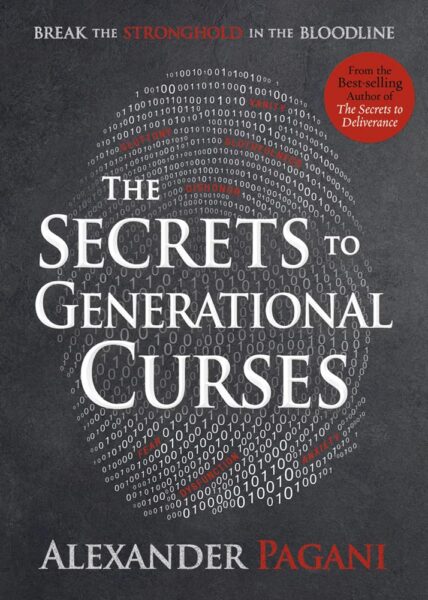
Order Alexander Pagani’s Book, “The Secrets to Generational Curses” on Amazon.com!

Turning on Family and the Weight of Honor

Scripture is unambiguous about honoring one’s parents, a commandment tied directly to blessing and longevity. Harry’s estrangement from his father, King Charles III, and his ongoing rift with Prince William are central themes in the Fox News reporting.

“The grievance has become his brand,” Schofield said. “Instead of transcending the role of ‘spare,’ he continues to orbit it.”

Biblically, public dishonor of family, especially within leadership lines, is not treated lightly. While Scripture does not deny the reality of wrongdoing or pain, it consistently warns against bitterness, public shaming and prideful retaliation. Harry’s memoir, Spare, which revealed deeply personal details about his family, may have brought short-term attention, but experts argue it hardened the very identity he was trying to escape.

Pride, Humility and a Biblical Warning

One of the most striking aspects of the Fox News analysis is the repeated emphasis on humility and patience as the missing ingredients in Harry’s reinvention.

“Harry stands at a crossroads,” Schofield said. “He can continue chasing relevance through proximity to controversy or he can build an identity rooted in service, philanthropy and genuine leadership.”

Those qualities are not just good public relations. They are biblical imperatives. Humility and patience are foundational Christian virtues, with patience listed explicitly as a fruit of the Spirit. Pride, however, carries a warning. God resists the proud but gives grace to the humble.

Royal experts also contrasted Harry’s reactive posture with Meghan Markle’s intentional branding. “Meghan is operating with intention more than Harry is,” Schofield said. “Harry, meanwhile, feels reactive.”

Scripture repeatedly shows that pride leads leaders into isolation, confusion and eventual downfall, while humility restores clarity and purpose.

A Curse or a Consequence?

The Fox News article makes clear that Harry’s professional options are narrowing, with failed media ventures, legal battles and fading public sympathy.

Yet the question lingers. When a man born into authority rejects responsibility, turns publicly against his family, leans into grievance and struggles with pride, is it fair to call the outcome a curse?

Or is Scripture simply playing out as it always has, revealing that when God’s order is rejected, consequences follow?

Could Prince Harry truly be cursed or is he experiencing the biblical cost of walking away from humility, honor and calling?

James Lasher, a seasoned writer and editor at Charisma Media, combines faith and storytelling with a background in journalism from Otterbein University and ministry experience in Guatemala and the LA Dream Center. A Marine Corps and Air Force veteran, he is the author of The Revelation of Jesus: A Common Man’s Commentary and a contributor to Charisma magazine.


Jack Hibbs Issues a Warning Many Churches Won’t Touch

Pastor Jack Hibbs, senior pastor of Calvary Chapel Chino Hills, opened a recent teaching on Bible prophecy with a simple but forceful claim: Scripture explains the world more clearly than modern headlines, artificial intelligence or political analysis ever could.

Teaching from John 14:29, Hibbs said Jesus’ words establish the purpose of prophecy itself. “I’m telling you something that’s going to come,” Hibbs paraphrased, “and when it does come to pass, you may believe.”

That pattern, he argued, is the foundation of biblical prophecy: prediction followed by fulfillment, producing faith.

Prophecy as Evidence, Not Speculation

Hibbs defined Bible prophecy as the study of God’s revealed future, commonly called eschatology, but emphasized it should be understood as evidence rather than guesswork.

“The God of the Bible claims to know the future in advance,” Hibbs said. “When God says, ‘Watch the future, this is what’s going to happen,’ and then it happens thousands of years later, should you not sit up and take notice?”

He argued fulfilled prophecy answers one of Christianity’s most common challenges: whether God exists at all. According to Hibbs, Scripture presents prophecy as God speaking from outside time and space, validating His Word through history.

“Bible prophecy proves the existence of God,” he said, adding that fulfilled prophecy produces confidence in what has not yet occurred.

Reading Headlines Through a Biblical Lens

Hibbs encouraged listeners to interpret current events through what he called a “biblical prophetic worldview,” rather than reacting emotionally to news cycles.

He pointed repeatedly to Israel, which he described as the most frequently mentioned nation in Scripture. Developments involving Iran, identified biblically as Persia, were cited as examples of why prophecy remains relevant, though Hibbs stressed that certain prophetic events have not yet occurred.

“It hasn’t happened yet,” he said of Ezekiel 38, which describes a future invasion of Israel. “But what’s happening right now should make us pay attention.”

Hibbs cautioned against drawing premature conclusions while still urging discernment rooted in Scripture rather than speculation.

Technology, Deception and the Book of Revelation

Addressing artificial intelligence, Hibbs referenced Revelation 13, which describes an “image” empowered to identify those aligned with a future global system.

“That’s my opinion,” Hibbs said, clarifying that his view connects modern technology with biblical warnings about deception in the last days. “Jesus said there would be deceiving spirits and doctrines of demons.”

He emphasized that Scripture anticipates both technological advancement and spiritual deception, requiring believers to remain grounded in biblical truth.

Order James Lasher’s New Book, “The Revelation of Jesus” on Amazon.com!

Why Avoiding Prophecy Weakens the Church

Hibbs warned that neglecting Bible prophecy leaves Christians vulnerable to confusion and false teaching.

“Christians that don’t know Bible prophecy are like people who are anemic,” he said. “They can’t fight back. They can’t discern truth from error.”

He compared ignoring prophecy to attempting to live on a partial Bible, arguing that prophecy is essential to spiritual maturity and discernment.

Revelation’s Built-In Road Map

One of the most practical elements of Hibbs’ teaching focused on Revelation 1:19, which he said provides the book’s complete outline.

“Write the things which you have seen, the things which are, and the things which will take place after this,” Hibbs quoted, explaining that the verse divides Revelation into past (chapter 1), present (chapters 2–3) and future (chapters 4–22).

He encouraged believers to apply this framework broadly, sorting prophetic passages into past, present or future categories to better understand Scripture’s unfolding narrative.

Prophecy Meant to Prepare, Not Panic

Hibbs concluded by stressing that prophecy is intended to steady believers, not frighten them.

“God gave us Bible prophecy to prepare us, not to scare us,” he said.

According to Hibbs, understanding prophecy anchors Christians in hope, enabling them to face global uncertainty with confidence rooted in God’s proven Word.

James Lasher, a seasoned writer and editor at Charisma Media, combines faith and storytelling with a background in journalism from Otterbein University and ministry experience in Guatemala and the LA Dream Center. A Marine Corps and Air Force veteran, he is the author of The Revelation of Jesus: A Common Man’s Commentary and a contributor to Charisma magazine.


Pastor Greg Laurie Warns Iran-Israel Tensions May Be ‘Foreshadowing’ Biblical Prophecy

As tensions in the Middle East continue to escalate, Pastor Greg Laurie is urging Christians to respond with biblical clarity rather than fear, pointing to Israel’s central role in Scripture and the growing significance of Iran in global events.

In a recent episode of his program, The Greg Laurie Show, addressing Iran and Israel, Laurie framed current headlines through the lens of biblical prophecy, emphasizing that while events may be alarming, they should not surprise believers.

Israel at the Center of Prophecy

Laurie described Israel as “God’s prophetic time clock,” arguing that the modern rebirth of the nation marked a major turning point in biblical history.

“It all starts on May 14, 1948,” Laurie said. “Israel became a nation. … When this happened, this would be a sign of the times and effectively the prophetic time clock would start ticking.”

Laurie noted that Israel’s return to the land followed centuries of exile, something he called unprecedented in world history. He said the Holocaust played a central role in shaping the modern Jewish state, as the Jewish people realized “no one was going to look out for them” and they needed to defend themselves.

Antisemitism and a Spiritual Conflict

Laurie traced modern antisemitism back to Scripture, arguing that hostility toward the Jewish people is not merely political but spiritual.

“This hatred against the Jews … goes back to the Garden of Eden,” Laurie said, pointing to God’s promise that the Messiah would come through Israel.

He criticized slogans such as “from the river to the sea,” saying they amount to a call for Israel’s destruction. “They’re really saying we don’t want the Jews. We don’t want them in their land,” Laurie said.

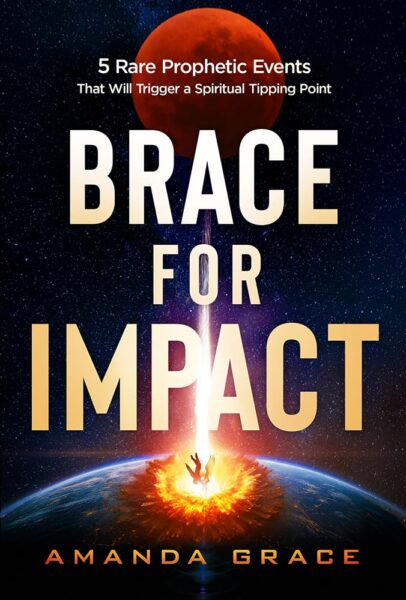
Order Amanda Grace’s New Book, “Brace For Impact” on Amazon.com!

Iran’s Ideology and End-Times Beliefs

Laurie warned that Iran’s threat to Israel is driven by more than geopolitics. He said Iran’s leadership embraces a form of Islamic eschatology that views chaos as a pathway to redemption.

“They believe the way they will prepare the way for their Messiah is creating chaos,” Laurie said. “And that’s what they’ve been doing for a long time, provoking Israel and the West.”

Laurie also highlighted Iran’s role in sponsoring terrorist organizations, noting that the regime has repeatedly expressed a desire to eliminate Israel.

Ezekiel 38 and a Foreshadowing, Not Fulfillment

Laurie referenced Ezekiel chapters 38 and 39, which describe a future invasion of Israel involving Persia, the ancient name for Iran.

“Is this a fulfillment of what the Bible predicted?” Laurie asked. “I would classify it as a foreshadowing, not necessarily a complete fulfillment.”

He added that Russia’s growing alignment with Iran is noteworthy, given that Ezekiel describes Persia marching alongside Gog, a figure many associate with Russia.

“We’re seeing things play out today the Bible predicted thousands of years ago,” Laurie said.

Prophecy Should Prepare, Not Terrify

Despite the sobering nature of the subject, Laurie emphasized that biblical prophecy is meant to reassure believers.

“Bible prophecy is not given to scare us, but to prepare us,” he said. “When these things happen, we should not be terrified, but reassured that God is keeping His promises.”

Laurie urged Christians to remain watchful but calm, quoting Jesus’ instruction to “look up” rather than panic.

Pray for Peace and Be Ready

Laurie closed by stressing that awareness of prophecy does not mean hoping for war.

“We don’t want Armageddon to come,” he said. “We want to see peace in the Middle East. … The Bible says, ‘Pray for the peace of Jerusalem.’”

At the same time, he reminded believers that the return of Christ could happen at any moment.

“There is nothing that needs to happen for the rapture to take place,” Laurie said. “That’s why the Bible tells us repeatedly to watch and be ready.”

James Lasher, a seasoned writer and editor at Charisma Media, combines faith and storytelling with a background in journalism from Otterbein University and ministry experience in Guatemala and the LA Dream Center. A Marine Corps and Air Force veteran, he is the author of The Revelation of Jesus: A Common Man’s Commentary and a contributor to Charisma magazine.