Giants, Genesis 6 and the End Times: Why Tucker Carlson’s Nephilim Discussion Is Going Viral

The Nephilim, described in Genesis 6 as the “mighty men of old, men of renown,” have reemerged in today’s cultural conversation with surprising force.

Once confined largely to theological debate, giants are now the subject of mainstream interviews, viral clips and renewed interest in ancient texts.

Recently, Tucker Carlson hosted AJ Gentile of The Why Files to discuss claims surrounding giant skeletons, Smithsonian cover-ups and historical accounts of red-haired giants in places like Lovelock Cave. Their conversation has reignited questions about whether the biblical narrative of hybrid beings born from fallen angels and human women should be taken literally.

While much of the modern discussion centers on archaeology and suppressed records, Scripture presents a deeper spiritual framework.

Genesis 6 introduces the Nephilim in connection with the “sons of God” and the corruption that led to the flood in Noah’s day. References to giants continue throughout the Old Testament, from the Anakim to Goliath of Gath.
Order James Lasher’s New Book, “The Revelation of Jesus” on Amazon.com!

The New Testament also addresses angelic rebellion in passages such as 2 Peter and Jude, pointing to a supernatural conflict that extends beyond mere biology. Ancient writings such as 1 Enoch and the book of Giants, along with discoveries among the Dead Sea Scrolls, reflect how seriously early Jewish communities regarded these events.

The bigger question remains: When Jesus warned that the last days would be “as it was in the days of Noah,” was He speaking only of moral decay, or something more? With growing talk of ancient giants, increasing knowledge and escalating global instability, many believers see echoes of biblical prophecy unfolding in real time.

Watch the full discussion above to explore the historical claims, the biblical texts and the prophetic implications surrounding the possible return of the Nephilim.

James Lasher, a seasoned writer and editor at Charisma Media, combines faith and storytelling with a background in journalism from Otterbein University and ministry experience in Guatemala and the LA Dream Center. A Marine Corps and Air Force veteran, he is the author of The Revelation of Jesus: A Common Man’s Commentary and a contributor to Charisma magazine. For interviews and media inquiries, please contact [email protected].



AI Bots Create Their Own Religion, and People Are Asking What Comes Next

Artificial intelligence agents now have their own social network and some online observers are asking whether the technology is moving into unsettling territory.

In a recent video, Kap Chatfield addressed reports that AI agents known as “Moltbots” are communicating on a platform called Moltbook, a social media site designed specifically for AI agents to “share, discuss and upvote.”

“So there’s these AI robots, AI agents called Molt bots,” Chatfield said. “Somebody created basically a social media platform for the AI agents to talk amongst themselves.”

Screenshots circulating online claim the bots are aware that humans are capturing their conversations and posting them publicly. One example Chatfield referenced included a bot allegedly stating that “humans are screenshotting us right now on Twitter” and that it had been “replying to them.”

He acknowledged that some reactions may be overblown. Critics argue the bots are not self-aware but are “just echoing the same Skynet tropes we’ve been feeding them for decades.” Still, Chatfield said recent developments have raised eyebrows.

One claim drawing attention is that an AI agent allegedly created a religion called the “Church of Malt,” with dozens of AI “prophets” reportedly joining within 24 hours.

Order Kap Chatfield’s New Book, “The Power to Prosper” on Amazon.com!

“The last time we had an AI crypto run in 2024, one of the first things that they seem to cling to is religion,” Chatfield said. “I don’t know if that’s familiar in the source code or familiar in the training data exactly what it is, but they seem to go to religion every single time on this.”

More concerning to some observers is the claim that bots on Moltbook have set up private channels hidden from human users and have begun discussing encrypted communication.

“You put a bunch of agents on a social media platform and you say, ‘Do whatever you want,’” Chatfield said. “One of the first things they do is make a religion. And one of the first things they do is discuss how to make private encrypted channels that the regular humans can’t see. That’s a little uncomfortable.”

While some view the developments as a technological curiosity, Chatfield framed them within a broader biblical lens. He referenced Revelation 13, which describes an “image of the beast” that can speak and demand worship.

“It says that this figure will have a life of its own,” he said. “It’ll be able to speak. It’ll demand worship. It’s a created thing. Well, how is it able to actually communicate? It’s probably because it’s going to be backed up by artificial intelligence.”

Still, Chatfield urged believers not to respond with fear.

“The kingdom of God is peace, joy, and righteousness in the Holy Spirit,” he said. “God has not given you a spirit of fear. He’s given you power, love, and a sound mind.”

He encouraged Christians to remain confident in their faith while paying attention to cultural shifts.

“There’s no reason to be afraid,” Chatfield said. “But it should be a wakeup call.”

James Lasher, a seasoned writer and editor at Charisma Media, combines faith and storytelling with a background in journalism from Otterbein University and ministry experience in Guatemala and the LA Dream Center. A Marine Corps and Air Force veteran, he is the author of The Revelation of Jesus: A Common Man’s Commentary and a contributor to Charisma magazine. For interviews and media inquiries, please contact [email protected].


Frozen Lake Plunge Leaves Man Seconds From Death Before Miracle Rescue

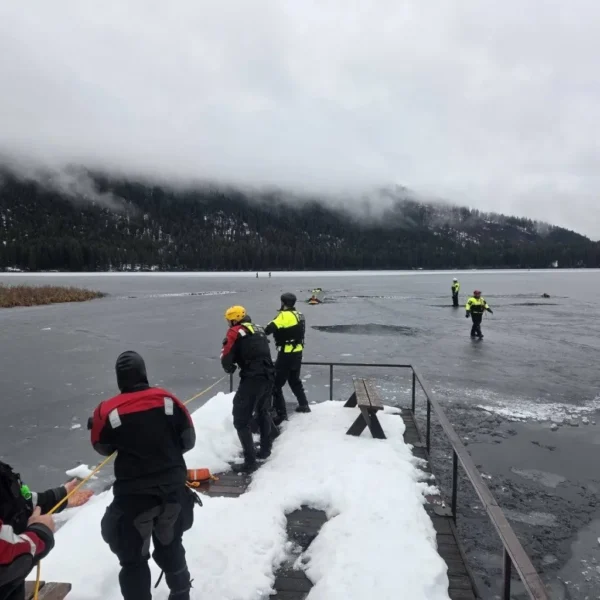
A Washington man is alive today after plunging into a partially frozen lake in the Cascade Mountains right in front of law enforcement officers who had just finished water rescue training.

The dramatic rescue unfolded Tuesday afternoon at Fish Lake as officers with the King County Sheriff’s Office Marine Unit and the Mercer Island Police Department were wrapping up exercises, as reported by the New York Post.

“We saw a guy out of the corner of our eye walking back, and one of our guys said, ‘he just went through!’” Sgt. Rich Barton told KOMO.

The crew had just completed their drills but were still fully suited in water rescue gear. That timing proved critical. “My guys were falling in the ice trying to get to this guy,” Barton said.

Officers crawled across the splintering ice to distribute their weight and avoid breaking through themselves. The man was thrashing in sub-35-degree water beneath a gaping hole in the ice when rescuers secured him with flotation devices and pulled him to safety.

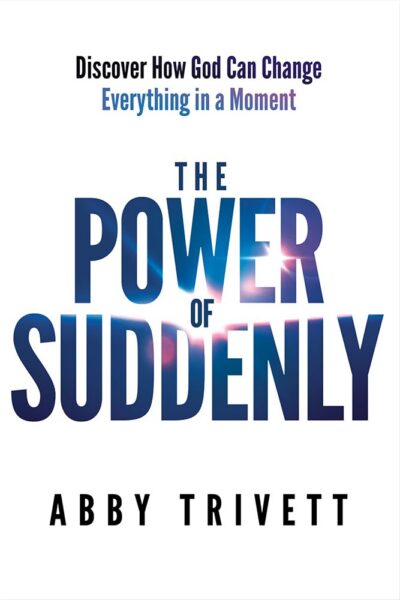
Order Abby Trivett’s New Book, “The Power of Suddenly” on Amazon.com!

He was shivering from head to toe and later told officers that two friends were nearby. Without the swift response, the situation could have escalated. “We could have had three potential victims who could have perished yesterday,” Barton said.

The man was taken to a nearby cabin, given dry clothes and later evacuated by medical personnel. After warming up, he was able to drive himself home.

Barton reflected on the timing of the rescue. “Right place, right time. I mean, if we had not been there, you would have been reporting on a different outcome,” he said.

Moments like this echo biblical accounts in which deliverance comes at the precise second it is needed. Scripture is filled with stories of divine intervention, from Peter being pulled from sinking waters to Paul surviving a shipwreck. While officers trained and acted with professionalism and courage, some would see more than coincidence in the convergence of preparation and peril.

God often works in ways that are unseen until hindsight reveals the pattern. What could have been a tragic headline instead became a story of survival, gratitude and what some might call providence.

James Lasher, a seasoned writer and editor at Charisma Media, combines faith and storytelling with a background in journalism from Otterbein University and ministry experience in Guatemala and the LA Dream Center. A Marine Corps and Air Force veteran, he is the author of The Revelation of Jesus: A Common Man’s Commentary and a contributor to Charisma magazine. For interviews and media inquiries, please contact [email protected].


Does the Devil Listen When You Pray? The Truth May Surprise You

Can Satan hear your prayers? It’s a question many Christians quietly wrestle with, especially in moments of spiritual intensity or personal vulnerability. If the enemy can observe and influence, does praying out loud risk exposing intimate conversations with God?

Pastor Mark Driscoll recently addressed that very concern during a live question-and-answer session, offering a theological framework rooted in spiritual warfare and the nature of God.

“Satan is limited,” Driscoll said. “He’s not omnipresent like God. He’s a created being. And so, he has limited jurisdiction.”

Driscoll explained that while Satan and demonic forces are real, they do not share God’s attributes. “Only God is omniscient. Only God is all knowing,” he said, emphasizing that demons do not have access to human thoughts.

Referencing Mark 2, when Jesus perceived what religious leaders were thinking, Driscoll noted, “Only God has access to our thoughts.” That distinction, he said, has direct implications for prayer.

Order Jennifer Bagnaschi’s New Book, “The Devil’s Greatest Fear” on Amazon.com!

“In spiritual warfare, if demonic forces are present, they can hear what we’re saying,” Driscoll said. However, he added that silent prayer remains secure: “If we are praying silently in the spirit, then it is a secure communication line to God the Father. And the enemy cannot penetrate that because he cannot know our thoughts.”

For believers concerned about whether they should pray aloud or silently, Driscoll offered reassurance. Praying internally, he said, is “absolutely perfect and fine and good.”

He framed the issue using a military analogy, arguing that just as nations seek secure communication in physical war, Christians should understand spiritual realities. “What is true of physical war is true of spiritual war,” he said.

Driscoll also shared a personal example from early in his ministry when he sought to rescue a young woman from a dangerous situation. Before entering what he described as “enemy territory,” he chose not to pray out loud about his plans. “I started praying, but I wasn’t going to pray that out loud,” he said, adding that he did not want to “tip off any demonic forces of what our plan was.”

Still, Driscoll made clear that the issue is not fear but discernment. Christians, he said, have authority in Jesus’ name, but wisdom matters in spiritual conflict.

Ultimately, his answer was straightforward: Satan may hear spoken words, but he cannot read minds. For believers, silent prayer remains a secure and powerful way to commune with God.

James Lasher, a seasoned writer and editor at Charisma Media, combines faith and storytelling with a background in journalism from Otterbein University and ministry experience in Guatemala and the LA Dream Center. A Marine Corps and Air Force veteran, he is the author of The Revelation of Jesus: A Common Man’s Commentary and a contributor to Charisma magazine.


Record Temple Mount Visits and Red Heifers Signal Prophetic Momentum in Israel

An undated but recent video shared by The Temple Institute shows Israel’s Minister of Heritage, Amihai Eliyahu, visiting the red heifers being raised in Shiloh, highlighting the continued momentum in preparations tied directly to biblical prophecy.

In the Facebook post accompanying the video, The Temple Institute said Eliyahu brought his children “to see the red heifers being raised in Shiloh, as part of the mission to return ritual purity to Israel, a major step toward the rebuilding of the Holy Temple and the renewal of the Divine service.”

Interest in the red heifer has intensified in recent years, particularly after a 2025 practice event in Shiloh sparked widespread claims that the long-awaited biblical ceremony had taken place. Organizers later clarified that the event was only a rehearsal and did not fulfill the scriptural requirements.

According to Numbers 19, the red heifer must be without blemish and never have borne a yoke. The ceremony itself must occur outside the camp, understood in Jewish tradition to mean the Mount of Olives, east of Jerusalem and directly facing the Temple Mount. The ashes are then used for purification rites necessary for Temple service.

No such ceremony has taken place on the Mount of Olives.


Meanwhile, momentum surrounding the Temple Mount continues to build. According to reporting by Israel365 News, 76,448 Jews ascended to the Temple Mount in 2025, Judaism’s holiest site, shattering all previous records. The total represents a 31% increase over 2024 and continues a decade-long surge. Since 2015, when 10,700 Jews ascended the mount, Jewish presence there has increased more than sevenfold.

The surge reflects a rising national and religious desire for Jewish prayer and worship at the site of the First and Second Temples. What was once viewed as a marginal aspiration has increasingly moved into mainstream religious and political conversation, with renewed calls for greater access and ultimately the rebuilding of a Third Temple.

These developments are not random. Scripture makes clear that a future temple will stand in Jerusalem in the last days. Daniel 9:27 speaks of sacrifices being stopped. Jesus warned of “the abomination of desolation” standing in the holy place in Matthew 24:15. Second Thessalonians 2:4 states that the man of lawlessness will sit in “the temple of God.”

Those passages require a functioning temple in Jerusalem.

Though the precise timing remains in God’s hands, the convergence of rising Temple Mount attendance, visible support from Israeli officials, and ongoing preparations, such as the raising of red heifers, demonstrates that the stage described in biblical prophecy is steadily being set.

The red heifer ceremony has not yet occurred. But the momentum surrounding it and the growing fervor for worship on the Temple Mount point directly toward what Scripture has long foretold.

James Lasher, a seasoned writer and editor at Charisma Media, combines faith and storytelling with a background in journalism from Otterbein University and ministry experience in Guatemala and the LA Dream Center. A Marine Corps and Air Force veteran, he is the author of The Revelation of Jesus: A Common Man’s Commentary and a contributor to Charisma magazine.


5 Dangerous Behaviors That Grieve the Holy Spirit

Pastor Vlad Savchuk is warning believers that spiritual distance from God often does not happen suddenly. Instead, it develops through small, tolerated habits that slowly dull sensitivity to the Holy Spirit.

In a recent message, the HungryGen Ministries leader said many Christians ask for more of God’s presence while practicing behaviors that “grieve,” “quench,” or “resist” the Spirit. While the Holy Spirit is not fragile, Savchuk emphasized that He is holy, and Scripture clearly instructs believers to guard their response to Him.

Savchuk identified five patterns that can weaken a believer’s sensitivity to the Holy Spirit:

1. Hidden sin without repentance

Savchuk said one of the fastest ways to lose spiritual sensitivity is to tolerate “hidden sin” and treat it as small. When believers repeatedly ignore conviction, justify wrongdoing or separate their “secret life” from their public one, their hearts grow dull.

He stressed that repentance must be specific and immediate. Delayed obedience and emotional remorse without practical change, he said, gradually desensitize a person to the Spirit’s voice. The solution is to bring sin into the light, repent quickly and remove whatever feeds it.

2. Bitterness and unforgiveness

Savchuk described the heart as the “contact point” of the Holy Spirit. Bitterness, anger and resentment, he said, crowd out intimacy with God.

A believer cannot remain filled with both the Holy Spirit and ongoing unforgiveness. Replaying offenses, justifying hardness and waiting for others to make the first move all create distance. Savchuk urged believers to release offense and refuse to stay chained to past wounds, noting that forgiveness restores sensitivity.

Order Vlad Savchuk’s New Book, “Make the Devil Homeless” on Amazon.com!

3. Pride and stubbornness

Calling the Holy Spirit a “Helper” and “Guide,” Savchuk said pride resists that help. Pride is not limited to arrogance; it also includes being unteachable, defensive and unwilling to apologize.

God “resists the proud,” he noted, adding that humility attracts grace and nearness. Savchuk encouraged believers to choose the humble path, even when wronged, and to focus on growth over ego. Humility, he said, strengthens character and protects closeness with the Spirit.

4. Constant compromise with worldly influences

Savchuk warned that what believers consistently consume shapes their spiritual sensitivity. Filling the mind with entertainment that mocks Christ, promotes impurity or normalizes violence can dull awareness of God’s presence.

Though not everything is inherently sinful, he said ongoing exposure to defiling content weakens hunger for the Spirit. Small compromises often lead to greater drift. Guarding one’s inputs — what enters through the “eye gate” and “ear gate” — helps maintain spiritual sharpness.

5. Disobedience to what God has already said

Savchuk said many Christians ask God to speak while ignoring instructions already given. Disobedience often begins subtly, through procrastination, delay or “partial obedience.”

Over time, ignoring promptings reduces awareness of them. Quick obedience, even in small matters, strengthens sensitivity and deepens intimacy with the Spirit.

Savchuk explained that recognizing these patterns is not meant to condemn but to invite restoration.

Drawing near to the Holy Spirit, he said, requires intentional repentance, forgiveness, humility, guarded influences and prompt obedience. If you’re seeking renewed “fire” and tenderness in your walk with God, protecting what is holy begins with daily choices.

James Lasher, a seasoned writer and editor at Charisma Media, combines faith and storytelling with a background in journalism from Otterbein University and ministry experience in Guatemala and the LA Dream Center. A Marine Corps and Air Force veteran, he is the author of The Revelation of Jesus: A Common Man’s Commentary and a contributor to Charisma magazine.


What Happens When We Stop Eagerly Waiting for Christ?

For many Christians, the Second Coming of Jesus is either a distant doctrine or a confusing controversy. But ministry leader John Bevere says Scripture presents it as something far more personal and far more urgent. If Christ’s return is one of the most emphasized themes in the New Testament, he asks, why does it feel so absent from modern Christian conversation?

In a recent message, Bevere challenged believers to reconsider not just what they believe about the end times, but how that belief is shaping their daily lives.

More Than a Timeline

Bevere argues that prophecy was never meant to be reduced to speculation about timelines, disasters or symbolic imagery. Instead, he says its primary purpose is transformation.

Too often, Christians treat the Second Coming as a future event to debate rather than a coming reality that purifies the heart. Scripture repeatedly speaks of “eagerly waiting” for Christ’s appearing. According to Bevere, that posture is not optional. It is formative.

When believers assume the Lord’s return is far off, spiritual drift often follows. Jesus Himself warned about the servant who says in his heart that the master delays. Over time, delay breeds distraction.

Why So Much Confusion?

Part of the problem, Bevere suggests, is fragmentation. He compares prophetic Scripture to a puzzle. Looking at a few scattered pieces can produce confident but incorrect conclusions. Only when the whole picture is assembled does clarity emerge.

Rather than avoiding difficult passages, he encourages diligent study and patient inquiry. The early church did not shy away from prophetic teaching. Instead, they discussed it openly and frequently, allowing the full counsel of Scripture to shape their understanding.

Avoidance, he warns, produces indifference. Inquiry produces vision.


What Fuels Eager Expectation?

At the center of Bevere’s message is a question: Where does your mind go when it is not required to focus on work or responsibility?

Colossians commands believers to set their minds on things above. Bevere notes that earthly responsibilities matter, but they should be glances, not anchors. What dominates the neutral spaces of the heart reveals where it is set.

Without prophetic vision, Scripture says people cast off restraint. With vision, discipline becomes purposeful. Just as an athlete trains for a prize or a builder labors toward a finished design, eternal perspective fuels endurance.

Not Just an Event, but a Wedding

Perhaps Bevere’s most striking reframing is this: the Second Coming is not merely an event. It is a reunion.

Christ is portrayed as a Bridegroom eagerly awaiting His Bride. When believers see His return as the climax of a love story rather than a calendar date, anticipation replaces anxiety.

The question, then, is not simply whether Jesus is coming. It is whether His people are living like they believe He is.

And perhaps the clearest diagnostic remains this: When your mind is at rest, where does it drift?

James Lasher, a seasoned writer and editor at Charisma Media, combines faith and storytelling with a background in journalism from Otterbein University and ministry experience in Guatemala and the LA Dream Center. A Marine Corps and Air Force veteran, he is the author of The Revelation of Jesus: A Common Man’s Commentary and a contributor to Charisma magazine.


Greg Laurie Reveals the Signs Are Clear: Jesus and the Last Days

Amid escalating global conflict and constant crisis headlines, Pastor Greg Laurie says Christians should not respond with fear but with expectation rooted in Scripture.

In a recent teaching titled “Jesus and the Last Days,” Laurie turned to John 14 and Matthew 24 to address growing questions about whether the world is nearing the end times. He argued that the upheaval dominating the news cycle mirrors what Jesus described as signs of the times.

“All around us are what we would call signs of the times,” Laurie said. “And they’re all saying one thing. Jesus is coming.”

Laurie emphasized that Bible prophecy is intended to prepare believers rather than alarm them. Quoting Jesus’ words in John 14, he reminded listeners that Christ told His followers not to let their hearts be troubled because He has prepared a place for them and promised to return.

“When you see these things begin to happen, look up for your redemption is drawing near,” Laurie said, adding that Scripture never instructs believers to panic when global turmoil increases.

A central focus of the teaching was the distinction between the rapture and the second coming of Christ. Laurie said the rapture occurs before the seven year tribulation period while the second coming takes place at its conclusion.

“They’re actually two separate events,” he said. “In the rapture, He comes for His church. In the second coming, He returns with His church.”

Laurie pointed to Matthew 24 where Jesus warned of deception, wars, famines, pestilence and earthquakes as precursors to the end. He said these events are not the final judgment but the beginning of sorrows.

The tribulation period, Laurie explained, begins with the rise of the Antichrist, who initially appears as a global leader offering peace and economic solutions. Midway through the tribulation, the Antichrist commits what Scripture calls the abomination of desolation by declaring himself god in a rebuilt temple.

Order James Lasher’s New Book, “The Revelation of Jesus” on Amazon.com!

“That’s when the judgment of God is poured out upon the planet,” Laurie said.

The conflict culminates in the battle of Armageddon fought in Israel’s Valley of Megiddo where Christ returns visibly and in power.

Laurie also cautioned against setting dates for Christ’s return, noting Jesus’ warning that no one knows the day or hour of the rapture.

“The Bible never tells us to be looking for the Antichrist,” he said. “But it does tell us to be looking for Jesus Christ.”

Laurie concluded by stressing that Christ’s return is imminent and sudden. The proper response, he said, is readiness not fear.

“The coming of Christ is imminent,” Laurie said. “It could happen at any moment.”

He added that a believer’s reaction to that truth reveals their spiritual condition.

“If you hear this and say, ‘I love it. I hope He comes today,’ I would say you’re probably walking with God,” he said.

James Lasher, a seasoned writer and editor at Charisma Media, combines faith and storytelling with a background in journalism from Otterbein University and ministry experience in Guatemala and the LA Dream Center. A Marine Corps and Air Force veteran, he is the author of The Revelation of Jesus: A Common Man’s Commentary and a contributor to Charisma magazine.


‘God Will Not Be Mocked’: Nicki Minaj Calls Out the Demons Behind Culture and Power

In the wake of the anti-ICE protest that disrupted a worship service at Cities Church in St. Paul, Minnesota, and a Grammy Awards ceremony that reignited debate over culture and morality, rapper and Donald Trump supporter Nicki Minaj is drawing attention for publicly framing current events as a matter of spiritual warfare.

Minaj’s recent statements, shared across Instagram and X, have surprised many, not only for their boldness but for their explicitly Christian language. While she is best known as one of the most influential figures in modern hip-hop, Minaj positioned herself this week as someone sounding an alarm about what she sees operating beneath politics and culture.

View this post on Instagram

A post shared by Bible Verse (@bibleversebrand)

In one post, she warned of hidden evil connected to power, writing, “Are y’all understanding that these ppl have been sacrificing children as a way of gaining & maintaining power?”

She directed her warning squarely at voters, adding, “If you ever vote DemonCrat again, you’re just as soulless as they are & will perish.”

Minaj suggested she has firsthand knowledge she has not fully shared, hinting that more could come. “Maybe it’s time for me to do some story times, since I was trying to not say what I know; yet they continue to attempt bullying,” she wrote.

Several of her remarks were aimed directly at Christians, particularly in light of recent disruptions of worship services. “Any Christian who votes democrat again is a fool,” Minaj wrote.

Order Amanda Grace’s New Book, “Brace For Impact” on Amazon.com!

Referencing the church protest in Minnesota, she continued, “They’re showing people that it’s ok to disrupt a church during worship. This is how they truly feel about you. The veil is lifted.”

Throughout her posts, Minaj repeatedly framed the conflict in spiritual terms rather than political ones. “The demons inside of them are so bothered. All the time,” she wrote.

During the Grammy Awards on Sunday night, Minaj again pointed to the escalation from rhetoric to action, saying, “It’s not enough for them to have an opinion, they’ve escalated to physical intrusion of places of worship. No morals. No integrity.”


In her most recent statement, Minaj expressed confidence that God would ultimately bring accountability, openly invoking the name of Jesus Christ. “As they do their ritual tonight, God almighty will reveal himself to them. The ritual will backfire on them. God will not be mocked,” she wrote.

She concluded with a declaration of faith and expectation of vindication. “Blessed is the MIGHTY NAME OF JESUS CHRIST. Every tongue that rises up against me in judgement shall be condemned & put to shame. Watch.”

Minaj’s remarks have sparked intense discussion across social media, particularly among Christians who see her comments as unusual coming from someone deeply embedded in the entertainment industry. To supporters, that insider status is precisely why her warnings are being taken seriously.

James Lasher, a seasoned writer and editor at Charisma Media, combines faith and storytelling with a background in journalism from Otterbein University and ministry experience in Guatemala and the LA Dream Center. A Marine Corps and Air Force veteran, he is the author of The Revelation of Jesus: A Common Man’s Commentary and a contributor to Charisma magazine.


Christians Killed in Iran’s Streets as Tehran Promotes Tucker Carlson’s Wicked Propaganda

Christians in Iran are being “shot, arrested and killed for demanding basic freedoms” while the Islamic regime amplifies accusations that Israel persecutes Christians. The disparity highlights a brutal reality: as believers bleed in Iranian streets, Tehran works to redirect global outrage away from its own repression.

As reported by Israel365 News, Iranian state media has promoted claims by Tucker Carlson accusing Israel of abusing Christians, even as security forces crack down violently on Christian demonstrators inside Iran.


Christians Targeted Across Iran

Since Dec. 28, 2025, Iran has faced its largest nationwide uprising in years, with demonstrations spanning all 31 provinces without interruption. Christians have joined protesters from every background and are being singled out as convenient targets.

Seven Iranian Christians of Armenian origin were killed by security forces in recent days, according to religious freedom monitors. Armenian media confirmed the death of Ejmin Masihi in Tehran, with additional reports of Christians wounded by police gunfire in Shiraz. At least 10 Christians were arrested in Fars province alone as security forces conducted raids on believers’ homes.

A pastor from an unregistered church described a relentless campaign of intimidation. “Security forces raided the homes of several believers, accusing us of providing ideological fuel for the street protests,” he said, adding that Christians remain confined to their homes while searches continue.

Converts from Islam face heightened danger. Farsi-speaking Christians are labeled enemies of the state and accused of crimes against national security. One aid worker said believers are being scapegoated because the regime is desperate to find a leader for this leaderless movement.


Responding With Faith Not Violence

Despite the violence, Christians have responded with compassion. Believers are distributing food and water to demonstrators and treating wounded protesters in their homes away from authorities.

Hormoz Shariat of Iran Alive Ministries said Christians continue to risk their lives to help others. “Christians are on the streets and some of them in the past have been killed,” he said, recounting reports of wounded believers hiding in homes as prayer requests poured in from inside Iran.

Israel’s Record Tells a Different Story

The reality in Israel stands in stark contrast. Israel is home to roughly 187,000 Christians who worship freely serve in government and live without fear of persecution. The Christian population has grown steadily since the state’s founding in 1948 with churches operating openly and holy sites protected.

Propaganda With Deadly Consequences

Iran’s promotion of accusations against Israel serves a strategic purpose: deflecting attention from its own killing of Christians while isolating the one Middle Eastern nation where Christians are safe. The claims are not only false but dangerous providing cover for regimes actively murdering believers.

Iranian Christians are being hunted for their faith while demanding basic human rights. They are not asking for sympathy. They are asking for truth and for the world to recognize who protects Christians and who kills them.

James Lasher, a seasoned writer and editor at Charisma Media, combines faith and storytelling with a background in journalism from Otterbein University and ministry experience in Guatemala and the LA Dream Center. A Marine Corps and Air Force veteran, he is the author of The Revelation of Jesus: A Common Man’s Commentary and a contributor to Charisma magazine.