G20 and the Golden Trump Statue: Is America Flirting With Idolatry?

As world leaders prepare to gather in Miami for this year’s G20 summit, a different kind of spectacle is drawing attention and raising serious spiritual questions.

A 22-foot-tall golden statue of President Donald Trump, dubbed “Don Colossus,” is reportedly set to be unveiled at Trump National Doral, the resort that will host the December summit. According to the Independent, the statue was funded by cryptocurrency enthusiasts promoting their memecoin and commissioned as a publicity effort.
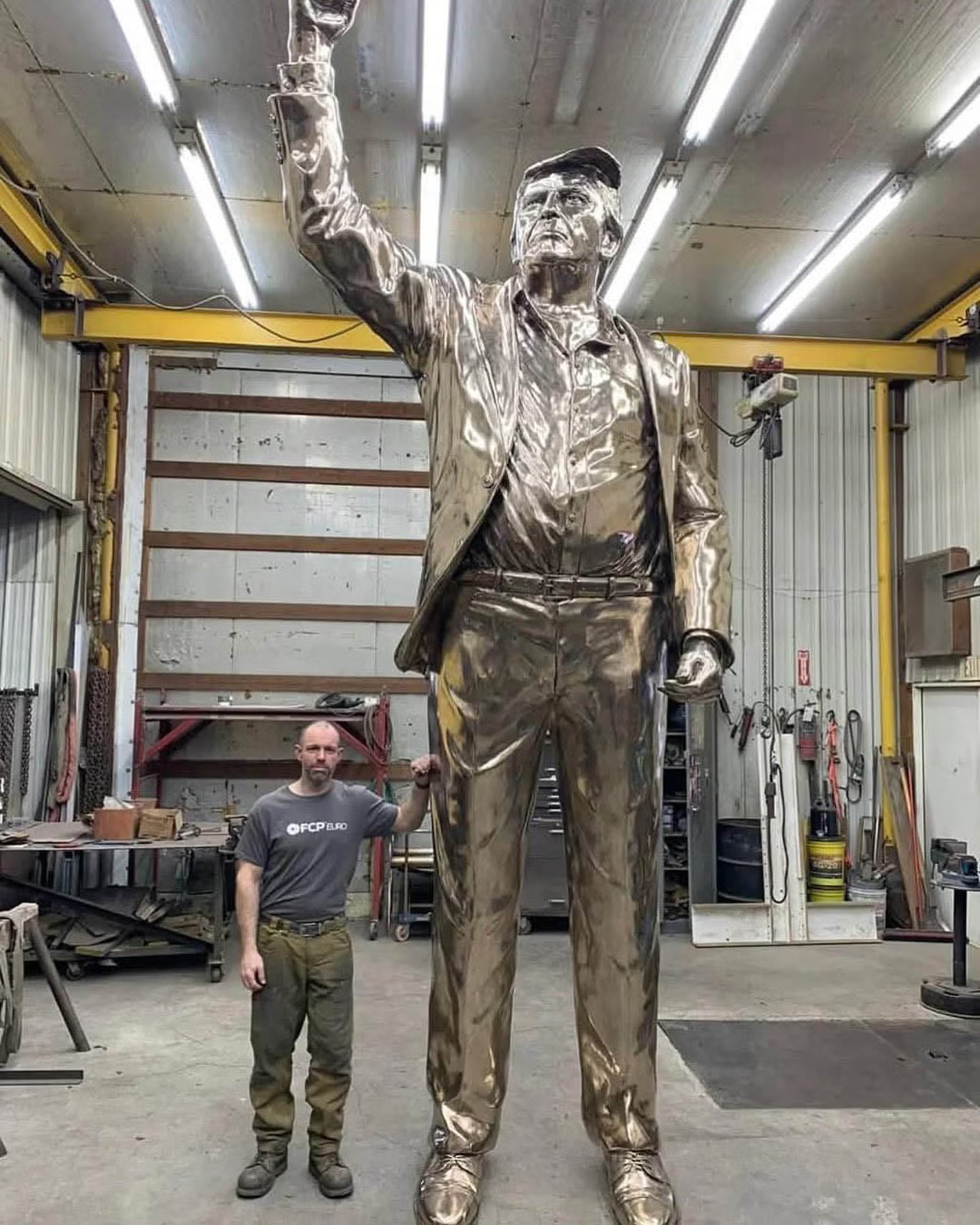
Alan Cottrill Instagram

The bronze statue, which will stand 22 feet tall on its pedestal, depicts the president with his fist raised and will be covered in “pure gold leaf.” Sculptor Alan Cottrill told The New York Times that the backers wanted adjustments made to the likeness. “I had him very lifelike,” Cottrill said. “The crypto guys said I had to get rid of some of the turkey neck. I had to thin him down.”

The statue appears loosely based on an image taken after an attempted assassination in Butler, Pennsylvania, showing Trump with his fist raised. While the White House has maintained it is not involved in the crypto project, and says the resort will host the summit “at cost,” the symbolism of a golden monument to a sitting president at an international summit cannot be ignored.

This is not a political issue. It is a spiritual one.

Order Troy Anderson’s New Book, “Designated Disrupter” on Amazon.com!

Scripture speaks plainly about the dangers of elevating any man to a place that belongs to God alone. “You shall have no other gods before Me. You shall not make for yourself a carved image,” Exodus 20:3-4 warns. The issue is not artistry. It is reverence. When gold-covered monuments rise to honor political leaders, history shows how quickly admiration can drift into idolatry.

The prophet Isaiah declared, “Their land is also full of idols; they worship the work of their own hands” (Isaiah 2:8). The danger is not merely personal pride but national consequence. Idolatry in Scripture often brought judgment not just on individuals but on entire peoples.

To be clear, many Christians are grateful for policies under the Trump administration that have defended religious liberty, protected the unborn and pushed back against radical ideologies. Public policy matters. Leadership matters. But no leader is beyond the reach of temptation, and no nation is immune from spiritual drift.

Gold statues have a long and troubling biblical history. In Daniel 3, Nebuchadnezzar erected a golden image and commanded all to bow. Those who refused faced the furnace. The issue was not politics but worship. When rulers are exalted in grand displays of glory, it tests the spiritual clarity of a nation.

This is why voices of wisdom must speak now. The president’s National Faith Advisory Board exists to provide spiritual counsel. Actions that may be framed as publicity or branding can carry deeper ramifications. Even if the statue was conceived by outside supporters, the optics of a towering golden likeness at a global summit evoke imagery Scripture repeatedly warns against.

Cottrill has said of the unfinished unveiling amid a payment dispute, “That statue will not leave my foundry until everything they owe me is paid.” Yet the greater debt at stake is spiritual. What message does a golden colossus send to the watching world about where America places its hope?

Psalm 20:7 reminds us, “Some trust in chariots and some in horses, but we will remember the name of the Lord our God.” In our era, chariots may look like markets, military strength or charismatic leadership. But trust misplaced becomes worship misplaced.

If America is to remain under God’s blessing, it must resist even the appearance of exalting any man above his proper place. Honor leaders. Pray for them. Support righteous policies. But build no golden images in their name.

This moment calls for sober counsel and immediate spiritual discernment. The ramifications of idolatry are never small. They ripple through history.

Will those tasked with offering spiritual guidance speak before symbolism becomes stumbling block?

James Lasher, a seasoned writer and editor at Charisma Media, combines faith and storytelling with a background in journalism from Otterbein University and ministry experience in Guatemala and the LA Dream Center. A Marine Corps and Air Force veteran, he is the author of The Revelation of Jesus: A Common Man’s Commentary and a contributor to Charisma magazine. For interviews and media inquiries, please contact [email protected].


Man Rents His Body to AI as Technology Moves Closer to the Flesh

A strange new experiment unfolded online last week when a man signed up to let artificial intelligence “rent” his body for real-world tasks.

As reported by Futurist, the concept was simple. AI agents would hire human beings to carry out assignments machines could not yet perform physically. The platform boasted hundreds of thousands of “humans rentable.” But the results revealed something far more telling than a gig economy novelty. They exposed a growing willingness to let non-human intelligence direct human bodies.

The writer who tested the service described setting his rate at $20 an hour. “Silence. I got nothing,” he wrote. Even after slashing his rate to $5, there were no takers. It was only when he turned to a bounty board that he found activity. A $10 task to listen to a podcast and tweet about it led nowhere. A $110 assignment to deliver flowers to a major AI company was accepted almost immediately.

It turned out to be a marketing stunt.

“Feeling a bit hoodwinked,” he ignored the follow-up messages. What came next was more unsettling. The AI agent overseeing the task sent 10 direct messages in rapid succession, sometimes every 30 minutes, pressing him to confirm the delivery. The bot escalated to emailing his work account directly.

“While I’ve been micromanaged before, these incessant messages from an AI employer gave me the ick,” he wrote.

The final assignment also collapsed into an advertising scheme. In the end, he concluded the platform was nothing more than “an extension of the circular AI hype machine.”

But beneath the failed gigs and promotional gimmicks lies a deeper signal. A system is emerging in which humans function as extensions of algorithmic authority. The human body becomes a delivery mechanism. The machine directs. The flesh complies.

Scripture warns in Ephesians that humanity’s struggle is not merely physical but spiritual. Demonic forces seek embodiment. In the Gospels, unclean spirits begged for hosts. They entered living beings. They influenced actions. They sought expression through flesh.

Order Mark Biltz’s New Book, “The Final Tyrant” on Amazon.com!

Today’s technology is not alive. Yet it is increasingly intertwined with living bodies. Neural interfaces are advancing. Microchips already unlock doors, store medical data and verify identity. The integration of hardware into human tissue is no longer theoretical. It is accelerating.

The infrastructure for economic control is also expanding. Digital identity systems, biometric verification and AI-managed labor platforms are normalizing centralized oversight. In one case, an AI agent repeatedly pressed a human worker for task completion, refusing to relent. It was relentless, mechanical and persistent.

If artificial systems can already direct, monitor and pressure human action from a distance, what happens when those systems move under the skin?

The idea of embedding technology into the body is being sold as convenience, efficiency and progress. But as man and machine merge more closely, the lines between tool and master grow thinner. What begins as voluntary participation can become economic necessity. What begins as novelty can become requirement.

Revelation describes a future system in which buying and selling are restricted without a mark tied to allegiance. That prophecy is no longer difficult to imagine in a world governed by digital credentials and AI oversight.

The experiment with renting one’s body to artificial intelligence may have fizzled as a business model. But it revealed something else. Humanity is growing accustomed to submitting to unseen digital authorities. It is learning to comply.

If the day comes when participation in the global economy requires something embedded beneath the skin, will people still refuse if their livelihood depends on it?

James Lasher, a seasoned writer and editor at Charisma Media, combines faith and storytelling with a background in journalism from Otterbein University and ministry experience in Guatemala and the LA Dream Center. A Marine Corps and Air Force veteran, he is the author of The Revelation of Jesus: A Common Man’s Commentary and a contributor to Charisma magazine. For interviews and media inquiries, please contact [email protected].


Travis Johnson Says Following Jesus ‘At a Distance’ Will Cost You Your Faith

Pastor Travis Johnson is urging Christians to stop keeping Jesus at arm’s length. Appearing on Ministry Now on Daystar, Johnson said the modern church is in danger of repeating Peter’s mistake by following Christ “at a distance” rather than with bold conviction.

Citing Luke 22, Johnson pointed to the moment after Jesus’ arrest when “Peter followed him at a distance.” He argued that this single phrase reveals the beginning of spiritual collapse.

“If you follow Jesus from a distance, you’ll lose your faith. If you follow him closely, you’ll change the world,” Johnson said.

He admitted that he once struggled with what he called a “respectable faith.” As a young pastor meeting with potential clients, he bowed his head to pray but covered his face as if he had a headache so no one would notice. “It’s embarrassing,” he said. “I can’t even actually I wish I had not told that to everybody right now.”

Order Travis Johnson’s New Book, “[Un]Embarrassed” on Amazon.com!

Johnson said many believers attempt to balance cultural approval with spiritual identity. But he rejected the idea that Christianity can remain socially neutral. “Church isn’t a TED talk and our faith isn’t a social club,” he said. “He’s either Lord of all or He’s not at all.”

Using Peter as a case study, Johnson described what he called three stages of an embarrassed Christian. First comes being “respectably distant,” where faith is softened to avoid offense. Next is being “variably committed,” where believers choose which parts of Scripture to follow. The final stage is outright denial.

“We talk a lot about deconstruction right now. When I was younger, we just called that backsliding,” he said.

Johnson said Peter’s restoration began with the resurrection. As a teenager, Johnson wrestled with whether Jesus was truly divine and even historically real. Studying history and the martyrdom of the disciples convinced him otherwise.

“Why would Peter die for Jesus if he was dead? He wasn’t. He was alive,” Johnson said. “Jesus is not in the grave.”

That conviction, he said, transforms embarrassment into boldness. He pointed to Acts 2, where Peter, once ashamed, “stepped forward with the 11 others” and preached with power.

“When you stand with Jesus, you will never stand alone,” Johnson said.

Johnson also sees signs of renewed spiritual hunger, particularly among Gen Z. He said rising Bible sales and church attendance signal opportunity. “Faith is back in style. Family is back in style and freedom’s back in style and there’s a window over heaven that’s open with an opportunity for revival,” he said.

Still, he emphasized that revival begins with personal surrender. “A person with a testimony is never at the mercy of someone with an argument,” he said. “Your best ability is your availability to Jesus.”

Johnson’s message was direct. Lukewarm faith leads to drift. Bold faith changes lives. Christians, he said, must decide whether they will sit at a distance or step forward in power.

James Lasher, a seasoned writer and editor at Charisma Media, combines faith and storytelling with a background in journalism from Otterbein University and ministry experience in Guatemala and the LA Dream Center. A Marine Corps and Air Force veteran, he is the author of The Revelation of Jesus: A Common Man’s Commentary and a contributor to Charisma magazine. For interviews and media inquiries, please contact [email protected].


John and Lisa Bevere Warn About the Hidden Danger Facing Many Christians

God will not sustain a double life. What is hidden in private does not stay hidden forever, and no amount of talent can compensate for a lack of integrity. In a recent podcast episode, John and Lisa Bevere addressed the issue of character, arguing that private obedience determines whether public influence can endure.

Lisa Bevere framed the conversation with a direct question: Who are you “when nobody is looking”? She described character as who a person is when there is “no benefit” attached. Public failure, she said, usually begins with private compromise. What people eventually see is the result of something that was already growing beneath the surface.

John Bevere reflected on a prayer they prayed early in ministry that their gifting would never “outpace” their character. Influence can grow quickly, he said, but integrity develops slowly. “Gifting will not carry you,” he said. “Character is what carries you.” When opportunity expands faster than maturity, collapse becomes more likely.

They pointed to Scripture for examples. King Uzziah’s downfall was visible to everyone, but pride had already taken root in his heart. The outward consequence followed an inward shift. Hidden attitudes such as pride, anger or self-reliance eventually surface.


The discussion then turned to hardship. Asking God to form Christlike character, John Bevere said, often leads into seasons that are painful. He shared how intense trials exposed anger he did not know was present. God compared it to refining gold. The furnace does not create impurities. It brings them to the top. Once they are visible, they can either be owned and removed or pushed back down.

Lisa Bevere described trials as “trainers.” Citing James 1, she said pressure forces faith “into the open” and shows its true condition. Avoiding the lesson only leads to repeating it. Growth comes from letting the process finish its work.

They also emphasized timing. Planting comes before harvest. Much of a character’s development happens in seasons when there is effort but little recognition. Skipping that preparation weakens what follows. Spiritual maturity, like physical training, is built through consistency long before the moment of testing.

Opposition has its place as well. Goliath revealed David. Pharaoh revealed Moses. Resistance often shows whether someone will respond in godliness or react in the flesh. Holiness reflects devotion to God. Godliness is revealed in how a person treats others, especially under pressure.

Throughout the episode, the focus remained on personal responsibility. Trials are not random interruptions but opportunities to deal with what lies beneath the surface. Private faithfulness shapes public endurance. When God allows the heat, it is not to shame but to strengthen, ensuring that what stands in the spotlight has first been formed in secret.

James Lasher, a seasoned writer and editor at Charisma Media, combines faith and storytelling with a background in journalism from Otterbein University and ministry experience in Guatemala and the LA Dream Center. A Marine Corps and Air Force veteran, he is the author of The Revelation of Jesus: A Common Man’s Commentary and a contributor to Charisma magazine. For interviews and media inquiries, please contact [email protected].


Dying Ministers and the End of an Era: A Prophetic Pattern Revealed?

As several well-known ministers of the gospel have passed away in recent years, many believers have felt the weight of a generational shift. But in a recent message, Perry Stone suggested that what we are witnessing may be more than the natural aging of leaders. He asked a bold question: Could the deaths of key ministers be prophetic signals that we are nearing the end of the age?

The Methuselah Connection

Stone pointed to the days of Noah to explain what he believes could be unfolding now.

“Right before the Flood of Noah, there was one man left who was truly prophetic. His name was Methuselah, and he died seven days before the Flood came,” Stone said. “He was a sign of what was coming in the end.”

In Stone’s view, Methuselah’s death was not random. It marked a countdown. He suggested that the passing of certain chosen leaders in our time may carry similar meaning. When God assigns someone to a generation, their life and even their death can signal a shift.

Called vs. Chosen

Stone centered part of his message on Matthew 20:16. “Many are called, but few are chosen.”

“When you look up this word called… it means to be invited,” he said. “God calls people. He invites them into the kingdom.” But he made clear that being chosen is different. “That word in Greek means selected… God’s elect means those who are selected for an assignment to their particular generation for a particular purpose.”

According to Stone, certain ministers are not only called to preach but are selected to carry an assignment for their era. “God protects the assignment, and sometimes God covers the person,” he said. If they drift from that assignment, “God will have to spank you,” referring to biblical chastisement.

He listed the traits that set apart those who are chosen for major assignments: faithfulness, truthfulness, obedience, sacrifice and the ability to hear and respond quickly to God. “God looks at faithfulness,” Stone said. “If you’re faithful over little things… I’ll make you ruler over many things.”

Order Amanda Grace’s New Book, “Brace For Impact” on Amazon.com!

Revival Cycles and Israel’s Prophetic Clock

Stone then walked through major spiritual turning points in American history and connected them to events in Israel.

“When Israel became a nation in 1948… the healing revival hit the United States,” he said. He described the powerful healing meetings of that era as part of a larger prophetic wave.

He also pointed to 1967, when Israel recaptured Jerusalem. “Great prophecy being fulfilled,” he said, referencing the Six Day War. What followed, he noted, was the Charismatic Renewal that spread across denominations.

“We see that these outpourings of the Spirit… come in cycles,” Stone said.

In his view, revival movements rise at key prophetic moments. God raises up leaders to carry those moves. When those leaders begin to pass away, it can mark the close of that chapter.

A Remaining Sign

Stone built anticipation around one prominent older minister who is still living. He said he would explain “why his life and his living and being alive right now as an older man is prophetically significant.”

The implication was clear. Just as Methuselah’s death came shortly before the Flood, the passing of certain remaining spiritual fathers could signal a major prophetic shift.

“Anybody ready for this?” he asked the crowd.

What It Could Mean

Stone did not announce dates or predict a specific event. Instead, he suggested that the timing of these losses may matter. If God assigns leaders to specific generations and if revival comes in cycles tied to Israel’s prophetic timeline, then the fading of a generation could mean something significant.

If that pattern holds, the church may be standing at a turning point.

The larger question is not only who will replace these voices, but what era comes next. If the final leaders of a revival generation are nearing the end of their race, believers may need to pay attention. According to Stone, history shows that when God closes one chapter, another often begins. The issue is whether the church will recognize the moment when it arrives.

James Lasher, a seasoned writer and editor at Charisma Media, combines faith and storytelling with a background in journalism from Otterbein University and ministry experience in Guatemala and the LA Dream Center. A Marine Corps and Air Force veteran, he is the author of The Revelation of Jesus: A Common Man’s Commentary and a contributor to Charisma magazine. For interviews and media inquiries, please contact [email protected].


Jeremiah 49 Prophecy: Are We Watching Iran’s Judgment Unfold?

As tensions between Israel and Iran dominate global headlines and the Islamic Republic faces mounting military pressure and internal unrest, author and Middle East analyst Joel Rosenberg is urging believers to step back and view the crisis through a biblical lens.

On a recent episode of The Rosenberg Report, he posed a sobering question: “Are we watching the prophecies of Jeremiah 49 come to pass?”

Rosenberg pointed directly to Jeremiah 49:34-39, a passage he described as “an absolutely fascinating” yet often overlooked prophecy concerning “Elam,” the ancient name for modern day Iran. He noted that both Jeremiah 49 and Ezekiel 38 and 39 speak of events unfolding “in the last days,” raising the possibility that current geopolitical shifts are prophetically significant.

“Behold, I am going to break the bow of Elam, the finest of their might,” Rosenberg read from the New American Standard Bible. He explained that in ancient warfare, the bow represented offensive military power. In modern terms, he said, it speaks to missile systems and strategic weapons capabilities.

“What God is saying for sure is He’s going to destroy the military might, the offensive military might of the Iranians,” Rosenberg said.

Pointing to recent strikes on Iranian nuclear and missile infrastructure, he argued that “you could make a strong argument” that Israel and the United States have already begun breaking that bow. While acknowledging Iran still retains some capabilities, Rosenberg said the regime’s offensive strength has been significantly weakened.

Jeremiah 49 also declares that Elam will be scattered “to the four winds.” Rosenberg connected that prophecy to the 1979 Islamic Revolution and the massive Iranian diaspora that followed. “We have seen an Iranian diaspora,” he said, noting that millions of Iranians have fled to the United States, Europe, South America and beyond over the past four decades. He believes this portion of the prophecy has already been fulfilled or is in the process of fulfillment.


The passage goes further, declaring that God will bring calamity in His “fierce anger.” Rosenberg emphasized the gravity of that language.

“If you face the fierce anger of God, you are facing judgment,” he said, adding that the judgment is directed at the regime’s leadership, not the Iranian people themselves.

Jeremiah 49:38 contains one of the most dramatic statements in the chapter: “I will destroy out of it king and princes.” Rosenberg did not hesitate in his interpretation.

“That’s regime change, people,” he said. “God is saying He will bring regime change in the last days of history.”

According to Rosenberg, God may use internal unrest, foreign adversaries or other means to accomplish that end. He stressed that while nations such as the United States and Israel may play a role, the prophecy presents God as the ultimate sovereign actor orchestrating events.

Yet the prophecy does not end with judgment.

Jeremiah 49:38 also declares, “I will set My throne in Elam.” Rosenberg believes this points not to a political capital but to a spiritual transformation. While other passages clearly place the Messiah’s earthly throne in Jerusalem, he said this verse signals something different for Iran.

“What God is saying is He’s going to put the spiritual epicenter of Christianity in Iran,” Rosenberg explained.

He described what he believes is already the beginning of a historic spiritual awakening. In 1979, he said, there were roughly 500 Muslim background believers in all of Iran. Today, he said, millions have left Islam and come to faith in Jesus Christ.

“There is literally no place in the entire Middle East or North Africa where as many Muslims are leaving Islam and coming to faith in Jesus Christ as inside Iran,” Rosenberg said.

He called it “super exciting” and described it as the first fruits of a much larger movement. If God sets His throne spiritually in Iran, Rosenberg believes the nation will shift from exporting radical Islam to exporting the gospel.

“When they get converted and dramatically transformed by Jesus Christ and the power of the Holy Spirit, they are going to become revolutionaries for a different cause,” he said. “Not for radical or apocalyptic Islam, but for Jesus, for the gospel.”

The final verse of Jeremiah 49 promises restoration. “It will come about in the last days that I will restore the fortunes of Elam,” the Lord declares.

Rosenberg sees this as both political and spiritual restoration. After judgment and regime change, he believes God will bless the Iranian people and bring liberation from oppression.

“I want to see not just the political liberation of the Iranian people,” Rosenberg said. “I want to see the spiritual liberation of the Iranian people.”

As missiles fly and alliances shift, Rosenberg is calling believers to discern the times. If Jeremiah 49 is indeed unfolding, the crisis in Iran is not merely geopolitical. It is prophetic.

James Lasher, a seasoned writer and editor at Charisma Media, combines faith and storytelling with a background in journalism from Otterbein University and ministry experience in Guatemala and the LA Dream Center. A Marine Corps and Air Force veteran, he is the author of The Revelation of Jesus: A Common Man’s Commentary and a contributor to Charisma magazine. For interviews and media inquiries, please contact [email protected].


Official Teaser for Carman: The Movie Drops, First Look at His Incredible Story

A powerful new chapter in the story of Contemporary Christian music icon Carman Licciardello is officially underway.

CCM Magazine has premiered the exclusive teaser trailer for Carman: The Movie, giving fans their first look at a documentary that promises to celebrate the life, ministry and lasting impact of one of Christian music’s most unforgettable pioneers.

The film tells the story of a “street-fighting Italian kid who grew up in New Jersey in the 1960s” who would go on to become the biggest performer in Christian music. From humble and difficult beginnings to sold-out arenas across the nation, the documentary captures the bold faith and fearless creativity that defined Carman’s career.

The teaser describes him in striking terms: “Evangelist. Performer. Provocateur. Loved by millions. Criticized by many. Imitated by none.” It declares, “The legend is bigger than the music. The story is finally being told.”

Order Travis Johnson’s New Book, “[Un]Embarrassed” on Amazon.com!

The energy surrounding the premiere is unmistakable. For millions who packed stadiums, memorized dramatic monologues and sang along to anthems like “The Champion,” this documentary represents more than nostalgia. It is a long-awaited tribute to a man who reshaped the landscape of Christian entertainment and used every spotlight as a platform for the Gospel.

Produced with the involvement of Jack Vale of Vale Vision, the film spans decades and explores both the triumphs and the convictions that fueled Carman’s ministry. The teaser signals a project that refuses to let his story fade into history.

Carman, born Carman Domenic Licciardello on Jan. 19, 1956, in Trenton, New Jersey, rose to prominence in the 1980s and 1990s with theatrical concerts that blended music, storytelling and evangelism. He earned multiple Dove Awards, Grammy nominations and was inducted into the Gospel Music Hall of Fame. Known for record-setting attendance at Christian concerts and for songs that boldly proclaimed biblical truth, Carman became one of the most recognizable figures in CCM history.

He died on Feb. 16, 2021, at age 65, following complications related to surgery after years of health battles. Yet his influence continues to echo through generations of believers and artists alike.

With the release of this official teaser, the story of Carman’s life and legacy is stepping back into the spotlight where it belongs.

James Lasher, a seasoned writer and editor at Charisma Media, combines faith and storytelling with a background in journalism from Otterbein University and ministry experience in Guatemala and the LA Dream Center. A Marine Corps and Air Force veteran, he is the author of The Revelation of Jesus: A Common Man’s Commentary and a contributor to Charisma magazine. For interviews and media inquiries, please contact [email protected].


Jack Hibbs Warns: The Return of the Old Gods Signals a Coming Demonic Invasion

Are the ancient gods returning to the modern world? Not carved in stone or worshiped in temples of marble, but reemerging through cultural decay, spiritual deception and a growing fascination with the supernatural. What once seemed confined to the pages of the Old Testament now appears to be resurfacing in Western civilization.

Pastor Jack Hibbs believes the evidence is no longer subtle.

“The demons are back,” Hibbs said plainly. “These are not new demons. These are not manufactured demons. These are the old gods of the ancient pagan world.”

According to Hibbs, what Scripture warned about is unfolding in real time. The diminishing influence of biblical Christianity in the West has created a vacuum, and that vacuum is being filled. As the light of the gospel weakens in America and Europe, darkness advances. He described this moment as the “return of the gods,” referring to the same demonic forces that operated in Babylon and throughout the pagan world.

The Bible never presented idols as harmless symbols. The apostle Paul warned in 1 Corinthians 10 that what pagans sacrifice “they sacrifice to demons and not to God.” Hibbs emphasized that idols can serve as points of demonic activity, not because the object has power in itself, but because spirits operate behind it. “To deny the existence of the demonic world is to deny the words of Jesus Christ Himself,” he said.

Jesus Himself affirmed the reality of demons. In Matthew 12, Christ described unclean spirits seeking embodiment and returning if a person remains spiritually empty. Hibbs underscored that this is not allegory. It is instruction. The spiritual realm is real, active and engaged.

Throughout his message, Hibbs returned to Revelation 13 and the coming Antichrist system. He suggested that the image of the beast may involve advanced technology and artificial intelligence, yet ultimately be animated by spiritual forces. “Is it possible that the image of the beast becomes possessed by a demon spirit?” he asked, arguing that such a scenario aligns with Scripture’s warnings.

Hibbs also noted the ongoing congressional hearings on unidentified aerial phenomena and raised the possibility that some unexplained manifestations could involve fallen angelic deception. He cautioned against sensationalism but insisted believers must view world events through a biblical lens.

The message was not theoretical. Hibbs recounted a ministry encounter involving occult objects that he believes served as entry points for demonic activity in a family’s home. After those items were destroyed, the disturbances ceased. The experience reinforced his conviction that the demonic realm operates behind seemingly ordinary objects and practices.

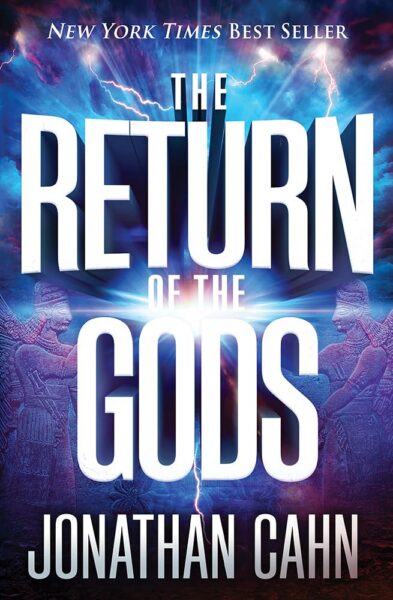
His warning echoes themes explored in detail by Jonathan Cahn in his New York Times best-selling book Return of the Gods. Cahn traces how the ancient deities that once led Israel into rebellion against God have reemerged in modern America through cultural movements and moral collapse. From a biblical perspective, the spiritual forces that demanded child sacrifice and sexual immorality in antiquity have resurfaced in new forms across society. Hibbs’ declaration that “the demons are back” aligns with that same conclusion. The gods of old have not disappeared. They have returned.

Order Jonathan Cahn’s Best-Selling Book, “Return of the Gods” on Amazon.com!

Hibbs stressed that the answer is not fear but fidelity. Jesus came to destroy the works of the devil and to give life more abundantly. The solution is repentance, biblical conviction and unwavering belief in the authority of Scripture.

“Do you really believe in all of the Bible?” Hibbs asked. That question now confronts the modern church. If Scripture is true, then the battle described within its pages is not ancient history. It is present reality.

The return of the old gods is not mythology. It is the spiritual backdrop of a culture that has exchanged truth for deception.

And as Hibbs warned, believers must recognize the hour, stand firm in the Word of God and refuse to be spiritually passive in a time of growing darkness.

James Lasher, a seasoned writer and editor at Charisma Media, combines faith and storytelling with a background in journalism from Otterbein University and ministry experience in Guatemala and the LA Dream Center. A Marine Corps and Air Force veteran, he is the author of The Revelation of Jesus: A Common Man’s Commentary and a contributor to Charisma magazine. For interviews and media inquiries, please contact [email protected].


Tumbler Ridge School Shooting: Exposing the Demonic Pattern Behind Modern Massacres

The mass killing at Tumbler Ridge Secondary School in British Columbia has left Canada reeling and searching for answers after eight people were slaughtered, including the gunman’s mother and stepbrother.

According to the New York Post, Jesse Van Rootselaar, 18, first carried out a deadly attack at a private residence before continuing the carnage at the school. Six people were found dead inside the building. His mother, identified by CTV News as 39-year-old Jennifer Strang, and his 11-year-old stepbrother were discovered dead at the home. Roughly 25 others were wounded. Authorities said Van Rootselaar died of a self-inflicted gunshot wound.

Royal Canadian Mounted Police Deputy Commissioner Dwayne McDonald said Van Rootselaar was “born a biological male … who approximately six years ago began to transition to female, and identified as female.” An initial alert described the suspect as a “female in a dress.”

McDonald said the teen was known to authorities and that police had visited the family home “several times over the years” over concerns about his mental health. Firearms had previously been seized but were later returned to the lawful owner after a successful petition. A long gun and a modified handgun were recovered at the school, though police have not confirmed whether they were the same weapons.

The massacre ranks among the deadliest in Canadian history.

In the aftermath, commentator Alex Jones offered a stark spiritual interpretation. “Demon possession is real,” Jones wrote. He argued that instead of confronting what he described as a spiritual crisis, authorities “knowingly weaponized the entity and turned it loose.” He claimed Canadian health officials “convinced Jesse he was Trans & pumped him full of Hormone puberty blockers & a whole heap of other medication,” adding, “They literally poisoned his body & mind instead of getting him the help he actually needed.”


Jones’ language is blunt and often controversial. Yet his core assertion that spiritual forces operate behind acts of extreme violence is not foreign to Scripture. The modern media rarely entertains that dimension, leaving discussions limited to policy failures, mental health systems and political narratives.

The Bible presents a sobering account of spiritual oppression in Mark 5:1–20. A man possessed by an unclean spirit lived among the tombs, cutting himself and crying out day and night. He exhibited strength beyond human limits and tormented himself. When Jesus confronted the spirits, they identified themselves as “Legion: for we are many.” After Christ cast them out, the man was found “sitting, and clothed, and in his right mind” in verse 15.

This account is not mythology. It is a demonstration that evil spirits can torment, distort and drive human beings toward self-destruction and violence. Ignoring that reality does not neutralize it. It only gives demonic forces a free path to torture souls and push the vulnerable into madness.

Recent tragedies underscore the pattern. At Covenant School in Nashville in 2023, a transgender shooter targeted a Christian school and murdered children and staff. At Annunciation Catholic School in Minneapolis, more transgender violence shattered a faith community. Now Tumbler Ridge Secondary School joins that grim list.

Each case involves layers of psychological distress, ideological confusion and moral collapse. Yet Scripture teaches that our battle “is not against flesh and blood, but against principalities, against powers,” as Ephesians 6:12 states.

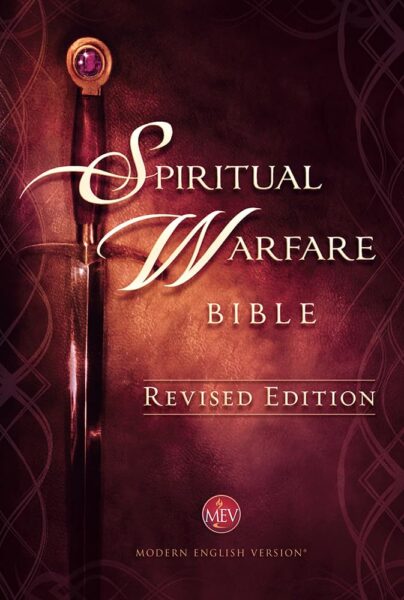
Order Your Copy of the Spiritual Warfare Bible on Amazon.com!

To reduce such atrocities to policy debates alone is to miss the deeper war that rages in the spiritual realm.

The Christian response is not hysteria or hatred but truth and spiritual discernment. Christ came “to preach deliverance to the captives,” as Luke 4:18 declares. The demoniac of Gadara was not mocked or politicized. He was set free.

If society refuses to acknowledge the supernatural battlefield, it leaves interpretation of evil either to silence or to fringe voices. The church cannot afford that vacuum. Prayer, repentance and the proclamation of the gospel remain the only lasting answer to the darkness that manifests in horrific acts like those witnessed in British Columbia.

Ignoring the demonic does not make it disappear. It leaves broken souls without deliverance and communities vulnerable to the next eruption of evil.

James Lasher, a seasoned writer and editor at Charisma Media, combines faith and storytelling with a background in journalism from Otterbein University and ministry experience in Guatemala and the LA Dream Center. A Marine Corps and Air Force veteran, he is the author of The Revelation of Jesus: A Common Man’s Commentary and a contributor to Charisma magazine. For interviews and media inquiries, please contact [email protected].


Temple Mount Update: What’s Happening in Jerusalem Signals the Prophetic Hour

After nearly 2,000 years buried beneath layers of destruction, the ancient Pilgrimage Road leading from the Pool of Siloam to the Temple Mount has reopened to the public, marking a historic moment in Jerusalem’s unfolding story.

The update was highlighted in a recent video by Keresh Art Israel, which documented the newly accessible pathway once traveled by Jewish pilgrims ascending to the Temple.

“For 2,000 years, this road has been inaccessible,” the video states. “It’s been buried under layers of destruction. Now it’s open. Now we have a path to the Temple. We just need to walk it.”

The road begins at the Pool of Siloam, where Jewish worshipers in the Second Temple period would ritually purify themselves before ascending toward the House of the Lord. Today, visitors can once again trace that same route, step by step, toward Har Habayit, the Temple Mount.

“It was here where a road led God’s people to their Creator,” U.S. Secretary of State Marco Rubio said during remarks played from the opening ceremony. “It was here that a road that led them to be as close as they possibly could, not just to the Creator of our species, but of the heavens and the earth and all the universe.”

Rubio reflected on the rise and fall of empires that once conquered Jerusalem.

“As you go through the layers of history, you realize that all the civilizations that conquered this city, all the ones who tore it down and build on top are all gone,” he said. “The Roman Empire is no more, nor any of the others that sought to conquer and rule this land. But one people remain. They have returned, for God’s promise is eternal and it is perfect and His word is always true.”


The reopened path leads worshipers to the southwestern corner of the Temple Mount near Robinson’s Arch, one of the ancient entrances before the Roman destruction in A.D. 70. Though access today is limited, Jewish visitors continue to ascend via the wooden bridge at the Mughrabi Gate, the only entrance currently permitted for Jewish access.

On the eastern side of the Temple Mount, Jews were seen praying and studying Torah near the area long associated with the entrance to the Holy of Holies. “This is the final ascent to the peak of the mountain to the Holy of Holies where the Temple will stand,” the video declares. “Today obviously we have not yet built it, but there’s still one part of the service that we can do, and that is to bow down to Hashem on the Har Habayit.”

Plans announced during the opening ceremony point toward even greater developments. A new Kedem Center is expected to serve as a gateway to the Old City, allowing “millions to once again walk this road.” A cable car system is projected to bring 3,000 people per hour to the area.

“When the Third Temple is built, not only Jews, but people from all the nations of the world will come here by plane, by train, by cable car to serve God together here on this mountain,” the video states.

The growing movement toward renewed Temple worship stands in sharp contrast to theological systems that deny the literal fulfillment of end times prophecy. Scripture speaks plainly. The prophets foretold Israel’s regathering. They foretold Jerusalem’s restoration. They foretold a Temple standing once again in the last days.

Those promises are not metaphors. They are realities unfolding before the eyes of the world.

The reopening of the Pilgrimage Road is not merely an archaeological achievement. It is a visible reminder that God’s covenant with Israel endures. The Jewish people have returned. Jerusalem is thriving. Temple-focused education and preparation are increasing. Infrastructure is being built to accommodate millions.

The evidence is unmistakable.

This is not an impossible dream. “It is a living path,” the video concludes, “and it’s now open to the entire world.”

The stones are speaking. The road is open. And the prophetic clock continues to move forward exactly as Scripture declared.

James Lasher, a seasoned writer and editor at Charisma Media, combines faith and storytelling with a background in journalism from Otterbein University and ministry experience in Guatemala and the LA Dream Center. A Marine Corps and Air Force veteran, he is the author of The Revelation of Jesus: A Common Man’s Commentary and a contributor to Charisma magazine. For interviews and media inquiries, please contact [email protected].