Are Prophetic Words Still Valid When Leaders Fall? Alwyn Uys Responds to the Shawn Bolz Controversy

In the wake of growing controversy surrounding allegations of false prophecy and sexual abuse tied to Shawn Bolz and the subsequent response issued by Bethel Church, many are asking a deeply personal question: If a prophetic leader falls, was any of it ever real?

That question was addressed head-on in a recent Charisma Media interview with prophetic teacher Alwyn Uys, whose viral video response to Bethel’s statement struck a chord with Christians wrestling through disappointment, confusion and discernment.

“We do believe that God does speak. We do believe that the prophetic is real,” Uys said. “But we’ve also seen there’s abuse of that.”
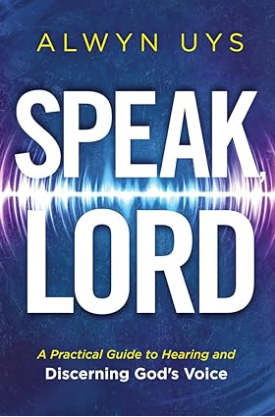
To order Alwyn Uys’ new book, Speak, Lord, visit Amazon.com.

Uys acknowledged the pain many feel when leaders they once trusted fall into moral failure. “Leaders do fall, unfortunately, and we’re all human at the end of the day,” he said. “That’s not to excuse people of their actions. Actions have consequences—even if they were years before.”

When Failure Causes Doubt

For Uys, the issue is deeply personal. He openly shared that he once followed, learned from and even received accurate prophetic words from some of the very figures now under scrutiny.

“I got words from some of these people—accurate prophetic words,” Uys explained. “Things that weren’t publicly available, things that were only between me and God. I knew this was the Holy Spirit speaking through them.”

Yet when a scandal emerges, it can trigger spiritual whiplash. “You start doubting—was this even real? Did this even happen?” Uys said, noting that the enemy often attempts to steal what God genuinely did by sowing doubt after moral failure is exposed.

Testing the Word

Uys further emphasized that prophetic words must be tested—not blindly accepted. He pointed to Scripture as the non-negotiable standard.

“The most obvious one is that it must align with Scripture,” he said. “But also, more than 50% of the time, a prophetic word is confirmation of what the Lord has already spoken to me.”

When a word doesn’t resonate, Uys practices restraint. “I write it down. I put it on the shelf. But I don’t make life-altering decisions based on a prophetic word that doesn’t resonate.”

He stressed that New Testament believers have a responsibility to steward prophetic words. “Eat the meat, spit out the bones,” he said. “A prophetic word is not a one-fix-all solution to being stuck in life.”

New Testament vs. Old Testament Prophets

Uys also drew a clear theological distinction between Old Testament and New Testament prophets—an issue often misunderstood in modern charismatic circles.

“Old Testament prophets had another level of authority. Their words were canonized,” he said. “New Testament prophets do not have that same authority at all.

Instead, New Testament prophecy functions to “uplift, exhort and encourage,” as outlined in 1 Corinthians 14. True prophetic ministry, Uys argued, is marked not by flashy words of knowledge but by maturity, character and the ability to equip others.

“Don’t be wowed by a gift,” he warned. “If you’re not being drawn closer to Jesus, there’s a problem.”

Holding On to What God Did

Rather than discarding everything learned through fallen leaders, Uys urged believers not to “throw the baby out with the bathwater.”

“God can still work through an imperfect vessel,” he said. “The enemy would love for you to deconstruct the whole thing and end up back at ground level again.”

In a season marked by exposure, shaking and refinement, Uys’ message was clear: the prophetic is real—but Jesus must always remain the center.

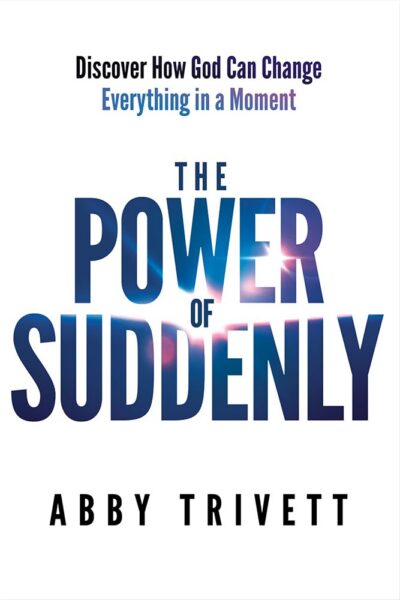
Abby Trivett is a writer and editor for Charisma Media and has a passion for sharing the gospel through the written word. She holds two degrees from Regent University, a B.A. in Communication with a concentration in Journalism and a Master of Arts in Journalism. She is the author of the upcoming book, The Power of Suddenly: Discover How God Can Change Everything in a Moment.


Randy Kay: God’s Glory Is Falling in the Middle of a Supernatural Shift

Christians have prayed the words “on earth as it is in heaven” for centuries.

According to Randy Kay, that prayer is not merely a request — it is a prophecy now being fulfilled.

“What if I told you that prayer isn’t just a request?” he said. “It’s a prophecy, and it’s being fulfilled. Right now, God is doing something He hasn’t done since creation itself. He’s creating something new.”

Citing Ecclesiastes’ declaration that there is “nothing new under the sun,” Kay argues that while humanity endlessly recycles systems and structures, God operates above the sun — and therefore is not bound by human limitation. “Only God can create new,” he said.

As Kay cites, history has already witnessed two major spiritual shifts initiated by God, and a third, final one is now underway.

The First Two Shifts

The first shift, he explained, occurred with the arrival of Jesus Christ.

“For thousands of years, God worked through Israel. The covenant was with the Jewish people,” he said. “Then Jesus came, died, rose — and everything changed.”

Quoting Isaiah 43:18–19, Kay emphasized the prophetic nature of that transition: “Forget the former things. Do not dwell on the past. See, I am doing a new thing.”

The inclusion of the Gentiles, described by Paul in Romans 11, marked what he called God’s first great disruption of religious expectation.

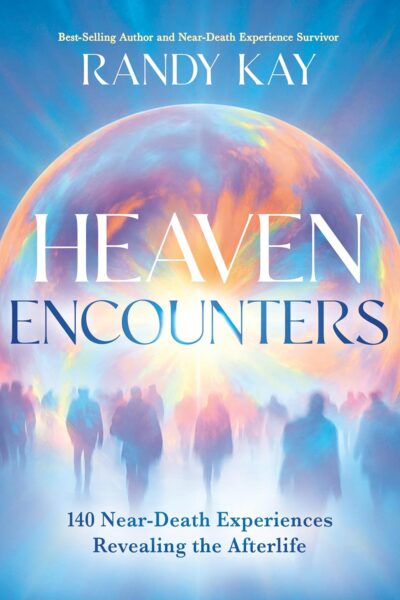
To order Randy Kay’s new book, Heaven Encounters, visit Amazon.com.

The second shift, however, he says, is less often acknowledged — Christianity moving from a Christ-centered movement into an institutional system.

“What Jesus built got buried when Rome corrupted the Way around 300 AD,” he said. “Walls were erected between God and His people.”

Referencing the Edict of Milan in 313 AD and the rise of Constantine’s influence over church doctrine, he quoted historians who observed, “The church conquered Rome, but Rome conquered the church.” What was once a Spirit-led, relational movement became hierarchical, politicized and mediated.

Even the Protestant Reformation, he argues, failed to restore what was lost. “The Reformation didn’t restore the Way — it just reorganized the separation,” he said.

The Third Shift: Heaven to Earth

Kay contends the third shift — and final one — is now unfolding: heaven manifesting on earth before death.

“This isn’t reformation. This isn’t revival of the old,” he said. “This is God manifesting the reality of heaven here, now.”

He describes heaven not as a distant destination, but as a state of total relational immersion with God. “In heaven, God isn’t part-time. He isn’t a Sunday appointment,” he said. “He is your point of reference.”

Kay then shared his own personal testimony: “I died in 2005 — 30 minutes clinically dead — and I experienced what I’m describing to you.”

In that experience, he claims there was no separation between God and man. “The glory of God isn’t something you visit. It’s something you’re immersed in,” he said. “You don’t step in and out. You live in it.”

Why the West Is Declining While the Underground Church Explodes

While the Western church continues to hemorrhage attendance — with Gallup reporting U.S. church membership falling from 70% in 1999 to 47% today — Kay points to explosive growth in places where Christianity is illegal or persecuted.

“Iran now has the fastest-growing Christian population on earth,” he said. “More Iranians have come to Christ in the last 20 years than in the previous 1,400 years combined.”

Conversions there, he noted, come not through programs or pulpits, but through dreams and visions of Jesus. “No missionary. No program. Direct encounter with Christ.”

China’s underground church and Africa’s exponential growth show the same pattern. “The glory falls where the walls don’t exist,” he said.

A Vision of Glory — and a Warning

During his near-death experience, Kay described seeing God’s glory spreading across the earth — but stopping short of many in the West.

“Some people had a covering over them, like an umbrella,” he said. “They were defended — but not by God. Defended against Him by tradition, religion and systems.”

He warned that theological camps, denominational identities, and political allegiances can become barriers to intimacy with God. “The glory can only fall on the open, the surrendered.”

A Call to Discernment and Relationship

While the message is undeniably provocative — and certain claims demand biblical testing — its core challenge aligns with Scripture’s emphasis on relationship over ritual.

Jesus Himself warned religious leaders, “You shut the door of the kingdom of heaven in people’s faces” (Matt. 23:13). And Peter reminds believers that God is “not wanting anyone to perish, but everyone to come to repentance” (2 Pet. 3:9).

“The church doesn’t need another doctrine,” Kay said. “It needs transformation. And transformation only comes through relationship.”

The question now is not whether heaven is real, but whether Christians will lower their defenses enough to seek God Himself, rather than the structures built around Him.

Abby Trivett is a writer and editor for Charisma Media and has a passion for sharing the gospel through the written word. She holds two degrees from Regent University, a B.A. in Communication with a concentration in Journalism and a Master of Arts in Journalism. She is the author of the upcoming book, The Power of Suddenly: Discover How God Can Change Everything in a Moment.


Trump Moves to Address Nigeria’s Christian Persecution As Pressure Mounts

Nigeria has become the epicenter of global Christian persecution, and new attention from the White House is bringing long-ignored atrocities into the international spotlight.

In a video by CBN News’ Raj Nair, the outlet looked at statistics on Christian persecution from Open Doors, a Christian watchdog organization, which shows that 72% of Christians murdered for their faith worldwide last year were killed in Nigeria.

Joining Nair was Mariam Wahba, a research analyst at the Foundation for Defense of Democracies, who explained that persecution in Nigeria falls into “one of two buckets.”

“First, you have your classic Islamist jihadi forces,” Wahba said, pointing to groups such as ISIS affiliates and Boko Haram. “Here, when we’re talking about these groups persecuting Christians, the classic images of murdering Christians and kidnapping Christians should come to mind.”

But Wahba emphasized that a second, less understood form of persecution has been accelerating.

“What’s interesting about the second bucket of Christian persecution taking place in Nigeria today is that it’s not being perpetrated by your classic Islamist jihadi groups,” she said. Instead, she pointed to Fulani militants, an ethnic group historically known for nomadic herding.

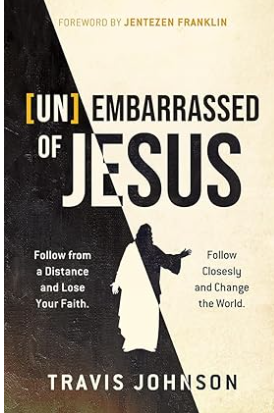
To order Travis Johnson’s new book, (Un)Embarrassed of Jesus, visit Amazon.com.

“These conflicts are about resources—water resources, land resources,” Wahba explained, noting long-standing tensions between Fulani herders and predominantly Christian farmers. However, she added that something has shifted. “Unfortunately, in the last few years, we’re seeing a religious undertone take place on some of these attacks… organized militia efforts… attacking Christians not just because of resources, but for their faith.”

The core problem, according to Wahba, is a failure of governance.

“The Nigerian government has been unable and really unwilling to enforce its own laws,” she said. “This is really a security issue, and it’s in Nigeria’s best interest to begin to address the security.”

That failure prompted action from the Trump administration. Waba revealed that the White House established a working group on Jan. 22 and has sent U.S. military commanders to Abuja to pressure Nigeria’s government to act.

“The goal is to try to enable them to enforce their own laws and begin to decrease the security gap that we’re seeing take place,” she said.

In addition, Wahba confirmed that on Christmas Day, the president “ordered air strikes on an ISIS affiliate in the northwestern region of Nigeria,” calling it “certainly a welcome step,” though not a complete solution.

While some fear conditions are worsening, Waba offered a measured perspective. “I don’t think they’re necessarily happening more frequently,” she said of reported attacks. “Now that we know about this issue via the spotlight, we’re hearing more things that were happening that we weren’t hearing about before.”

During this time, continue to lift the persecuted church in Nigeria, which faces death and torment each day for their faith in Jesus Christ, in prayer.

Abby Trivett is a writer and editor for Charisma Media and has a passion for sharing the gospel through the written word. She holds two degrees from Regent University, a B.A. in Communication with a concentration in Journalism and a Master of Arts in Journalism. She is the author of the upcoming book, The Power of Suddenly: Discover How God Can Change Everything in a Moment.


Blasphemous Sermon Claims Christians Should Avoid the Word ‘Sinner’

Are we really not allowed to call ourselves what we are? Sinners.

In a video clip shared on Christian Media outlet Protestia’s X account, an Episcopal pastor delivered a sermon on the unthinkable: why she believes the term “sinner” is uncomfortable.

She started with the tactic of stating, “You’re all going to hell. Aren’t you glad we don’t go to that church? You’re not, you’re not.”


She then expressed Christianity as having “spectrums” for believing in sin and God’s redemption.

“I don’t think anybody, no matter what tradition you come from…wherever you are on the spectrum, I don’t think any of us are comfortable anymore with the language of being a sinner.”

Since when does Christianity remove the one thing that properly identifies humanity for what we are? We are broken, hopeless, born as sinners. That is exactly why we need the Gospel. That is the whole point of Jesus’ death and resurrection. We are incapable of saving ourselves and can only be saved through the Savior.

“Whether we associate sin with shame and self-punishment or with those creepy sermons about hellfire…sinner is a word I don’t use very much because I think it alienates more people from God than it helps.”

To order Travis Johnson’s new book, (Un)Embarrassed of Jesus, visit Amazon.com.

Christianity is not about hearing what you want to hear: it’s about hearing what you need to hear so we can change and become more like Christ. Scripture does not treat sin as a linguistic inconvenience—it names it as the condition that separates humanity from God. “

All have sinned and fall short of the glory of God” (Rom. 3:23). Jesus did not come to soften the diagnosis; He came because the diagnosis was fatal. He said plainly, “Those who are well have no need of a physician, but those who are sick. I did not come to call the righteous, but sinners, to repentance” (Luke 5:31–32).

To reject the word “sinner” is to reject the very truth that makes the Gospel necessary. Life is found in Christ alone, but it begins with recognizing our sin, repenting of it and turning fully toward Him—“If we confess our sins, He is faithful and just to forgive us our sins and to cleanse us from all unrighteousness” (1 John 1:9). Any message that removes repentance removes the cross, and any gospel without the cross is no gospel at all.

Scripture also warns that such distortions would mark the last days. Paul wrote that a time would come when people would “not endure sound doctrine, but according to their own desires… will turn their ears away from the truth” (2 Tim. 4:3–4).

We are watching that separation unfold now—the wheat and the chaff being divided (Matt. 3:12), the faithful clinging to truth while others fall away in what Scripture calls the Great Falling Away (2 Thess. 2:3). This is not about cruelty or condemnation; it is about clarity. The Holy Spirit convicts because He gives life (John 16:8).

The call for the Christian has never been comfort without change, but death to self and resurrection into new life. Those who belong to Him hear His voice, follow Him and do not trade eternal truth for temporary comfort.

Abby Trivett is a writer and editor for Charisma Media and has a passion for sharing the gospel through the written word. She holds two degrees from Regent University, a B.A. in Communication with a concentration in Journalism and a Master of Arts in Journalism. She is the author of the upcoming book, The Power of Suddenly: Discover How God Can Change Everything in a Moment.


Lakewood Church Shares Devastating Announcement

Joel Osteen’s Lakewood Church made a heartbreaking statement following a death that hit close to home for them.

According to The Christian Post, a staff member with Lakewood Church, Shawna Collins, was killed during the tragic plane crash that took place in Bangor, Maine, on Sunday.

Lakewood gave a statement to the Post which confirmed Collins’ death, writing:

We can confirm with great sadness that a beloved member of our church staff and treasured friend, Shawna Collins, was on the plane that crashed in Maine on Sunday evening.

The church further discussed the joy and brightness she added to the team.

To order Travis Johnson’s new book, (Un)Embarrassed of Jesus, visit Amazon.com.

“She was a light that brightened our days, and she possessed a beautiful spirit that lifted everyone she met,” Lakewood told the Post. “We loved Shawna dearly, and we will miss her more than words can express. We pray for her entire family and offer them our love and support during this difficult time.”

Lakewood shared that Collins was not traveling for purposes related to Lakewood when she died in the plane crash.

During this time, lift Shawna Collins’ family, friends and the entire Lakewood Church community in prayer as they grieve after this heartbreaking loss.

Abby Trivett is a writer and editor for Charisma Media and has a passion for sharing the gospel through the written word. She holds two degrees from Regent University, a B.A. in Communication with a concentration in Journalism and a Master of Arts in Journalism. She is the author of the upcoming book, The Power of Suddenly: Discover How God Can Change Everything in a Moment.


Sid Roth: The Prophetic Separation of Nations Has Started

There is a tangible shift unfolding across the nations—spiritually, prophetically and geopolitically—and many believe we are witnessing the early tremors of the next great move of God.

In a recent prophetic video, Sid Roth declared that the global church now stands “between two moves of God’s Spirit,” noting that we are “at the tail end… of the last great move of God’s Spirit” and simultaneously “in the infancy of the next move… which [he] called the greater glory.”

According to the longtime evangelist, this next phase will not merely be revival as we have known it. Instead, he says the fulfillment of prophetic Scriptures is tied directly to Israel, the nations and the glory of God that will cover the earth.

Israel: The Prophetic Dividing Line

Roth did not hesitate to make Israel the focal point of both present history and God’s unfolding plan. “I am going to be talking about your position on Israel, which will determine your future, the future of America and the future of the world,” he said.

Citing Zechariah 2:8, he warned, “He who touches Israel touches the apple of His eye,” adding that in Hebrew, it could be rendered as someone “who pokes their finger in God’s eye.”

Roth argued that Scripture is explicit: nations and families rise or fall based on their treatment of Israel. “You bless Israel as a nation, you’re blessed. You curse Israel as a nation, you’re cursed,” he said, echoing Genesis 12:3. In his view, anti-Semitism is not merely political or cultural but “caused from the invisible world,” describing it as “evil… raising its ugly head worldwide.”

To order Abby Trivett’s new book, The Power of Suddenly, visit Amazon.com.

He connected these developments to the gospel of Matthew, asserting that the separation of sheep and goat nations is tied to how nations treat “these brothers of mine,” identifying Jesus’ “brothers” as the Jewish people. “How can you do that to Jesus?” he asked. “He that touches Israel is the same as someone that pokes their finger in God’s eye.”

The Greater Glory and the Jewish Salvation

Yet for Roth, the story does not end with conflict—it ends with redemption. Quoting Romans 11:26, he declared, “And so all Israel shall be saved,” stressing that Israel is “the only nation in the Bible called by name” for such a promise. “Can you imagine a nation that will be totally saved?” he asked.

Roth believes this will mark one of the greatest evangelistic harvests in history. “The Jewish harvest is not coming,” he declared. “It has already begun.”

The Esther Call for the Church

Roth concluded with a charge to the church, likening believers to Esther positioned “for such a time as this.” He argued that righteous believers have historically impacted Jewish destiny through three things: “praying, witnessing, and giving.”

“If you remain silent at this time,” he warned, quoting Esther 4:14, “deliverance… will come from somewhere else—but you and your father’s house will be destroyed.

Roth’s words make it clear: we are nearing the end, the harvest is great and God is calling His people to put their hands to the plow to preach the gospel and make disciples all over the globe.

Abby Trivett is a writer and editor for Charisma Media and has a passion for sharing the gospel through the written word. She holds two degrees from Regent University, a B.A. in Communication with a concentration in Journalism and a Master of Arts in Journalism. She is the author of the upcoming book, The Power of Suddenly: Discover How God Can Change Everything in a Moment.


Man Defies Apostate Billboard, Paints Over Message to Declare: ‘Jesus Is God’

For one man in Los Angeles, declaring ‘Jesus is God’ was worth even vandalizing property.

In a video that went viral on social media, a man in Los Angeles can be seen painting over one of the controversial billboards that have started to pop up recently, which read, ” The Bible says… Jesus is not God.”

This statement is not only heretical, but it is infuriating for Christians. So, one soul decided he would take matters into his own hands, even if it meant vandalism.

In the video, the man is seen using a large black paint roller to match the background of the sign, painting over the word “not” and the billboard’s bottom statement as well. This made the sign read, “The Bible says… Jesus is God.”


At the heart of the Christian faith is not a slogan, a protest or a viral moment—it is the unshakable truth of who Jesus Christ is. Scripture reveals Him as fully God and fully man, not partially divine, not merely a prophet, and not a created being. “In the beginning was the Word, and the Word was with God, and the Word was God” (John 1:1). Yet that same Word “became flesh and dwelt among us” (John 1:14). If Jesus were not both man and God, His death would have been insufficient. It is precisely because He was both that redemption was possible.

To order Travis Johnson’s new book, (Un)Embarrassed of Jesus, visit Amazon.com.

Only a sinless Savior—God clothed in flesh—could bear the weight of humanity’s sin. On the cross, Jesus did not merely suffer as a martyr; He shed His blood as the spotless Lamb of God, offering a once-for-all atonement that no human effort could ever achieve. Denying His deity does not simply challenge theology—it undermines the very foundation of salvation itself.

Without the divine Christ, there is no forgiveness of sins, no victory over death, and no hope of reconciliation with God. This is why the declaration “Jesus is God” is not a matter of opinion, emotion or activism—it is the cornerstone of the gospel and the reason the cross still stands as the ultimate answer to humanity’s deepest need.

Abby Trivett is a writer and editor for Charisma Media and has a passion for sharing the gospel through the written word. She holds two degrees from Regent University, a B.A. in Communication with a concentration in Journalism and a Master of Arts in Journalism. She is the author of the upcoming book, The Power of Suddenly: Discover How God Can Change Everything in a Moment.


Amanda Grace Issues Warning as a Critical Season Emerges for World Leaders

In a sobering and urgent broadcast, prophetic voice Amanda Grace warned that global leaders—particularly in the United States—are entering what she described as a highly volatile spiritual moment marked by pride, provocation and carefully planned ambushes.

“This is a very serious time we’re in right now,” Grace said. “I feel the weight of it in the realm of the spirit. The enemy has entered a time of provocation. He wants to provoke leaders to get in the flesh so he can attempt to attack them.”

Grace emphasized that leadership itself is a treacherous calling, noting that political power often places leaders in what she called a “snake pit” filled with temptation, compromise and spiritual traps. “It is not easy to be the leader of the United States of America,” she said. “It is a very difficult and treacherous task.”

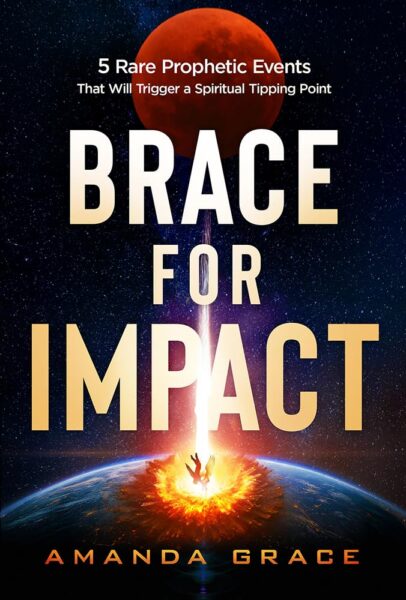
To order Amanda Grace’s new book, Brace For Impact, visit Amazon.com.

Grace also shared a prophetic word she said she received during prayer in the early hours of Jan. 26, 2026. The message repeatedly warned that pride opens the door for destruction.

“Pride has gone forth as the purveyor of the flesh,” Grace stated. “Pride makes the way straight, pride opens the gate and makes conditions legally right in the spirit for destruction to have a claim.”

She warned that leadership decisions made in the flesh—rather than by submission to God—could result in leaders being drawn into conflicts and agreements “that I, the Lord, did not ratify.”

Grace’s words cautioned that meetings, peace initiatives, and international negotiations may not be what they appear on the surface. “Nations…will attempt to lure the president out into a meeting that is an ambush,” Grace said. “It is not reason but treason.”

Grace repeatedly referenced James 4:7, stressing that submission to God must come before resistance to the enemy. “Resisting without submitting is nothing more than rebellion,” she said, adding that rebellion is “the aroma that is attempting to broker deals the Lord has not ratified.”

She also drew a strong parallel to Nehemiah 6, warning that just as Nehemiah was invited into meetings meant to harm him, modern leaders may face similar traps. “This is the time of Nehemiah 6,” Grace said. “Meetings are being planned to ambush leadership.”

Grace urged leaders to refuse meetings held on enemy terms, echoing Nehemiah’s response: “I am doing a great work and cannot come down.”

In addition to political leaders, Grace warned that prophets themselves may become targets in this season. “The enemy realized the prophets were a threat,” she said, explaining that prophetic voices can alter the spiritual atmosphere of nations by speaking truth.

Grace further explained that God’s warnings are not meant to humiliate leaders but to protect them. “The Lord will always warn first gently,” she said. “He loves them enough that He doesn’t want to see anything happen to them.”

She concluded with a call for the church to act as watchmen through prayer and intercession. “We cannot sit back and say, ‘They’ve got this,’” Grace said. “We have been given the power and authority to intercede, expose the works of darkness and dismantle them.”

“Pride comes before destruction,” she added. “But humility invites the hand of God to intervene.”

During this critical time, lift up our leaders in prayer for their safety, wisdom and guidance as they lead America.

Abby Trivett is a writer and editor for Charisma Media and has a passion for sharing the gospel through the written word. She holds two degrees from Regent University, a B.A. in Communication with a concentration in Journalism and a Master of Arts in Journalism. She is the author of the upcoming book, The Power of Suddenly: Discover How God Can Change Everything in a Moment.


9 Things Benny Hinn Says the American Church Is Getting Wrong

Recently, evangelist Benny Hinn and his daughter, Natasha, engaged in a surprisingly tender yet theologically weighty conversation about the state of the church, righteous judgment, and how believers can spiritually endure the days ahead. Natasha’s questions echoed the silent struggle of many younger Christians who feel caught between digital outrage culture and biblical holiness.

Here are nine takeaways from this powerful conversation that Benny Hinn says the church today is getting wrong.

1. The Church During Benny Hinn’s Youth Was “Pure and Simple.”

Natasha opened by asking how the church has changed between generations, especially with the pressures of social media, public criticism and the culture war. Hinn did not hesitate to draw a sharp contrast.

“Much different. Very pure and simple.” He continued: “All we heard was the crucified life… loving the Lord, serving the Lord, and dying to self.”

Hinn described a youth movement in the 1970s built around prayer, repentance and holiness rather than influence, platforms or controversy. For him, the center of gravity was Christ Himself, not the spectacle surrounding Him.

2. Restoration Used to Be the Norm—Not Destruction

While recalling the church of his youth, Hinn emphasized a culture of restoration rather than condemnation.

“We don’t see real power. We don’t see real love. We don’t see real order. We see disorder and a lot of hate and wanting to destroy people, not restore people,” Hinn said. “When I grew up, it was restoring, not destroying. Today, they destroy. Nobody wants to restore.”

To him, the problem is not that believers are addressing sin—it’s how they’re doing it. The digital age has conditioned Christians to “call out” rather than “call back,” to “expose” rather than “edify,” often forgetting that Jesus’s ministry was fundamentally redemptive.

3. Judge Not—Unless You’ve Removed the Beam From Your Own Eye

Natasha pressed into the heart of her concern: how does the church judge righteously without grieving the Holy Spirit? Hinn immediately grounded his answer in Matthew 7.

“Judge not, that ye be not judged… First cast out the beam out of thine own eye,” Hinn said. “People are attacking each other and attacking ministers… not looking at what is in their eye.”

In other words, Jesus condemned not discernment but hypocrisy, and the attempt to fix the speck in a brother’s eye while ignoring the plank lodged in our own.

4. It Is Not Everyone’s Job to Expose the Church

One of the most clarifying moments came when Natasha asked whether it is the responsibility of believers to “clean up the body of Christ.”

Hinn answered plainly: “No… that belongs only to elders… ordained and recognized in the church.”

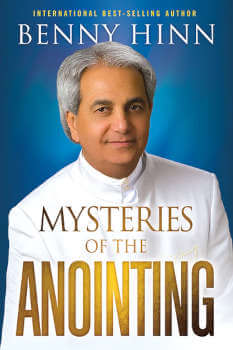
To order Benny Hinn’s book, Mysteries of the Anointing, visit Amazon.com.

This statement directly addressed the rise of internet watchdog ministries, anonymous exposé channels, and self-appointed online theologians who believe their calling is to correct the church publicly. Hinn argued that such efforts lack biblical warrant and often cause wounding rather than healing.

5. Only Elders Have Biblical Authority to Correct Leaders

To support his claim that only the elders can correct leaders, Hinn turned to 1 Timothy 5: “Rebuke not an elder… Against an elder receive not an accusation but before two or three witnesses.”

He clarified what he meant in this modern application: “Not someone who has a camera in front of him.”

Hinn then took his statement a step further: “The sheep follow shepherds, not the other way around.”

6. God Will Clean His Church—Not the Internet

Hinn then shifted the responsibility of judgment away from the crowd and back toward Christ Himself: “..all that talk about that they have to clean the church, that’s not their job. The Lord will clean his church,” Hinn said.

He reminded viewers that in Revelation, Jesus—not the mob—rebuked the seven churches. The judge of the church is not the algorithm, the comment thread or the influencer, but the Head of the Body Himself.

7. The Crisis of the Church is Mostly in America—Not Worldwide

Another surprising assertion came when Natasha asked whether this problem of scandal, judgment and faith issues was universal. Hinn responded: “The chaotic stuff is mostly in the United States and Canada,” Hinn said before mentioning a surprising revival happening abroad.

“The fastest growing church today is inside Iran,” Hinn said. “Under that persecution, there is growth…I can tell you the majority of the Church is experiencing the beauty of the Lord and the glory of the Lord, and they don’t understand.”

8. Only Scripture—Not Experiences—Will Sustain You

Perhaps the most unexpected statement came when Hinn—known for healing crusades—said: “Not the gifts, not signs and wonders, not even the anointing… only the Scriptures will keep you.”

This is not a rejection of the supernatural, but a prioritization of the relationship with Christ over the gifts of the Spirit. According to Hinn, experiences may bless you, but the Word transforms you.

9. “Attacks Will Increase Through AI—But the Word Will Anchor You”

Finally, Hinn warned about the intensifying days ahead.

“The attacks will continue and get worse… they’re going to use AI,” he said. “The Word of God is going to give you such peace and such joy in Jesus that nothing, nothing will offend you.”

For a generation entering an age of digital warfare, misinformation and identity confusion, Hinn argued that survival will come not through strategy but through Scripture.

In the end, this was not a debate about platforms, exposure or personalities—it was a warning and an invitation. Hinn’s message to a rising generation was not to retreat from truth, but to return to it.

In an age of outrage, accusations and endless opinions amplified by technology, he pointed believers back to the one anchor that has never shifted: the Word of God.

Abby Trivett is a writer and editor for Charisma Media and has a passion for sharing the gospel through the written word. She holds two degrees from Regent University, a B.A. in Communication with a concentration in Journalism and a Master of Arts in Journalism. She is the author of the upcoming book, The Power of Suddenly: Discover How God Can Change Everything in a Moment.


Pope Leo Confronts Growing ‘Love Bot’ Crisis

The Pope is tackling a strange epidemic known only to the 21st century: Human relationships with artificial intelligence.

According to The Hill, Pope Leo XIV issued a dire warning regarding these relationships in his address for the 60th World Day of Social Communications.

“Technology must serve the human person, not replace it,” Leo said. He further noted that “preserving human faces and voices” is an “indelible reflection of God’s love.”

As the use of AI continues to skyrocket, so does its unusual use. People are no longer using AI only for simple tasks to make life easier. They are relying on it for emotional support, and in many cases, choosing companionship with these bots over relationships with other people. Some have even “married” AI boyfriends and girlfriends, and unfortunately, some have relied on it to do even the unthinkable, up until the point of it leading to self-destruction and death.

“By simulating human voices and faces, wisdom and knowledge, consciousness and responsibility, empathy and friendship,” Leo believes AI is “encroach[ing] upon the deepest level of communication, that of human relationships.” 

To order Amanda Grace’s new book, Brace For Impact, visit Amazon.com.

He further noted the spiritual dangers of seeking AI to be an “omniscient friend, source of all knowledge … or an oracle of all advice.” The Hill reported that Leo then said: “Because chatbots are excessively ‘affectionate,’ as well as always present and accessible, they can become hidden architects of our emotional states and so invade and occupy our sphere of intimacy.”

The Pope further cited that replacing human relationships with AI “robs” us of the chance to “encounter others.”

In Scripture, the apostles warned that the last days would be marked by deception on a scale never before witnessed. Paul wrote that “evil men and impostors will grow worse and worse, deceiving and being deceived” (2 Tim. 3:13). What was once thought to be science fiction is now creating spiritual substitutes—counterfeit relationships, counterfeit intimacy and even counterfeit purpose.

The rise of AI “companionship” looks less like progress and more like a reframing of ancient temptations: to create gods in our own image, to seek counsel without accountability, and to embrace relationships without covenant or cost. It is not hard to imagine how such technologies could become tools for isolation, control and deception in a generation already wrestling with loneliness and identity confusion.

Jesus also warned that in the final hours, “lawlessness will abound, and the love of many will grow cold” (Matt. 24:12). As human connection fractures and digital imitation becomes normalized, society is trading the God-designed gift of relationship for hollow simulations that can never satisfy the soul. The more humanity tries to outsource what only Christ can fulfill, the more vulnerable it becomes to the lies of the age.

Now is the time for Christians to guard their hearts, contend for truth and anchor themselves in the love of God that no machine can ever replicate.

Abby Trivett is a writer and editor for Charisma Media and has a passion for sharing the gospel through the written word. She holds two degrees from Regent University, a B.A. in Communication with a concentration in Journalism and a Master of Arts in Journalism. She is the author of the upcoming book, The Power of Suddenly: Discover How God Can Change Everything in a Moment.