Doomsday Prophet Camping Leaves Radio Show

ap_harold_camping

AP Photo

The voice of prophetic doom is silenced, sort of.

Harold Camping, the 89-year-old Christian radio broadcaster who three times predicted the world would end—most recently on May 21—is putting an end to his weekday segment called Open Forum on Family Radio.

Camping suffered a stroke on June 9, and Family Radio has been playing reruns of earlier recorded episodes on the radio station he founded since then. Specifically, Camping’s staff aired 20 segments he recorded between May 23 and June 9, according to the Oakland Tribune.

“When those are completed, we will have other programming that is scheduled to run in that time slot,” Program Department Secretary Judi Rathbone wrote in a published e-mail. “Mr. Camping is still in the hospital and continues to recover.”

Like many whose prophecies fail, Camping did not admit that he was wrong. In fact, he said that Judgment Day was May 21—in a spiritual sense. Although we didn’t see Jesus crack open the sky and rapture the church, Camping is nevertheless convinced his prediction was accurate.

“On May 21, this last weekend, this is where the spiritual aspect of it really comes through,” Camping said. “God again brought judgment on the world. We didn’t see any difference but God brought Judgment Day to bear upon the whole world. The whole world is under Judgment Day and it will continue right up until Oct. 21, 2011, and by that time the whole world will be destroyed.”


Hostile Rhetoric Turns Up Heat on Iranian Christians

iranundergroundchurchcpIncreased
public statements against Christianity in Iran have intensified
pressures on Christians, sources said, but at their core they reflect
Islamic leaders’ dismay with the growth of house churches and may signal
dissension within Iran’s leadership.

“The reality is most
of the house churches are so hidden that the government can’t do
anything, and they know it,” said a regional expert who requested
anonymity. “They just see how the house churches are still growing.”

The source said that since mass arrests at the beginning of this year, Christians have been more cautious.

 Another Iranian Christian, a pastor, said the comments likely foretell more arrests.

 “I believe that a new wave of persecution is underway,” he said. “The
authorities are in the process of evaluating the situation.”

 Some sources told Compass the comments of Islamic leaders may indicate a
power struggle between Supreme Leader Ali Khamenei and Iranian
President Mahmoud Ahmadinejad. This bodes ill for Christians and
minorities in general, they said.

 “When there is conflict in
the government and division, then all the minorities will have a hard
time,” said another Christian Iranian who requested anonymity. “If, for
example, Ayatollah    [Mohammad Taghi Mesbah] Yazdi says ‘We have to
end the Christian movement,’ as he said a few weeks ago, that is enough
for his followers in the government to go and arrest Christians.”

 In May, Yazdi said authorities have not done enough to quench the
growth of Christian house churches, considering the “massive funding”
the government has spent toward that end. Yazdi made his statement in a
meeting with the heads of the Islamic Propagation Center of Qom. His
statement was originally publicized on the Iranian Student News Agency
website, according to Iranian Christian news agency Mohabat News.

 Given the “the growth of Christianity in some of the provinces, the
actions taken by the government and the judicial authorities, and the
massive funding of such programs, the desired results have not been
achieved, and this is partly due to the undisciplined attitude and lack
of proper supervision of these programs,” Yazdi reportedly said.

 Yazdi suggested that the government set up a central system to monitor and coordinate the suppression of churches.

 Another Christian source said the political situation in Iran is too
complicated to predict future arrests on the basis of religious leaders’
public statements. The source, who requested anonymity, said that Yazdi
is one of Iran’s most influential clerics and receives government funds
to carry out his work. This year he has received a fraction of the
funds he has in the past. His public statement could be a request for
more money, the source said.

 “Maybe he’s just asking for
more money,” said the source. “There are elements that indicate there
could be another wave of arrests, but maybe he’s saying something
different: ‘We should be changing our tactics [against Christians], so I
need more money.’”

 Today Mohabat reported that a faculty
member of Mehdi Seminary in Qom claimed that “the enemies of Islam” are
providing $50,000 a year to some house churches. The general director
of comparative religious studies, Hojatoleslam Tarashioon, was speaking
at the seminary in Qom, the country’s Shiite center and breeding ground
for Iran’s Islamic clerics and leaders.

 “This cult in
recent years has become active, and today they work under the pretext of
cultural and educational centers and have expanded their activities in
several provinces,” Tarashioon said, according to Mohabat.

 Religious leaders also publicly attacked the country’s underground house
church movement last fall. In October, Khamenei said Iran’s enemies
wanted to shake the country’s religious and societal values through the
spread of Baha’ism and a network of Christian house churches.

 Experts believe these public attacks on Christians, and particularly
Khamenei’s, resulted in authorities arresting over 120 Iranian
Christians between December and January. Most of those detained were
converts from Islam.

 Still in Prison
Of
those arrested at the beginning of this year, all but three were
released, according to a recent report from the Elam Ministries.

 Farshid Fathi, 32, has been incarcerated since Dec. 26, at the
notorious Evin prison in Tehran. Authorities refuse to release him and
have pressed no formal charges. They have kept Fathi in solitary
confinement for months and have used psychological torture methods on
him to extract more information on Christian networks in Iran. They have
allowed him to speak to his family only once a week, according to
Mohabat. Fathi is married and has two children.

 Authorities
have kept Abrahim Firuzi in prison at Robat Karim near Tehran since
Jan. 8, according to Elam. They charged him with evangelizing, keeping
many copies of the Bible and apostasy, or leaving Islam, reported the
ministry. His family is unable to pay bail.

 Another
Christian, Noorollah Ghabitizadeh, has been in prison since Dec. 24, in Defzul in western Iran, according to Elam.

 A fourth Christian, Masoud Delijani, was arrested on March 17 in Kermanshah and remains in prison.

 Ethnic Armenian Christian Vahik Abrahamian has been in prison since
Sept. 4. On May 1 authorities released his wife, Sonia
Keshish-Avanesian, who was imprisoned with him, according to Elam.
Abrahamian also spent two months in prison between February and April of
last year. He was released on bail and re-arrested in September.

 Yousef Naderkhani, a Christian from Rasht, has been in prison since
October 2009. Authorities found him guilty of apostasy on Nov. 13,
and handed him the death penalty. His lawyer has filed an appeal with
the Supreme Court, and Nadarkhani is awaiting a trial date. Authorities
have allegedly treated Nadarkhani harshly, both physically and mentally. 

 On May 31, authorities arrested another Christian, Behnam Irani of Karaj, according to a reliable source.

 Iran’s Constitution gives Christians “protected” religious minority
status, but in practice they face substantial societal discrimination,
according to the U.S. Department of State’s International Religious
Freedom Report 2010.


84 People Accept Christ Where Witchcraft Rules

gfa_tractsIn an area plagued by darkness, Gospel for Asia-supported pastor Josiah Munda is working to proclaim the name of Christ.

People in this region hold to traditional beliefs and superstitions.
If a person dies, the people in the community often blame a widow or an
older woman for the death, accusing her of witchcraft. Sometimes they
will even kill people over such matters.

Last August, a local newspaper
reported that nine people took part in murdering a 56-year-old woman. A
pregnant young woman in their village had died, and they suspected the
older lady had committed witchcraft against her.

Although this woman was falsely accused, Munda knows from
personal experience that people in his area do practice witchcraft. When
he was a young man, he followed the traditional religion of this
region.

One day, he had a stroke that left him paralyzed. His wife
consulted a magician who told them that if they did not offer goats to
their deities, Munda would die. Because he could not afford to
sacrifice goats, Munda went to a doctor instead. He took the medicines
prescribed by the doctor and experienced complete physical restoration.

As a result, Munda abandoned his traditional faith and started
exploring Christianity. During this time, he met a believer who shared
the good news with him. Munda and his family chose to give their lives
to Jesus! After sensing God’s calling to reach out to those alienated
from Christ, he enrolled in a GFA-supported Bible college.

Now, Munda and his wife, Banhi, are sharing God’s love in their
village through various ministries—including home prayer meetings,
Sunday school and distributing gospel tracts. In spite of the
superstitious beliefs in this area, Munda leads a growing
congregation of 56 people.

Munda is not the only one touching lives in this region. Many
other GFA-supported missionaries are spreading the good news. In the
past three months, they were able to hand out over 46,450 gospel tracts,
12 Bibles and 95 New Testaments altogether. They also witnessed 84
people choose to follow Jesus.

Munda and the other missionaries desire prayer that God will
open the eyes of people in his area to who Jesus is, and that many will
decide to follow Christ. Also pray God will bless Munda and his
family with good health and continue to use his ministry in powerful
ways.


{ Day 174 }

But God chose the foolish things of the world to shame the wise; God chose the weak things of the world to shame the strong. He chose the lowly things of this world and the despised things—and the things that are not—to nullify the things that are, so that no one may boast before him. It is because of him that you are in Christ Jesus, who has become for us wisdom from God—that is, our righteousness, holiness and redemption. —1 Corinthians 1:27-31

Fasting in fellowship with the Holy Spirit helps protect us from discontentment, coveting, and fleshly cravings. Fasting will lead to a change of your emotional chemistry. You will, for the most part, no longer desire to have the things that you once wanted. This is because fasting intensifies your detachment from worldly concerns. The strange thing about fasting is that it requires doing nothing instead of doing something, for when you fast you don’t eat, don’t work, don’t talk, and so on. This is the ultimate state of the foolish and weak things of this world confounding the so-called wise things of the world. Fasting literally begins to unlock and release those negative feelings that have been ruling our hearts and ruling us. The presence of God released through fasting also helps to break the bondages of self-absorption so common in today’s world.

{ PRAYER STARTER }

Father, remove my fleshly cravings and concerns so that I can fast unimpeded by the cares of this world. Strengthen my spiritual identity in You so that I will no longer desire the things of this world.

Fasting is a powerful spiritual tool that
strengthens your spiritual identity in God and
weakens your fleshly identity.


Praying for Those Who Hurt You

… and pray for those who persecute you … —Matthew 5:44

Praying for the one who has hurt you or let you down is the greatest challenge of all, for three reasons:

1. You take a route utterly against the flesh.

2. Nobody will ever know you are doing it.

3. Your heart could break when God answers that prayer and truly blesses them as if they’d never sinned.

And yet Jesus’ word to pray for such people is not just a polite suggestion. It is a command—one that may seem so outrageous that you want to dismiss it out of hand. Some see it as a lofty but unrealistic goal.

But this is not what Jesus means. He is commanding you to pray that your enemy will be blessed. If, however, you should pray that he or she will be cursed or punished instead of being blessed, just remember that is how your enemy possibly feels about you. After all, have you ever been someone’s enemy? Have you ever done something that brought a fellow Christian to tears and brokenness? If so, how would you like that person to pray for you? That God will deal with you? That God will cause you to have an accident? Yet how would it make you feel if they prayed that you would be blessed and let off the hook? That you would prosper as if you’d never sinned? Would you not like that? “Do to others as you would have them do to you” (Luke 6:31).

Jesus wants a sincere prayer from you. It is like signing your name to a document, having it witnessed, and never looking back. You are not allowed to tell the world, “Guess what I did? I have actually prayed for my unfaithful spouse to be blessed.” No. It is quiet. Only the angels witness it, but it makes God very happy.

Excerpted from Total Forgiveness (Charisma House, 2002).


Mission Aviation Fellowship Celebrates 50 Years in Congo

maf_congoanniversaryMembers of the Congolese medical community joined church and mission leaders, relief workers and Congolese government officials in celebrating 50 years of Mission Aviation Fellowship service in the Democratic Republic of the Congo.

MAF is a Christian ministry organization that uses airplanes and other technologies to serve church and relief organizations in remote areas of the world.

During a gathering at the International Protestant Church of Kinshasa last month, Dr. Tony Karemere of the Institut National de Recherche Biomedicale commended MAF’s commitment to sharing the gospel and providing access to medical care. Karemere emphasized MAF’s work to combat Ebola epidemics in 1995 and 2007, as well as the measles outbreak that threatened the DRC this spring.

“MAF was the only aviation company who accepted this task—to fly international medical personnel and a mobile laboratory into the hot zone of the [Ebola] epidemic and to fly personnel out of that area,” says Karemere. “In the recent measles outbreak, the areas that were affected were difficult to reach, and with MAF we were able to get into those areas and transport the needed vaccines.”

In the DRC, MAF operates from bases in Kinshasa, Bunia and Lubumbashi. MAF often conducts emergency medical evacuations and provides support to those working in refugee camps or assisting victims of militia violence.

Dr. Makuma Booto Baudouin from the DRC Ministry of Health remarked on the vital role MAF plays in DRC: “Each year MAF transports vaccinations for 39,000 to 40,000 children in the Bandundu region. I thank God for MAF and their partnership now and into the future.”

MAF began serving in DRC in 1961 at the request of the Protestant Relief Agency. Following revolt and tribal warfare in the country in 1960, the medical situation was dire, with only 200 doctors in the entire country to care for millions of people. With the assistance of MAF, PRA initiated “Operation Doctor” to bring healthcare to remote villages. Initially using two planes, MAF flew five teams of doctors between remote clinics, where hundreds of people would typically be waiting to see the physicians.

Former U.S. Surgeon General C. Everett Koop was part of “Operation Doctor.” Koop, now 94, recalls flying with MAF pilots in the early 1960s as they performed airdrops of medical supplies.

“They took off from the airport in Kinshasa, and they headed for pre-arranged parachute drops,” says Koop. “It was said that there wasn’t an aspirin tablet from coast to coast since the missionaries went home … The MAF pilot took that stuff and dropped it, and thereafter there was no trouble.”

Through the years, MAF’s presence in DRC has been marked by unique challenges. Political unrest and threatening bush warfare have caused several evacuations of MAF staff. In 2002, the MAF base at Nyankunde in eastern DRC was destroyed during fighting by two tribal factions. Fortunately, no MAF staff were killed, and the ministry still serves east DRC from its Bunia base. Click here to read more about the Nyankunde incident.

“Longevity in any area of ministry is difficult to achieve,” says John Boyd, president and CEO of MAF-US. “Serving in the DRC is a calling that MAF takes seriously and counts as a privilege.”


Will Kansas Become First Abortion-Free State?

stop abortion now
AP Photo/Joel Page

Kansas could become the first abortion-free state in the nation.

According to the new state law, clinics offering abortions must meet minimum safety standards before they can be licensed. If clinics fail to meet the new standards, they cannot legally do abortions.

The Kansas Department of Health and Environment has the authority to deny, suspend or revoke a license, and has the authority to fine a clinic for violations and go into court to ask that a clinic be closed. The KDHE will notifiy the trio of clinics on July 1 as to whether or not they can continue killing unborn babies.

“We have doubts that any of the abortion clinics can meet the safety requirements of the new law,” says Operation Rescue President Troy Newman. “If they cannot comply, all three abortion clinics would be forced to cease abortion operations, making Kansas the first abortion-free state in the nation.”

The new standards include having an emergency door that can accommodate a gurney. The lack of such a door contributed to the death of Karnamaya Monger in Pennsylvania after an abortion by the notorious Kermit Gosnell.

Other requirements include maintaining proper emergency equipment, drugs and protocols, having proper lighting and ventilation, lavatory areas, and spaces for the sterilization of surgical equipment. Clinics must also have a licensed nurse in the clinic when abortions are done. Operation Rescue has documented that it is a common practice for abortion clinics to employ under-trained, unqualified staff.

The first inspections under a new law began on Wednesday morning at Comprehensive Health of Planned Parenthood, an Overland Park abortion clinic that is currently facing 107 criminal charges related to illegal late-term abortions. The initial inspection is said to be a two-day review. The other two abortion clinics will be inspected within the next few days.

“If clinics cannot comply with these minimum safety standards, they are simply too dangerous to continue to operate. It is shocking that anyone would even question whether or not women deserve to be protected from shoddy and unsafe abortion practices,” says Newman. “We certainly believe there is no such thing as a ‘safe’ abortion clinic. Abortionists have the attitude that they are above the law and will likely not keep it, therefore the best way to protect women is to close the abortion clinics.”


Biblical Babies

“Jacob” and “Isabella” are king and queen of the crib again this year. This is the 12th year in a row on the Social Security Administration’s list of popular baby names that the biblical name Jacob has ranked supreme. Other Bible names on the list include Michael, Noah, Daniel and Abigail.


Batting 1.000 For Churches

National Back To Church Sunday, a cross-denominational movement to reverse declining church attendance and encourage everyone to revisitInform-Batting1000 congregational life, is set for Sept. 18.
Lending his voice to this year’s event is Texas Rangers All-Star Josh Hamilton, the 2010 American League Championship Series MVP who credits his comeback from drug addiction and suspension from the game to his faith and church.

“God’s Word tells us to spur one another on toward love and good deeds, and not give up meeting together,” Hamilton said. “We are to walk through life with other believers. My family and I have found that church is a wonderful way to do this, so I encourage you to join thousands of Americans as they go back to church on National Back To Church Sunday.”


Sorry, Apostle!

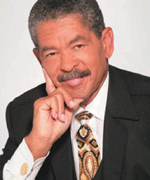
Inform-FrederickKCPriceABC News issued a long overdue public apology to Frederick K.C. Price for painting him in an opportunistic light. Four years ago, it aired a misleading report about the founder of Crenshaw Christian Center in Los Angeles.
Correspondent John Stossel reported the story “Enough!” on the network’s popular 20/20 and Good Morning America programs in March 2007. The premise of the segment was to explore ministers of large churches who use donations to support their lavish lifestyles.

ABC aired a 10-second video clip of a sermon in which Price said: “I live in a 25-room mansion, I have my own $6 million yacht, I have my own private jet, and I have my own helicopter and I have seven luxury automobiles.” The problem was, ABC took the video out of context to support its story. The network division admitted it misled its audience and failed to live up to its own news-reporting standards.


Inform-EgyptsRevolutionaries